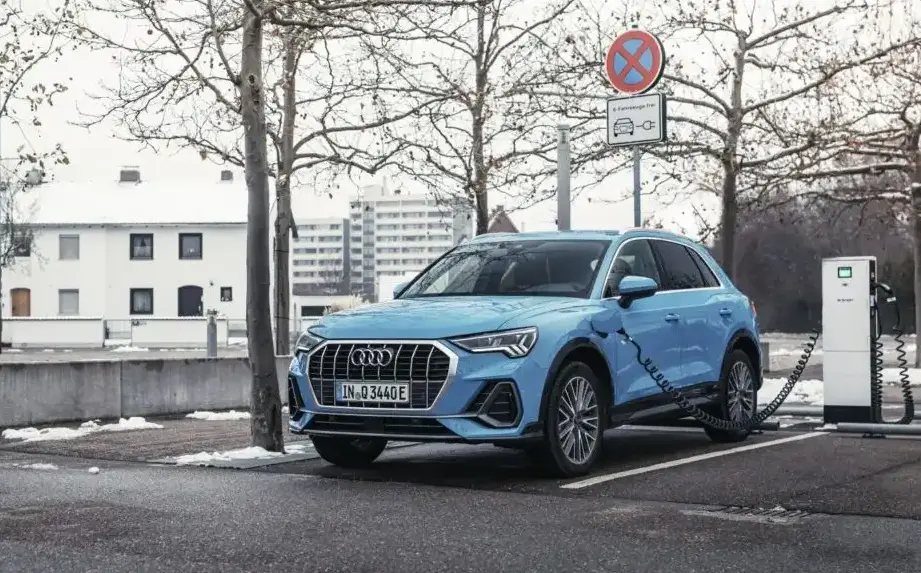
The Audi Q3 II (F3) 45 TFSI e, produced from January 2021 to December 2023, represents Audi’s entry into the plug-in hybrid (PHEV) compact SUV segment. Based on the Volkswagen Group’s MQB platform (specifically the 1HX0/A3 variant), this model combines a 1.4-liter turbocharged gasoline engine with an electric motor, offering a balance of performance and fuel efficiency. Positioned as a mid-range offering within the Q3 lineup, the 45 TFSI e aimed to attract buyers seeking a more environmentally conscious option without sacrificing the premium feel and technology associated with the Audi brand. It was primarily marketed in Europe and other regions with established PHEV infrastructure.
Technical Specifications
| Brand | Audi |
| Model | Q3 |
| Generation | Q3 II (F3) |
| Type (Engine) | 45 TFSI e (245 Hp) Plug-in Hybrid S tronic |
| Start of production | January, 2021 |
| End of production | December, 2023 |
| Powertrain Architecture | PHEV (Plug-in Hybrid Electric Vehicle) |
| Body type | SUV |
| Seats | 5 |
| Doors | 5 |
| Fuel consumption (combined) | 1.4-1.7 l/100 km (168 – 138.4 US mpg, 201.8 – 166.2 UK mpg, 71.4 – 58.8 km/l) |
| CO2 emissions | 32-39 g/km |
| Fuel Type | Petrol / electricity |
| Acceleration 0 – 100 km/h | 7.3 sec |
| Acceleration 0 – 62 mph | 7.3 sec |
| Acceleration 0 – 60 mph | 6.9 sec |
| Maximum speed | 210 km/h (130.49 mph) |
| Emission standard | Euro 6d-ISC-FCM |
| Weight-to-power ratio | 7.1 kg/Hp, 140.8 Hp/tonne |
| Weight-to-torque ratio | 4.4 kg/Nm, 229.9 Nm/tonne |
| Gross battery capacity | 13 kWh |
| Battery technology | Lithium-ion (Li-Ion) |
| Battery weight | 130 kg (286.6 lbs.) |
| Battery location | Below the floor, under the rear seats |
| Recuperation output | 40 kW |
| All-electric range (WLTP) | 45-51 km (27.96 – 31.69 mi) |
| All-electric range (NEDC) | 61 km (37.9 mi) |
| Average Energy consumption (NEDC/WLTP) | 14.4-16.0 kWh/100 km (23.17 – 25.75 kWh/100 mi, 145 – 131 MPGe, 6.9 – 6.3 km/kWh, 4.3 – 3.9 mi/kWh) |
| Max speed (electric) | 140 km/h (86.99 mph) |
| Electric motor power | 116 Hp |
| Electric motor Torque | 330 Nm (243.4 lb.-ft.) |
| Electric motor location | Between the combustion engine and the transmission |
| System power | 245 Hp |
| System torque | 400 Nm (295.02 lb.-ft.) |
| Engine Power | 150 Hp @ 5000-6000 rpm |
| Engine Torque | 250 Nm @ 1550-3500 rpm (184.39 lb.-ft. @ 1550-3500 rpm) |
| Engine layout | Front, Transverse |
| Engine Model/Code | DGEA |
| Engine displacement | 1395 cm3 (85.13 cu. in.) |
| Number of cylinders | 4 |
| Engine configuration | Inline |
| Cylinder Bore | 74.5 mm (2.93 in.) |
| Piston Stroke | 80 mm (3.15 in.) |
| Compression ratio | 10:1 |
| Number of valves per cylinder | 4 |
| Fuel injection system | Direct injection |
| Engine aspiration | Turbocharger, Intercooler |
| Valvetrain | DOHC |
| Engine oil capacity | 4 l (4.23 US qt | 3.52 UK qt) |
| Coolant capacity | 14.6 l (15.43 US qt | 12.85 UK qt) |
| Kerb Weight | 1740 kg (3836.04 lbs.) |
| Max. weight | 2320 kg (5114.72 lbs.) |
| Max load | 580 kg (1278.68 lbs.) |
| Trunk (boot) space – minimum | 380 l (13.42 cu. ft.) |
| Trunk (boot) space – maximum | 1375 l (48.56 cu. ft.) |
| Fuel tank capacity | 45 l (11.89 US gal | 9.9 UK gal) |
| Max. roof load | 75 kg (165.35 lbs.) |
| Permitted trailer load with brakes (8%) | 1700 kg (3747.86 lbs.) |
| Permitted trailer load with brakes (12%) | 1400 kg (3086.47 lbs.) |
| Permitted trailer load without brakes | 750 kg (1653.47 lbs.) |
| Permitted towbar download | 90 kg (198.42 lbs.) |
| Length | 4485 mm (176.57 in.) |
| Width | 1849 mm (72.8 in.) |
| Width including mirrors | 2024 mm (79.69 in.) |
| Height | 1574 mm (61.97 in.) |
| Wheelbase | 2680 mm (105.51 in.) |
| Front track | 1584 mm (62.36 in.) |
| Rear track | 1576 mm (62.05 in.) |
| Drag coefficient (Cd) | 0.33 |
| Minimum turning circle | 11.8 m (38.71 ft.) |
| Approach angle | 20.4° |
| Departure angle | 17.6° |
| Drivetrain Architecture | Front wheel drive. PHEV. ICE and electric motor drive front wheels. |
| Number of gears | 6 |
| Gearbox type | Automatic transmission S tronic |
| Front suspension | Independent type McPherson |
| Rear suspension | Independent multi-link suspension |
| Front brakes | Ventilated discs |
| Rear brakes | Disc |
Powertrain & Engine Architecture
The Audi Q3 45 TFSI e utilizes a sophisticated powertrain centered around the Volkswagen Group’s DGEA engine code – a 1.4-liter, turbocharged, four-cylinder gasoline engine. This engine produces 150 horsepower and 184 lb-ft of torque. It features direct fuel injection and a sophisticated turbocharging system designed for both efficiency and responsiveness. The engine is paired with a 116 hp electric motor integrated between the engine and the S tronic 6-speed dual-clutch transmission. The electric motor draws power from a 13 kWh lithium-ion battery pack located under the rear seats. This configuration allows for all-electric driving for up to 45-51 kilometers (28-32 miles) under WLTP testing. The S tronic transmission provides quick and smooth gear changes, optimizing power delivery in both electric and hybrid modes. The system intelligently manages the interplay between the gasoline engine and electric motor, prioritizing electric drive when possible and seamlessly transitioning to hybrid operation when more power is needed or the battery is depleted.
Driving Characteristics
The 45 TFSI e offers a noticeably different driving experience compared to Q3 models equipped with solely gasoline engines. In electric mode, the vehicle provides near-silent acceleration and instant torque, making it ideal for urban driving. The combined system output of 245 horsepower delivers brisk acceleration, achieving 0-60 mph in approximately 6.9 seconds. While not as overtly sporty as the higher-output gasoline variants, the 45 TFSI e provides ample power for everyday driving and highway merging. The S tronic transmission contributes to a refined driving experience, with quick and precise shifts. The added weight of the battery pack (approximately 287 lbs) is noticeable, particularly in cornering, but the low center of gravity helps to mitigate some of this effect. The regenerative braking system allows for one-pedal driving in certain situations, further enhancing efficiency.
Equipment & Trim Levels
The 45 TFSI e trim typically included a high level of standard equipment, reflecting Audi’s premium positioning. Standard features generally included Audi’s Virtual Cockpit digital instrument cluster, a touchscreen infotainment system with navigation, leather upholstery, automatic climate control, and a suite of advanced driver-assistance systems such as lane departure warning and automatic emergency braking. Optional extras included a panoramic sunroof, upgraded sound system, and adaptive cruise control. Interior trim options varied, allowing buyers to personalize the cabin to their preferences. The exterior styling was largely consistent with other Q3 models, with subtle “TFSI e” badging to denote the plug-in hybrid powertrain.
Chassis & Braking
The Q3 45 TFSI e utilizes a fully independent suspension system, with McPherson struts at the front and a multi-link setup at the rear. This configuration provides a comfortable ride and good handling characteristics. Braking duties are handled by ventilated discs at the front and solid discs at the rear. The vehicle is equipped with ABS (Anti-lock Braking System) and electronic stability control as standard. Due to the added weight of the battery pack, the suspension was often tuned slightly firmer to maintain stability and control. Steering is provided by an electric power steering system, offering precise and responsive handling.
Market Reception & Comparison
The Audi Q3 45 TFSI e was generally well-received by automotive critics, who praised its fuel efficiency, refined driving experience, and luxurious interior. Compared to the standard gasoline-powered Q3 models, the 45 TFSI e offered significantly improved fuel economy and the ability to drive in all-electric mode, reducing emissions. However, the higher price tag and slightly reduced cargo space (due to the battery pack) were noted as potential drawbacks. Compared to other PHEV SUVs in its class, the Q3 45 TFSI e offered a compelling combination of performance, luxury, and technology.
Legacy
The Audi Q3 45 TFSI e represents an important step in Audi’s electrification strategy. While production ended in 2023, the powertrain technology and design principles have influenced subsequent Audi PHEV models. On the used car market, the 45 TFSI e remains a desirable option for buyers seeking a premium, fuel-efficient SUV. The long-term reliability of the powertrain appears to be generally good, although regular maintenance and battery health monitoring are essential. The availability of charging infrastructure and government incentives continue to influence the demand for this model.