
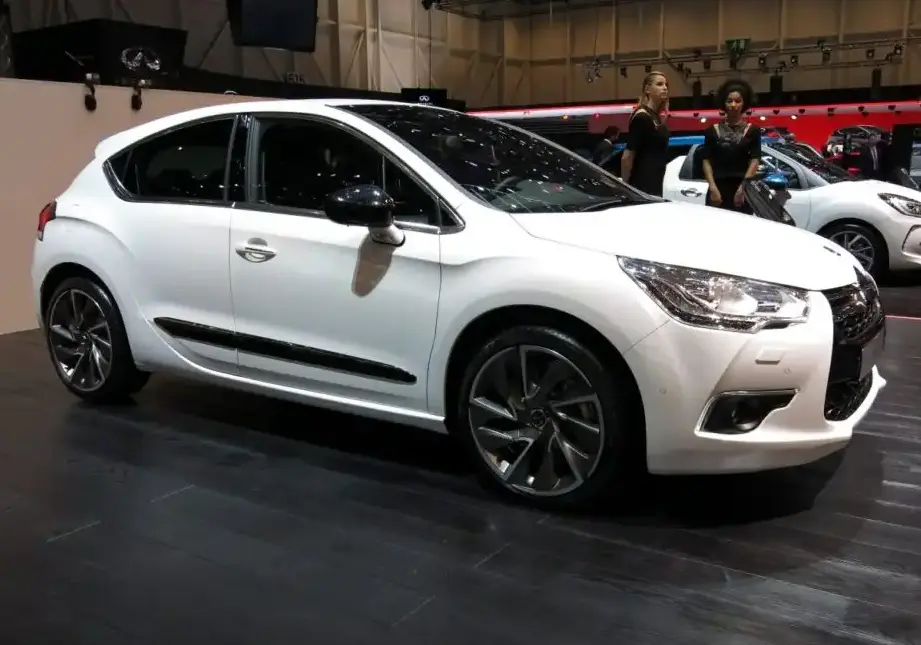
The Citroen DS4 2.0 HDi (163 Hp) was a front-wheel-drive hatchback produced between 2011 and 2015. Positioned as a premium compact offering within Citroen’s DS range, it aimed to blend style, comfort, and efficiency. This variant, powered by the 2.0-liter HDi diesel engine, represented a mid-range option in the DS4 lineup, slotting between the lower-powered 1.6 HDi models and the more performance-oriented DS4 Racing. It was primarily marketed in Europe, where compact hatchbacks with diesel engines were highly popular due to fuel economy and tax benefits.
Technical Specifications
| Brand | Citroen |
| Model | DS4 |
| Generation | DS4 |
| Type (Engine) | 2.0 HDi (163 Hp) |
| Start of production | 2011 |
| End of production | 2015 |
| Powertrain Architecture | Internal Combustion engine |
| Body type | Hatchback |
| Seats | 5 |
| Doors | 5 |
| Fuel consumption (urban) | 6.1 l/100 km (38.6 US mpg, 46.3 UK mpg, 16.4 km/l) |
| Fuel consumption (extra urban) | 4.2 l/100 km (56 US mpg, 67.3 UK mpg, 23.8 km/l) |
| Fuel consumption (combined) | 4.9 l/100 km (48 US mpg, 57.6 UK mpg, 20.4 km/l) |
| CO2 emissions | 130 g/km |
| Fuel Type | Diesel |
| Acceleration 0 – 100 km/h | 9.3 sec |
| Acceleration 0 – 62 mph | 9.3 sec |
| Acceleration 0 – 60 mph | 8.8 sec |
| Maximum speed | 212 km/h (131.73 mph) |
| Emission standard | Euro 5 |
| Weight-to-power ratio | 8.6 kg/Hp, 116.8 Hp/tonne |
| Weight-to-torque ratio | 4.1 kg/Nm, 243.7 Nm/tonne |
| Power | 163 Hp @ 4000 rpm |
| Power per litre | 81.6 Hp/l |
| Torque | 340 Nm @ 2000 rpm (250.77 lb.-ft. @ 2000 rpm) |
| Engine layout | Front, Transverse |
| Engine Model/Code | RHH DW10CTED4 |
| Engine displacement | 1997 cm3 (121.86 cu. in.) |
| Number of cylinders | 4 |
| Engine configuration | Inline |
| Cylinder Bore | 85 mm (3.35 in.) |
| Piston Stroke | 88 mm (3.46 in.) |
| Compression ratio | 16:1 |
| Number of valves per cylinder | 4 |
| Fuel injection system | Diesel Commonrail |
| Engine aspiration | Turbocharger, Intercooler |
| Valvetrain | DOHC |
| Engine oil capacity | 5 l (5.28 US qt | 4.4 UK qt) |
| Kerb Weight | 1395 kg (3075.45 lbs.) |
| Max. weight | 1880 kg (4144.69 lbs.) |
| Max load | 485 kg (1069.24 lbs.) |
| Trunk (boot) space – minimum | 385 l (13.6 cu. ft.) |
| Trunk (boot) space – maximum | 1021 l (36.06 cu. ft.) |
| Fuel tank capacity | 60 l (15.85 US gal | 13.2 UK gal) |
| Permitted trailer load with brakes (12%) | 1300 kg (2866.01 lbs.) |
| Permitted trailer load without brakes | 695 kg (1532.21 lbs.) |
| Permitted towbar download | 75 kg (165.35 lbs.) |
| Length | 4275 mm (168.31 in.) |
| Width | 1810 mm (71.26 in.) |
| Height | 1533 mm (60.35 in.) |
| Wheelbase | 2612 mm (102.83 in.) |
| Front track | 1531 mm (60.28 in.) |
| Rear (Back) track | 1525 mm (60.04 in.) |
| Front overhang | 924 mm (36.38 in.) |
| Rear overhang | 739 mm (29.09 in.) |
| Minimum turning circle (turning diameter) | 10.7 m (35.1 ft.) |
| Drivetrain Architecture | The Internal combustion engine (ICE) drives the front wheels of the vehicle. |
| Drive wheel | Front wheel drive |
| Number of gears and type of gearbox | 6 gears, manual transmission |
| Front suspension | Independent type McPherson |
| Rear suspension | Semi-independent, coil spring |
| Front brakes | Ventilated discs |
| Rear brakes | Disc |
| Assisting systems | ABS (Anti-lock braking system) |
| Steering type | Steering rack and pinion |
| Tires size | 215/55 R17; 225/45 R18; 225/40 R19 |
| Wheel rims size | 17; 18; 19 |
Powertrain & Engine Architecture
The DS4 2.0 HDi utilized the DW10CTED4 engine, a 1997cc four-cylinder diesel engine. This engine was a common sight in PSA Group (Peugeot-Citroen) vehicles of the era. It featured a common rail direct injection system, delivering fuel at extremely high pressure for improved combustion efficiency and reduced emissions. The engine was turbocharged and intercooled, boosting power output to 163 horsepower and 340 Nm of torque. The turbocharger provided a significant increase in power compared to naturally aspirated diesel engines, while the intercooler cooled the intake air, further enhancing performance. The engine employed a double overhead camshaft (DOHC) valvetrain with four valves per cylinder, optimizing gas flow for improved power and efficiency. The 6-speed manual transmission was the standard offering, providing a good balance between fuel economy and driver control.
Driving Characteristics
The DS4 2.0 HDi offered a comfortable and refined driving experience. While not a sports car, the 163 hp engine provided adequate power for everyday driving and overtaking maneuvers. Acceleration from 0 to 60 mph took around 8.8 seconds, and the car had a top speed of 131.73 mph. The manual transmission allowed for precise gear changes, and the engine delivered strong torque from low revs, making it easy to drive in urban environments. Compared to the lower-powered 1.6 HDi versions, the 2.0 HDi offered noticeably more performance, particularly when fully loaded or on inclines. However, it didn’t possess the outright performance of the DS4 Racing model. The suspension was tuned for comfort, absorbing bumps and imperfections in the road well.
Equipment & Trim Levels
The DS4 2.0 HDi typically came equipped with a generous level of standard features. These included air conditioning, electric windows, a CD stereo system, alloy wheels, and ABS brakes. Higher trim levels added features such as automatic climate control, a touchscreen infotainment system, parking sensors, and leather upholstery. Optional extras included a panoramic sunroof, xenon headlights, and a navigation system. The interior design was modern and stylish, with a focus on comfort and ergonomics. The dashboard layout was driver-focused, with all essential controls within easy reach.
Chassis & Braking
The DS4 featured a McPherson strut front suspension and a semi-independent coil spring rear suspension. This setup provided a good balance between ride comfort and handling. The front brakes were ventilated discs, offering excellent stopping power, while the rear brakes were solid discs. ABS (Anti-lock Braking System) was standard, enhancing safety by preventing wheel lockup during hard braking. The steering was a rack and pinion system, providing precise and responsive steering feel.
Market Reception & Comparison
The Citroen DS4 2.0 HDi was generally well-received by automotive critics. It was praised for its stylish design, comfortable ride, and fuel-efficient engine. However, some critics noted that the interior space was somewhat limited, particularly in the rear seats. Compared to rivals such as the Volkswagen Golf and Audi A3, the DS4 offered a more distinctive design and a more comfortable ride, but it lacked the brand prestige of its German competitors. The 2.0 HDi engine offered a good balance between performance and fuel economy, making it a popular choice for drivers who covered long distances.
Legacy
The DW10CTED4 engine proved to be a reliable and durable unit when properly maintained. While diesel engines are susceptible to issues with the diesel particulate filter (DPF) if not driven on longer journeys regularly, the DW10CTED4 generally held up well. On the used car market, the DS4 2.0 HDi remains a relatively affordable option, offering a good combination of style, comfort, and fuel efficiency. However, potential buyers should be aware of the potential for DPF issues and ensure that the car has been regularly serviced. The DS4, as a whole, represented Citroen’s attempt to move upmarket and offer a more premium alternative to mainstream compact hatchbacks.
