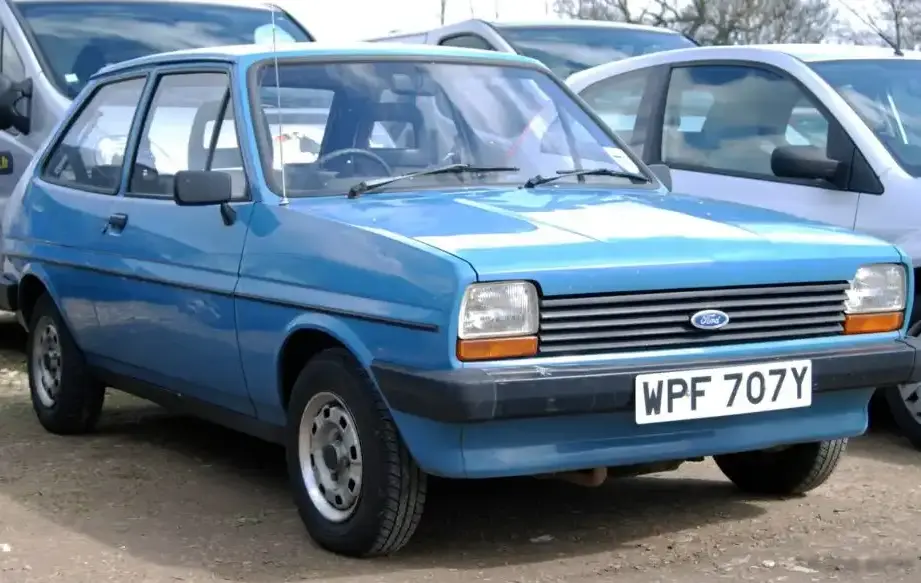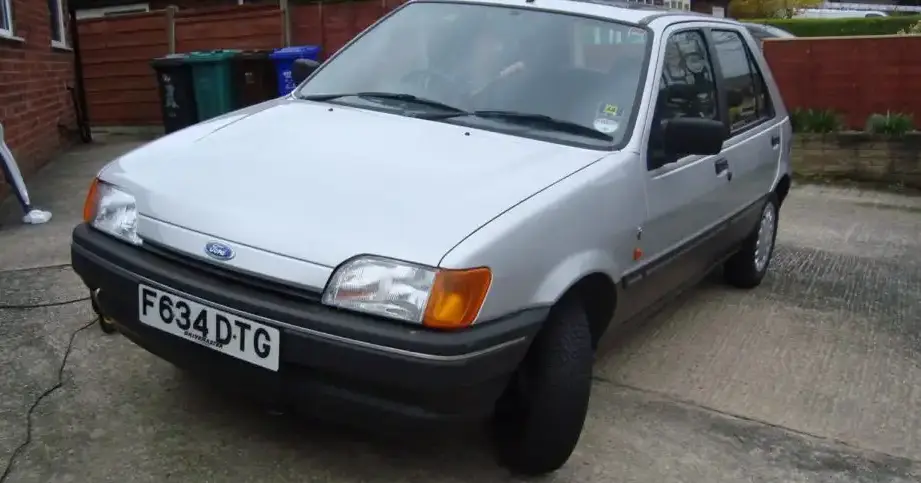
The Ford Fiesta Mk3 1.6i 16V, produced between 1994 and 1995, represented a significant step up in performance and refinement for the popular supermini. Positioned as a mid-range offering within the Mk3 Fiesta lineup, it bridged the gap between the more economical, lower-powered models and the performance-focused XR2i. This variant was primarily aimed at drivers seeking a blend of practicality, reasonable performance, and a more engaging driving experience than the base models offered. It was a key model for Ford in Europe, where the Fiesta consistently ranked among the best-selling vehicles in its class.
Technical Specifications
| Brand | Ford |
| Model | Fiesta |
| Generation | Fiesta III (Mk3) |
| Type (Engine) | 1.6 i 16V (88 Hp) |
| Start of production | 1994 |
| End of production | 1995 |
| Powertrain Architecture | Internal Combustion engine |
| Body type | Hatchback |
| Seats | 5 |
| Doors | 3 |
| Fuel consumption (combined) | 7.8 l/100 km |
| Fuel consumption (US mpg) | 30.2 US mpg |
| Fuel consumption (UK mpg) | 36.2 UK mpg |
| Fuel consumption (km/l) | 12.8 km/l |
| Fuel Type | Petrol (Gasoline) |
| Acceleration 0 – 100 km/h | 11.1 sec |
| Acceleration 0 – 62 mph | 11.1 sec |
| Acceleration 0 – 60 mph | 10.5 sec |
| Maximum speed | 177 km/h (109.98 mph) |
| Weight-to-power ratio | 11.3 kg/Hp |
| Power per tonne | 88.9 Hp/tonne |
| Weight-to-torque ratio | 7.3 kg/Nm |
| Torque per tonne | 136.4 Nm/tonne |
| Power | 88 Hp @ 5250 rpm |
| Power per litre | 55.1 Hp/l |
| Torque | 135 Nm @ 3500 rpm (99.57 lb.-ft. @ 3500 rpm) |
| Engine layout | Front, Transverse |
| Engine Model/Code | L1G |
| Engine displacement | 1597 cm3 (97.45 cu. in.) |
| Number of cylinders | 4 |
| Engine configuration | Inline |
| Cylinder Bore | 76 mm (2.99 in.) |
| Piston Stroke | 88 mm (3.46 in.) |
| Compression ratio | 10.3:1 |
| Number of valves per cylinder | 4 |
| Fuel injection system | Multi-port manifold injection |
| Engine aspiration | Naturally aspirated engine |
| Valvetrain | DOHC |
| Engine oil capacity | 4.25 l (4.49 US qt | 3.74 UK qt) |
| Coolant capacity | 7 l (7.4 US qt | 6.16 UK qt) |
| Kerb Weight | 990 kg (2182.58 lbs.) |
| Max. weight | 1425 kg (3141.59 lbs.) |
| Max load | 435 kg (959.01 lbs.) |
| Trunk (boot) space – minimum | 250 l (8.83 cu. ft.) |
| Trunk (boot) space – maximum | 625 l (22.07 cu. ft.) |
| Fuel tank capacity | 42 l (11.1 US gal | 9.24 UK gal) |
| Length | 3769 mm (148.39 in.) |
| Width | 1610 mm (63.39 in.) |
| Height | 1370 mm (53.94 in.) |
| Wheelbase | 2446 mm (96.3 in.) |
| Front track | 1398 mm (55.04 in.) |
| Rear track | 1365 mm (53.74 in.) |
| Drivetrain Architecture | Front wheel drive |
| Number of gears | 5 |
| Gearbox type | Manual transmission |
| Front suspension | Wishbone |
| Rear suspension | Coil spring |
| Front brakes | Ventilated discs |
| Rear brakes | Drum |
| Assisting systems | ABS (Anti-lock braking system) |
| Steering type | Steering rack and pinion |
| Power steering | Hydraulic Steering |
| Tires size | 185/55 R14 |
Introduction
The Ford Fiesta Mk3, launched in 1989, was a significant evolution of the popular Fiesta line. The 1.6i 16V variant, introduced in 1994, offered a more potent engine option within the range. Built on the 1HX0/A3 platform, this Fiesta aimed to provide a more sophisticated and enjoyable driving experience compared to the lower-spec models. It was a key player in the competitive European small car market, offering a blend of practicality, affordability, and a touch of sporting flair.
Powertrain & Engine Architecture
At the heart of the Fiesta 1.6i 16V lies the Ford L1G engine, a 1.6-liter inline-four cylinder unit. This engine, part of Ford’s Zetec series, featured a double overhead camshaft (DOHC) valvetrain and multi-port fuel injection. The engine code, L1G, is crucial for identifying specific parts and maintenance requirements. The 16-valve configuration allowed for improved breathing and higher revs, contributing to the engine’s increased power output. The engine’s design prioritized reliability and ease of maintenance, making it a relatively straightforward unit to work on. The 5-speed manual transmission was the standard offering, providing a good balance between acceleration and fuel economy. The gear ratios were tuned to maximize the engine’s torque, offering reasonable performance in everyday driving situations.
Driving Characteristics
The 1.6i 16V Fiesta offered a noticeable improvement in performance over the lower-powered 1.4 and 1.6 8V models. While not a sports car, the 88 horsepower engine provided brisk acceleration, with 0-60 mph times around 10.5 seconds. The engine felt responsive throughout the rev range, and the manual gearbox allowed drivers to fully exploit the available power. Compared to the later XR2i, the 1.6i 16V offered a more refined and less aggressive driving experience. The suspension, while relatively basic, provided a comfortable ride without sacrificing too much handling capability. The steering was light and precise, making the Fiesta easy to maneuver in urban environments.
Equipment & Trim Levels
The 1.6i 16V typically came equipped with features such as power steering, central locking, and an upgraded interior trim compared to the base models. Interior upholstery was usually cloth, with a more modern dashboard design than earlier Fiesta models. Optional extras included electric windows, a sunroof, and alloy wheels. The trim level often included body-colored bumpers and door mirrors, adding to the car’s more upmarket appearance. Air conditioning was a less common option, but could be found on some examples.
Chassis & Braking
The Fiesta Mk3 utilized a front-wheel-drive layout with a relatively simple suspension setup. The front suspension featured independent wishbones, while the rear employed a twist-beam axle with coil springs. Braking was handled by ventilated discs on the front wheels and drum brakes on the rear. ABS (Anti-lock Braking System) was often included as standard equipment, enhancing safety. The chassis was relatively lightweight, contributing to the car’s nimble handling. Stabilizer bars were fitted to both the front and rear axles, helping to reduce body roll during cornering.
Market Reception & Comparison
The Fiesta 1.6i 16V was generally well-received by automotive critics. It was praised for its lively performance, comfortable ride, and relatively affordable price. Compared to the 1.4 and 1.6 8V models, the 16V offered a significant performance boost. However, it wasn’t as focused on outright performance as the XR2i. Fuel economy was respectable for the time, averaging around 30 mpg in mixed driving conditions. Reliability was generally good, although regular maintenance was essential to ensure long-term durability.
Legacy
The Ford Fiesta Mk3 1.6i 16V remains a popular choice among classic car enthusiasts. The L1G engine is known for its robustness and relatively simple construction, making it a relatively easy engine to maintain. Parts availability is generally good, although some components may be becoming increasingly difficult to find. Today, these Fiestas are often sought after as affordable and enjoyable classic cars, offering a nostalgic driving experience. Well-maintained examples can still provide reliable transportation, and their relatively simple mechanicals make them a good choice for DIY mechanics.