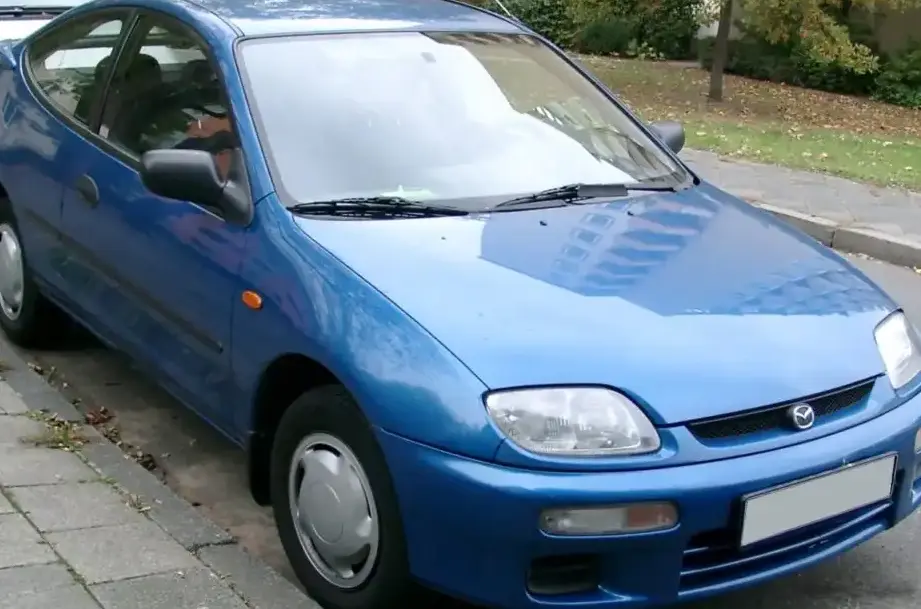
The Mazda 323 III Hatchback, internally designated as the BF series, was produced from November 1986 to August 1987. This generation represented a significant step forward for Mazda in the compact segment, offering a blend of practicality, affordability, and a relatively modern design for its time. The 1.7 D variant, equipped with a 54 horsepower diesel engine, occupied the entry-level position within the 323 III hatchback range, aimed at buyers prioritizing fuel economy and basic transportation. It was a key model in European and Asian markets where diesel engines were gaining popularity due to their efficiency.
Technical Specifications
| Brand | Mazda |
| Model | 323 |
| Generation | 323 III Hatchback (BF) |
| Type (Engine) | 1.7 D (54 Hp) |
| Start of production | November, 1986 |
| End of production | August, 1987 |
| Powertrain Architecture | Internal Combustion engine |
| Body type | Hatchback |
| Seats | 5 |
| Doors | 5 |
| Fuel consumption (urban) | 6.2 l/100 km (37.9 US mpg, 45.6 UK mpg, 16.1 km/l) |
| Fuel consumption (extra urban) | 4.7 l/100 km (50 US mpg, 60.1 UK mpg, 21.3 km/l) |
| Fuel Type | Diesel |
| Maximum speed | 142 km/h (88.23 mph) |
| Weight-to-power ratio | 17.1 kg/Hp, 58.4 Hp/tonne |
| Weight-to-torque ratio | 9.3 kg/Nm, 108.1 Nm/tonne |
| Power | 54 Hp @ 4700 rpm |
| Power per litre | 31.4 Hp/l |
| Torque | 100 Nm @ 3700 rpm (73.76 lb.-ft. @ 3700 rpm) |
| Engine layout | Front, Transverse |
| Engine displacement | 1720 cm3 (104.96 cu. in.) |
| Number of cylinders | 4 |
| Engine configuration | Inline |
| Cylinder Bore | 78 mm (3.07 in.) |
| Piston Stroke | 90 mm (3.54 in.) |
| Compression ratio | 22:1 |
| Number of valves per cylinder | 2 |
| Fuel injection system | Precombustion chamber injection |
| Engine aspiration | Naturally aspirated engine |
| Valvetrain | SOHC |
| Engine oil capacity | 4.9 l (5.18 US qt | 4.31 UK qt) |
| Coolant capacity | 6 l (6.34 US qt | 5.28 UK qt) |
| Kerb Weight | 925 kg (2039.28 lbs.) |
| Fuel tank capacity | 45 l (11.89 US gal | 9.9 UK gal) |
| Length | 3990 mm (157.09 in.) |
| Width | 1645 mm (64.76 in.) |
| Height | 1390 mm (54.72 in.) |
| Wheelbase | 2400 mm (94.49 in.) |
| Front track | 1390 mm (54.72 in.) |
| Rear track | 1415 mm (55.71 in.) |
| Minimum turning circle | 9.4 m (30.84 ft.) |
| Drivetrain Architecture | Front wheel drive |
| Number of gears and type of gearbox | 5 gears, manual transmission |
| Front suspension | Independent, type McPherson with coil spring and anti-roll bar |
| Rear suspension | Coil spring, Torsion |
| Front brakes | Ventilated discs |
| Rear brakes | Disc |
| Steering type | Steering rack and pinion |
| Tires size | 175/70 R13 |
| Wheel rims size | 4.5J x 13; 5J x 13 |
Powertrain & Engine Architecture
The heart of the 323 III 1.7 D was the Mazda RF engine, a 1.7-liter inline-four diesel. This engine utilized precombustion chamber injection, a common diesel technology of the era. This system involved injecting fuel into a precombustion chamber connected to the main cylinder, where it was partially ignited before entering the main combustion chamber for complete combustion. This design aided in smoother combustion and reduced engine noise compared to direct injection systems of the time. The engine featured a single overhead camshaft (SOHC) valvetrain, operating two valves per cylinder. The 54 horsepower output at 4700 rpm and 100 Nm (73.76 lb-ft) of torque at 3700 rpm were modest, but sufficient for the vehicle’s intended purpose. The engine was transversely mounted, driving the front wheels through a five-speed manual transmission. This configuration was typical for front-wheel-drive vehicles of the period, optimizing space utilization.
Driving Characteristics
The 1.7 D variant of the 323 III offered a utilitarian driving experience. Acceleration was slow, with a 0-60 mph time estimated to be around 15-17 seconds. The focus was clearly on fuel efficiency rather than performance. The five-speed manual transmission helped to keep the engine within its optimal operating range, but required frequent shifting, especially when climbing hills or overtaking. Compared to the gasoline-powered versions of the 323 III, the diesel offered significantly less power but a substantial improvement in fuel economy. The manual gearbox provided a more engaging driving experience than an automatic would have, but also demanded more driver involvement. The relatively light weight of the vehicle (925 kg / 2039.28 lbs) helped to mitigate the lack of power to some extent.
Equipment & Trim Levels
The 1.7 D trim level was the most basic offering in the 323 III hatchback range. Standard equipment typically included cloth upholstery, a basic instrument cluster, and manual windows and door locks. Power steering was often an optional extra. The interior was functional and durable, prioritizing practicality over luxury. Optional extras could include a radio/cassette player, upgraded seat fabric, and occasionally, a sunroof. The overall aesthetic was simple and understated, reflecting the car’s budget-conscious positioning.
Chassis & Braking
The 323 III utilized a McPherson strut front suspension with coil springs and an anti-roll bar, providing a reasonable level of ride comfort and handling. The rear suspension employed a torsion beam setup, which was a cost-effective solution for compact cars. The braking system consisted of ventilated discs on the front wheels and discs on the rear, offering adequate stopping power for the vehicle’s weight and performance. The steering was a rack and pinion system, providing precise and responsive steering feel.
Market Reception & Comparison
The 323 III 1.7 D was generally well-received as an affordable and economical option in the compact hatchback segment. Critics praised its fuel efficiency and practicality, but noted its lack of performance. Compared to other diesel-powered hatchbacks of the time, such as the Volkswagen Golf 1.6 D, the Mazda offered a similar level of fuel economy but slightly less power. However, the Mazda was often considered to be more reliable and less prone to mechanical issues. The gasoline-powered 323 variants, such as the 1.6, offered significantly more performance but at the cost of increased fuel consumption.
Legacy
The Mazda 323 III 1.7 D, while not a performance icon, proved to be a durable and reliable vehicle. The RF diesel engine, while relatively simple in design, was known for its longevity. Today, these cars are relatively rare, but those that remain are often sought after by enthusiasts looking for a classic, economical, and easy-to-maintain vehicle. Parts availability can be a challenge, but many components are still available through specialist suppliers. The 323 III 1.7 D represents a significant chapter in Mazda’s history, demonstrating the company’s commitment to producing affordable and practical vehicles for the mass market.