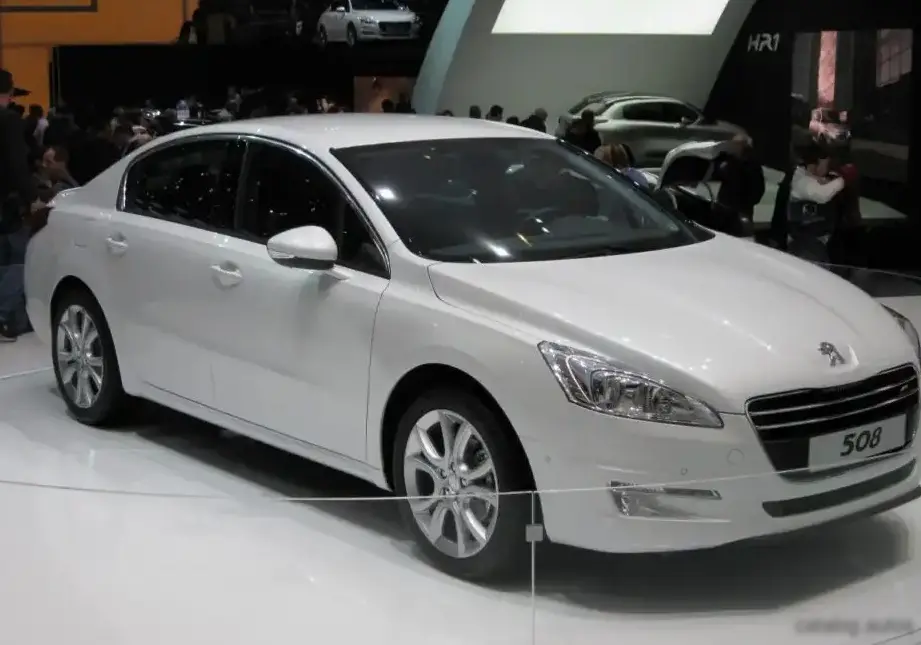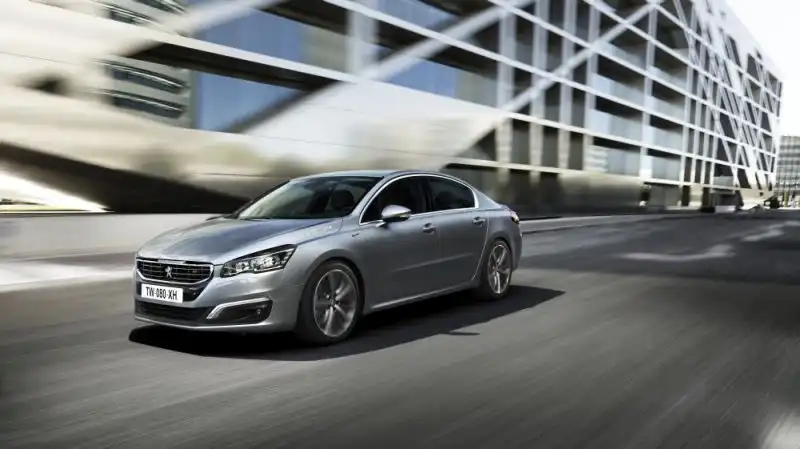
The Peugeot 508 I (Phase II), specifically the 1.6 THP 165 horsepower variant, represents a significant refinement of Peugeot’s mid-size executive car. Introduced in 2014 as part of a mid-life facelift for the first-generation 508 (produced from 2010-2018), this model aimed to enhance the car’s appeal with a more efficient and powerful engine option. Positioned as a mid-range offering within the 508 lineup, it bridged the gap between the lower-powered diesel engines and the more expensive, higher-performance petrol options. The Phase II updates included revised styling, improved interior materials, and crucially, the introduction of Peugeot’s new PureTech petrol engines, including the 1.6 THP.
Technical Specifications
| Brand | Peugeot |
| Model | 508 |
| Generation | 508 I (Phase II, 2014) |
| Type (Engine) | 1.6 THP (165 Hp) |
| Start of production | 2014 |
| End of production | 2018 |
| Powertrain Architecture | Internal Combustion engine |
| Body type | Sedan |
| Seats | 5 |
| Doors | 4 |
| Fuel consumption (urban) | 7.5 l/100 km (31.4 US mpg) |
| Fuel consumption (extra urban) | 4.5 l/100 km (52.3 US mpg) |
| Fuel consumption (combined) | 5.6 l/100 km (42 US mpg) |
| CO2 emissions | 129 g/km |
| Fuel Type | Petrol (Gasoline) |
| Acceleration 0 – 100 km/h | 8.6 sec |
| Acceleration 0 – 62 mph | 8.6 sec |
| Acceleration 0 – 60 mph | 8.2 sec |
| Maximum speed | 210 km/h (130.49 mph) |
| Emission standard | Euro 6 |
| Weight-to-power ratio | 8.5 kg/Hp |
| Weight-to-torque ratio | 5.8 kg/Nm |
| Power | 165 Hp @ 6000 rpm |
| Torque | 240 Nm @ 1400 rpm (177.01 lb.-ft. @ 1400 rpm) |
| Engine layout | Front, Transverse |
| Engine Model/Code | 5GZ EP6FDT |
| Engine displacement | 1598 cm3 (97.52 cu. in.) |
| Number of cylinders | 4 |
| Engine configuration | Inline |
| Number of valves per cylinder | 4 |
| Fuel injection system | Direct injection |
| Engine aspiration | Turbocharger, Intercooler |
| Engine oil capacity | 4.25 l (4.49 US qt | 3.74 UK qt) |
| Kerb Weight | 1400 kg (3086.47 lbs.) |
| Max. weight | 1995 kg (4398.22 lbs.) |
| Max load | 595 kg (1311.75 lbs.) |
| Trunk (boot) space – minimum | 473 l (16.7 cu. ft.) |
| Fuel tank capacity | 72 l (19.02 US gal | 15.84 UK gal) |
| Length | 4830 mm (190.16 in.) |
| Width | 1828 mm (71.97 in.) |
| Height | 1456 mm (57.32 in.) |
| Wheelbase | 2817 mm (110.91 in.) |
| Front track | 1579 mm (62.17 in.) |
| Rear (Back) track | 1552 mm (61.1 in.) |
| Ride height (ground clearance) | 146 mm (5.75 in.) |
| Minimum turning circle | 12.2 m (40.03 ft.) |
| Drivetrain Architecture | Front wheel drive |
| Number of gears | 6 |
| Type of gearbox | Manual transmission |
| Front suspension | Independent, type McPherson with coil spring and anti-roll bar |
| Rear suspension | Independent multi-link suspension |
| Front brakes | Ventilated discs |
| Rear brakes | Disc |
| Assisting systems | ABS (Anti-lock braking system) |
| Steering type | Steering rack and pinion |
| Tires size | 215/60 R16; 215/55 R17; 235/45 R18 |
| Wheel rims size | 16; 17; 18 |
Powertrain & Engine Architecture
The heart of this 508 variant is the 1.6 THP (Turbo High Pressure) engine, specifically the EP6FDT engine code. This engine is a member of Peugeot-Citroën’s Prince engine family, developed in collaboration with BMW. It’s a 1.6-liter (1598cc) inline-four cylinder engine featuring direct fuel injection and a twin-scroll turbocharger. The direct injection system, coupled with the turbocharging, allows for a high compression ratio (typically around 10.5:1) which contributes to both power and efficiency. The engine utilizes a timing chain, intended for longer service intervals compared to timing belts. The 165 horsepower output is achieved at 6000 rpm, while the peak torque of 240 Nm (177 lb-ft) is available from a low 1400 rpm, providing good responsiveness in everyday driving. This engine was paired with a six-speed manual transmission in this configuration, offering a balance between fuel economy and driver engagement.
Driving Characteristics
The 1.6 THP 165 hp version of the 508 offers a noticeably more spirited driving experience than the lower-powered diesel options. While not a performance-focused model, the turbocharger provides a good surge of power during acceleration. The 0-60 mph time of around 8.2 seconds is respectable for a mid-size sedan. The six-speed manual transmission allows for precise control, and the engine’s torque delivery makes it easy to drive in urban environments. Compared to the higher-output 181 hp version of the same engine, the 165 hp variant feels slightly less eager to rev, but the difference is not dramatic. The gear ratios are well-chosen for both fuel efficiency and everyday usability. The suspension, tuned for comfort, provides a reasonably smooth ride, although it may not be as sporty as some competitors.
Equipment & Trim Levels
The 1.6 THP 165 hp model typically came equipped with a reasonable level of standard features. These generally included air conditioning, a touchscreen infotainment system with Bluetooth connectivity, alloy wheels (typically 16 or 17 inch), and electric windows and mirrors. Higher trim levels, such as Allure or GT Line, added features like automatic climate control, parking sensors, a navigation system, leather upholstery, and more advanced safety systems. Interior upholstery was typically cloth on the base models, with leather options available on higher trims. Dashboard configuration was consistent across the range, featuring a clean and modern design.
Chassis & Braking
The 508 I Phase II utilizes a McPherson strut front suspension and a multi-link rear suspension. This setup provides a good balance between ride comfort and handling. The front brakes are ventilated discs, while the rear brakes are solid discs. ABS (Anti-lock Braking System) is standard. The steering is a rack and pinion system, providing precise and responsive control. Stabilizer bars are fitted to both the front and rear axles to reduce body roll during cornering. The weight distribution is fairly balanced, contributing to predictable handling characteristics.
Market Reception & Comparison
The 1.6 THP 165 hp variant of the Peugeot 508 was generally well-received by automotive critics. It was praised for its refined engine, good fuel economy (around 42 US mpg combined), and comfortable ride. Compared to the diesel models, the petrol engine offered a more responsive and enjoyable driving experience. However, some critics noted that the engine could be a little noisy under hard acceleration. Compared to the 181 hp version, the 165 hp model offered a more affordable entry point into the 508 range, making it a popular choice for buyers seeking a balance between performance and value. Reliability reports suggest that the Prince engine family is generally robust, but owners should be mindful of regular oil changes and potential issues with the turbocharger.
Legacy
The 1.6 THP engine proved to be a successful powerplant for Peugeot-Citroën, and it continued to be used in various models for several years. The 508 I Phase II 1.6 THP 165 hp remains a relatively affordable and practical used car option. The engine’s fuel efficiency and decent performance make it suitable for both commuting and longer journeys. However, potential buyers should be aware of the potential for carbon buildup on the intake valves, a common issue with direct injection engines. Regular servicing and the use of quality fuel can help mitigate this risk. Overall, the 508 I Phase II 1.6 THP 165 hp represents a well-rounded and capable mid-size executive car that offers a good balance of comfort, performance, and economy.