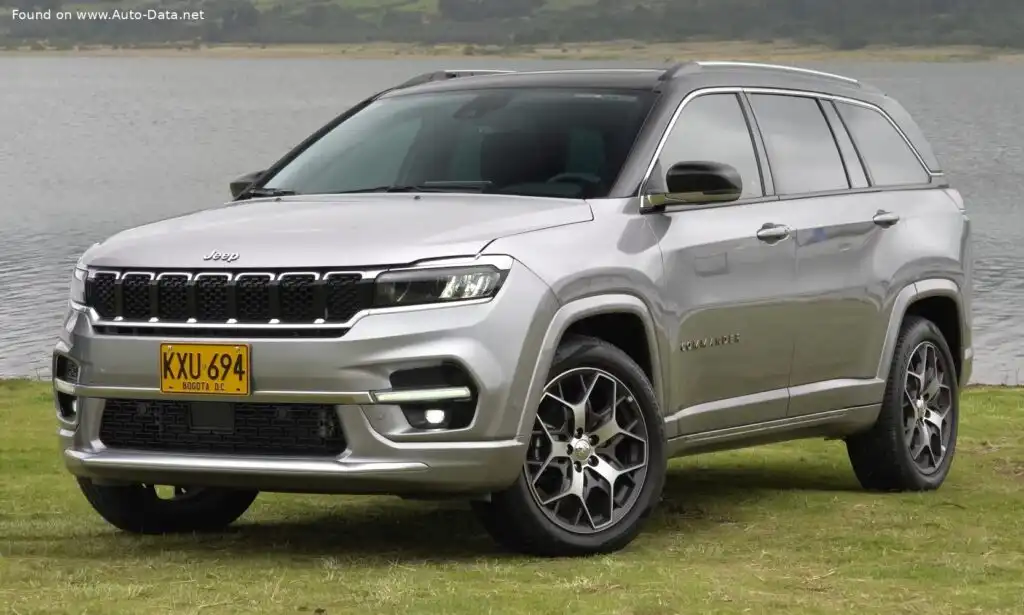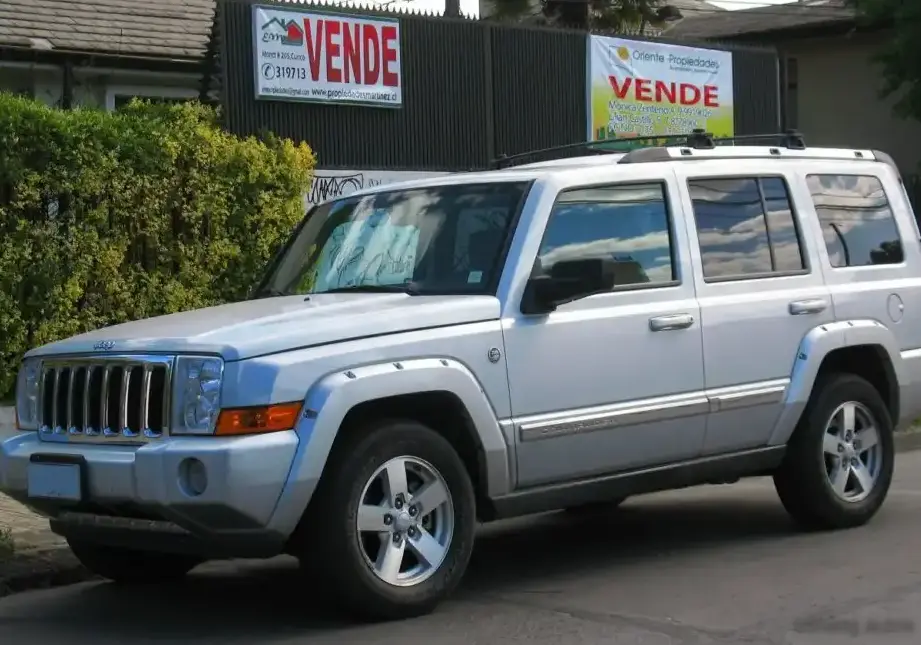
The Jeep Commander (XK), specifically the 3.7 i V6 4WD Automatic variant, was a mid-size SUV produced by Jeep from 2006 to 2010. Positioned as a larger, three-row alternative to the Jeep Grand Cherokee, the Commander aimed to capitalize on the growing demand for family-friendly SUVs with genuine off-road capability. This particular configuration, powered by the 3.7-liter V6 engine paired with a five-speed automatic transmission, served as the entry-level powertrain option for the Commander in the North American market. It offered a balance between affordability and usability, though it differed significantly in performance and features compared to the higher-trim models equipped with the 4.7-liter or 5.7-liter HEMI V8 engines.
Technical Specifications
| Brand | Jeep |
| Model | Commander |
| Generation | Commander (XK) |
| Type (Engine) | 3.7 i V6 (213 Hp) 4WD Automatic |
| Start of production | 2006 |
| End of production | 2010 |
| Powertrain Architecture | Internal Combustion engine |
| Body type | SUV |
| Seats | 7 |
| Doors | 5 |
| Fuel consumption (urban) | 14.7 l/100 km (16 US mpg, 19.2 UK mpg, 6.8 km/l) |
| Fuel consumption (extra urban) | 12.4 l/100 km (19 US mpg, 22.8 UK mpg, 8.1 km/l) |
| Fuel consumption (combined) | 13.8 l/100 km (17 US mpg, 20.5 UK mpg, 7.2 km/l) |
| Fuel Type | Petrol (Gasoline) |
| Maximum speed | 180 km/h (111.85 mph) |
| Weight-to-power ratio | 10.2 kg/Hp, 98.2 Hp/tonne |
| Weight-to-torque ratio | 6.8 kg/Nm, 147 Nm/tonne |
| Power | 213 Hp @ 5200 rpm |
| Power per litre | 57.6 Hp/l |
| Torque | 319 Nm @ 4000 rpm (235.28 lb.-ft. @ 4000 rpm) |
| Engine layout | Front, Longitudinal |
| Engine Model/Code | EKG |
| Engine displacement | 3701 cm3 (225.85 cu. in.) |
| Number of cylinders | 6 |
| Engine configuration | V-engine |
| Cylinder Bore | 93 mm (3.66 in.) |
| Piston Stroke | 90.8 mm (3.57 in.) |
| Compression ratio | 9.6:1 |
| Number of valves per cylinder | 2 |
| Fuel injection system | Multi-port manifold injection |
| Engine aspiration | Naturally aspirated engine |
| Valvetrain | OHC |
| Engine oil capacity | 4.7 l (4.97 US qt | 4.14 UK qt) |
| Coolant | 8.5 l (8.98 US qt | 7.48 UK qt) |
| Kerb Weight | 2170 kg (4784.03 lbs.) |
| Max. weight | 2905 kg (6404.43 lbs.) |
| Max load | 735 kg (1620.4 lbs.) |
| Trunk (boot) space – minimum | 170 l (6 cu. ft.) |
| Trunk (boot) space – maximum | 1950 l (68.86 cu. ft.) |
| Fuel tank capacity | 78 l (20.61 US gal | 17.16 UK gal) |
| Length | 4787 mm (188.46 in.) |
| Width | 1900 mm (74.8 in.) |
| Height | 1826 mm (71.89 in.) |
| Wheelbase | 2781 mm (109.49 in.) |
| Front track | 1590 mm (62.6 in.) |
| Rear (Back) track | 1590 mm (62.6 in.) |
| Drive wheel | All wheel drive (4×4) |
| Number of gears and type of gearbox | 5 gears, automatic transmission |
| Front suspension | Coil spring |
| Rear suspension | Coil spring |
| Front brakes | Ventilated discs |
| Rear brakes | Drum |
| Assisting systems | ABS (Anti-lock braking system) |
| Tires size | 245/65 R17 |
Powertrain & Engine Architecture
The heart of this Commander variant was the 3.7-liter EKG V6 engine. This engine, part of Jeep’s “PowerTech” family, featured a 90-degree V-configuration, single overhead camshafts (OHC) per cylinder bank, and two valves per cylinder. It utilized a multi-port fuel injection system, delivering fuel directly into the intake ports. The engine produced 213 horsepower at 5,200 rpm and 235 lb-ft of torque at 4,000 rpm. The five-speed automatic transmission (typically the 545RFE) was chosen for its balance of smoothness and durability. While not offering the rapid acceleration of the V8 models, the 3.7L engine provided adequate power for everyday driving and towing. The longitudinal engine layout was typical for Jeep’s four-wheel-drive systems, allowing for a more efficient transfer of power to the front and rear axles.
Driving Characteristics
The 3.7L V6 Commander, with its automatic transmission, offered a comfortable but not particularly sporty driving experience. Acceleration was adequate for merging onto highways and passing slower vehicles, but it lacked the punch of the V8-powered models. The automatic transmission, while smooth, sometimes felt hesitant during downshifts. The gear ratios were tuned for fuel economy and everyday usability rather than performance. In real-world conditions, drivers often reported that the engine felt strained when fully loaded or climbing steep hills. The four-wheel-drive system provided good traction in inclement weather and on moderately challenging off-road terrain, but the Commander was not designed for serious rock crawling.
Equipment & Trim Levels
The 3.7L Commander typically came standard with features like air conditioning, power windows and locks, a CD player, and cloth upholstery. Higher trim levels, such as the Limited, added features like leather upholstery, heated seats, a premium sound system, and alloy wheels. Optional extras included a navigation system, a sunroof, and rear-seat entertainment. The base model focused on providing essential features at an affordable price point, while the higher trims offered increased luxury and convenience.
Chassis & Braking
The Commander utilized a traditional body-on-frame construction, providing a robust and durable platform. The suspension consisted of coil springs at all four corners. The front suspension featured independent upper and lower control arms, while the rear suspension used a solid axle with coil springs. Braking duties were handled by ventilated discs at the front and drum brakes at the rear. Anti-lock brakes (ABS) were standard. The Commander’s relatively heavy weight and long wheelbase contributed to a comfortable ride, but also limited its handling agility. Stabilizer bars were included to reduce body roll during cornering.
Market Reception & Comparison
Critics generally viewed the 3.7L Commander as a capable but unremarkable SUV. The engine was often criticized for its lack of power, especially when compared to the V8 options. Fuel economy was also a concern, averaging around 17 mpg in combined driving. However, the Commander’s spacious interior, comfortable ride, and genuine four-wheel-drive capability were praised. Compared to the V6 Grand Cherokee, the Commander offered more interior space, particularly in the third row, but it was also larger and less maneuverable. The V8-powered Commanders were significantly faster and more capable, but they also came with a higher price tag and lower fuel economy.
Legacy
The Jeep Commander, particularly the 3.7L V6 Automatic variant, has become a relatively affordable option in the used SUV market. While not known for exceptional reliability, the 3.7L engine is generally considered to be durable, provided it receives regular maintenance. Common issues include oil leaks, sensor failures, and transmission problems. The Commander’s body-on-frame construction and four-wheel-drive system make it a popular choice for those seeking a rugged and spacious SUV for family transportation and light off-road adventures. However, potential buyers should be aware of the vehicle’s relatively poor fuel economy and the potential for costly repairs as it ages.