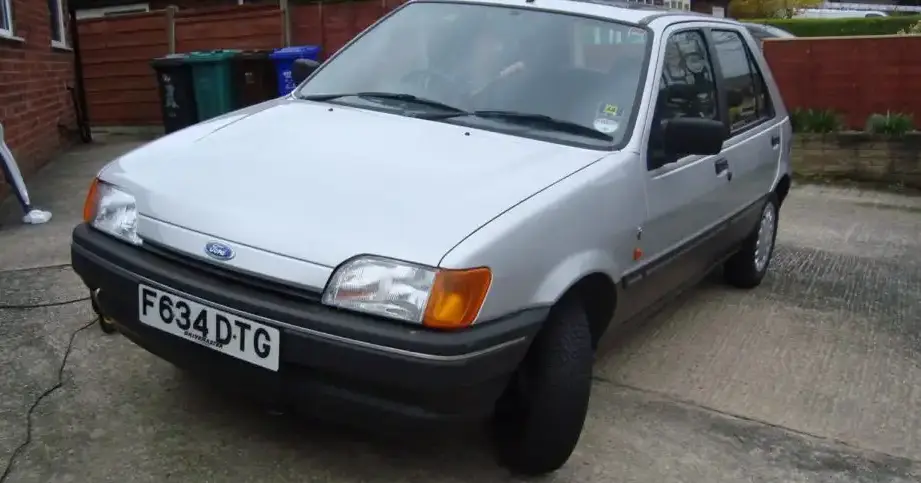
The Ford Fiesta Mk3 1.8 16V, produced between 1992 and 1995, represented a significant step up in performance and refinement for the popular supermini. Positioned as a near-top-of-the-line trim, it offered a more sporting alternative to the base models and the fuel-efficient diesel options. This variant was primarily sold in Europe, where the Fiesta Mk3 enjoyed considerable success as a versatile and affordable family car. It utilized the Ford 1HX0/A3 platform, shared with other Ford models of the era, and aimed to appeal to drivers seeking a blend of practicality and driving enjoyment. While not a high-volume seller compared to the lower-spec models, the 1.8 16V gained a reputation as a capable and surprisingly quick small car.
Technical Specifications
| Brand | Ford |
| Model | Fiesta |
| Generation | Fiesta III (Mk3) |
| Type (Engine) | 1.8 16V (105 Hp) |
| Start of production | 1992 |
| End of production | 1995 |
| Powertrain Architecture | Internal Combustion engine |
| Body type | Hatchback |
| Seats | 5 |
| Doors | 3/5 |
| Fuel consumption (urban) | 9.7 l/100 km (24.2 US mpg) |
| Fuel consumption (extra urban) | 6.4 l/100 km (36.8 US mpg) |
| Fuel consumption (combined) | 7.9 l/100 km (29.8 US mpg) |
| Fuel Type | Petrol (Gasoline) |
| Acceleration 0 – 100 km/h | 9.5 sec |
| Acceleration 0 – 62 mph | 9.5 sec |
| Acceleration 0 – 60 mph | 9 sec |
| Maximum speed | 182 km/h (113.09 mph) |
| Weight-to-power ratio | 9 kg/Hp |
| Weight-to-torque ratio | 6.2 kg/Nm |
| Power | 105 Hp @ 5500 rpm |
| Torque | 153 Nm @ 4000 rpm (112.85 lb.-ft. @ 4000 rpm) |
| Engine layout | Front, Transverse |
| Engine Model/Code | RDB |
| Engine displacement | 1796 cm3 (109.6 cu. in.) |
| Number of cylinders | 4 |
| Engine configuration | Inline |
| Cylinder Bore | 80.6 mm (3.17 in.) |
| Piston Stroke | 88 mm (3.46 in.) |
| Compression ratio | 10:1 |
| Number of valves per cylinder | 4 |
| Fuel injection system | Multi-port manifold injection |
| Engine aspiration | Naturally aspirated engine |
| Valvetrain | OHC |
| Engine oil capacity | 4.25 l (4.49 US qt | 3.74 UK qt) |
| Coolant capacity | 7 l (7.4 US qt | 6.16 UK qt) |
| Kerb Weight | 950 kg (2094.39 lbs.) |
| Max. weight | 1375 kg (3031.36 lbs.) |
| Max load | 425 kg (936.96 lbs.) |
| Trunk (boot) space – minimum | 250 l (8.83 cu. ft.) |
| Trunk (boot) space – maximum | 625 l (22.07 cu. ft.) |
| Fuel tank capacity | 42 l (11.1 US gal | 9.24 UK gal) |
| Length | 3743 mm (147.36 in.) |
| Width | 1606 mm (63.23 in.) |
| Height | 1379 mm (54.29 in.) |
| Wheelbase | 2446 mm (96.3 in.) |
| Front track | 1392 mm (54.8 in.) |
| Rear track | 1384 mm (54.49 in.) |
| Drivetrain Architecture | Front wheel drive |
| Number of gears | 5 |
| Gearbox type | Manual transmission |
| Front suspension | Coil spring |
| Rear suspension | Coil spring |
| Front brakes | Disc |
| Rear brakes | Drum |
| Assisting systems | ABS (Anti-lock braking system) |
| Steering type | Steering rack and pinion |
| Tires size | 155/70 R13 |
Introduction
The Ford Fiesta Mk3 1.8 16V, launched in 1992, was a performance-oriented variant of the popular Fiesta Mk3. It slotted into the lineup above the 1.4 and 1.6 liter models, offering a noticeable increase in power and a more engaging driving experience. Available in both 3-door and 5-door body styles, it aimed to attract buyers who wanted a small, practical car with a bit more zest. The 1.8 16V was a response to growing demand for more powerful small cars, particularly in markets where driving conditions favored nimble and responsive vehicles. It represented a significant upgrade over the earlier Fiesta models, benefiting from advancements in engine technology and chassis design.
Powertrain & Engine Architecture
The heart of the Fiesta 1.8 16V is the Ford RDB engine, a 1.8-liter inline-four cylinder gasoline engine. This engine featured a dual overhead camshaft (DOHC) design with four valves per cylinder, hence the “16V” designation. This configuration allowed for improved breathing and higher engine speeds, contributing to its increased power output. The RDB engine utilized multi-port fuel injection, providing precise fuel delivery for optimal combustion. The engine’s block was cast iron, while the cylinder head was aluminum, a common construction for Ford engines of this era. The 1.8 16V was typically paired with a five-speed manual transmission, although a three-speed automatic was also available, albeit less common. The automatic transmission, while offering convenience, did impact acceleration and fuel economy compared to the manual version. The engine’s relatively simple design made it reasonably reliable, although regular maintenance was crucial to prevent issues like oil leaks and timing belt failure.
Driving Characteristics
The Fiesta 1.8 16V offered a noticeably more spirited driving experience than its lower-powered siblings. With 105 horsepower, it could accelerate from 0 to 60 mph in around 9 seconds and reach a top speed of 113 mph. While these figures might seem modest by modern standards, they were competitive for a supermini in the early 1990s. The engine delivered its power smoothly, with a usable torque curve that made it enjoyable to drive in everyday conditions. The five-speed manual transmission allowed drivers to keep the engine in its sweet spot, maximizing performance. The automatic version, while comfortable, felt somewhat sluggish in comparison, with noticeable gear changes and a less responsive feel. The Fiesta’s relatively light weight contributed to its nimble handling, making it fun to drive on winding roads. However, the suspension was tuned for comfort rather than outright sportiness, resulting in a slightly softer ride.
Equipment & Trim Levels
The 1.8 16V trim level generally included features such as power steering, central locking, and electric front windows. Interior upholstery typically consisted of cloth seats, with options for upgraded materials and trim levels. A basic stereo system was standard, with options for upgraded speakers and a cassette player. Air conditioning was often available as an optional extra. The dashboard layout was typical of Ford designs of the period, with a functional and straightforward design. Higher-spec versions of the 1.8 16V might have included alloy wheels, a sunroof, and upgraded interior trim. The overall interior ambiance was practical and durable, reflecting the Fiesta’s focus on affordability and everyday usability.
Chassis & Braking
The Fiesta Mk3 utilized a MacPherson strut front suspension and a twist-beam rear suspension. This setup provided a good balance between ride comfort and handling. The front brakes were disc brakes, offering good stopping power, while the rear brakes were drum brakes, a cost-saving measure common in this class of vehicle. ABS (Anti-lock Braking System) was available as an option, enhancing safety by preventing wheel lockup during hard braking. The steering was rack and pinion, providing precise and responsive steering feel. The Fiesta’s relatively small size and light weight contributed to its agility and maneuverability. Stabilizer bars were fitted to both the front and rear axles to reduce body roll during cornering.
Market Reception & Comparison
The Fiesta 1.8 16V was generally well-received by automotive critics, who praised its lively performance and engaging driving dynamics. It was often compared to rivals such as the Peugeot 205 and the Renault Clio. While the 1.8 16V offered more power than the base models, it also came with a higher price tag. The 1.6-liter version offered a good compromise between performance and economy, while the diesel models prioritized fuel efficiency. The automatic transmission version of the 1.8 16V was criticized for its sluggishness, with most reviewers recommending the manual gearbox. Fuel economy was respectable for a car of this type, averaging around 30 mpg in combined driving. Reliability was generally good, although regular maintenance was essential to prevent issues.
Legacy
The Ford Fiesta Mk3 1.8 16V remains a popular choice among classic car enthusiasts. The RDB engine is known for its durability and relatively simple mechanics, making it a relatively easy engine to maintain. Parts availability is generally good, although some components may be becoming increasingly difficult to find. Well-maintained examples of the 1.8 16V can still provide a fun and rewarding driving experience. In the used car market, these models tend to command a premium over the lower-spec versions, reflecting their increased performance and desirability. The Fiesta Mk3 1.8 16V represents a high point in the Fiesta lineage, offering a compelling blend of practicality, performance, and affordability.