Technical Specifications
| Brand | BMW |
| Model | 5 Series |
| Generation | 5 Series (E60 LCI, facelift 2007) |
| Type (Engine) | 525d (197 Hp) Steptronic |
| Start of production | 2007 |
| End of production | 2010 |
| Powertrain Architecture | Internal Combustion engine |
| Body type | Sedan |
| Seats | 5 |
| Doors | 4 |
| Fuel consumption (urban) | 10.8 l/100 km (21.8 US mpg) |
| Fuel consumption (extra urban) | 6.2 l/100 km (37.9 US mpg) |
| Fuel consumption (combined) | 7.9 l/100 km (29.8 US mpg) |
| Fuel Type | Diesel |
| Acceleration 0 – 100 km/h | 7.7 sec |
| Acceleration 0 – 62 mph | 7.7 sec |
| Acceleration 0 – 60 mph | 7.3 sec |
| Maximum speed | 232 km/h (144.16 mph) |
| Emission standard | Euro 4 |
| Weight-to-power ratio | 8.1 kg/Hp |
| Weight-to-torque ratio | 4 kg/Nm |
| Power | 197 Hp @ 4000 rpm |
| Torque | 400 Nm @ 1300-3250 rpm (295.02 lb.-ft.) |
| Engine layout | Front, Longitudinal |
| Engine Model/Code | M57D30 |
| Engine displacement | 2993 cm3 (182.64 cu. in.) |
| Number of cylinders | 6 |
| Engine configuration | Inline |
| Cylinder Bore | 84 mm (3.31 in.) |
| Piston Stroke | 90 mm (3.54 in.) |
| Compression ratio | 17:1 |
| Number of valves per cylinder | 4 |
| Fuel injection system | Diesel Commonrail |
| Engine aspiration | Turbocharger, Intercooler |
| Engine oil capacity | 7.5 l (7.93 US qt | 6.6 UK qt) |
| Coolant capacity | 9.8 l (10.36 US qt | 8.62 UK qt) |
| Kerb Weight | 1595 kg (3516.37 lbs.) |
| Max. weight | 2155 kg (4750.96 lbs.) |
| Max load | 560 kg (1234.59 lbs.) |
| Trunk (boot) space – minimum | 520 l (18.36 cu. ft.) |
| Fuel tank capacity | 70 l (18.49 US gal | 15.4 UK gal) |
| Length | 4841 mm (190.59 in.) |
| Width | 1846 mm (72.68 in.) |
| Height | 1468 mm (57.8 in.) |
| Wheelbase | 2888 mm (113.7 in.) |
| Front track | 1558 mm (61.34 in.) |
| Rear track | 1581 mm (62.24 in.) |
| Ride height (ground clearance) | 142 mm (5.59 in.) |
| Drag coefficient (Cd) | 0.26 |
| Drivetrain Architecture | Rear wheel drive |
| Number of gears | 6 |
| Gearbox type | Automatic transmission |
| Front suspension | Independent, type McPherson with coil spring and anti-roll bar |
| Rear suspension | Independent coil spring |
| Front brakes | Ventilated discs |
| Rear brakes | Disc |
| Assisting systems | ABS (Anti-lock braking system) |
| Steering type | Steering rack and pinion |
| Power steering | Hydraulic Steering |
| Tires size | 225/55 R16 W |
| Wheel rims size | 7J x 16 LM |
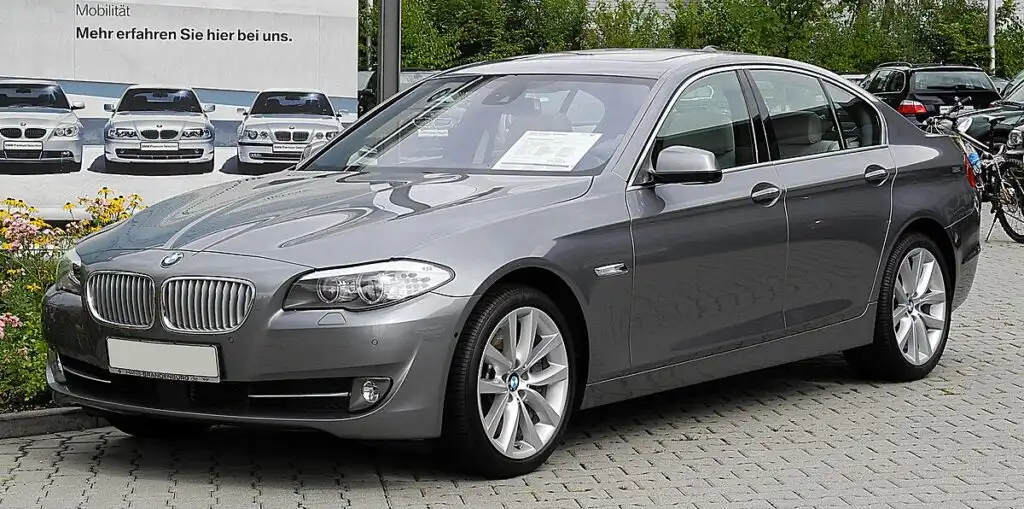
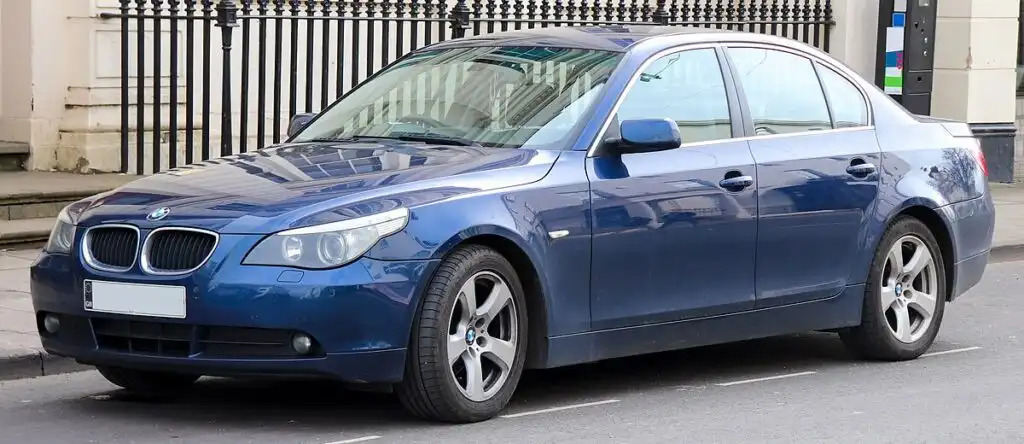
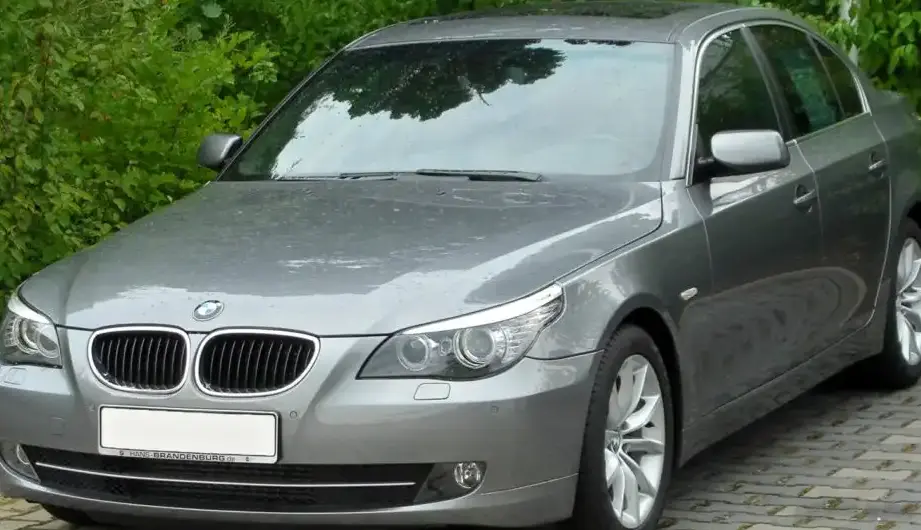
The BMW 5 Series (E60 LCI) 525d Steptronic, produced from 2007 to 2010, represented a significant refinement of BMW’s mid-size executive car. This variant, part of the E60 LCI (Life Cycle Impulse – BMW’s term for facelift) generation, offered a diesel-powered option with an automatic transmission, aimed at providing a balance of performance, efficiency, and comfort. The 525d Steptronic occupied a middle ground within the 5 Series lineup, positioned above the base models and below the more powerful 530d and 535d variants. It was primarily marketed towards buyers seeking a refined driving experience with lower running costs than gasoline-powered alternatives.
Powertrain & Engine Architecture
The 525d Steptronic is powered by the M57D30, a 3.0-liter inline-six diesel engine. This engine is a well-regarded design within BMW’s diesel engine family, known for its durability and relatively simple maintenance requirements. The M57D30 employs a common rail direct injection system, injecting fuel at very high pressure to optimize combustion efficiency. A variable geometry turbocharger (VGT) and intercooler work together to boost power and torque. The engine generates 197 horsepower at 4000 rpm and 400 Nm (295 lb-ft) of torque across a broad range, from 1300 to 3250 rpm. The six-speed Steptronic automatic transmission is a conventional torque converter automatic, designed for smooth gear changes and a comfortable driving experience. It incorporates adaptive shift programs that respond to the driver’s input and prevailing road conditions.
Driving Characteristics
The 525d Steptronic provides a relaxed and refined driving experience. While it doesn’t offer the same level of outright performance as the higher-powered 5 Series models, it delivers sufficient power for everyday driving and comfortable highway cruising. The automatic transmission contributes to a smooth and effortless driving style, with gear ratios carefully selected to keep the engine operating within its peak torque band. Acceleration from 0 to 60 mph takes approximately 7.3 seconds, which is competitive for a diesel-powered executive car. Compared to the manual transmission version of the 525d, the Steptronic exhibits slightly slower acceleration due to the inherent efficiency losses within the torque converter. However, the convenience and ease of use offered by the automatic transmission often outweigh this minor performance difference for many drivers. In comparison to the 530d or 535d, the 525d prioritizes fuel economy, though it sacrifices some of the higher trims’ performance capabilities.
Equipment & Trim Levels
The 525d Steptronic typically came standard with a comprehensive array of features. These included automatic climate control, power-adjustable front seats, a multi-function steering wheel, and a BMW Professional audio system. Interior upholstery was generally cloth or leatherette, with full leather available as an optional upgrade. Popular optional extras included a navigation system, a premium sound system, a sunroof, and parking sensors. The LCI facelift also introduced updated interior trim options and improved material quality, enhancing the overall sense of luxury. Trim levels varied depending on the specific market, but the 525d Steptronic was generally positioned as a well-equipped mid-range offering.
Chassis & Braking
The E60 5 Series boasts a sophisticated chassis design. The front suspension utilizes a McPherson strut setup with coil springs and an anti-roll bar, while the rear suspension employs an independent multi-link configuration. This combination delivers a good balance between ride comfort and handling precision. The 525d Steptronic typically featured ventilated front disc brakes and solid rear disc brakes. Anti-lock Braking System (ABS) was standard, along with Electronic Brake-force Distribution (EBD). The suspension tuning was generally biased towards comfort, prioritizing the absorption of road imperfections and providing a stable ride.
Market Reception & Comparison
The 525d Steptronic received generally positive reviews from automotive critics. It was praised for its fuel efficiency, comfortable ride quality, and refined driving experience. Some critics did note that it lacked the dynamic performance of the higher-powered 5 Series models. When compared to other diesel-powered executive cars of the era, such as the Audi A6 TDI and Mercedes-Benz E320 CDI, the 525d offered a competitive blend of performance, efficiency, and handling characteristics. Its fuel economy was comparable to its rivals, and its reliability was considered to be good, although potential issues with the diesel particulate filter (DPF) could arise with predominantly short-distance driving.
Legacy
The M57D30 engine has proven to be a durable and reliable powerplant, and well-maintained examples of the 525d Steptronic remain readily available in the used car market today. While older diesel engines can be susceptible to certain issues, such as turbocharger wear and DPF clogging, the M57D30 is generally regarded as a robust and dependable unit. The 525d Steptronic continues to be a popular choice for buyers seeking a comfortable, efficient, and relatively affordable executive car. Its combination of luxury, performance, and economy has ensured its enduring appeal in the used car market.