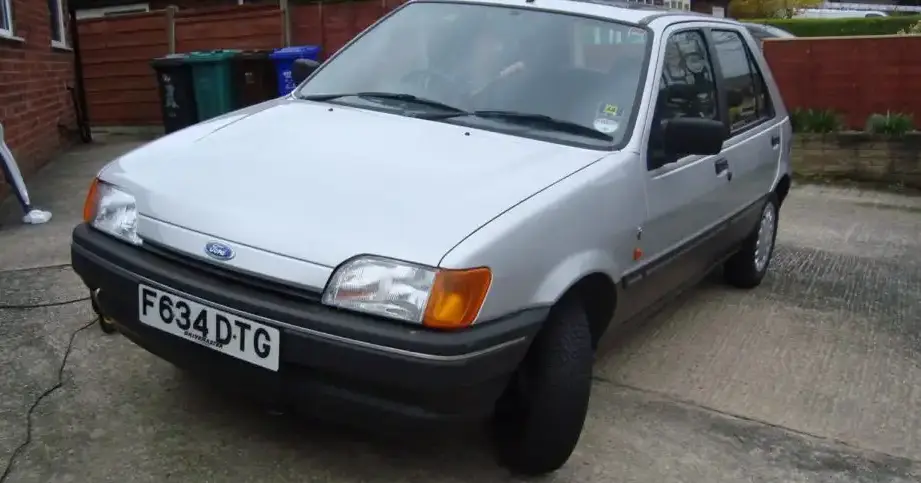
The Ford Fiesta Mk3 1.8 D, produced between 1989 and 1995, represented a pragmatic offering within the broader Fiesta Mk3 range. Positioned as an economy-focused variant, it catered to buyers prioritizing fuel efficiency and low running costs over outright performance. This diesel-powered Fiesta occupied the lower end of the lineup, serving as a more affordable alternative to the gasoline-powered models and a precursor to the later, more refined diesel options. It was primarily sold in Europe, where diesel engines enjoyed significant popularity due to favorable taxation and fuel prices. The Mk3 Fiesta itself was a significant evolution of the original Fiesta, offering increased space, improved refinement, and a more modern aesthetic.
Technical Specifications
| Brand | Ford |
| Model | Fiesta |
| Generation | Fiesta III (Mk3) |
| Type (Engine) | 1.8 D (60 Hp) |
| Start of production | 1989 |
| End of production | 1995 |
| Powertrain Architecture | Internal Combustion engine |
| Body type | Hatchback |
| Seats | 5 |
| Doors | 3/5 |
| Fuel consumption (combined) | 5.5 l/100 km (42.8 US mpg, 51.4 UK mpg, 18.2 km/l) |
| Fuel Type | Diesel |
| Acceleration 0 – 100 km/h | 16.4 sec |
| Acceleration 0 – 62 mph | 16.4 sec |
| Acceleration 0 – 60 mph | 15.6 sec |
| Maximum speed | 152 km/h (94.45 mph) |
| Weight-to-power ratio | 15.7 kg/Hp |
| Weight-to-torque ratio | 8.5 kg/Nm |
| Power | 60 Hp @ 4800 rpm |
| Power per litre | 34.2 Hp/l |
| Torque | 110 Nm @ 2500 rpm (81.13 lb.-ft. @ 2500 rpm) |
| Engine layout | Front, Transverse |
| Engine Model/Code | RTC, RTD, RTG |
| Engine displacement | 1753 cm3 (106.97 cu. in.) |
| Number of cylinders | 4 |
| Engine configuration | Inline |
| Cylinder Bore | 82.5 mm (3.25 in.) |
| Piston Stroke | 82 mm (3.23 in.) |
| Compression ratio | 21.5:1 |
| Number of valves per cylinder | 2 |
| Fuel injection system | Precombustion chamber injection |
| Engine aspiration | Naturally aspirated engine |
| Valvetrain | OHC |
| Engine oil capacity | 5 l (5.28 US qt | 4.4 UK qt) |
| Coolant | 9.3 l (9.83 US qt | 8.18 UK qt) |
| Kerb Weight | 940 kg (2072.35 lbs.) |
| Max. weight | 1400 kg (3086.47 lbs.) |
| Max load | 460 kg (1014.13 lbs.) |
| Trunk (boot) space – minimum | 250 l (8.83 cu. ft.) |
| Trunk (boot) space – maximum | 625 l (22.07 cu. ft.) |
| Fuel tank capacity | 42 l (11.1 US gal | 9.24 UK gal) |
| Length | 3743 mm (147.36 in.) |
| Width | 1606 mm (63.23 in.) |
| Height | 1379 mm (54.29 in.) |
| Wheelbase | 2446 mm (96.3 in.) |
| Front track | 1392 mm (54.8 in.) |
| Rear (Back) track | 1384 mm (54.49 in.) |
| Drivetrain Architecture | The Internal combustion engine (ICE) drives the front wheels of the vehicle. |
| Drive wheel | Front wheel drive |
| Number of gears and type of gearbox | 5 gears, manual transmission |
| Front suspension | Wishbone |
| Rear suspension | Coil spring |
| Front brakes | Disc |
| Rear brakes | Drum |
| Assisting systems | ABS (Anti-lock braking system) |
| Steering type | Steering rack and pinion |
| Tires size | 165/65 R13 |
Powertrain & Engine Architecture
The heart of the Fiesta 1.8 D was the Ford RTC, RTD, or RTG engine – a 1.8-liter inline-four diesel. This engine utilized precombustion chamber injection, a common diesel technology of the era. Unlike direct injection systems, precombustion chambers housed a glow plug and a small auxiliary combustion chamber connected to the main cylinder. Fuel was injected into this chamber, ignited by the glow plug (especially during cold starts), and then transferred to the main cylinder for complete combustion. This system offered smoother combustion and reduced engine noise compared to earlier diesel designs. The engine featured an overhead camshaft (OHC) valvetrain operating two valves per cylinder. The 5-speed manual transmission was the only gearbox option available with this engine, prioritizing fuel economy over sporty driving. The engine’s relatively low compression ratio of 21.5:1, while high for a gasoline engine, was typical for indirect injection diesels of the time.
Driving Characteristics
The 1.8 D Fiesta was not known for its blistering performance. With only 60 horsepower, acceleration was leisurely, taking approximately 16.4 seconds to reach 62 mph. The focus was firmly on fuel economy and durability. The engine produced a respectable 110 Nm (81 lb-ft) of torque at 2500 rpm, providing adequate pulling power for everyday driving, but lacked the responsiveness of the gasoline-powered variants. The gear ratios in the 5-speed manual transmission were optimized for economy, with taller gearing in higher gears to reduce engine speed at cruising speeds. Compared to the 1.6 gasoline models, the 1.8 D felt significantly slower, but offered a substantial advantage in fuel consumption. The driving experience was characterized by a robust, if somewhat agricultural, feel, typical of diesel engines of that period.
Equipment & Trim Levels
The 1.8 D Fiesta typically came with a basic level of equipment. Standard features generally included cloth upholstery, a basic instrument cluster, and manual windows and door locks. Power steering was often an optional extra, as was a radio. Trim levels were relatively limited for this variant, with the emphasis on affordability. The interior was functional and durable, designed to withstand the rigors of daily use. Optional extras could include upgraded seat fabrics, a sunroof, and central locking, but these were less common on the base 1.8 D model.
Chassis & Braking
The Fiesta Mk3 utilized a front-wheel-drive layout with a relatively simple suspension setup. The front suspension featured independent wishbones, while the rear employed a coil spring setup. Braking was typically accomplished with front disc brakes and rear drum brakes. ABS (Anti-lock Braking System) was available as an option, enhancing safety, particularly in wet or slippery conditions. The chassis was designed to provide a comfortable ride, prioritizing practicality over sporty handling. Stabilizer bars were often omitted on the base models to keep costs down, resulting in slightly more body roll during cornering.
Market Reception & Comparison
The Fiesta 1.8 D was well-received in markets where diesel cars were popular, particularly in Europe. Critics praised its fuel economy and low running costs, making it an attractive option for budget-conscious buyers and those covering high mileages. However, it was often criticized for its lack of performance compared to the gasoline-powered models. Compared to the 1.6 gasoline variants, the 1.8 D offered significantly better fuel economy (around 43 mpg combined versus 35-40 mpg for the gasoline models) but considerably slower acceleration. The 1.8 D also proved to be more reliable than some of the early fuel-injected gasoline engines, benefiting from the inherent simplicity of its diesel design.
Legacy
The Ford Fiesta Mk3 1.8 D has proven to be a remarkably durable vehicle. Many examples are still on the road today, testament to the robustness of the engine and chassis. While not a collector’s item, it remains a popular choice for those seeking an affordable and reliable classic car. The engine, while simple, is known for its longevity, provided it receives regular maintenance. The 1.8 D Fiesta represents a practical and economical choice from a bygone era, offering a glimpse into a time when fuel efficiency and durability were paramount considerations for car buyers.