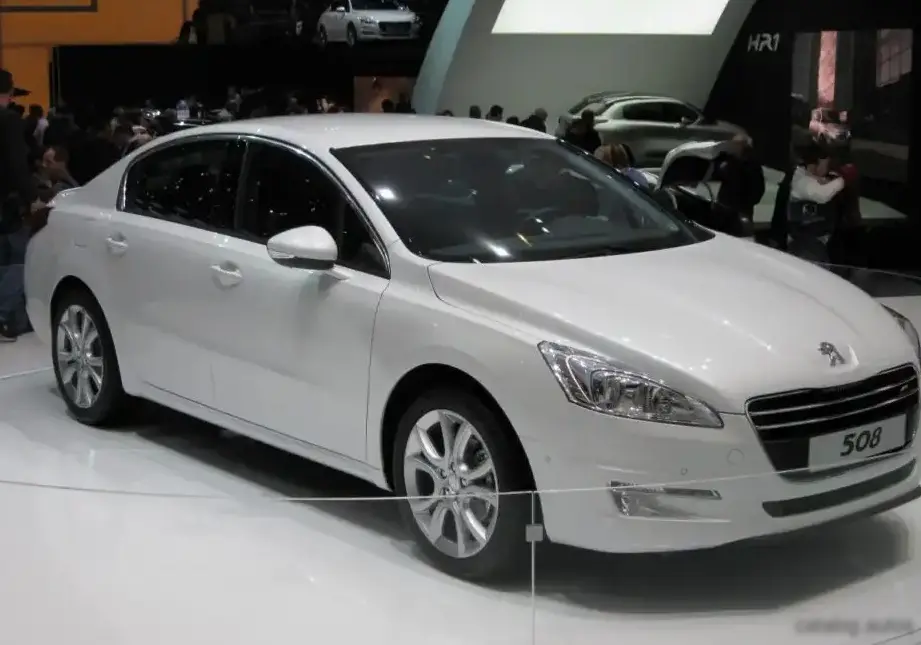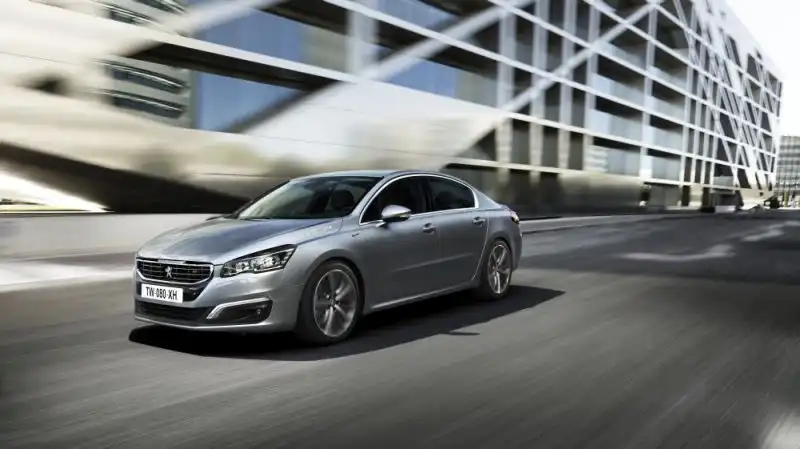
The Peugeot 508 I (Phase II), specifically the 2.0 BlueHDi variant producing 150 horsepower, was a key model in Peugeot’s lineup from 2014 to 2018. This iteration of the 508, built on the 508 I platform, represented a mid-cycle refresh of the original model introduced in 2010. Positioned as a mainstream offering within the 508 range, the 2.0 BlueHDi 150hp aimed to balance fuel efficiency, respectable performance, and affordability for the European market. It served as a popular alternative to gasoline-powered versions and lower-output diesel trims, appealing to drivers seeking a comfortable and economical mid-size sedan.
Technical Specifications
| Brand | Peugeot |
| Model | 508 |
| Generation | 508 I (Phase II, 2014) |
| Type (Engine) | 2.0 BlueHDi (150 Hp) |
| Start of production | 2014 |
| End of production | 2018 |
| Powertrain Architecture | Internal Combustion engine |
| Body type | Sedan |
| Seats | 5 |
| Doors | 4 |
| Fuel consumption (urban) | 4.9 l/100 km (48 US mpg, 57.6 UK mpg, 20.4 km/l) |
| Fuel consumption (extra urban) | 3.7 l/100 km (63.6 US mpg, 76.3 UK mpg, 27 km/l) |
| Fuel consumption (combined) | 4.1 l/100 km (57.4 US mpg, 68.9 UK mpg, 24.4 km/l) |
| CO2 emissions | 105 g/km |
| Fuel Type | Diesel |
| Acceleration 0 – 100 km/h | 8.9 sec |
| Acceleration 0 – 62 mph | 8.9 sec |
| Acceleration 0 – 60 mph | 8.5 sec |
| Maximum speed | 210 km/h (130.49 mph) |
| Emission standard | Euro 6 |
| Weight-to-power ratio | 10 kg/Hp, 100 Hp/tonne |
| Weight-to-torque ratio | 4.1 kg/Nm, 246.7 Nm/tonne |
| Power | 150 Hp @ 4000 rpm |
| Power per litre | 75.1 Hp/l |
| Torque | 370 Nm @ 2000 rpm (272.9 lb.-ft. @ 2000 rpm) |
| Engine layout | Front, Transverse |
| Engine Model/Code | AHX DW10FD |
| Engine displacement | 1997 cm3 (121.86 cu. in.) |
| Number of cylinders | 4 |
| Engine configuration | Inline |
| Number of valves per cylinder | 4 |
| Fuel injection system | Diesel Commonrail |
| Engine aspiration | Turbocharger, Intercooler |
| Engine oil capacity | 6.1 l (6.45 US qt | 5.37 UK qt) |
| Coolant | 10 l (10.57 US qt | 8.8 UK qt) |
| Kerb Weight | 1500 kg (3306.93 lbs.) |
| Max. weight | 2125 kg (4684.82 lbs.) |
| Max load | 625 kg (1377.89 lbs.) |
| Trunk (boot) space – minimum | 473 l (16.7 cu. ft.) |
| Fuel tank capacity | 72 l (19.02 US gal | 15.84 UK gal) |
| Length | 4830 mm (190.16 in.) |
| Width | 1828 mm (71.97 in.) |
| Height | 1456 mm (57.32 in.) |
| Wheelbase | 2817 mm (110.91 in.) |
| Front track | 1579 mm (62.17 in.) |
| Rear (Back) track | 1552 mm (61.1 in.) |
| Ride height (ground clearance) | 146 mm (5.75 in.) |
| Minimum turning circle (turning diameter) | 12.2 m (40.03 ft.) |
| Drivetrain Architecture | The Internal combustion engine (ICE) drives the front wheels of the vehicle. |
| Drive wheel | Front wheel drive |
| Number of gears and type of gearbox | 6 gears, manual transmission |
| Front suspension | Independent, type McPherson with coil spring and anti-roll bar |
| Rear suspension | Independent multi-link suspension |
| Front brakes | Ventilated discs |
| Rear brakes | Disc |
| Assisting systems | ABS (Anti-lock braking system) |
| Steering type | Steering rack and pinion |
| Tires size | 215/55 R17 94W |
| Wheel rims size | 17 |
Powertrain & Engine Architecture
The heart of the 508 2.0 BlueHDi 150 was the DW10FD engine, a four-cylinder diesel powerplant. This engine, identified by the code AHX, was a staple in the PSA Group’s (Peugeot-Citroën) offerings. It featured a common-rail direct injection system, delivering fuel at extremely high pressure for optimized combustion. A turbocharger with an intercooler was employed to boost power and torque, providing a good balance between performance and efficiency. The engine utilized four valves per cylinder and a single overhead camshaft. The 2.0 BlueHDi engine was designed to meet stringent Euro 6 emissions standards, incorporating a diesel particulate filter (DPF) to reduce particulate matter emissions. The 6-speed manual transmission was the standard offering, chosen for its efficiency and driver engagement.
Driving Characteristics
The 508 2.0 BlueHDi 150 offered a comfortable and refined driving experience. While not a sports sedan, the 150 horsepower and 370 Nm (272.9 lb-ft) of torque provided adequate performance for everyday driving and highway cruising. Acceleration from 0 to 100 km/h (0-62 mph) took around 8.9 seconds. The manual transmission allowed for precise gear changes, and the engine delivered a broad torque curve, making it easy to maintain speed in various driving conditions. Compared to the more powerful 180 hp BlueHDi variant, the 150 hp version felt less urgent in acceleration, but it offered superior fuel economy. The gear ratios were tuned for efficiency, prioritizing fuel savings over outright performance.
Equipment & Trim Levels
The 508 2.0 BlueHDi 150 typically came with a respectable level of standard equipment. This included air conditioning, power windows, central locking, a basic audio system, and alloy wheels. Higher trim levels added features such as a touchscreen infotainment system, navigation, automatic climate control, leather upholstery, and parking sensors. Safety features like ABS, ESP (Electronic Stability Program), and multiple airbags were standard across the range. Optional extras included a panoramic sunroof, xenon headlights, and a premium sound system.
Chassis & Braking
The 508 featured a McPherson strut front suspension and an independent multi-link rear suspension, providing a comfortable ride and good handling characteristics. The front brakes were ventilated discs, while the rear brakes were solid discs. ABS (Anti-lock Braking System) was standard, enhancing braking performance and stability. The steering was a rack and pinion system, offering precise and responsive control. The suspension was tuned to prioritize comfort, but it also provided adequate body control in corners.
Market Reception & Comparison
The Peugeot 508 2.0 BlueHDi 150 was generally well-received by automotive critics. It was praised for its fuel efficiency, comfortable ride, and spacious interior. However, some critics noted that the interior design, while modern, lacked the premium feel of some competitors. Compared to other trims in the 508 lineup, the 150 hp version offered the best balance of price and fuel economy. It was a popular choice for drivers who prioritized practicality and efficiency over outright performance. Against competitors like the Ford Mondeo and Volkswagen Passat, the 508 offered a distinctive styling and a comfortable driving experience.
Legacy
The 2.0 BlueHDi engine proved to be a reliable and durable powerplant. While diesel engines, in general, have faced increased scrutiny in recent years, the DW10FD engine has a reputation for longevity when properly maintained. The 508 2.0 BlueHDi 150 remains a popular choice in the used car market, offering a compelling combination of fuel efficiency, comfort, and affordability. Regular maintenance, including timely DPF regeneration and oil changes, is crucial to ensure the long-term reliability of this powertrain. The 508, in this configuration, represents a solid and practical choice for those seeking a comfortable and economical mid-size sedan.