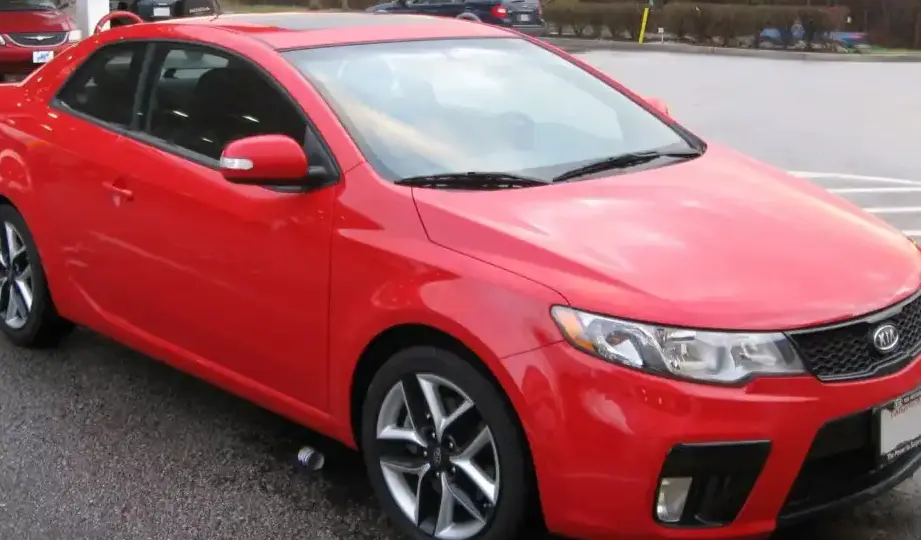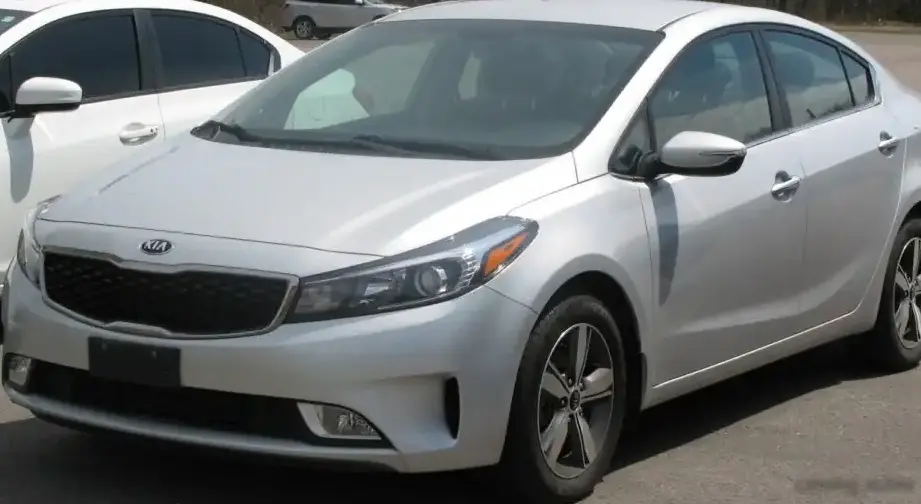
The Kia Forte II, specifically the facelifted version introduced in 2017, represented a significant step forward for the South Korean automaker in the competitive compact sedan segment. The 2.0 GDI (Gasoline Direct Injection) Automatic variant, produced from 2017 to 2018, occupied a key position in the lineup, offering a balance of performance, fuel efficiency, and features aimed at a broad range of buyers. This model was primarily targeted at the North American market, where Kia was actively building brand recognition and market share. It sat as a mid-range offering, positioned above the base 1.6L engine option and below any potential higher-performance trims.
Technical Specifications
| Brand | Kia |
| Model | Forte |
| Generation | Forte II (facelift 2017) |
| Type (Engine) | 2.0 GDI (164 Hp) Automatic |
| Start of production | 2017 |
| End of production | 2018 |
| Powertrain Architecture | Internal Combustion engine |
| Body type | Sedan |
| Seats | 5 |
| Doors | 4 |
| Fuel consumption (economy) – urban | 9.4 l/100 km (25 US mpg, 30.1 UK mpg, 10.6 km/l) |
| Fuel consumption (economy) – combined | 7 l/100 km (33.6 US mpg, 40.4 UK mpg, 14.3 km/l) |
| Fuel Type | Petrol (Gasoline) |
| Weight-to-power ratio | 8.4 kg/Hp, 119.4 Hp/tonne |
| Weight-to-torque ratio | 6.7 kg/Nm, 149.2 Nm/tonne |
| Power | 164 Hp @ 6200 rpm |
| Torque | 205 Nm @ 4000 rpm (151.2 lb.-ft. @ 4000 rpm) |
| Engine layout | Front, Transverse |
| Engine Model/Code | Nu / G4NC |
| Number of cylinders | 4 |
| Engine configuration | Inline |
| Compression ratio | 11.5:1 |
| Number of valves per cylinder | 4 |
| Fuel injection system | Direct injection |
| Engine aspiration | Naturally aspirated engine |
| Valvetrain | DOHC |
| Engine oil capacity | 4 l (4.23 US qt | 3.52 UK qt) |
| Coolant capacity | 5.9 l (6.23 US qt | 5.19 UK qt) |
| Kerb Weight | 1374 kg (3029.15 lbs.) |
| Max. weight | 1770 kg (3902.18 lbs.) |
| Max load | 396 kg (873.03 lbs.) |
| Trunk (boot) space – minimum | 421 l (14.87 cu. ft.) |
| Fuel tank capacity | 50 l (13.21 US gal | 11 UK gal) |
| Length | 4560 mm (179.53 in.) |
| Width | 1780 mm (70.08 in.) |
| Height | 1430 mm (56.3 in.) |
| Wheelbase | 2700 mm (106.3 in.) |
| Ride height (ground clearance) | 135 mm (5.31 in.) |
| Drivetrain Architecture | The Internal combustion engine (ICE) drives the front wheels of the vehicle. |
| Drive wheel | Front wheel drive |
| Number of gears and type of gearbox | 6 gears, automatic transmission |
| Front suspension | Independent, type McPherson with coil spring and anti-roll bar |
| Rear suspension | Semi-independent, coil spring |
| Front brakes | Ventilated discs |
| Rear brakes | Disc |
| Assisting systems | ABS (Anti-lock braking system) |
| Steering type | Steering rack and pinion |
| Power steering | Electric Steering |
Powertrain & Engine Architecture
The heart of the 2017-2018 Kia Forte 2.0 GDI Automatic is the Nu engine family, specifically the G4NC code. This 1998cc (2.0L) inline-four cylinder engine utilizes direct fuel injection (GDI) technology, a key feature for improving both power and fuel economy. The GDI system injects fuel directly into the combustion chamber, allowing for more precise fuel control and a higher compression ratio of 11.5:1. The engine employs a double overhead camshaft (DOHC) valvetrain with four valves per cylinder, optimizing airflow for increased performance. The engine’s output of 164 horsepower at 6200 rpm and 151.2 lb-ft of torque at 4000 rpm was a substantial improvement over the base engine options. Paired with this engine is a six-speed automatic transmission, designed to provide smooth and efficient gear changes. This transmission was a conventional torque-converter automatic, prioritizing comfort and ease of use over outright performance.
Driving Characteristics
The 2.0 GDI Automatic Forte offered a noticeable improvement in driving experience compared to the lower-powered variants. While not a sports sedan, the engine provided adequate acceleration for everyday driving situations, including highway merging and passing maneuvers. The automatic transmission, while smooth, wasn’t particularly quick to downshift, resulting in a slightly less responsive feel than a manual transmission equipped model. The gear ratios were tuned for fuel efficiency, with a relatively tall final drive. This meant that while highway cruising was comfortable, the engine could feel strained when climbing hills or carrying a full load of passengers. Compared to the manual transmission version, the automatic sacrificed some responsiveness for convenience. The automatic also differed significantly from any potential turbocharged or higher-output versions of the Forte, which would have offered considerably more aggressive acceleration.
Equipment & Trim Levels
The 2.0 GDI Automatic trim typically included standard features such as air conditioning, power windows and locks, a touchscreen infotainment system with Bluetooth connectivity, and a rearview camera. Higher sub-trims within the 2.0 GDI range often added features like alloy wheels, a sunroof, upgraded audio systems, and advanced safety technologies such as lane departure warning and automatic emergency braking. Interior upholstery was typically cloth, with optional leather available on higher-spec models. Dashboard configuration was consistent across the range, featuring a straightforward layout with easy-to-use controls. Optional extras included navigation systems, premium sound systems, and various cosmetic enhancements.
Chassis & Braking
The Kia Forte II utilized a front-wheel-drive platform with an independent McPherson strut suspension in the front and a semi-independent coil spring suspension in the rear. This setup provided a comfortable ride quality, although it wasn’t particularly sporty in handling. The front brakes were ventilated discs, offering good stopping power, while the rear brakes were solid discs. Anti-lock braking system (ABS) was standard. The suspension tuning was geared towards comfort and ride quality, with relatively soft springs and dampers. Stabilizer bars were included at both the front and rear to reduce body roll during cornering, but the overall handling characteristics were more focused on everyday usability than dynamic performance.
Market Reception & Comparison
The 2017-2018 Kia Forte 2.0 GDI Automatic was generally well-received by automotive critics. It was praised for its value proposition, offering a good level of features and performance for its price point. Fuel economy was considered competitive within its class, achieving around 33.6 US mpg in combined driving. Compared to other trims in the Forte lineup, the 2.0 GDI Automatic offered a noticeable performance advantage over the base 1.6L engine, but at a slightly higher price. Reliability was generally good, although some owners reported minor issues with the GDI system, such as carbon buildup on the intake valves. Compared to competitors like the Honda Civic and Toyota Corolla, the Forte offered a more aggressive styling and a longer warranty, but lacked the established reputation for long-term reliability of its Japanese rivals.
Legacy
The Kia Forte II 2.0 GDI Automatic powertrain has proven to be reasonably reliable in the used car market. While the GDI system requires regular maintenance to prevent carbon buildup, the engine itself is generally durable. The six-speed automatic transmission has also proven to be reliable, with few reported issues. Today, these vehicles represent an affordable and practical option for buyers seeking a compact sedan with a good balance of features and fuel economy. The 2.0 GDI engine, while not groundbreaking, provided a significant step forward for Kia in terms of performance and refinement, helping to establish the brand as a serious contender in the compact car segment.