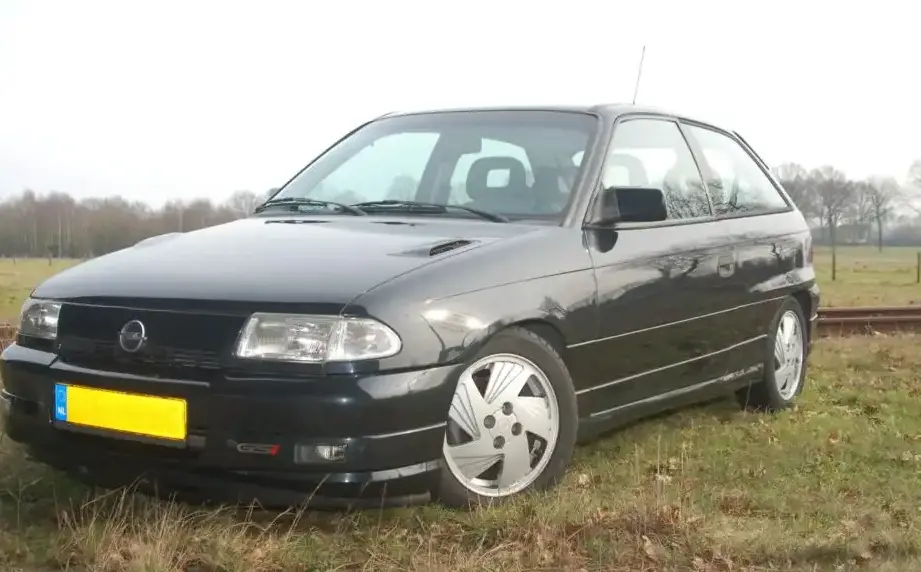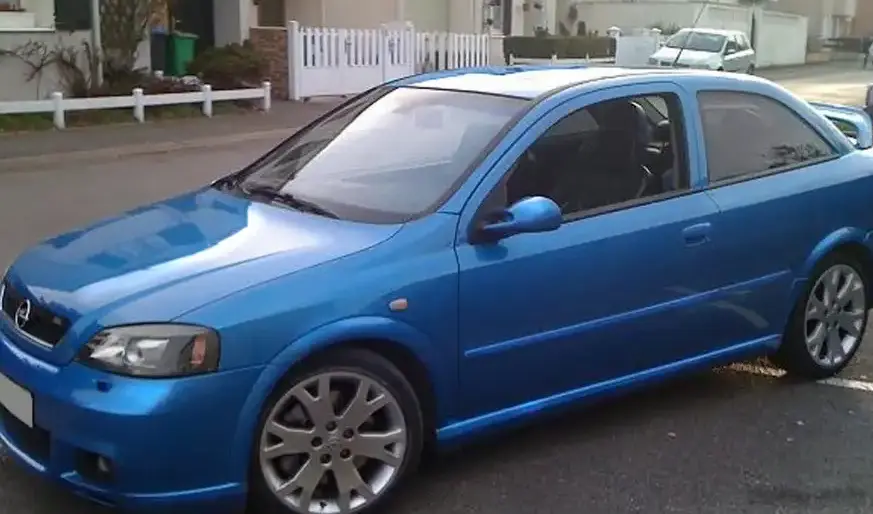
The Opel Astra G (facelift, produced 2002-2004) 1.6-liter (85 horsepower) variant represented an entry-level offering within the broader Astra G range. Introduced as part of the facelifted G generation (internally designated as the 1HX0/A3 platform), this model aimed to provide affordable and practical transportation for a wide demographic. It served as a stepping stone into the Astra lineup, positioned below the more powerful 1.8 and 2.0-liter versions, and the diesel options. This particular configuration was primarily sold in European markets, where compact hatchbacks were – and continue to be – a dominant vehicle segment.
Technical Specifications
| Brand | Opel |
| Model | Astra |
| Generation | Astra G (facelift 2002) |
| Type (Engine) | 1.6 (85 Hp) |
| Start of production | 2002 |
| End of production | February 2004 |
| Powertrain Architecture | Internal Combustion engine |
| Body type | Hatchback |
| Seats | 5 |
| Doors | 3-5 |
| Fuel consumption (urban) | 9.8 l/100 km (24 US mpg, 28.8 UK mpg, 10.2 km/l) |
| Fuel consumption (extra urban) | 5.8 l/100 km (40.6 US mpg, 48.7 UK mpg, 17.2 km/l) |
| Fuel consumption (combined) | 7.1 l/100 km (33.1 US mpg, 39.8 UK mpg, 14.1 km/l) |
| Fuel Type | Petrol (Gasoline) |
| Acceleration 0 – 100 km/h | 13 sec |
| Acceleration 0 – 62 mph | 13 sec |
| Acceleration 0 – 60 mph | 12.4 sec |
| Maximum speed | 180 km/h (111.85 mph) |
| Weight-to-power ratio | 12.8 kg/Hp, 78 Hp/tonne |
| Weight-to-torque ratio | 7.9 kg/Nm, 126.6 Nm/tonne |
| Power | 85 Hp @ 5400 rpm |
| Power per litre | 53.2 Hp/l |
| Torque | 138 Nm @ 2600 rpm (101.78 lb.-ft. @ 2600 rpm) |
| Engine layout | Front, Transverse |
| Engine Model/Code | Z16SE |
| Engine displacement | 1598 cm3 (97.52 cu. in.) |
| Number of cylinders | 4 |
| Engine configuration | Inline |
| Cylinder Bore | 79 mm (3.11 in.) |
| Piston Stroke | 81.5 mm (3.21 in.) |
| Compression ratio | 9.6:1 |
| Number of valves per cylinder | 2 |
| Fuel injection system | Multi-port manifold injection |
| Engine aspiration | Naturally aspirated engine |
| Valvetrain | OHC |
| Engine oil capacity | 3.5 l (3.7 US qt | 3.08 UK qt) |
| Coolant capacity | 5.8 l (6.13 US qt | 5.1 UK qt) |
| Kerb Weight | 1090 kg (2403.04 lbs.) |
| Max. weight | 1620 kg (3571.49 lbs.) |
| Max load | 530 kg (1168.45 lbs.) |
| Trunk (boot) space – minimum | 370 l (13.07 cu. ft.) |
| Trunk (boot) space – maximum | 1180 l (41.67 cu. ft.) |
| Fuel tank capacity | 52 l (13.74 US gal | 11.44 UK gal) |
| Length | 4110 mm (161.81 in.) |
| Width | 1709 mm (67.28 in.) |
| Width including mirrors | 1967 mm (77.44 in.) |
| Height | 1425 mm (56.1 in.) |
| Wheelbase | 2606 mm (102.6 in.) |
| Front track | 1484 mm (58.43 in.) |
| Rear track | 1452 mm (57.17 in.) |
| Front overhang | 791 mm (31.14 in.) |
| Rear overhang | 713 mm (28.07 in.) |
| Ride height (ground clearance) | 160 mm (6.3 in.) |
| Drag coefficient (Cd) | 0.32 |
| Drivetrain Architecture | Front wheel drive |
| Number of gears | 5 |
| Gearbox type | Manual transmission |
| Front suspension | Wishbone |
| Rear suspension | Suspension with traction connecting levers |
| Front brakes | Ventilated discs |
| Rear brakes | Disc |
| Assisting systems | ABS (Anti-lock braking system) |
| Steering type | Steering rack and pinion |
| Power steering | Hydraulic Steering |
| Tires size | 185/65 R15 |
| Wheel rims size | 15 |
Powertrain & Engine Architecture
The Astra G 1.6-liter engine, designated the Z16SE, is an inline four-cylinder, naturally aspirated gasoline engine. It features a single overhead camshaft (SOHC) valvetrain with two valves per cylinder. The engine utilizes a multi-port fuel injection system, delivering fuel directly into the intake ports. The Z16SE is known for its relatively simple design, contributing to its reliability and ease of maintenance. The 85 horsepower output is achieved at 5400 rpm, while peak torque of 138 Nm (101.78 lb-ft) arrives at 2600 rpm. This engine was paired with a five-speed manual transmission in most configurations, but a four-speed automatic transmission was also available, though less common. The automatic transmission was designed for smooth operation and fuel efficiency, but at the cost of some performance.
Driving Characteristics
The 1.6-liter engine with the manual transmission provided adequate, though not exhilarating, performance. Acceleration from 0-100 km/h (0-62 mph) took approximately 13 seconds. The automatic transmission version was slightly slower, due to the inherent power loss within the torque converter. The engine felt most comfortable in the mid-range, offering sufficient power for everyday driving situations. Compared to the more powerful 1.8 and 2.0-liter versions, the 1.6 felt noticeably less responsive, particularly when overtaking or climbing hills. However, the automatic transmission offered a more relaxed driving experience, especially in urban traffic. The gear ratios were optimized for fuel economy rather than outright performance.
Equipment & Trim Levels
The 1.6-liter Astra G typically came with a base level of equipment. Standard features generally included power steering, central locking, front airbags, and an adjustable steering column. Interior upholstery was typically cloth. Optional extras included air conditioning, alloy wheels, electric windows, and a radio/cassette player. Trim levels varied slightly depending on the market, but the 1.6-liter model generally represented the entry point to the Astra G range. Higher trim levels added features like upgraded interior trim, fog lights, and a sunroof.
Chassis & Braking
The Astra G 1.6-liter utilized a MacPherson strut front suspension and a torsion beam rear suspension. The braking system consisted of ventilated discs on the front wheels and solid discs on the rear. Anti-lock Braking System (ABS) was standard equipment. The suspension was tuned for comfort and ride quality, rather than sporty handling. The relatively lightweight nature of the 1.6-liter model helped to compensate for its lower power output, providing reasonable handling characteristics. Stabilizer bars were fitted to both the front and rear axles to reduce body roll.
Market Reception & Comparison
The Astra G 1.6-liter was generally well-received as an affordable and practical family car. Critics praised its fuel efficiency and comfortable ride. However, the engine’s lack of power was often cited as a drawback, particularly when compared to the more powerful alternatives. The 1.8-liter version offered a significant performance boost, while the diesel models provided superior fuel economy. The automatic transmission version was seen as a good option for drivers prioritizing convenience over performance. In terms of reliability, the Z16SE engine proved to be relatively robust, although regular maintenance was essential.
Legacy
The Opel Astra G 1.6-liter remains a common sight on European roads today. The Z16SE engine is known for its durability and relatively low maintenance costs. Parts availability is generally good, making it an affordable car to own and repair. While not a performance icon, the Astra G 1.6-liter served as a reliable and practical transportation option for many drivers, and continues to offer a budget-friendly entry point into the world of European motoring. The automatic transmission versions, while less sought after by enthusiasts, provide a comfortable and convenient driving experience for those prioritizing ease of use.