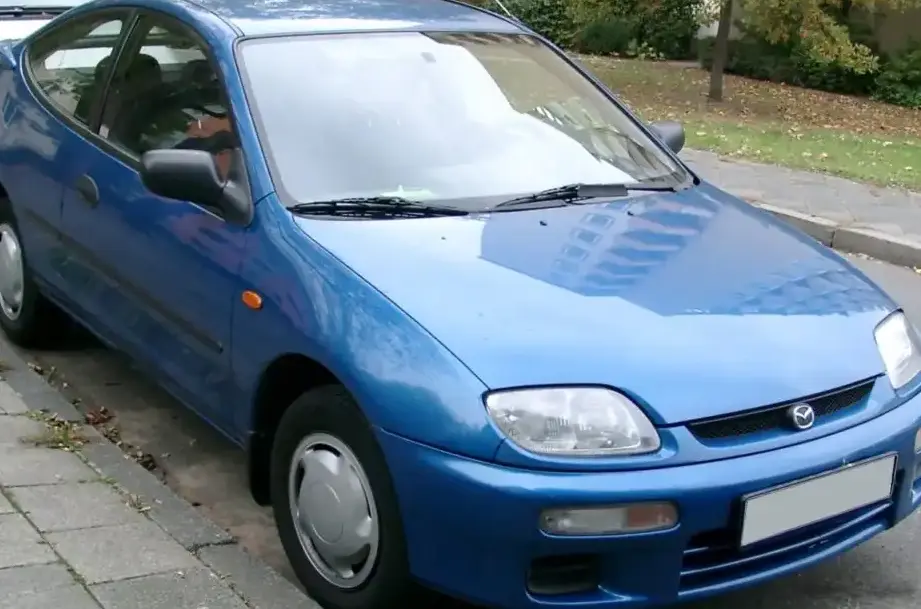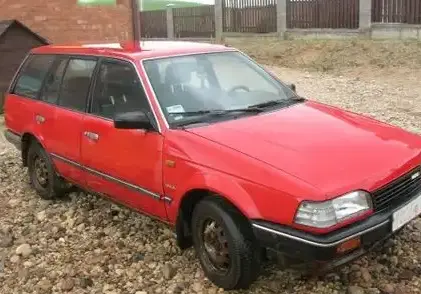
The Mazda 323 III Station Wagon (BF) 1.6, produced between 1986 and 1993, represented Mazda’s entry into the increasingly popular compact estate car segment. Part of the broader BF series 323 range, this variant offered a practical and affordable option for families and individuals needing versatile cargo space. Positioned as the base engine and transmission choice within the wagon lineup, it catered to buyers prioritizing economy and usability over outright performance. The BF series itself was a significant step forward for Mazda, incorporating more modern styling and engineering compared to its predecessors, and aimed to compete with established European and Japanese rivals.
Technical Specifications
| Brand | Mazda |
| Model | 323 |
| Generation | 323 III Station Wagon (BF) |
| Type (Engine) | 1.6 (86 Hp) |
| Start of production | 1986 |
| End of production | 1993 |
| Powertrain Architecture | Internal Combustion Engine |
| Body type | Station wagon (estate) |
| Fuel Type | Petrol (Gasoline) |
| Power | 86 Hp |
| Engine aspiration | Naturally aspirated engine |
Powertrain & Engine Architecture
The 1.6-liter engine powering the 323 III Station Wagon (BF) was part of Mazda’s F-series engine family, specifically the FE variant. This engine, typically designated as the FE-D or similar depending on specific market requirements, was a four-cylinder, naturally aspirated unit with a cast iron block and an aluminum cylinder head. It featured a single overhead camshaft (SOHC) design operating two valves per cylinder. Fuel delivery was managed by a carburetor in earlier models (1986-1989) and transitioned to multi-point fuel injection (EFI) in later years (1990-1993), improving efficiency and reducing emissions. The carburetor versions utilized a Hitachi or similar unit, while the EFI systems employed components from Bosch or Denso.
The engine produced 86 horsepower at approximately 5,600 rpm and 99 lb-ft of torque at 3,000 rpm. This power was transmitted to the front wheels through a four-speed automatic transmission. This transmission, while providing convenience, was not known for its sporty responsiveness. It prioritized smooth shifts and fuel economy over rapid acceleration. The gear ratios were relatively conservative, designed to maximize fuel efficiency and provide adequate performance for everyday driving. The automatic transmission was a common choice for buyers seeking ease of use, particularly in urban environments.
Driving Characteristics
The 323 III Station Wagon 1.6 with the automatic transmission offered a comfortable, if not particularly exciting, driving experience. Acceleration was adequate for merging onto highways and maintaining cruising speeds, but it wasn’t a vehicle designed for spirited driving. The 0-60 mph time was estimated to be around 12-14 seconds, significantly slower than the manual transmission versions or the higher-powered 2.0-liter variants. The automatic transmission contributed to a noticeable delay in response when accelerating, and frequent downshifts were required for overtaking maneuvers.
The suspension, consisting of MacPherson struts at the front and a twist-beam rear axle, provided a reasonably comfortable ride, absorbing most road imperfections effectively. However, the soft suspension setup also resulted in noticeable body roll during cornering. Steering was light and easy, making it well-suited for city driving, but lacked the precision and feedback desired by more enthusiastic drivers. Overall, the driving experience was geared towards practicality and ease of use rather than performance.
Equipment & Trim Levels
The 1.6-liter automatic variant of the 323 III Station Wagon typically represented the base trim level. Standard equipment generally included cloth upholstery, a basic AM/FM radio, and manual windows and door locks. Air conditioning was often an optional extra, as were power windows and central locking. Interior plastics were durable but relatively basic in appearance. The dashboard layout was functional and straightforward, with clearly labeled controls. Later models (post-1990) often featured upgraded interior trim and improved sound insulation.
Exterior features typically included steel wheels with hubcaps, black plastic bumpers, and relatively simple exterior trim. Optional extras could include alloy wheels, a sunroof, and upgraded exterior paint colors. The station wagon body style itself offered a generous cargo capacity, making it a practical choice for families and those needing to transport larger items. The rear seats could be folded down to further increase cargo space.
Chassis & Braking
The 323 III Station Wagon featured a front-wheel-drive layout with a unibody construction. The front suspension utilized MacPherson struts, coil springs, and an anti-roll bar. The rear suspension employed a twist-beam axle with coil springs. This setup provided a reasonable balance between ride comfort and handling. The braking system consisted of disc brakes at the front and drum brakes at the rear. The drum brakes at the rear were a cost-saving measure typical of base-level models. Power steering was often optional, with many vehicles equipped with manual steering. The braking performance was adequate for everyday driving, but lacked the stopping power of more advanced braking systems.
Market Reception & Comparison
The Mazda 323 III Station Wagon 1.6 automatic was generally well-received as an affordable and practical family car. Critics praised its spacious interior, generous cargo capacity, and fuel efficiency. However, the engine’s lack of power and the automatic transmission’s sluggishness were often cited as drawbacks. Compared to the manual transmission versions and the 2.0-liter variants, the 1.6 automatic offered significantly less performance. The 2.0-liter models provided a more engaging driving experience, while the manual transmission versions offered better fuel economy and more control.
In terms of fuel economy, the 1.6-liter automatic typically achieved around 25-30 mpg in combined driving conditions. This was comparable to other compact station wagons of the era. Reliability was generally good, with the F-series engine proving to be durable and relatively trouble-free. However, the automatic transmission could be prone to wear and tear if not properly maintained.
Legacy
The Mazda 323 III Station Wagon 1.6 automatic, while not a performance icon, remains a fondly remembered vehicle for many owners. Its practicality, affordability, and reliability have ensured its continued presence on roads today, albeit primarily as a used car. The F-series engine, in its various iterations, proved to be a robust and long-lasting powerplant. The automatic transmission, while not the most sophisticated, provided years of service for many owners. In the used car market, these wagons are often sought after by those looking for a classic, affordable, and practical vehicle. Parts availability is generally good, although some specific trim pieces may be difficult to find. The 323 III Station Wagon 1.6 automatic represents a solid and dependable choice for those seeking a classic compact estate car.