
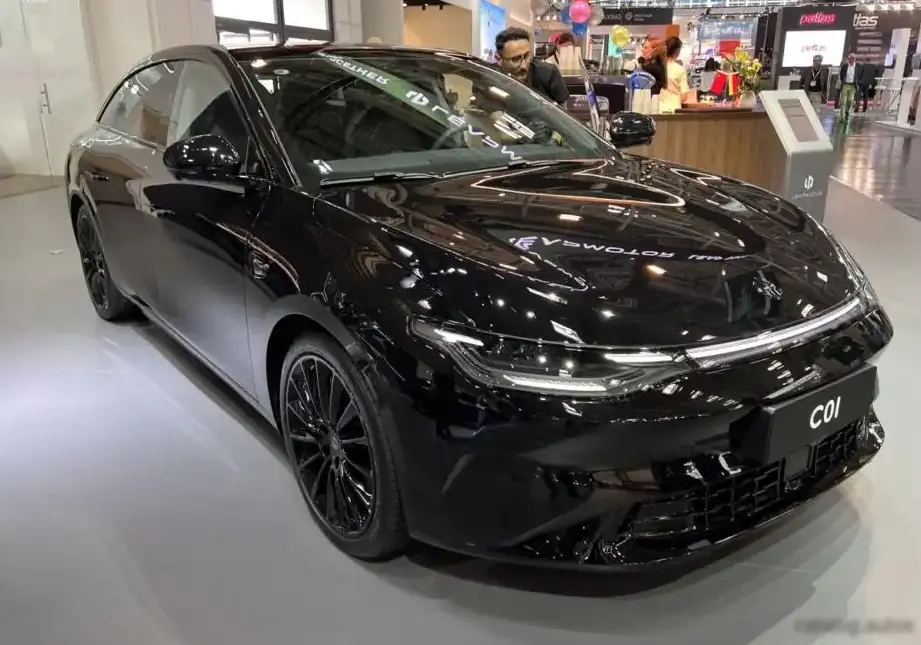
The Leapmotor C01, specifically the 89.9 kWh (544 Hp) 4WD BEV variant, represents a notable entry into the expanding electric vehicle market from Chinese manufacturer Leapmotor. Introduced in September 2022, this model is positioned as a technologically advanced, long-range electric sedan designed to compete with established players in the mid-to-upper range EV segment. The C01 is built on a dedicated electric vehicle platform, demonstrating Leapmotor’s commitment to a fully electric future. It aims to offer a blend of performance, range, and smart features, targeting consumers seeking a premium EV experience.
Technical Specifications
| Brand | Leapmotor |
| Model | C01 |
| Generation | C01 |
| Type | 89.9 kWh (544 Hp) 4WD BEV |
| Start of Production | September 2022 |
| Powertrain Architecture | BEV (Electric Vehicle) |
| Body Type | Sedan |
| Seats | 5 |
| Doors | 4 |
| Fuel Type | Electricity |
| 0-100 km/h | 4.3 sec |
| 0-62 mph | 4.3 sec |
| 0-60 mph | 4.1 sec |
| Maximum Speed | 180 km/h (111.85 mph) |
| Gross Battery Capacity | 89.9 kWh |
| Battery Technology | Lithium-ion (Li-Ion) |
| Battery Location | Below the floor |
| All-Electric Range (CLTC) | 630 km (391.46 mi) |
| Electric Motor Power (Each) | 272 Hp |
| Electric Motor Torque (Each) | 360 Nm (265.52 lb.-ft.) |
| Electric Motor Location | Front & Rear Axle, Transverse |
| Electric Motor Type | Synchronous |
| System Power | 544 Hp |
| System Torque | 720 Nm (531.04 lb.-ft.) |
| Trunk Space (Minimum) | 465 l (16.42 cu. ft.) |
| Length | 5050 mm (198.82 in.) |
| Width | 1902 mm (74.88 in.) |
| Height | 1509 mm (59.41 in.) |
| Wheelbase | 2930 mm (115.35 in.) |
| Ride Height (Ground Clearance) | 120 mm (4.72 in.) |
| Drivetrain | All Wheel Drive (4×4) |
| Number of Gears | 1 |
| Gearbox Type | Automatic Transmission |
| Front Suspension | Double Wishbone |
| Rear Suspension | Independent Multi-Link |
| Front Brakes | Ventilated Discs |
| Rear Brakes | Ventilated Discs |
| Steering Type | Steering Rack and Pinion |
| Power Steering | Electric |
| Tire Size | 235/50 R18 |
| Wheel Rim Size | 18 |
Powertrain & Engine Architecture
The Leapmotor C01 89.9 kWh 4WD BEV employs a dual-motor all-wheel-drive system. Each motor, a synchronous type, generates 272 horsepower and 360 Nm (265.52 lb.-ft.) of torque. The combined system output is a substantial 544 horsepower and 720 Nm (531.04 lb.-ft.) of torque. The powertrain is entirely electric, utilizing an 89.9 kWh lithium-ion battery pack positioned under the vehicle floor to lower the center of gravity and enhance handling. A single-speed automatic transmission, common in most electric vehicles, provides seamless acceleration. The battery supports fast charging, although specific charging times depend on the charging infrastructure available. The vehicle’s electronic control unit (ECU) manages power distribution between the front and rear motors, optimizing efficiency and performance based on driving conditions.
Driving Characteristics
The C01 4WD delivers quick acceleration, reaching 0-60 mph in around 4.1 seconds. The dual-motor setup provides instant torque, resulting in a responsive and engaging driving experience. The all-wheel-drive system improves traction, especially in challenging weather. Compared to potential single-motor, rear-wheel-drive versions (if offered), the 4WD variant offers superior acceleration and stability. The low center of gravity, due to the underfloor battery pack, contributes to confident cornering. The single-speed transmission provides smooth, linear acceleration without the gear changes associated with internal combustion engines. While performance is a priority, the C01 also emphasizes ride comfort, with the suspension tuned to absorb road imperfections.
Equipment & Trim Levels
The C01 89.9 kWh 4WD BEV is generally well-equipped, reflecting its positioning as a premium electric sedan. Standard features typically include a large touchscreen infotainment system, advanced driver-assistance systems (ADAS) like adaptive cruise control and lane-keeping assist, a panoramic sunroof, and high-quality interior materials. Interior upholstery often combines leatherette and fabric, with higher trims offering full leather options. The dashboard layout is modern and minimalist, centered around the large central touchscreen. Optional extras may include upgraded audio systems, ventilated and heated seats, and a more comprehensive ADAS suite. Specific trim levels and available options can vary by market.
Chassis & Braking
The C01 features a double wishbone suspension at the front and an independent multi-link suspension at the rear, balancing ride comfort and handling precision. Ventilated disc brakes are used on all four wheels, ensuring adequate stopping power. The electric steering system offers precise and responsive control. The vehicle’s chassis is designed for maximum rigidity and minimal weight, contributing to overall performance and efficiency. The relatively low ride height (120 mm / 4.72 in.) further enhances stability. ABS (Anti-lock Braking System) is standard, improving safety during emergency braking.
Market Reception & Comparison
The Leapmotor C01 has been well-received in the Chinese market, praised for its long range, strong performance, and competitive pricing. Reviewers have highlighted its advanced technology and spacious interior. Compared to other electric sedans in its class, such as the Tesla Model 3 and NIO ET5, the C01 offers a compelling value, often undercutting rivals in price while delivering comparable range and performance. However, Leapmotor’s brand recognition is still developing compared to established automakers. Reliability data is still emerging, as the C01 is a relatively new model. Energy consumption, as a measure of fuel economy, is competitive with other EVs in its segment.
Legacy
The Leapmotor C01 represents a significant advancement for the Chinese EV industry, showcasing the growing capabilities of domestic manufacturers. The 89.9 kWh 4WD variant, in particular, demonstrates the potential for high-performance, long-range electric vehicles at a competitive price. While long-term reliability data is still being collected, the C01’s robust powertrain and advanced technology suggest it could become a popular choice in the used car market. Its success will likely influence the development of future electric vehicles from Leapmotor and other Chinese automakers, accelerating the transition to a more sustainable transportation future.
