
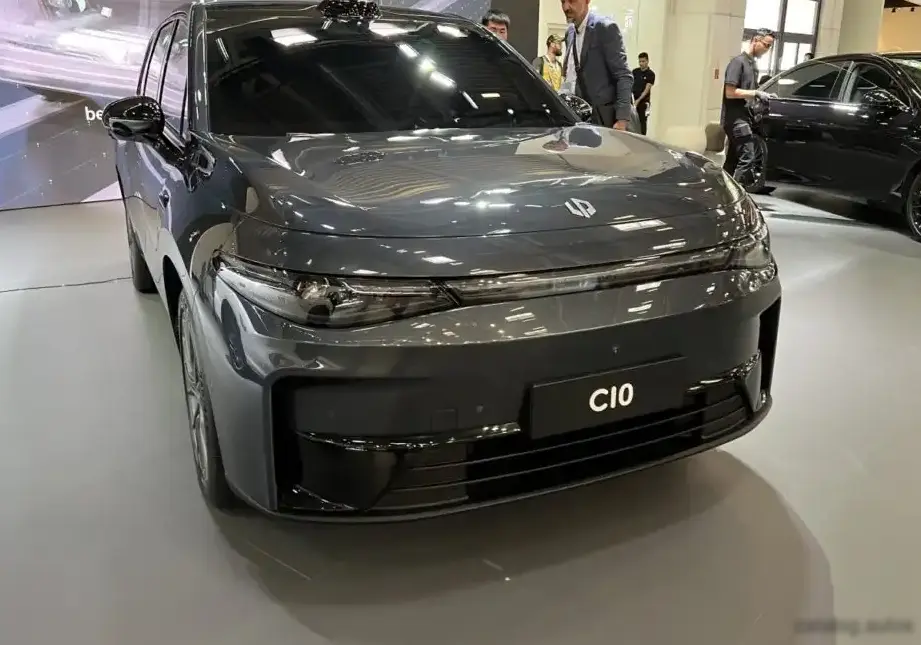
The Leapmotor C10 1.5L 28.4 kWh (215 Hp) REEV is a plug-in hybrid electric vehicle (PHEV) SUV introduced by the Chinese manufacturer Leapmotor in March 2025. Positioned as a technologically advanced and efficient option within the burgeoning EV market, the C10 represents Leapmotor’s entry into a competitive segment. It’s designed to appeal to consumers seeking the benefits of electric driving with the range security offered by a gasoline engine. The C10 is a five-seater, five-door SUV built on a dedicated electric vehicle platform, aiming to provide a spacious and comfortable interior alongside modern features.
Technical Specifications
| Brand | Leapmotor |
| Model | C10 |
| Generation | C10 |
| Type (Engine) | 1.5L 28.4 kWh (215 Hp) REEV |
| Start of production | March, 2025 |
| Powertrain Architecture | PHEV (Plug-in Hybrid Electric Vehicle) |
| Body type | SUV |
| Seats | 5 |
| Doors | 5 |
| Fuel Type | Petrol / electricity |
| Acceleration 0 – 100 km/h | 8.5 sec |
| Acceleration 0 – 62 mph | 8.5 sec |
| Acceleration 0 – 60 mph | 8.1 sec |
| Maximum speed | 170 km/h (105.63 mph) |
| Weight-to-power ratio | 9.1 kg/Hp, 110.3 Hp/tonne |
| Weight-to-torque ratio | 6.1 kg/Nm, 164.1 Nm/tonne |
| Gross battery capacity | 28.4 kWh |
| Battery technology | Lithium iron phosphate (LiFePO4) |
| Battery location | Below the floor |
| All-electric range (WLTP) | 145 km (90.1 mi) |
| Average Energy consumption (WLTP) | 21.5 kWh/100 km (34.6 kWh/100 mi, 97 MPGe, 4.7 km/kWh, 2.9 mi/kWh) |
| Electric motor power | 215 Hp |
| Electric motor Torque | 320 Nm (236.02 lb.-ft.) |
| Electric motor location | Rear axle, Transverse |
| Electric motor type | Synchronous |
| System power | 215 Hp |
| System torque | 320 Nm (236.02 lb.-ft.) |
| Power | 88 Hp |
| Power per litre | 58.7 Hp/l |
| Torque | 125 Nm (92.2 lb.-ft.) |
| Engine layout | Front, Transverse |
| Engine Model/Code | H15R |
| Engine displacement | 1499 cm3 (91.47 cu. in.) |
| Number of cylinders | 4 |
| Engine configuration | Inline |
| Number of valves per cylinder | 4 |
| Fuel injection system | Multi-port manifold injection |
| Engine aspiration | Naturally aspirated engine |
| Kerb Weight | 1950 kg (4299.01 lbs.) |
| Max. weight | 2410 kg (5313.14 lbs.) |
| Max load | 460 kg (1014.13 lbs.) |
| Trunk (boot) space – minimum | 400 l (14.13 cu. ft.) |
| Trunk (boot) space – maximum | 1375 l (48.56 cu. ft.) |
| Fuel tank capacity | 50 l (13.21 US gal | 11 UK gal) |
| Length | 4739 mm (186.57 in.) |
| Width | 1900 mm (74.8 in.) |
| Height | 1680 mm (66.14 in.) |
| Wheelbase | 2825 mm (111.22 in.) |
| Ride height (ground clearance) | 180 mm (7.09 in.) |
| Drive wheel | Rear wheel drive |
| Number of gears and type of gearbox | 1 gears, automatic transmission |
| Front suspension | Independent type McPherson |
| Rear suspension | Independent multi-link suspension |
| Front brakes | Ventilated discs |
| Rear brakes | Ventilated discs |
| Assisting systems | ABS (Anti-lock braking system) |
| Steering type | Steering rack and pinion |
| Power steering | Electric Steering |
| Front wheel tires | 235/55 R18 |
| Rear wheel tires | 245/45 R20 |
| Front wheel rims | 18 |
| Rear wheel rims | 20 |
Powertrain & Engine Architecture
The Leapmotor C10 1.5L REEV utilizes a unique powertrain configuration. The 1.5-liter, naturally aspirated H15R inline-four cylinder engine (producing 88 hp and 92.2 lb-ft of torque) functions solely as a generator to charge the 28.4 kWh lithium iron phosphate (LiFePO4) battery pack. Crucially, there is no mechanical link between the gasoline engine and the wheels. Power is delivered to the rear wheels via a single-speed automatic transmission connected to a 215 hp electric motor producing 236 lb-ft of torque. This setup allows for extended range while still offering the convenience of electric driving for daily commutes. The LiFePO4 battery is positioned under the floor, contributing to a lower center of gravity and improved handling. The engine employs a multi-port fuel injection system for efficient combustion.
Driving Characteristics
The C10’s driving experience is primarily dictated by the electric motor. Acceleration to 60 mph is claimed at 8.1 seconds, and 0-100 km/h takes 8.5 seconds. In electric-only mode, the C10 offers smooth and quiet acceleration, typical of electric vehicles. The single-speed transmission provides seamless power delivery. When the battery is depleted, the gasoline engine seamlessly kicks in to act as a generator, maintaining power to the electric motor and extending the range. Compared to potential higher-performance versions of the C10 (if offered), this 1.5L REEV variant prioritizes efficiency and range over outright speed. The rear-wheel drive configuration contributes to a balanced feel, though it may not offer the same level of all-weather capability as an all-wheel drive system.
Equipment & Trim Levels
Specific trim levels and standard equipment for the C10 1.5L REEV will vary depending on the market. However, it is expected to include features such as a large touchscreen infotainment system, digital instrument cluster, automatic climate control, and a suite of advanced driver-assistance systems (ADAS). Interior upholstery is likely to be a combination of cloth and leatherette, with higher trims offering full leather options. Optional extras may include a panoramic sunroof, premium sound system, and ventilated front seats. The C10 is designed to offer a modern and comfortable interior with a focus on technology.
Chassis & Braking
The Leapmotor C10 features an independent McPherson strut suspension at the front and an independent multi-link suspension at the rear, designed to provide a comfortable ride and responsive handling. Ventilated disc brakes are used on all four wheels, providing ample stopping power. An Anti-lock Braking System (ABS) is standard. The electric steering system offers precise and responsive steering feel. The vehicle’s relatively low curb weight of 4299 lbs contributes to its agility.
Market Reception & Comparison
As a newly launched vehicle, comprehensive market reception data for the C10 1.5L REEV is still emerging. However, it is expected to compete with other PHEV SUVs in the Chinese market and potentially in export markets. Compared to purely electric versions of the C10, the REEV variant offers extended range and eliminates range anxiety. Compared to traditional gasoline-powered SUVs, the C10 offers improved fuel efficiency and reduced emissions. The LiFePO4 battery technology is known for its safety and longevity, which could be a selling point for consumers.
Legacy
The long-term reliability of the C10’s powertrain remains to be seen, but Leapmotor’s use of proven technologies like the LiFePO4 battery and a naturally aspirated engine suggests a potential for good durability. The C10 1.5L REEV represents a significant step for Leapmotor in establishing itself as a major player in the EV market. Its success will depend on its ability to deliver on its promises of efficiency, range, and technological innovation. In the used car market, this variant is likely to be sought after by buyers looking for a practical and efficient PHEV SUV with a good balance of performance and range.
