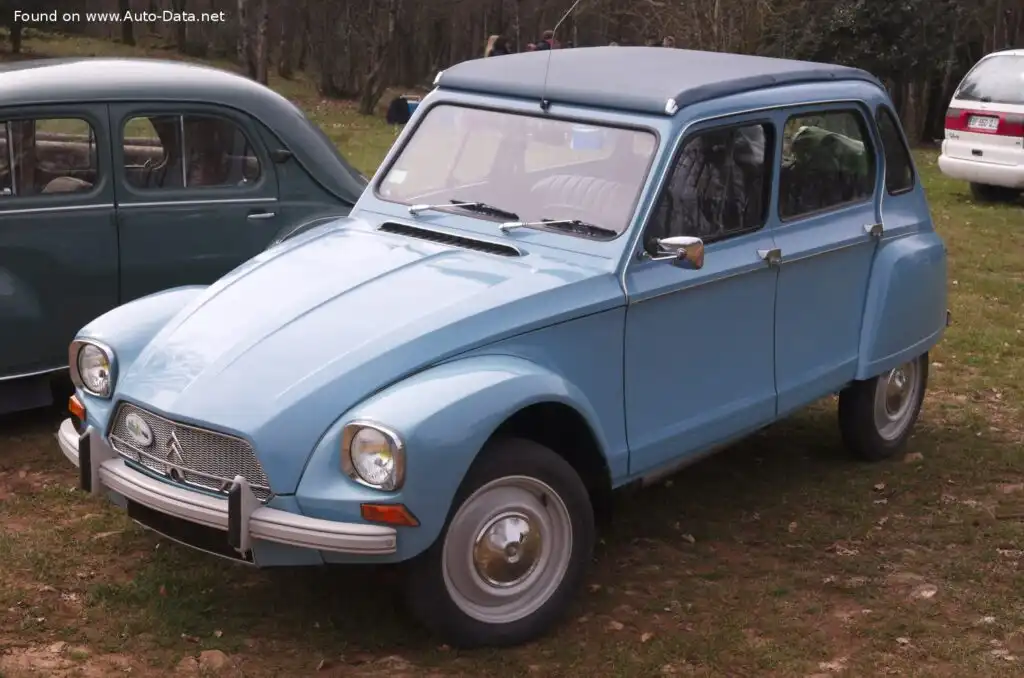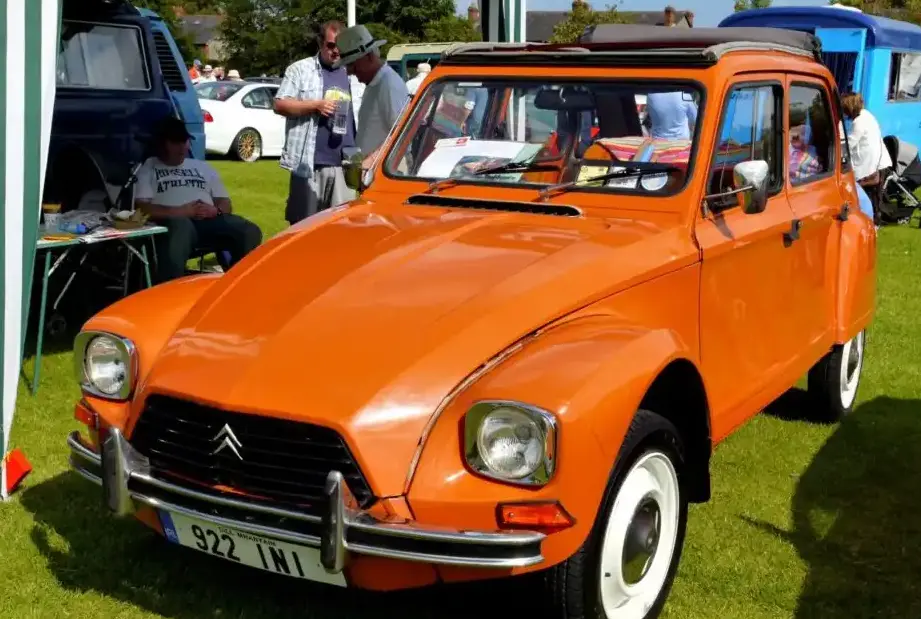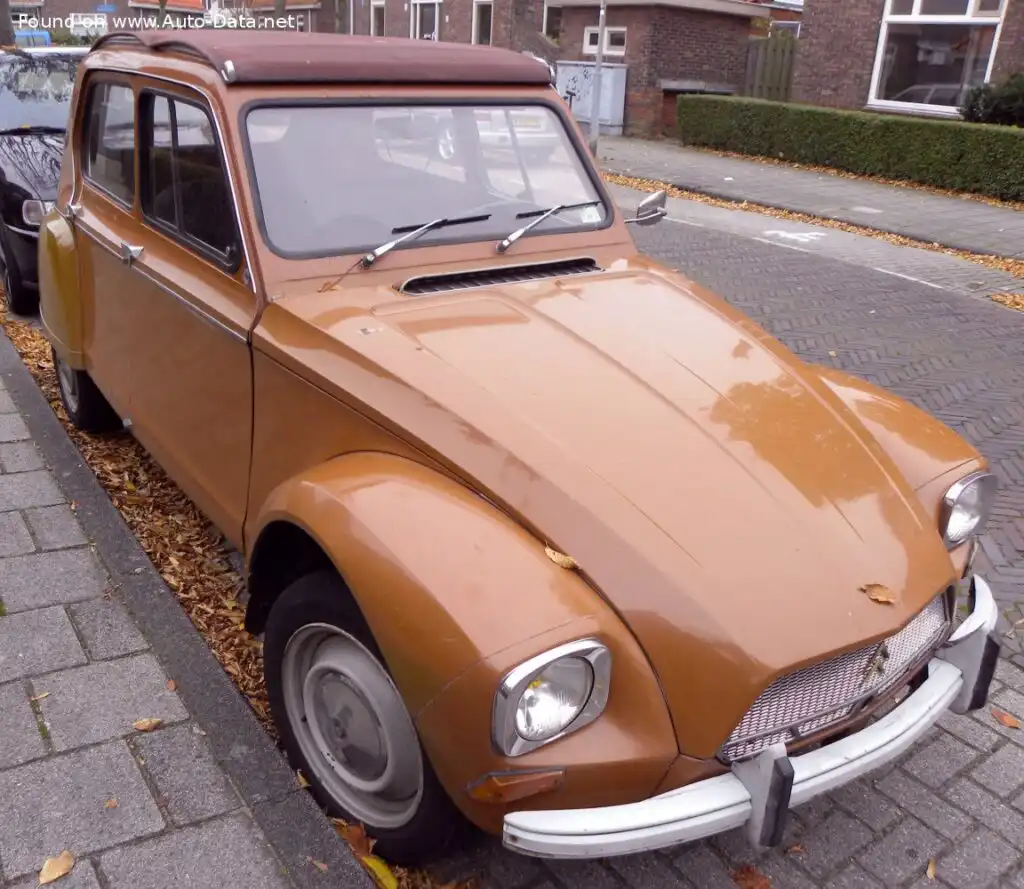
The Citroën Dyane I (Phase I) 0.4, produced between 1967 and October 1968, represents a significant entry point into the quirky and innovative world of Citroën during the late 1960s. Positioned as a more affordable and practical alternative to the Citroën Ami, the Dyane was designed to appeal to a broader market seeking a small, economical, and versatile vehicle. It was built upon a modified version of the 2CV platform, sharing many of its mechanical components but featuring a more modern and streamlined aesthetic. The 0.4 designation refers to its 425cc engine displacement, and the 21 horsepower output made it a popular choice for urban commuters and those seeking a simple, reliable mode of transportation. The Dyane I (Phase I) is considered the initial iteration of the Dyane model, setting the stage for subsequent refinements and variations.
Technical Specifications
| Brand | Citroen |
| Model | Dyane |
| Generation | Dyane I (Phase I) |
| Type (Engine) | 0.4 (21 Hp) |
| Start of production | 1967 |
| End of production | October, 1968 |
| Powertrain Architecture | Internal Combustion engine |
| Body type | Sedan, Fastback |
| Seats | 4 |
| Doors | 5 |
| Fuel consumption (combined) | 5-6.5 l/100 km (47 – 36.2 US mpg, 56.5 – 43.5 UK mpg, 20 – 15.4 km/l) |
| Fuel Type | Petrol (Gasoline) |
| Maximum speed | 95 km/h (59.03 mph) |
| Weight-to-power ratio | 26.4 kg/Hp, 37.8 Hp/tonne |
| Weight-to-torque ratio | 19.1 kg/Nm, 52.3 Nm/tonne |
| Power | 21 Hp @ 5500-6000 rpm |
| Power per litre | 49.4 Hp/l |
| Torque | 29 Nm @ 4750 rpm (21.39 lb.-ft. @ 4750 rpm) |
| Engine Model/Code | AYA, A79/0 |
| Engine displacement | 425 cm3 (25.94 cu. in.) |
| Number of cylinders | 2 |
| Engine configuration | Boxer |
| Cylinder Bore | 66 mm (2.6 in.) |
| Piston Stroke | 62 mm (2.44 in.) |
| Compression ratio | 7.9:1 |
| Engine aspiration | Naturally aspirated engine |
| Engine oil capacity | 2.5 l (2.64 US qt | 2.2 UK qt) |
| Kerb Weight | 555 kg (1223.57 lbs.) |
| Max. weight | 875 kg (1929.04 lbs.) |
| Max load | 320 kg (705.48 lbs.) |
| Trunk (boot) space – minimum | 250 l (8.83 cu. ft.) |
| Trunk (boot) space – maximum | 1340 l (47.32 cu. ft.) |
| Fuel tank capacity | 20 l (5.28 US gal | 4.4 UK gal) |
| Length | 3905 mm (153.74 in.) |
| Width | 1500 mm (59.06 in.) |
| Height | 1540 mm (60.63 in.) |
| Wheelbase | 2400 mm (94.49 in.) |
| Front track | 1260 mm (49.61 in.) |
| Rear (Back) track | 1260 mm (49.61 in.) |
| Ride height (ground clearance) | 155 mm (6.1 in.) |
| Drag coefficient (Cd) | 0.41 |
| Minimum turning circle (turning diameter) | 11 m (36.09 ft.) |
| Drivetrain Architecture | The Internal combustion engine (ICE) drives the front wheels of the vehicle. |
| Drive wheel | Front wheel drive |
| Number of gears and type of gearbox | 4 gears, manual transmission |
| Front suspension | Independent coil spring |
| Rear suspension | Independent coil spring |
| Front brakes | Drum |
| Rear brakes | Drum |
Powertrain & Engine Architecture
The heart of the Dyane 0.4 is its 425cc, two-cylinder boxer engine, designated AYA or A79/0. This engine, a hallmark of Citroën’s engineering philosophy, is known for its simplicity, robustness, and surprisingly smooth operation despite its small displacement. The boxer configuration, with horizontally opposed cylinders, contributes to a low center of gravity, enhancing stability. The engine utilizes a single carburetor for fuel delivery and a relatively simple valvetrain. It’s a naturally aspirated engine, meaning it doesn’t employ a turbocharger or supercharger. The 21 horsepower is delivered at 5500-6000 rpm, and the 29 Nm (21.39 lb-ft) of torque peaks at 4750 rpm. The engine is paired with a four-speed manual transmission, which was the only transmission option available for this variant. The transmission is known for its long throws and somewhat agricultural feel, but it is durable and reliable.
Driving Characteristics
The Dyane 0.4, with its modest power output, is not a performance car. Acceleration is leisurely, and top speed is limited to around 95 km/h (59 mph). However, its lightweight construction (555 kg / 1223.57 lbs) and front-wheel-drive layout make it surprisingly nimble in urban environments. The four-speed manual transmission requires deliberate shifting, and the engine needs to be revved to extract the most performance. Compared to later Dyane variants with larger engines, the 0.4 feels significantly slower, but it offers a more economical and relaxed driving experience. The suspension, while simple, provides a reasonably comfortable ride, absorbing bumps and imperfections in the road. The steering is light and direct, making it easy to maneuver in tight spaces.
Equipment & Trim Levels
The Dyane I (Phase I) 0.4 was a fairly spartan vehicle, reflecting its positioning as an affordable option. Standard equipment included basic instrumentation (speedometer, fuel gauge), a simple two-spoke steering wheel, and vinyl upholstery. The interior was functional rather than luxurious. Optional extras were limited but could include a heater, a radio, and upgraded upholstery. The body was typically finished in a single color, with a limited palette available. The 5-door configuration was a key selling point, providing easy access to the rear seats and cargo area.
Chassis & Braking
The Dyane’s chassis is based on the 2CV platform, utilizing an independent coil spring suspension at both the front and rear. This suspension system provides a comfortable ride and good handling characteristics, considering the vehicle’s simplicity. The brakes are drum brakes on all four wheels, which were adequate for the vehicle’s weight and performance. The steering is a worm-and-roller system, providing light and direct steering feel. The Dyane’s relatively narrow track and short wheelbase contribute to its nimble handling.
Market Reception & Comparison
The Citroën Dyane 0.4 was generally well-received as a practical and economical city car. Critics praised its affordability, fuel efficiency (5-6.5 l/100 km), and ease of parking. However, its limited performance and basic interior were also noted. Compared to the 2CV, the Dyane offered a more modern appearance and slightly improved comfort. Compared to later Dyane variants with larger engines (such as the 1.0 or 1.1 liter models), the 0.4 was significantly slower but more fuel-efficient. It appealed to a different segment of the market – those prioritizing economy and practicality over performance.
Legacy
The Citroën Dyane, and particularly the early 0.4 variant, has achieved a cult following among classic car enthusiasts. Its simple mechanicals and robust construction make it relatively easy to maintain and repair. The 0.4 engine, while underpowered by modern standards, is known for its reliability. Today, well-maintained examples of the Dyane I (Phase I) 0.4 are sought after by collectors and those looking for a unique and charming classic car. The Dyane represents a fascinating chapter in Citroën’s history, showcasing the company’s commitment to innovative and affordable transportation. Finding parts can sometimes be a challenge, but a dedicated network of suppliers and enthusiasts ensures that the Dyane will continue to be enjoyed for years to come.