
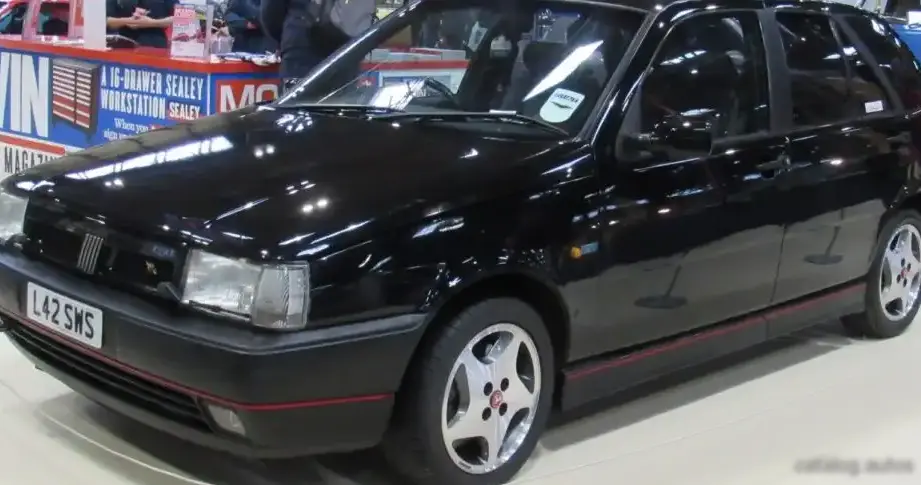
The Fiat Tipo (160) 1.6 i.e. 90 hp, produced between 1988 and 1991, represented a core offering within the second generation of the Tipo family. The Tipo (160) was Fiat’s compact family car, designed to replace the aging Ritmo and Uno models, and aimed squarely at the heart of the European C-segment. This 1.6-liter variant, equipped with an automatic transmission, served as a comfortable and accessible entry point into the Tipo range, prioritizing ease of use and affordability over outright performance. It was a key model for Fiat, intended to appeal to a broad customer base seeking a practical and reliable vehicle.
Technical Specifications
| Brand | Fiat |
| Model | Tipo |
| Generation | Tipo (160) |
| Type (Engine) | 1.6 i.e. (90 Hp) |
| Start of Production | 1988 |
| End of Production | 1991 |
| Powertrain Architecture | Internal Combustion Engine |
| Body Type | Hatchback |
| Fuel Type | Petrol (Gasoline) |
| Power | 90 Hp |
| Engine Model/Code | 159 A3.000 |
| Engine Aspiration | Naturally Aspirated |
| Engine Oil Capacity | 3.7 l (3.91 US qt | 3.26 UK qt) |
| Coolant Capacity | 6.5 l (6.87 US qt | 5.72 UK qt) |
Powertrain & Engine Architecture
The heart of the Tipo 1.6 i.e. was the 159 A3.000 engine, a 1581cc inline-four cylinder petrol engine. This engine featured a single overhead camshaft (SOHC) valvetrain operating two valves per cylinder. Fuel delivery was managed by Bosch Mono-Jetronic fuel injection, a relatively simple system for the time, prioritizing reliability and cost-effectiveness over the more sophisticated multi-point injection systems found in higher-spec models. The Mono-Jetronic system delivered fuel into a single throttle body, which then distributed it to the individual cylinders. This configuration, while not offering the precise fuel control of multi-point injection, was known for its durability and ease of maintenance. The engine produced 90 horsepower at 5600 rpm and 137 Nm (101 lb-ft) of torque at 3600 rpm. The automatic transmission paired with this engine was a three-speed unit, designed for smooth, if not particularly rapid, gear changes. It was a conventional hydraulic automatic, lacking the electronic controls found in later transmissions.
Driving Characteristics
The Tipo 1.6 i.e. automatic offered a comfortable, but unhurried, driving experience. Acceleration was adequate for everyday driving, with a 0-60 mph time estimated around 12-13 seconds. The three-speed automatic transmission, while providing convenience, did limit the engine’s ability to operate in its optimal power band. Gear ratios were spaced to prioritize fuel economy and smooth cruising rather than spirited acceleration. Compared to the five-speed manual version of the 1.6, the automatic suffered a noticeable performance deficit. The manual transmission allowed the engine to rev higher and stay within its peak power range for longer. Similarly, the more powerful 1.8 and 2.0-liter versions of the Tipo offered significantly greater performance, but at a higher price point. The automatic’s strength lay in its ease of use, making it ideal for urban driving and drivers prioritizing comfort over performance.
Equipment & Trim Levels
The 1.6 i.e. automatic typically represented a mid-range trim level within the Tipo lineup. Standard equipment generally included power steering, central locking, and cloth upholstery. The interior was functional and well-built, though materials were largely utilitarian. Dashboard design was typical of the late 1980s, with a clear instrument cluster and logically arranged controls. Optional extras included electric windows, a sunroof, and upgraded audio systems. Higher trim levels, such as the SX, added features like alloy wheels, a more luxurious interior, and additional comfort items. The base trim, often simply called the “Basic”, offered fewer features and a more spartan interior. The automatic transmission was often paired with a slightly higher trim level than was available with the base engine, reflecting its appeal to buyers seeking a more refined driving experience.
Chassis & Braking
The Tipo (160) utilized a front-wheel-drive layout with independent front suspension featuring MacPherson struts and a torsion beam rear suspension. This setup provided a reasonable balance between ride comfort and handling. The 1.6 i.e. models typically featured disc brakes on the front wheels and drum brakes on the rear. Stabilizer bars were fitted to both the front and rear axles to reduce body roll during cornering. Steering was unassisted, providing a direct feel, but requiring more effort at low speeds. The suspension was tuned for comfort, prioritizing a smooth ride over sharp handling. Compared to the higher-performance models, the 1.6 i.e. often had slightly softer suspension settings and smaller tires, further emphasizing its comfort-oriented nature.
Market Reception & Comparison
The Fiat Tipo 1.6 i.e. automatic was generally well-received by critics as a practical and affordable family car. It was praised for its comfortable ride, spacious interior, and reasonable fuel economy. However, the automatic transmission was sometimes criticized for its sluggish performance and lack of responsiveness. Compared to rivals such as the Volkswagen Golf, Ford Escort, and Opel Astra, the Tipo offered a competitive package in terms of price and features. Fuel economy was comparable to other cars in its class, typically achieving around 28-32 mpg on the combined cycle. Reliability was generally good, although the Mono-Jetronic fuel injection system could occasionally require maintenance. The 1.8 and 2.0-liter versions of the Tipo offered superior performance, but at a higher cost, making the 1.6 i.e. a popular choice for budget-conscious buyers.
Legacy
The Fiat Tipo (160) 1.6 i.e. automatic, while not a performance icon, remains a fondly remembered car for many owners. The 159 A3.000 engine, coupled with the three-speed automatic, proved to be a relatively durable powertrain. Today, finding well-maintained examples can be challenging, but they represent an affordable entry point into classic Fiat ownership. Parts availability is generally good, although some specific components may be difficult to source. The Tipo’s simple mechanical design makes it relatively easy to maintain for those with basic mechanical skills. In the used car market, these models are valued for their practicality, affordability, and nostalgic appeal. They offer a glimpse into a bygone era of automotive design, representing a solid and reliable family car from the late 1980s.
