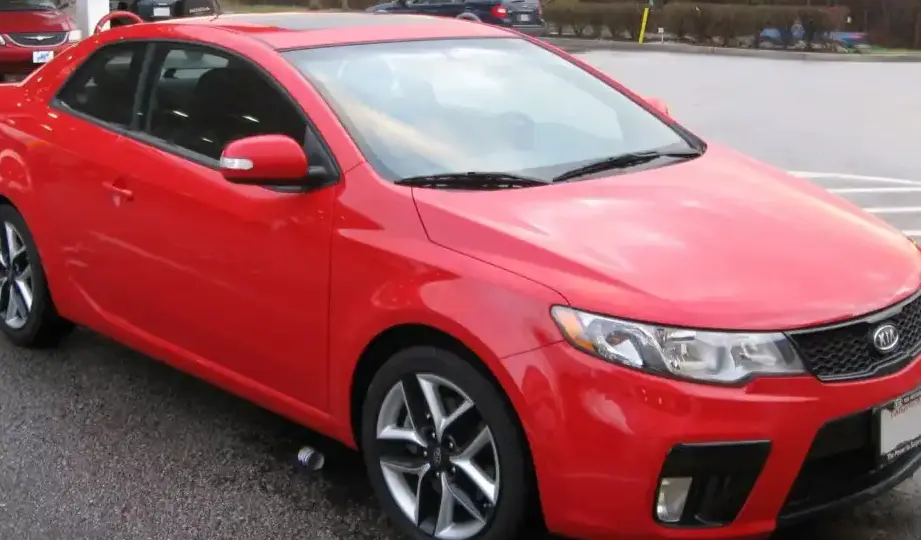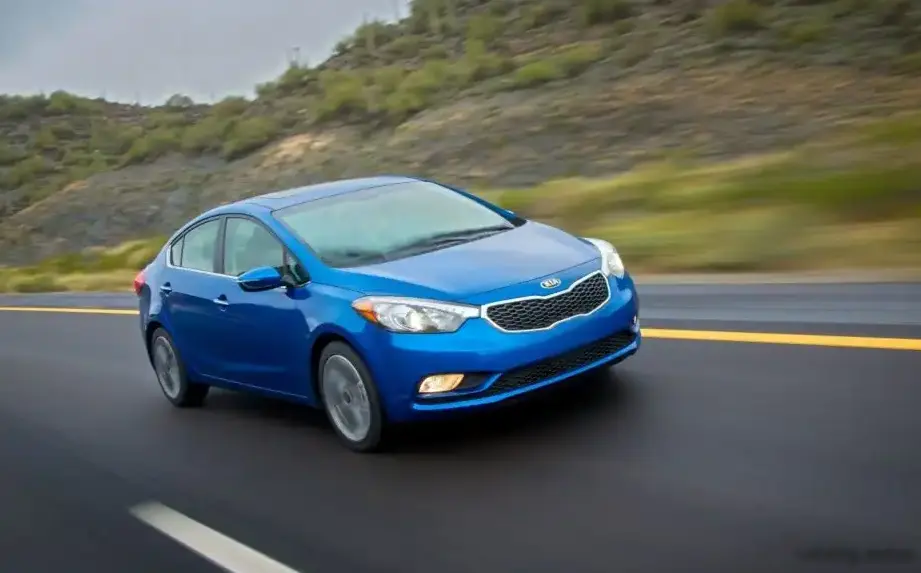
The Kia Forte II (YD), produced from 2013 to 2016, represented a significant step forward for the South Korean automaker in the competitive compact sedan segment. Positioned as a mainstream offering, the YD generation aimed to deliver a blend of style, efficiency, and value. Within the Forte II lineup, the 1.8 MPI (145 hp) variant served as a core model, offering a balance between affordability and acceptable performance for everyday driving. It was designed to appeal to a broad customer base seeking a practical and reliable vehicle. This model was primarily marketed in North America, South America, and select other global markets, offering a compelling alternative to established Japanese and American competitors.
Technical Specifications
| Brand | Kia |
| Model | Forte |
| Generation | Forte II (YD) |
| Type (Engine) | 1.8 MPI (145 Hp) |
| Start of production | 2013 |
| End of production | 2016 |
| Powertrain Architecture | Internal Combustion engine |
| Body type | Sedan |
| Seats | 5 |
| Doors | 4 |
| Fuel consumption (economy) – urban (EPA) | 9.4 l/100 km (25 US mpg) |
| Fuel consumption (economy) – extra urban (EPA) | 6.4 l/100 km (36.8 US mpg) |
| Fuel consumption (economy) – combined (EPA) | 7.8 l/100 km (30.2 US mpg) |
| Fuel Type | Petrol (Gasoline) |
| Emission standard | SULEV |
| Weight-to-power ratio | 8.8 kg/Hp |
| Weight-to-torque ratio | 7.2 kg/Nm |
| Power | 145 Hp @ 6500 rpm |
| Power per litre | 80.7 Hp/l |
| Torque | 176 Nm @ 4700 rpm (129.81 lb.-ft. @ 4700 rpm) |
| Engine layout | Front, Transverse |
| Engine Model/Code | Nu / G4NB |
| Engine displacement | 1797 cm3 (109.66 cu. in.) |
| Number of cylinders | 4 |
| Engine configuration | Inline |
| Cylinder Bore | 81 mm (3.19 in.) |
| Piston Stroke | 87.2 mm (3.43 in.) |
| Compression ratio | 10.3:1 |
| Number of valves per cylinder | 4 |
| Fuel injection system | Multi-port manifold injection |
| Engine aspiration | Naturally aspirated engine |
| Valvetrain | DOHC, D-CVVT |
| Engine oil capacity | 4 l (4.23 US qt | 3.52 UK qt) |
| Coolant | 6 l (6.34 US qt | 5.28 UK qt) |
| Kerb Weight | 1272-1332 kg (2804.28 – 2936.56 lbs.) |
| Max. weight | 1740 kg (3836.04 lbs.) |
| Max load | 408-468 kg (899.49 – 1031.76 lbs.) |
| Trunk (boot) space – minimum | 421 l (14.87 cu. ft.) |
| Fuel tank capacity | 50 l (13.21 US gal | 11 UK gal) |
| Length | 4560 mm (179.53 in.) |
| Width | 1780 mm (70.08 in.) |
| Height | 1430 mm (56.3 in.) |
| Wheelbase | 2700 mm (106.3 in.) |
| Front track | 1553-1563 mm (61.14 – 61.54 in.) |
| Rear (Back) track | 1566-1576 mm (61.65 – 62.05 in.) |
| Front overhang | 880 mm (34.65 in.) |
| Rear overhang | 980 mm (38.58 in.) |
| Ride height (ground clearance) | 135 mm (5.31 in.) |
| Minimum turning circle (turning diameter) | 10.6 m (34.78 ft.) |
| Approach angle | 15.2° |
| Departure angle | 20.4° |
| Drivetrain Architecture | The Internal combustion engine (ICE) drives the front wheels of the vehicle. |
| Drive wheel | Front wheel drive |
| Number of gears and type of gearbox | 6 gears, manual transmission |
| Front suspension | Independent, type McPherson with coil spring and anti-roll bar |
| Rear suspension | Coil spring, Torsion |
| Front brakes | Ventilated discs, 280 mm |
| Rear brakes | Disc, 262 mm |
| Assisting systems | ABS (Anti-lock braking system) |
| Steering type | Steering rack and pinion |
| Power steering | Electric Steering |
| Tires size | 195/65 R15; 205/55 R16 |
| Wheel rims size | 6J x 15; 6.5J x 16 |
Powertrain & Engine Architecture
The heart of the 1.8 MPI Forte II is the Kia-developed Nu engine, specifically the G4NB variant. This 1.8-liter inline-four cylinder engine utilizes a cast iron block with an aluminum cylinder head. It features multi-point fuel injection, delivering fuel directly into the intake ports. The engine employs a double overhead camshaft (DOHC) valvetrain with Kia’s Dual Continuously Variable Valve Timing (D-CVVT) system. D-CVVT optimizes valve timing based on engine load and speed, improving both fuel efficiency and power output. The engine produces 145 horsepower at 6,500 rpm and 176 Nm (129.81 lb-ft) of torque at 4,700 rpm. The engine’s design prioritizes reliability and ease of maintenance. The 6-speed manual transmission was standard, offering a relatively direct driving experience.
Driving Characteristics
The 1.8L engine paired with the 6-speed manual transmission provided adequate, though not exhilarating, performance. Acceleration from 0 to 60 mph was estimated around 9.5-10.5 seconds. The engine felt most comfortable in the mid-range, offering sufficient power for highway merging and passing maneuvers. The manual transmission’s gear ratios were well-spaced, allowing drivers to keep the engine in its optimal power band. Compared to higher-trim models equipped with the more powerful 2.0-liter engine, the 1.8L felt noticeably less responsive. However, the 1.8L offered a more fuel-efficient driving experience, making it a practical choice for daily commuting.
Equipment & Trim Levels
The 1.8 MPI Forte II typically came standard with features such as air conditioning, power windows and locks, a basic audio system with USB connectivity, and steel wheels with wheel covers. Higher trim levels, such as the EX, added features like alloy wheels, a more advanced audio system, Bluetooth connectivity, and a sunroof. Interior upholstery was typically cloth, with options for upgraded materials in higher trims. Safety features included dual front airbags, side airbags, and an anti-lock braking system (ABS).
Chassis & Braking
The Forte II utilized a front-wheel-drive platform with an independent McPherson strut suspension in the front and a torsion beam rear suspension. This setup provided a comfortable ride quality, suitable for everyday driving. The front brakes were ventilated discs, while the rear brakes were solid discs. The steering was rack-and-pinion with electric power steering, offering light and responsive steering feel. Tire sizes varied depending on the trim level, ranging from 195/65 R15 to 205/55 R16.
Market Reception & Comparison
The 1.8 MPI Forte II was generally well-received by critics as a value-oriented compact sedan. It was praised for its fuel efficiency, comfortable ride, and spacious interior. However, some reviewers noted that the engine lacked the power and refinement of some competitors. Compared to the 2.0-liter Forte, the 1.8L offered better fuel economy but less performance. Against rivals like the Honda Civic, Toyota Corolla, and Mazda3, the Forte II offered a competitive price point but often lagged behind in terms of driving dynamics and brand reputation.
Legacy
The Kia Forte II 1.8 MPI has proven to be a relatively reliable vehicle in the used car market. The Nu engine is known for its durability, and maintenance costs are generally reasonable. While not a performance standout, the 1.8L engine’s simplicity contributes to its longevity. Today, these vehicles can be found at affordable prices, making them a practical choice for budget-conscious buyers seeking a dependable and fuel-efficient compact sedan. The Forte II helped establish Kia as a serious contender in the compact car segment, paving the way for future generations of the Forte to gain greater market share and recognition.