
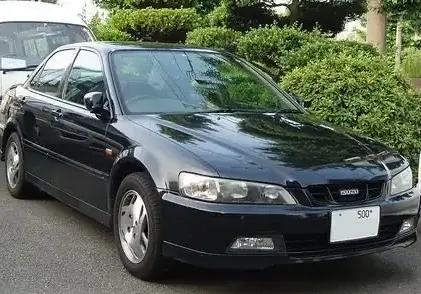
The Isuzu Aska IV (GS-5) 2.0 i 16V, produced between 1998 and 2002, represented a significant iteration of Isuzu’s mid-size sedan. Positioned as a competitor to vehicles like the Toyota Corolla and Honda Civic in many markets, the Aska aimed to provide a blend of practicality, comfort, and reasonable performance. This particular variant, equipped with the 6HEITC 2.0-liter 16-valve engine, was a mid-range offering within the Aska lineup, slotting above the base models and below any potential sportier or luxury-focused trims. The GS-5 designation refers to the fourth generation (GS) and a specific body style within that generation. While Isuzu had a limited presence in the North American market during this period, the Aska was primarily sold in Asia and Europe.
Technical Specifications
| Brand | Isuzu |
| Model | Aska |
| Generation | Aska IV (GS-5) |
| Type (Engine) | 2.0 i 16V (150 Hp) |
| Start of production | 1998 |
| End of production | 2002 |
| Powertrain Architecture | Internal Combustion engine |
| Body type | Sedan |
| Seats | 5 |
| Doors | 4 |
| Fuel consumption (urban) | 8.06 l/100 km (29.2 US mpg) |
| Fuel consumption (extra urban) | 4.65 l/100 km (50.6 US mpg) |
| Fuel Type | Petrol (Gasoline) |
| Power | 150 Hp @ 6000 rpm |
| Torque | 186 Nm @ 5000 rpm (137.19 lb.-ft. @ 5000 rpm) |
| Engine layout | Front, Transverse |
| Engine Model/Code | 6HEITC |
| Engine displacement | 1997 cm3 (121.86 cu. in.) |
| Number of cylinders | 4 |
| Engine configuration | Inline |
| Cylinder Bore | 85 mm (3.35 in.) |
| Piston Stroke | 88 mm (3.46 in.) |
| Compression ratio | 9:1 |
| Number of valves per cylinder | 4 |
| Fuel injection system | Multi-port manifold injection |
| Engine aspiration | Naturally aspirated engine |
| Valvetrain | OHC |
| Max. weight | 1545 kg (3406.14 lbs.) |
| Trunk (boot) space – minimum | 446 l (15.75 cu. ft.) |
| Fuel tank capacity | 60 l (15.85 US gal | 13.2 UK gal) |
| Length | 4635 mm (182.48 in.) |
| Width | 1695 mm (66.73 in.) |
| Height | 1270 mm (50 in.) |
| Wheelbase | 2665 mm (104.92 in.) |
| Front track | 1480 mm (58.27 in.) |
| Rear (Back) track | 1480 mm (58.27 in.) |
| Drivetrain Architecture | Front wheel drive |
| Drive wheel | Front wheel drive |
| Number of gears and type of gearbox | 5 gears, manual transmission |
| Front suspension | Coil spring |
| Rear suspension | Coil spring |
| Front brakes | Ventilated discs |
| Rear brakes | Disc |
| Assisting systems | ABS (Anti-lock braking system) |
| Steering type | Steering rack and pinion |
| Power steering | Hydraulic Steering |
| Tires size | 195/60 R15 |
Powertrain & Engine Architecture
The heart of the Aska 2.0 i 16V is the 6HEITC engine, a 1.997-liter inline-four cylinder gasoline engine. This engine utilizes a single overhead camshaft (OHC) valvetrain operating 16 valves (four per cylinder). The multi-port fuel injection system delivers fuel directly to each intake port, optimizing combustion efficiency. The 9:1 compression ratio was a common figure for engines of this era, balancing performance and fuel economy. The engine’s 150 horsepower peak at 6000 rpm and 186 Nm (137.19 lb-ft) of torque at 5000 rpm provided adequate power for everyday driving. The 5-speed manual transmission was the standard offering, providing drivers with full control over the engine’s powerband. The engine’s design prioritized reliability and ease of maintenance, typical of Japanese automotive engineering.
Driving Characteristics
The Aska 2.0 i 16V with the 5-speed manual transmission offered a reasonably engaging driving experience. While not a sports sedan, the engine provided sufficient power for confident acceleration and highway cruising. The gear ratios were tuned for a balance between fuel efficiency and responsiveness. The 5-speed manual allowed drivers to keep the engine in its optimal power range, especially during overtaking maneuvers. Compared to potential base engine options (if available), the 2.0-liter engine offered a noticeable improvement in performance. The front-wheel-drive configuration provided predictable handling, although it lacked the all-weather capability of an all-wheel-drive system. The steering, utilizing a hydraulic rack and pinion system, was light and precise, making the car easy to maneuver in urban environments.
Equipment & Trim Levels
The GS-5 2.0 i 16V typically came equipped with a standard set of features considered competitive for its class. These included power windows, power door locks, and a basic audio system. Interior upholstery was generally cloth, with options for upgraded materials available. The dashboard layout was functional and straightforward, prioritizing ease of use. Optional extras could include air conditioning, alloy wheels, and a more advanced audio system. The level of standard equipment positioned this variant as a well-rounded offering, appealing to buyers seeking a comfortable and practical sedan without excessive luxury.
Chassis & Braking
The Aska IV utilized a conventional chassis design with coil spring suspension at both the front and rear. This setup provided a comfortable ride quality, absorbing bumps and irregularities in the road surface effectively. The front suspension featured MacPherson struts, while the rear employed a multi-link setup. Braking duties were handled by ventilated discs at the front and solid discs at the rear, providing adequate stopping power. The inclusion of ABS (Anti-lock Braking System) enhanced safety by preventing wheel lockup during hard braking. The 195/60 R15 tires offered a good balance between grip and ride comfort.
Market Reception & Comparison
The Isuzu Aska, in general, received positive reviews for its reliability, practicality, and comfortable ride. The 2.0 i 16V variant was praised for its improved performance compared to lower-displacement engines. Fuel economy was also a strong point, with the Aska achieving respectable figures for its class. Compared to competitors like the Toyota Corolla and Honda Civic, the Aska offered a slightly more understated driving experience, prioritizing comfort over outright sportiness. However, its relative rarity in some markets limited its overall sales volume. Maintenance costs were generally considered reasonable, thanks to the engine’s robust design and readily available parts.
Legacy
The Isuzu Aska IV, while not a widely recognized model in all regions, has developed a reputation for long-term reliability among owners. The 6HEITC engine is known for its durability and relatively simple maintenance requirements. In the used car market, Aska 2.0 i 16V models are often sought after by buyers looking for an affordable and dependable sedan. Parts availability can be a concern in some areas, but the engine’s robust construction often allows it to withstand high mileage with proper maintenance. The Aska represents a solid example of Japanese automotive engineering from the late 1990s and early 2000s, offering a blend of practicality, comfort, and reliability.
