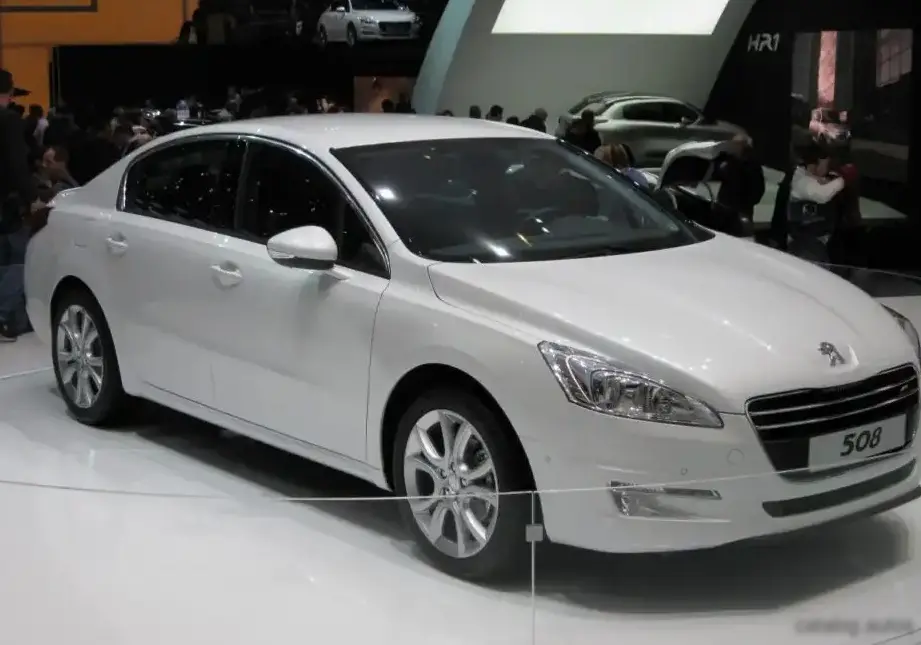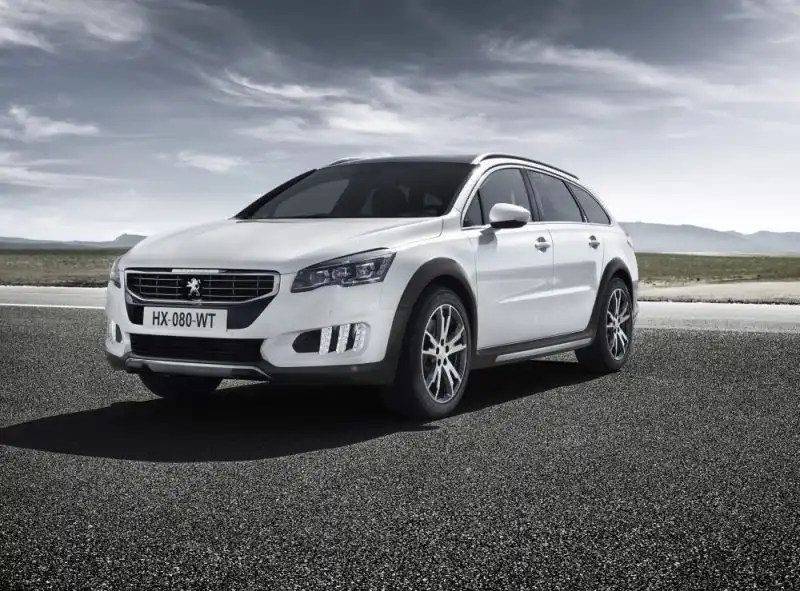
The Peugeot 508 RXH, specifically the Phase II model produced from 2014 to 2018, represented a unique offering in the mid-size segment. This variant combined a 2.0-liter HDi diesel engine with an electric motor, creating a hybrid four-wheel-drive system marketed as “Hybrid4”. Positioned as a premium trim within the 508 range, the RXH aimed to deliver improved fuel efficiency and all-weather capability compared to its conventionally powered siblings. It was primarily sold in Europe, where demand for diesel-electric hybrids and vehicles with enhanced traction was relatively strong. The RXH was built on the 1HX0/A3 platform, shared with other PSA Group vehicles of the era.
Technical Specifications
| Brand | Peugeot |
| Model | 508 |
| Generation | 508 I RXH (Phase II, 2014) |
| Type (Engine) | 2.0 HDi (200 Hp) Hybrid4 4×4 ETG6 |
| Start of production | 2014 |
| End of production | 2018 |
| Powertrain Architecture | FHEV (Full Hybrid Electric Vehicle) |
| Body type | Crossover |
| Seats | 5 |
| Doors | 5 |
| Fuel consumption (urban) | 3.8 l/100 km (61.9 US mpg, 74.3 UK mpg, 26.3 km/l) |
| Fuel consumption (extra urban) | 4.1 l/100 km (57.4 US mpg, 68.9 UK mpg, 24.4 km/l) |
| Fuel consumption (combined) | 4 l/100 km (58.8 US mpg, 70.6 UK mpg, 25 km/l) |
| CO2 emissions | 104 g/km |
| Fuel Type | Diesel |
| Acceleration 0 – 100 km/h | 8.8 sec |
| Acceleration 0 – 62 mph | 8.8 sec |
| Acceleration 0 – 60 mph | 8.4 sec |
| Maximum speed | 213 km/h (132.35 mph) |
| Emission standard | Euro 5 |
| Weight-to-power ratio | 8.9 kg/Hp, 113 Hp/tonne |
| Weight-to-torque ratio | 3.9 kg/Nm, 254.2 Nm/tonne |
| Gross battery capacity | 1.1 kWh |
| Battery voltage | 200 V |
| Battery technology | Nickel-metal hydride (NiMH) |
| Battery location | Under the trunk |
| All-electric range | 1.2 km (0.75 mi) |
| Max speed (electric) | 85 km/h (52.82 mph) |
| Electric motor power | 37 Hp @ 2000-7500 rpm (200 Nm @ 800-1290 rpm / 147.51 lb.-ft. @ 800-1290 rpm) |
| Electric motor location | Rear axle, Transverse |
| Electric motor type | Synchronous |
| System power | 200 Hp @ 3750 rpm |
| System torque | 450 Nm @ 1750 rpm (331.9 lb.-ft. @ 1750 rpm) |
| Engine Power | 163 Hp |
| Power per litre | 81.6 Hp/l |
| Engine layout | Front, Transverse |
| Engine Model/Code | RHC DW10CTED4 |
| Engine displacement | 1997 cm3 (121.86 cu. in.) |
| Number of cylinders | 4 |
| Engine configuration | Inline |
| Cylinder Bore | 85 mm (3.35 in.) |
| Piston Stroke | 88 mm (3.46 in.) |
| Number of valves per cylinder | 4 |
| Fuel injection system | Diesel Commonrail |
| Engine aspiration | Turbocharger, Intercooler |
| Engine oil capacity | 5 l (5.28 US qt | 4.4 UK qt) |
| Coolant | 10 l (10.57 US qt | 8.8 UK qt) |
| Kerb Weight | 1770 kg (3902.18 lbs.) |
| Max. weight | 2325 kg (5125.75 lbs.) |
| Max load | 555 kg (1223.57 lbs.) |
| Trunk (boot) space – minimum | 400 l (14.13 cu. ft.) |
| Trunk (boot) space – maximum | 1360 l (48.03 cu. ft.) |
| Fuel tank capacity | 70 l (18.49 US gal | 15.4 UK gal) |
| Permitted trailer load with brakes (12%) | 800 kg (1763.7 lbs.) |
| Permitted trailer load without brakes | 750 kg (1653.47 lbs.) |
| Permitted towbar download | 75 kg (165.35 lbs.) |
| Length | 4828 mm (190.08 in.) |
| Width | 1864 mm (73.39 in.) |
| Width including mirrors | 2068 mm (81.42 in.) |
| Height | 1521 mm (59.88 in.) |
| Wheelbase | 2817 mm (110.91 in.) |
| Front track | 1592 mm (62.68 in.) |
| Rear (Back) track | 1564 mm (61.57 in.) |
| Front overhang | 992 mm (39.06 in.) |
| Rear overhang | 1019 mm (40.12 in.) |
| Ride height (ground clearance) | 184 mm (7.24 in.) |
| Drivetrain Architecture | The Internal combustion engine (ICE) permanently drives the front wheels of the vehicle, the electric motor drives the rear wheels of the vehicle, capable of running in full electric mode, only by the Internal combustion engine (ICE) or in mixed mode. |
| Drive wheel | All wheel drive (4×4) |
| Number of gears and type of gearbox | 6 gears, automatic transmission ETG |
| Front suspension | Independent, type McPherson with coil spring and anti-roll bar |
| Rear suspension | Independent multi-link suspension |
| Front brakes | Ventilated discs |
| Rear brakes | Disc |
| Assisting systems | ABS (Anti-lock braking system) |
| Steering type | Steering rack and pinion |
| Power steering | Electric Steering |
| Tires size | 245/45 R18 93V; 225/55 R17 93V |
| Wheel rims size | 18; 17 |
INTRODUCTION
The Peugeot 508 RXH Phase II, launched in 2014, was a distinctive variant of the first-generation 508. It distinguished itself from the standard saloon and estate models through its raised ride height, rugged styling cues, and, most importantly, its Hybrid4 powertrain. This system combined a 2.0-liter HDi diesel engine with a rear-mounted electric motor, providing all-wheel drive and a limited all-electric range. The RXH aimed to appeal to buyers seeking a more versatile and environmentally conscious vehicle without sacrificing the comfort and refinement expected of a Peugeot. Production continued until 2018, with the model representing Peugeot’s early foray into mainstream hybrid technology.
Powertrain & Engine Architecture
At the heart of the 508 RXH lies the DW10CTED4 2.0-liter HDi diesel engine, a common powerplant in PSA Group vehicles. This engine, producing 163 horsepower, features a turbocharger with an intercooler and a common-rail direct injection system. The engine’s design prioritizes fuel efficiency and torque delivery. Coupled with this is a 37 horsepower electric motor located on the rear axle. This motor is powered by a 1.1 kWh nickel-metal hydride (NiMH) battery pack situated under the trunk floor, slightly reducing cargo capacity. The electric motor provides rear-wheel drive, creating an on-demand all-wheel-drive system. The six-speed ETG (Efficient Tronic Gearbox) automatic transmission manages power delivery. This automated manual transmission, while offering fuel efficiency, was sometimes criticized for its shift quality compared to traditional automatic gearboxes. The Hybrid4 system allows for three driving modes: Zero Emission Vehicle (ZEV) for short-distance electric-only driving, Auto mode which seamlessly blends diesel and electric power, and Sport mode for maximum performance.
Driving Characteristics
The 508 RXH’s driving experience is a blend of diesel efficiency and electric assistance. The 200 combined horsepower and 450 Nm (331.9 lb-ft) of torque provide adequate acceleration, with a 0-62 mph time of 8.8 seconds. However, the ETG transmission can sometimes feel hesitant during quick downshifts. The all-wheel-drive system provides enhanced traction, particularly in slippery conditions, making the RXH a capable all-weather vehicle. The limited 1.2 km (0.75 miles) all-electric range is sufficient for low-speed urban driving, but the battery’s capacity is relatively small. Compared to the standard 508 2.0 HDi, the RXH offers smoother acceleration from a standstill due to the electric motor’s instant torque. It also feels more stable and planted on the road thanks to the all-wheel-drive system. Compared to higher-powered 508 variants, such as those with the 2.2-liter petrol engine, the RXH prioritizes fuel economy over outright performance.
Equipment & Trim Levels
The RXH typically came well-equipped, reflecting its position as a premium trim level. Standard features included alloy wheels, automatic climate control, a touchscreen infotainment system, and parking sensors. Interior upholstery was typically a combination of cloth and leather. Optional extras included a panoramic sunroof, navigation system, and upgraded audio system. The dashboard layout was similar to other 508 models, with a focus on ergonomics and driver comfort. The RXH also featured unique exterior styling elements, such as distinctive front and rear bumpers, side sills, and wheel arch extensions, giving it a more rugged appearance.
Chassis & Braking
The 508 RXH utilizes an independent suspension setup, with McPherson struts at the front and a multi-link system at the rear. This configuration provides a comfortable ride quality and good handling characteristics. The RXH’s increased weight due to the hybrid system necessitated slightly stiffer spring rates compared to the standard 508. Braking duties are handled by ventilated discs at the front and solid discs at the rear, equipped with ABS (Anti-lock Braking System). The all-wheel-drive system contributes to improved braking stability, particularly on loose surfaces.
Market Reception & Comparison
The Peugeot 508 RXH received mixed reviews from automotive critics. While praised for its fuel efficiency, all-wheel-drive capability, and unique hybrid powertrain, the ETG transmission was a common point of criticism. Some reviewers found the shifts to be jerky and slow, detracting from the overall driving experience. Compared to other diesel-electric hybrids available in Europe, the RXH offered a competitive fuel economy figure of 4 l/100 km (58.8 US mpg). However, its limited all-electric range was a disadvantage compared to plug-in hybrid rivals. Against conventionally powered 508 models, the RXH offered a more refined and capable driving experience, but at a higher price point.
Legacy
The Peugeot 508 RXH represents an important step in Peugeot’s development of hybrid technology. While not a massive sales success, it demonstrated the feasibility of combining diesel and electric power in a mainstream vehicle. The powertrain, while showing its age, proved to be relatively reliable, with few widespread issues reported. On the used car market, the RXH remains a relatively uncommon sight, often appealing to buyers seeking a unique and fuel-efficient vehicle with all-wheel-drive capability. Its limited production numbers and distinctive features contribute to its collectibility among Peugeot enthusiasts. The lessons learned from the RXH paved the way for Peugeot’s later, more advanced plug-in hybrid models.