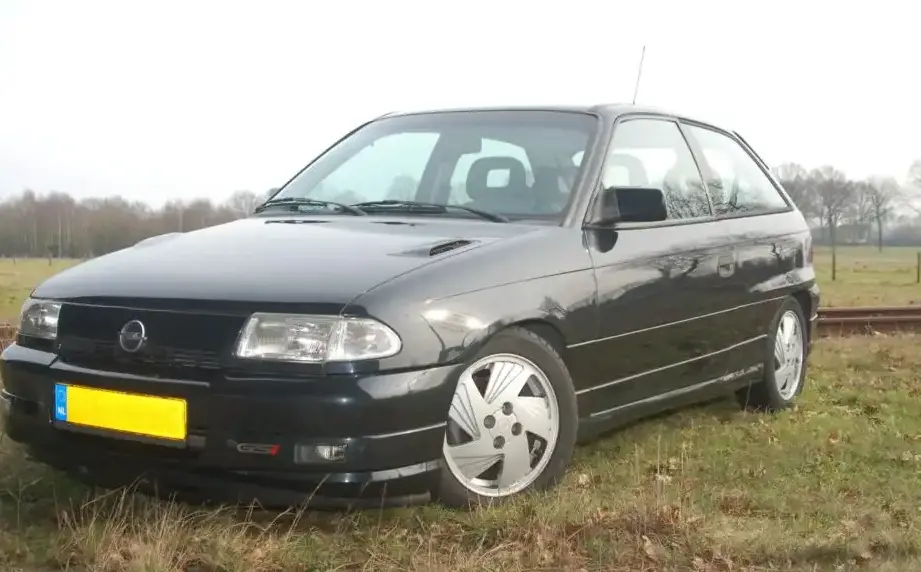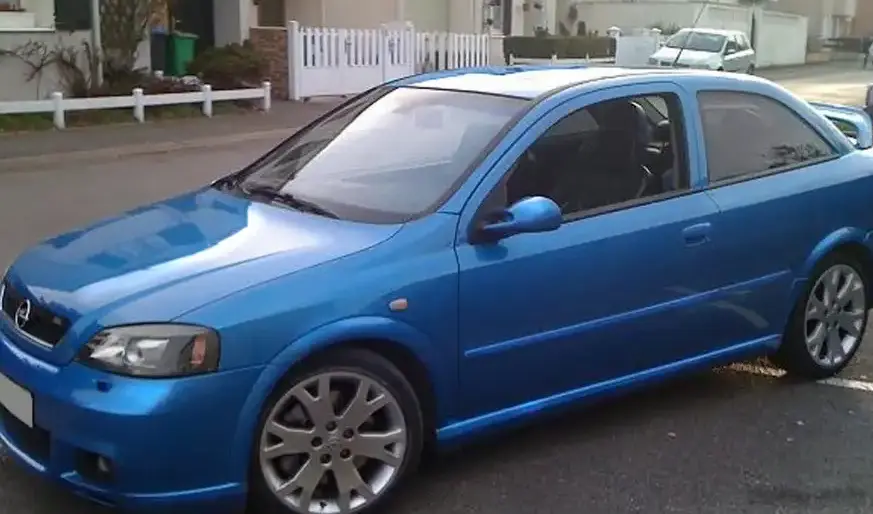
The Opel Astra G (facelift, produced from July 2002 to February 2004) 2.2 DTI, equipped with the Y22DTR engine producing 125 horsepower, represented a significant offering in the compact car segment, particularly within the European market. This variant slotted into the mid-range of the Astra G lineup, offering a balance between performance, fuel economy, and refinement. It was positioned above the lower-powered gasoline and diesel options, but below the more expensive and performance-oriented trims. The facelift brought updated styling cues and minor mechanical improvements to the already successful Astra G platform (1HX0/A3), enhancing its appeal to a broader customer base.
Technical Specifications
| Brand | Opel |
| Model | Astra |
| Generation | Astra G (facelift 2002) |
| Type (Engine) | 2.2 DTI (125 Hp) |
| Start of production | July, 2002 |
| End of production | February, 2004 |
| Powertrain Architecture | Internal Combustion engine |
| Body type | Hatchback |
| Seats | 5 |
| Doors | 3-5 |
| Fuel consumption (urban) | 8.7 l/100 km (27 US mpg, 32.5 UK mpg, 11.5 km/l) |
| Fuel consumption (extra urban) | 4.9 l/100 km (48 US mpg, 57.6 UK mpg, 20.4 km/l) |
| Fuel Type | Diesel |
| Acceleration 0 – 100 km/h | 9.9 sec |
| Acceleration 0 – 62 mph | 9.9 sec |
| Acceleration 0 – 60 mph | 9.4 sec |
| Maximum speed | 203 km/h (126.14 mph) |
| Weight-to-power ratio | 10 kg/Hp, 99.6 Hp/tonne |
| Weight-to-torque ratio | 4.5 kg/Nm, 223.1 Nm/tonne |
| Power | 125 Hp @ 4000 rpm |
| Power per litre | 57.6 Hp/l |
| Torque | 280 Nm @ 1500 rpm (206.52 lb.-ft. @ 1500 rpm) |
| Engine layout | Front, Transverse |
| Engine Model/Code | Y22DTR |
| Engine displacement | 2171 cm3 (132.48 cu. in.) |
| Number of cylinders | 4 |
| Engine configuration | Inline |
| Cylinder Bore | 84 mm (3.31 in.) |
| Piston Stroke | 98 mm (3.86 in.) |
| Compression ratio | 18.5:1 |
| Number of valves per cylinder | 4 |
| Fuel injection system | Diesel Commonrail |
| Engine aspiration | Turbocharger, Intercooler |
| Valvetrain | OHC |
| Engine oil capacity | 5.5 l (5.81 US qt, 4.84 UK qt) |
| Coolant capacity | 7.9 l (8.35 US qt, 6.95 UK qt) |
| Kerb Weight | 1255 kg (2766.8 lbs.) |
| Max. weight | 1800 kg (3968.32 lbs.) |
| Max load | 545 kg (1201.52 lbs.) |
| Trunk (boot) space – minimum | 370 l (13.07 cu. ft.) |
| Trunk (boot) space – maximum | 1140 l (40.26 cu. ft.) |
| Fuel tank capacity | 52 l (13.74 US gal, 11.44 UK gal) |
| Length | 4110 mm (161.81 in.) |
| Width | 1709 mm (67.28 in.) |
| Width including mirrors | 1967 mm (77.44 in.) |
| Height | 1425 mm (56.1 in.) |
| Wheelbase | 2606 mm (102.6 in.) |
| Front track | 1484 mm (58.43 in.) |
| Rear track | 1460 mm (57.48 in.) |
| Front overhang | 791 mm (31.14 in.) |
| Rear overhang | 713 mm (28.07 in.) |
| Ride height (ground clearance) | 160 mm (6.3 in.) |
| Drag coefficient (Cd) | 0.32 |
| Drivetrain Architecture | ICE to Front Wheels |
| Drive wheel | Front wheel drive |
| Number of gears | 5 |
| Gearbox type | Manual transmission |
| Front suspension | Wishbone |
| Rear suspension | Suspension with traction connecting levers |
| Front brakes | Ventilated discs |
| Rear brakes | Disc |
| Assisting systems | ABS (Anti-lock braking system) |
| Steering type | Steering rack and pinion |
| Power steering | Hydraulic |
| Tires size | 205/50 R16 |
| Wheel rims size | 16 |
Powertrain & Engine Architecture
The heart of the Astra G 2.2 DTI was the Y22DTR, a 2.2-liter inline-four cylinder diesel engine. This engine was a product of Opel’s collaboration with Isuzu, leveraging Japanese diesel technology. The Y22DTR featured a direct injection common rail system, delivering fuel at extremely high pressures for improved combustion efficiency and reduced emissions. The engine utilized an overhead camshaft (OHC) valvetrain, operating four valves per cylinder. A turbocharger with an intercooler was employed to boost power output, providing 125 horsepower at 4000 rpm and a substantial 280 Nm (206.52 lb.-ft.) of torque at a low 1500 rpm. This torque curve made the engine particularly flexible and suited to everyday driving. The engine was paired with a five-speed manual transmission, providing a balance between fuel economy and performance. The transmission’s gear ratios were tuned to maximize the engine’s torque, offering brisk acceleration and comfortable cruising.
Driving Characteristics
The 2.2 DTI automatic Astra G offered a comfortable and refined driving experience. The engine’s strong low-end torque meant that the car felt responsive in urban environments, requiring minimal gear changes. While not a sports car, the 9.9-second 0-62 mph acceleration was respectable for its class and provided enough power for overtaking maneuvers. Compared to the lower-powered 1.6-liter gasoline versions, the 2.2 DTI offered significantly more pulling power, especially when fully loaded. However, it wasn’t as nimble or rev-happy as the higher-performance Astra variants like the GSi. The automatic transmission, while convenient, did result in a slight performance penalty compared to the manual gearbox, and some drivers noted a degree of ‘hunting’ for the right gear in certain situations. The suspension provided a good compromise between comfort and handling, absorbing bumps well while maintaining reasonable body control.
Equipment & Trim Levels
The 2.2 DTI trim typically included features such as air conditioning, power windows, central locking, and an upgraded stereo system. Interior upholstery was generally cloth, with options for upgraded materials available. Safety features included ABS brakes, driver and passenger airbags, and seatbelt pretensioners. Optional extras included alloy wheels, a sunroof, and a more advanced audio system. The specific trim level (e.g., Comfort, Elegance, Sport) dictated the standard equipment, with higher trims offering more luxurious appointments.
Chassis & Braking
The Astra G utilized a MacPherson strut front suspension and a torsion beam rear suspension. The 2.2 DTI models generally featured ventilated disc brakes on the front wheels and solid disc brakes on the rear, providing adequate stopping power for the vehicle’s weight and performance. ABS (Anti-lock Braking System) was standard, enhancing safety during emergency braking situations. The steering was a hydraulic power-assisted rack and pinion system, offering a good balance between feel and ease of use. Stabilizer bars were fitted to both the front and rear axles to reduce body roll during cornering.
Market Reception & Comparison
The Astra G 2.2 DTI was generally well-received by automotive critics. It was praised for its fuel efficiency, strong torque output, and comfortable ride. However, some reviewers noted that the engine could be somewhat noisy compared to gasoline alternatives. Compared to the 1.8-liter gasoline versions, the 2.2 DTI offered superior fuel economy and more torque, making it a better choice for drivers who frequently traveled long distances or carried heavy loads. The 2.2 DTI was also more reliable than some of the earlier Opel diesel engines, benefiting from the Isuzu-derived technology. However, maintenance costs could be higher due to the complexity of the common rail diesel injection system.
Legacy
The Y22DTR engine, while generally reliable, is now showing its age. Common issues include injector failures, turbocharger wear, and potential problems with the EGR valve. However, with proper maintenance, these engines can still provide many years of service. In the used car market, the Astra G 2.2 DTI represents a relatively affordable and practical option for those seeking a comfortable and fuel-efficient compact car. Its strong torque and robust construction make it a capable all-rounder, and its relatively simple mechanicals (compared to more modern vehicles) make it appealing to DIY mechanics.