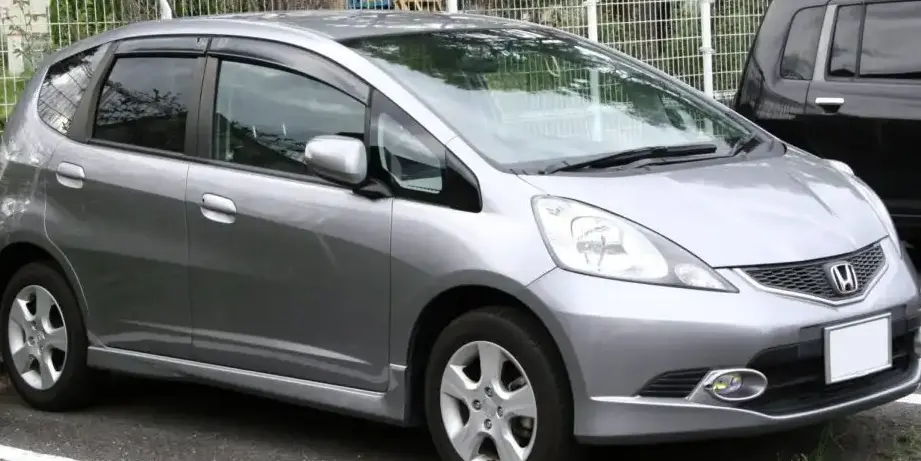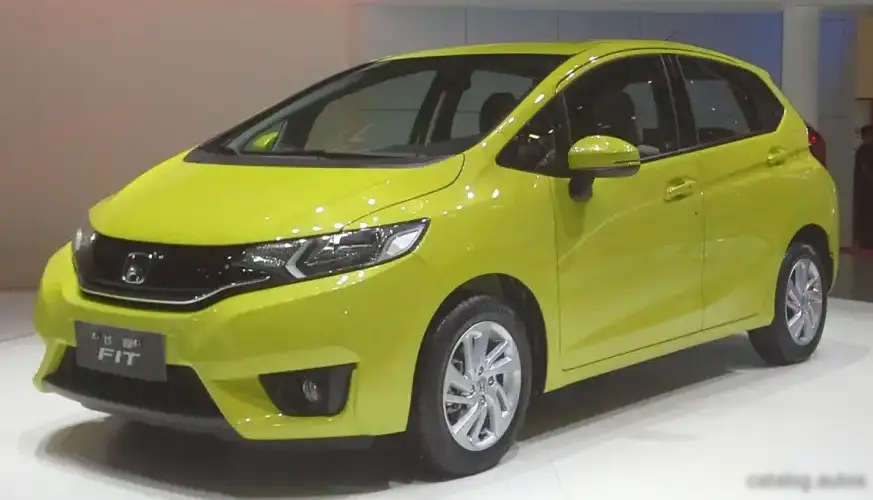
The Honda Fit III 1.3, producing 100 horsepower, was a key variant in the third generation of Honda’s globally popular subcompact hatchback. Produced from 2013 to 2017, this model served as an entry point into the Fit lineup in many markets, particularly in Asia and Europe, though it was also available in limited quantities in North America. It was built on the versatile 1HX0/A3 platform, known for its clever space utilization and efficient packaging. This specific engine and transmission combination aimed to balance affordability with Honda’s reputation for reliability and fuel economy.
Technical Specifications
| Brand | Honda |
| Model | FIT |
| Generation | Fit III |
| Type (Engine) | 1.3 (100 Hp) |
| Start of production | 2013 |
| End of production | 2017 |
| Powertrain Architecture | Internal Combustion engine |
| Body type | Hatchback |
| Seats | 5 |
| Doors | 5 |
| Fuel Type | Petrol (Gasoline) |
| Weight-to-power ratio | 10 kg/Hp, 100 Hp/tonne |
| Weight-to-torque ratio | 8.4 kg/Nm, 119 Nm/tonne |
| Power | 100 Hp @ 6000 rpm |
| Power per litre | 75.9 Hp/l |
| Torque | 119 Nm @ 5000 rpm |
| Torque (lb-ft) | 87.77 lb.-ft. @ 5000 rpm |
| Engine layout | Front, Transverse |
| Engine Model/Code | L13B |
| Engine displacement | 1317 cm3 |
| Engine displacement (cu. in.) | 80.37 cu. in. |
| Number of cylinders | 4 |
| Engine configuration | Inline |
| Cylinder Bore | 73 mm |
| Cylinder Bore (in.) | 2.87 in. |
| Piston Stroke | 78.7 mm |
| Piston Stroke (in.) | 3.1 in. |
| Compression ratio | 13.5:1 |
| Number of valves per cylinder | 4 |
| Fuel injection system | Multi-port manifold injection |
| Engine aspiration | Naturally aspirated engine |
| Valvetrain | DOHC, i-VTEC |
| Engine oil capacity | 3.3 l |
| Engine oil capacity (US qt) | 3.49 US qt |
| Engine oil capacity (UK qt) | 2.9 UK qt |
| Coolant | 3.35 l |
| Coolant (US qt) | 3.54 US qt |
| Coolant (UK qt) | 2.95 UK qt |
| Kerb Weight | 1000 kg |
| Kerb Weight (lbs) | 2204.62 lbs |
| Fuel tank capacity | 40 l |
| Fuel tank capacity (US gal) | 10.57 US gal |
| Fuel tank capacity (UK gal) | 8.8 UK gal |
| Length | 3955 mm |
| Length (in.) | 155.71 in. |
| Width | 1695 mm |
| Width (in.) | 66.73 in. |
| Height | 1525 mm |
| Height (in.) | 60.04 in. |
| Wheelbase | 2530 mm |
| Wheelbase (in.) | 99.61 in. |
| Front track | 1490 mm |
| Front track (in.) | 58.66 in. |
| Rear track | 1480 mm |
| Rear track (in.) | 58.27 in. |
| Ride height (ground clearance) | 135 mm |
| Ride height (in.) | 5.31 in. |
| Drag coefficient (Cd) | 0.30 |
| Minimum turning circle | 9.4 m |
| Minimum turning circle (ft) | 30.84 ft |
| Drivetrain Architecture | Front wheel drive |
| Number of gears | 5 |
| Gearbox type | manual transmission |
| Front brakes | Ventilated discs |
| Rear brakes | Drum |
| Assisting systems | ABS (Anti-lock braking system) |
| Tires size | 175/70 R14 |
| Wheel rims size | 14 |
Powertrain & Engine Architecture
The heart of the Fit III 1.3 was the L13B engine, a 1.3-liter inline-four cylinder gasoline engine. This engine was part of Honda’s Earth Dreams Technology series, focusing on efficiency and reduced emissions. The L13B featured a high compression ratio of 13.5:1, contributing to its relatively good power output for its size. It employed multi-point fuel injection and Honda’s intelligent Variable Valve Timing and Lift Electronic Control (i-VTEC) system. The i-VTEC system allowed for optimized valve timing based on engine speed and load, improving both fuel economy and performance. The engine was transversely mounted in the front of the vehicle. The standard transmission was a five-speed manual, but a Continuously Variable Transmission (CVT) was also offered in some markets. The CVT was designed to maximize fuel efficiency by keeping the engine operating in its most efficient range.
Driving Characteristics
The 1.3-liter engine, paired with the five-speed manual transmission, provided adequate, though not exhilarating, performance. Acceleration was modest, with a focus on fuel efficiency rather than outright speed. The gear ratios were tuned for everyday driving, prioritizing smooth operation and reasonable fuel economy. Compared to the 1.5-liter engine option available in other Fit models, the 1.3 felt noticeably less powerful, especially when fully loaded or climbing hills. The manual transmission offered a direct and engaging driving experience, while the optional CVT provided smoother, but less involving, acceleration. The lighter weight of the 1.3-liter engine did contribute to slightly more nimble handling compared to its larger-engined siblings.
Equipment & Trim Levels
The 1.3-liter Fit typically represented the base trim level in many markets. Standard equipment generally included air conditioning, power windows, power door locks, and a basic audio system. Safety features such as ABS and airbags were also standard. Interior upholstery was typically cloth, and the dashboard featured a functional, if somewhat basic, design. Optional extras included alloy wheels, a more advanced audio system with Bluetooth connectivity, and a rearview camera. Higher trim levels, equipped with the 1.5-liter engine, offered additional features such as automatic climate control, keyless entry, and upgraded interior materials.
Chassis & Braking
The Fit III utilized a front-wheel-drive layout with a MacPherson strut suspension in the front and a torsion beam suspension in the rear. The torsion beam setup was chosen for its compact design and cost-effectiveness. The front brakes were ventilated discs, providing adequate stopping power, while the rear brakes were drums, a cost-saving measure common in entry-level models. The suspension was tuned for comfort and ride quality, prioritizing a smooth ride over sporty handling. Stabilizer bars were included to reduce body roll during cornering, but the overall handling characteristics were geared towards everyday usability rather than performance.
Market Reception & Comparison
The Honda Fit III 1.3 was generally well-received by critics as an affordable and practical subcompact hatchback. Its fuel efficiency and spacious interior were frequently praised. However, the engine’s lack of power was a common criticism, particularly when compared to competitors offering more powerful engines. Compared to the 1.5-liter Fit, the 1.3 offered lower running costs but sacrificed performance. The 1.5-liter models were often seen as a better value for those willing to spend a bit more. In terms of reliability, the L13B engine proved to be very durable, with few reported issues. Fuel economy was a strong point, consistently achieving impressive numbers in real-world driving conditions.
Legacy
The Honda Fit III 1.3 remains a popular choice in the used car market, particularly for buyers seeking an affordable, reliable, and fuel-efficient vehicle. The L13B engine has a reputation for longevity, and maintenance costs are generally low. While not the most powerful or exciting vehicle, the Fit III 1.3 offers a practical and economical transportation solution. Its clever interior packaging and versatile cargo space continue to appeal to buyers looking for a subcompact hatchback that maximizes space and functionality. The model’s enduring popularity is a testament to Honda’s commitment to building durable and efficient vehicles.