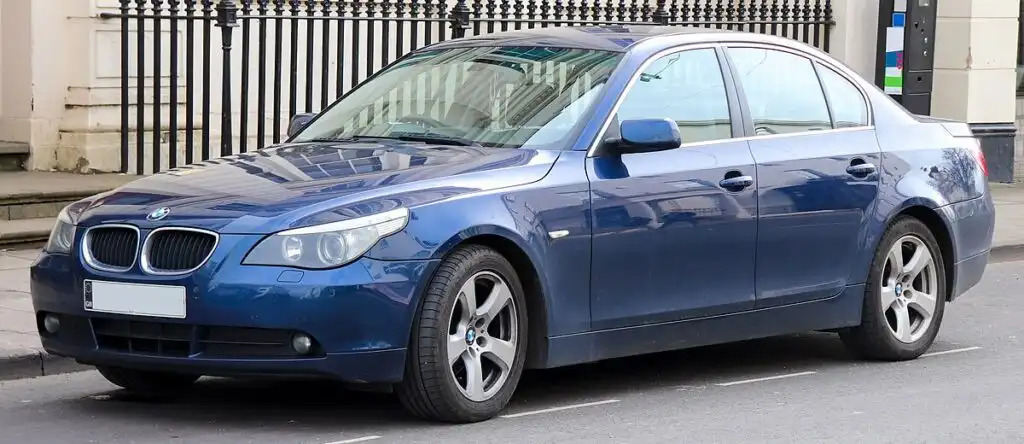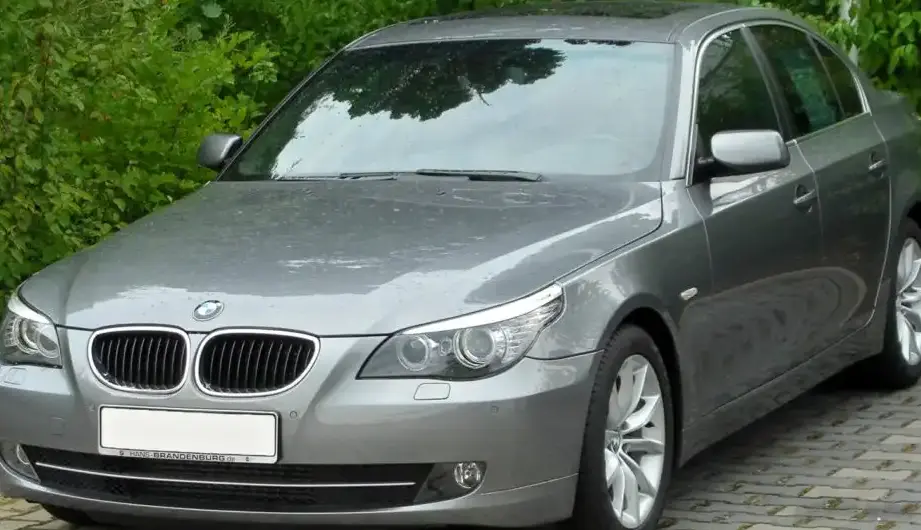
The BMW 5 Series (E60 LCI) 530d xDrive, produced from 2007 to 2010, represented a significant evolution of BMW’s mid-size executive car. This variant, powered by the M57D30 engine and featuring BMW’s xDrive all-wheel-drive system, was positioned as a premium offering within the 5 Series lineup, balancing performance, efficiency, and all-weather capability. The “LCI” designation refers to the *Life Cycle Impulse*, BMW’s term for a comprehensive facelift, bringing updated styling, technology, and engine refinements to the E60 platform.
Technical Specifications
| Brand | BMW |
| Model | 5 Series |
| Generation | 5 Series (E60 LCI, facelift 2007) |
| Type (Engine) | 530d (235 Hp) xDrive |
| Start of production | 2007 |
| End of production | 2010 |
| Powertrain Architecture | Internal Combustion engine |
| Body type | Sedan |
| Seats | 5 |
| Doors | 4 |
| Fuel consumption (urban) | 10.2 l/100 km (23.1 US mpg, 27.7 UK mpg, 9.8 km/l) |
| Fuel consumption (extra urban) | 6.1 l/100 km (38.6 US mpg, 46.3 UK mpg, 16.4 km/l) |
| Fuel consumption (combined) | 6.9 l/100 km (34.1 US mpg, 40.9 UK mpg, 14.5 km/l) |
| Fuel Type | Diesel |
| Acceleration 0 – 100 km/h | 6.6 sec |
| Acceleration 0 – 62 mph | 6.6 sec |
| Acceleration 0 – 60 mph | 6.3 sec |
| Maximum speed | 242 km/h (150.37 mph) |
| Emission standard | Euro 4 |
| Weight-to-power ratio | 6.9 kg/Hp, 145.5 Hp/tonne |
| Weight-to-torque ratio | 3.2 kg/Nm, 309.6 Nm/tonne |
| Power | 235 Hp @ 4000 rpm |
| Power per litre | 78.5 Hp/l |
| Torque | 500 Nm @ 1750-3000 rpm (368.78 lb.-ft. @ 1750-3000 rpm) |
| Engine layout | Front, Longitudinal |
| Engine Model/Code | M57D30 |
| Engine displacement | 2993 cm3 (182.64 cu. in.) |
| Number of cylinders | 6 |
| Engine configuration | Inline |
| Cylinder Bore | 84 mm (3.31 in.) |
| Piston Stroke | 90 mm (3.54 in.) |
| Compression ratio | 17:1 |
| Number of valves per cylinder | 4 |
| Fuel injection system | Diesel Commonrail |
| Engine aspiration | Turbocharger, Intercooler |
| Engine oil capacity | 7.7 l (8.14 US qt | 6.78 UK qt) |
| Coolant | 9.8 l (10.36 US qt | 8.62 UK qt) |
| Kerb Weight | 1615 kg (3560.47 lbs.) |
| Max. weight | 2245 kg (4949.38 lbs.) |
| Max load | 630 kg (1388.91 lbs.) |
| Trunk (boot) space – minimum | 520 l (18.36 cu. ft.) |
| Fuel tank capacity | 70 l (18.49 US gal | 15.4 UK gal) |
| Length | 4841 mm (190.59 in.) |
| Width | 1846 mm (72.68 in.) |
| Height | 1468 mm (57.8 in.) |
| Wheelbase | 2888 mm (113.7 in.) |
| Front track | 1558 mm (61.34 in.) |
| Rear (Back) track | 1581 mm (62.24 in.) |
| Ride height (ground clearance) | 142 mm (5.59 in.) |
| Drag coefficient (Cd) | 0.29 |
| Drive wheel | All wheel drive (4×4) |
| Number of gears and type of gearbox | 6 gears, manual transmission |
| Front suspension | Independent, type McPherson with coil spring and anti-roll bar |
| Rear suspension | Independent coil spring |
| Front brakes | Ventilated discs |
| Rear brakes | Disc |
| Assisting systems | ABS (Anti-lock braking system) |
| Steering type | Steering rack and pinion |
| Power steering | Hydraulic Steering |
| Tires size | 225/50 R17 |
| Wheel rims size | 17 |
Powertrain & Engine Architecture
At the heart of the 530d xDrive lies the M57D30, a 3.0-liter inline-six diesel engine. This engine was a mainstay of BMW’s diesel offerings for several years, known for its robust construction and strong torque output. The ‘D30’ designation indicates its approximate displacement. The M57D30 utilizes a common rail direct injection system, delivering fuel at extremely high pressures for optimized combustion. A variable geometry turbocharger (VGT) with an intercooler further enhances performance by providing increased air intake. The engine also features four valves per cylinder and a robust cast iron block, contributing to its longevity. The 6-speed manual transmission was standard, offering precise shifts and a direct connection to the engine.
Driving Characteristics
The 530d xDrive offered a compelling blend of performance and efficiency. The 235 horsepower and 368 lb-ft of torque provided brisk acceleration, with 0-60 mph times around 6.3 seconds. The xDrive all-wheel-drive system ensured excellent traction in all weather conditions, enhancing stability and confidence. Compared to the higher-output 535d, the 530d prioritized fuel economy and a more relaxed driving experience. While the 535d offered more outright power, the 530d’s torque curve was remarkably flat, providing strong pulling power across a wide range of engine speeds. The manual transmission, while engaging, required a degree of skill to extract the most from the engine, whereas automatic options were available for those prioritizing convenience.
Equipment & Trim Levels
The 530d xDrive typically came well-equipped, reflecting its position as a premium model. Standard features included leather upholstery, automatic climate control, a multi-function steering wheel, and a high-quality audio system. Optional extras were plentiful, including navigation, premium sound systems, sport seats, and various driver assistance features. Trim levels varied depending on the market, but generally offered increasing levels of luxury and technology. The xDrive models often included unique exterior styling cues, such as specific alloy wheel designs and badging.
Chassis & Braking
The E60 5 Series featured a sophisticated chassis design, utilizing independent suspension all around. The front suspension employed a McPherson strut setup with coil springs and an anti-roll bar, while the rear utilized an independent multi-link suspension. This configuration provided a comfortable ride and precise handling. Braking duties were handled by ventilated disc brakes at the front and solid discs at the rear. ABS (Anti-lock Braking System) was standard, enhancing safety and control during emergency braking. The xDrive system intelligently distributed torque between the front and rear axles, optimizing traction and stability.
Market Reception & Comparison
The 530d xDrive was generally well-received by automotive critics. It was praised for its refined engine, comfortable ride, and all-weather capability. Fuel economy was also a strong point, making it an attractive option for drivers covering long distances. Compared to the petrol-powered 530i, the 530d offered significantly better fuel economy and comparable performance. The 535d, with its more powerful engine, appealed to those prioritizing outright speed, but at the expense of fuel efficiency. Reliability was generally good, although some owners reported issues with the diesel particulate filter (DPF) and turbocharger.
Legacy
The BMW E60 530d xDrive remains a popular choice in the used car market. The M57D30 engine is known for its durability, and with proper maintenance, can reliably exceed 200,000 miles. However, potential buyers should be aware of the potential for DPF issues and the cost of maintaining the complex xDrive system. The E60 5 Series, in general, is considered a well-rounded and capable executive car, offering a blend of luxury, performance, and practicality. The 530d xDrive, in particular, represents a sweet spot in the lineup, providing a compelling combination of efficiency and all-weather capability.