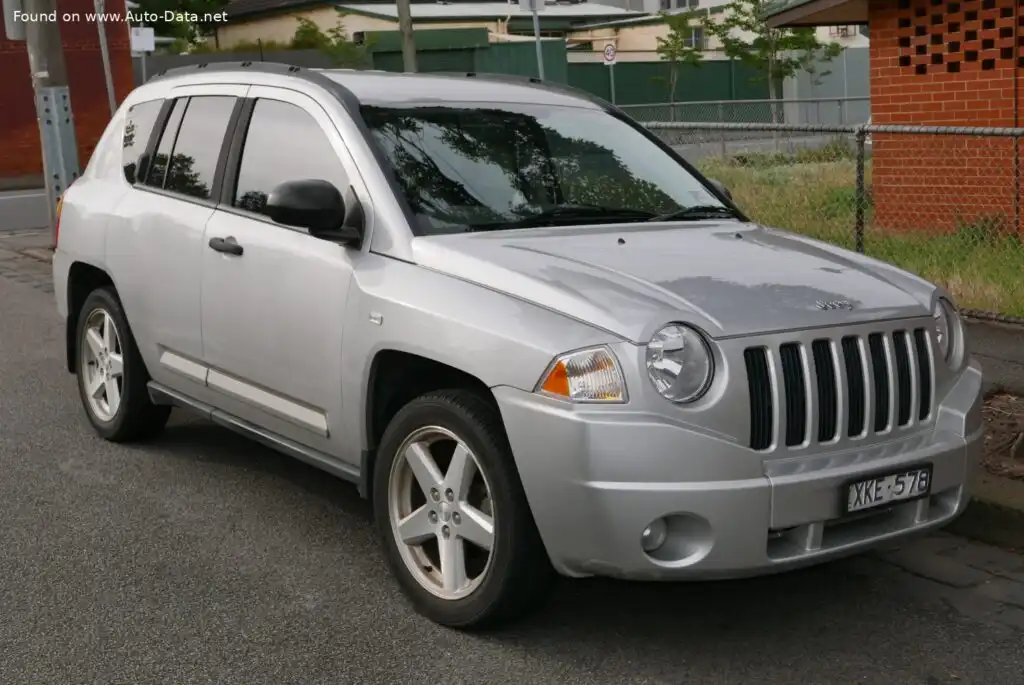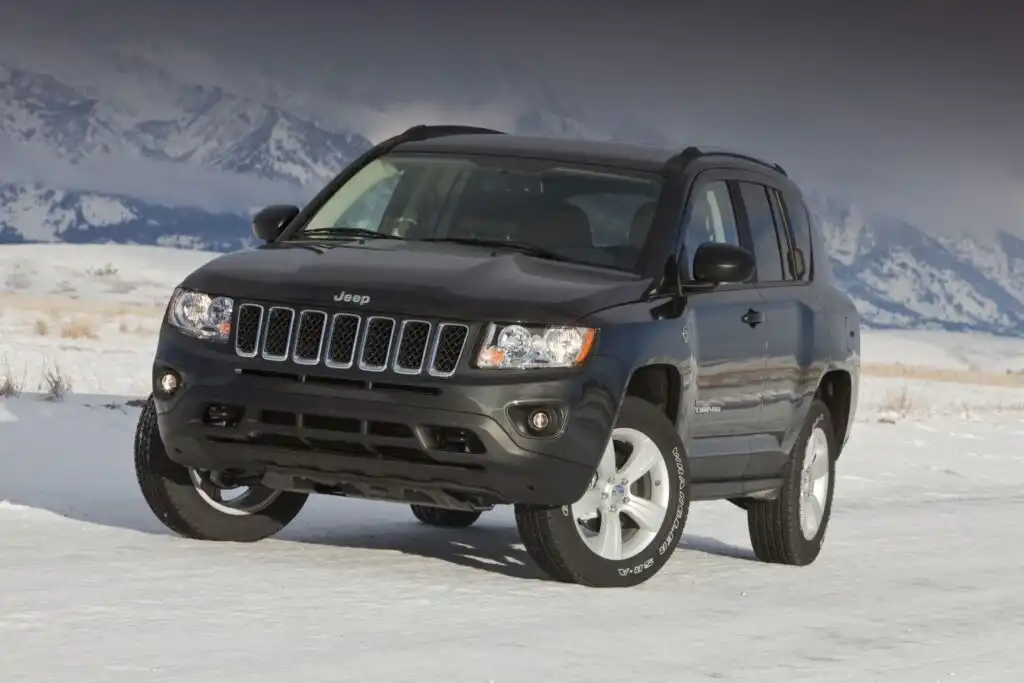
The Jeep Compass I (MK, facelift 2011) 2.2 CRD 4×4 represents a mid-cycle refresh of the first-generation Compass, produced from 2011 to 2015. Positioned as a compact crossover SUV, it aimed to offer Jeep’s renowned four-wheel-drive capability in a more fuel-efficient and accessible package. This variant, equipped with the 2.2-liter turbodiesel engine producing 163 horsepower, was a significant offering in European and other international markets where diesel engines were highly favored. It sat in the mid-range of the Compass lineup, offering a balance between performance, economy, and features, appealing to buyers seeking all-weather capability without the higher price tag of the more powerful petrol options.
Technical Specifications
| Brand | Jeep |
| Model | Compass |
| Generation | Compass I (MK, facelift 2011) |
| Type (Engine) | 2.2 CRD (163 Hp) 4×4 |
| Start of production | 2011 |
| End of production | 2015 |
| Powertrain Architecture | Internal Combustion engine |
| Body type | SUV, Crossover |
| Seats | 5 |
| Doors | 4 |
| Fuel consumption (urban) | 7.9 l/100 km (29.8 US mpg, 35.8 UK mpg, 12.7 km/l) |
| Fuel consumption (extra urban) | 5.9 l/100 km (39.9 US mpg, 47.9 UK mpg, 16.9 km/l) |
| Fuel consumption (combined) | 6.6 l/100 km (35.6 US mpg, 42.8 UK mpg, 15.2 km/l) |
| CO2 emissions | 172 g/km |
| Fuel Type | Diesel |
| Acceleration 0 – 100 km/h | 10.9 sec |
| Acceleration 0 – 62 mph | 10.9 sec |
| Acceleration 0 – 60 mph | 10.4 sec |
| Maximum speed | 201 km/h (124.9 mph) |
| Emission standard | Euro 5 |
| Weight-to-power ratio | 9.8 kg/Hp, 101.6 Hp/tonne |
| Weight-to-torque ratio | 5 kg/Nm, 199.4 Nm/tonne |
| Power | 163 Hp @ 3600-4200 rpm |
| Power per litre | 76.1 Hp/l |
| Torque | 320 Nm @ 1400-3600 rpm (236.02 lb.-ft. @ 1400-3600 rpm) |
| Engine layout | Front, Transverse |
| Engine Model/Code | ENE |
| Engine displacement | 2143 cm3 (130.77 cu. in.) |
| Number of cylinders | 4 |
| Engine configuration | Inline |
| Cylinder Bore | 83 mm (3.27 in.) |
| Piston Stroke | 99 mm (3.9 in.) |
| Compression ratio | 16.2:1 |
| Number of valves per cylinder | 4 |
| Fuel injection system | Diesel Commonrail |
| Engine aspiration | Turbocharger, Intercooler |
| Valvetrain | DOHC |
| Engine oil capacity | 7.5 l (7.93 US qt | 6.6 UK qt) |
| Coolant capacity | 9.5 l (10.04 US qt | 8.36 UK qt) |
| Kerb Weight | 1605-1655 kg (3538.42 – 3648.65 lbs.) |
| Max. weight | 2075 kg (4574.59 lbs.) |
| Max load | 420-470 kg (925.94 – 1036.17 lbs.) |
| Trunk (boot) space – minimum | 458 l (16.17 cu. ft.) |
| Trunk (boot) space – maximum | 1269 l (44.81 cu. ft.) |
| Fuel tank capacity | 51 l (13.47 US gal | 11.22 UK gal) |
| Max. roof load | 68 kg (149.91 lbs.) |
| Permitted trailer load with brakes (12%) | 2000 kg (4409.25 lbs.) |
| Permitted trailer load without brakes | 450 kg (992.08 lbs.) |
| Length | 4448 mm (175.12 in.) |
| Width | 1812 mm (71.34 in.) |
| Height | 1718 mm (67.64 in.) |
| Wheelbase | 2635 mm (103.74 in.) |
| Front track | 1520 mm (59.84 in.) |
| Rear track | 1520 mm (59.84 in.) |
| Front overhang | 916 mm (36.06 in.) |
| Rear overhang | 897 mm (35.31 in.) |
| Ride height (ground clearance) | 205 mm (8.07 in.) |
| Minimum turning circle | 11.3 m (37.07 ft.) |
| Approach angle | 20° |
| Departure angle | 32° |
| Ramp-over angle | 20° |
| Drivetrain Architecture | The Internal combustion engine (ICE) drives the front wheels permanently, and the rear wheels are driven through an electrically or mechanically operated clutch if necessary. |
| Drive wheel | All wheel drive (4×4) |
| Number of gears | 6 |
| Type of gearbox | manual transmission |
| Front suspension | Independent, type McPherson with coil spring and anti-roll bar |
| Rear suspension | Independent multi-link spring suspension with stabilizer |
| Front brakes | Ventilated discs |
| Rear brakes | Disc |
| Assisting systems | ABS (Anti-lock braking system) |
| Steering type | Steering rack and pinion |
| Power steering | Hydraulic Steering |
| Tires size | 215/60 R17 |
| Wheel rims size | 6.5J x 17 |
Powertrain & Engine Architecture
The heart of this Compass variant is the 2.2-liter (2143 cc) inline-four cylinder diesel engine, designated the ENE. This engine falls under the Mercedes-Benz OM646 family, a collaboration between DaimlerChrysler (then the parent company of Jeep) and Mercedes-Benz. It utilizes a common rail direct injection system, delivering fuel at extremely high pressure for optimized combustion. The engine features a single overhead camshaft (SOHC) design per cylinder bank, operating four valves per cylinder (DOHC). A turbocharger with an intercooler is employed to boost power and torque, providing 163 horsepower at 3600-4200 rpm and 320 Nm (236 lb-ft) of torque between 1400-3600 rpm. The engine’s robust bottom end and relatively flat torque curve made it well-suited for the Compass’s all-wheel-drive system and intended use as a versatile family vehicle. The 6-speed manual transmission was standard, providing a good balance between fuel efficiency and driver control.
Driving Characteristics
The 2.2 CRD 4×4 Compass offered a noticeable step up in performance compared to the base petrol engines. While not a sports car, the 163 hp and 320 Nm of torque provided adequate acceleration for everyday driving and highway merging. The manual transmission allowed for precise control, and the gear ratios were tuned for a blend of fuel economy and responsiveness. The all-wheel-drive system, while primarily front-wheel drive under normal conditions, could automatically engage the rear wheels when traction was lost, providing enhanced stability in slippery conditions. Compared to higher-output petrol versions, the diesel offered superior fuel economy and a more relaxed driving experience, but lacked the immediate responsiveness of the gasoline engines. The 0-60 mph time of around 10.4 seconds reflects this balance.
Equipment & Trim Levels
The 2.2 CRD 4×4 trim typically included standard features such as air conditioning, power windows and locks, a basic audio system with CD player, and alloy wheels. Safety features included ABS brakes, electronic stability control, and multiple airbags. Optional extras could include a premium audio system, leather upholstery, a sunroof, and a navigation system. The interior generally featured durable materials and a functional design, prioritizing practicality over luxury. Trim levels varied by market, but generally offered increasing levels of comfort and convenience features.
Chassis & Braking
The Compass I utilized a McPherson strut front suspension and an independent multi-link rear suspension. This setup provided a reasonable level of ride comfort and handling, although it wasn’t particularly sporty. Stabilizer bars were fitted to both axles to reduce body roll. Braking duties were handled by ventilated discs at the front and solid discs at the rear. The hydraulic power steering provided adequate assistance, although it lacked the feel of more modern electric systems. The tires were typically 215/60 R17, offering a good compromise between comfort and grip.
Market Reception & Comparison
The 2.2 CRD 4×4 Compass was generally well-received in markets where diesel engines were popular. Critics praised its fuel efficiency, all-wheel-drive capability, and relatively affordable price point. However, some reviewers noted the interior quality was below par compared to some competitors, and the driving experience wasn’t particularly engaging. Compared to the petrol versions, the diesel offered significantly better fuel economy, making it a more attractive option for long-distance drivers. Compared to rivals like the Nissan Qashqai and Kia Sportage, the Compass offered a more rugged image and Jeep’s established off-road heritage, but often lagged behind in terms of refinement and interior space.
Legacy
The 2.2 CRD engine, being based on the Mercedes-Benz OM646 design, proved to be relatively reliable, although like any diesel engine, it required regular maintenance and proper fuel quality. Common issues included potential problems with the fuel injectors and the diesel particulate filter (DPF). Today, well-maintained examples of the 2.2 CRD Compass can still be found on the used car market, offering a practical and affordable option for those seeking a capable all-wheel-drive crossover. Its enduring appeal lies in its blend of fuel efficiency, practicality, and the Jeep brand’s reputation for durability.