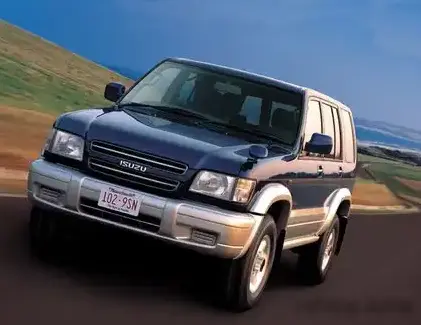
The Isuzu Bighorn Pickup 2.2 D, producing 87 horsepower, was a utilitarian vehicle offered between 1987 and 1991. It represented a key offering in Isuzu’s light commercial vehicle range, primarily targeted at markets requiring a robust and capable pickup truck. This variant occupied the lower end of the Bighorn Pickup lineup, focusing on affordability and fuel efficiency rather than outright performance. It was part of the broader Bighorn series, which included larger SUVs, but the pickup version catered to a different segment – those needing a workhorse vehicle for agricultural, construction, or general transport duties. The Bighorn nameplate itself was used across various Isuzu models, often denoting a rugged, off-road capable vehicle.
Technical Specifications
| Brand | Isuzu |
| Model | Bighorn |
| Generation | Bighorn Pickup |
| Type (Engine) | 2.2 D (87 Hp) |
| Start of production | 1987 |
| End of production | 1991 |
| Powertrain Architecture | Internal Combustion engine |
| Body type | Pick-up |
| Seats | 5 |
| Doors | 2 |
| Fuel Type | Diesel |
| Weight-to-power ratio | 17.8 kg/Hp, 56.1 Hp/tonne |
| Weight-to-torque ratio | 8.5 kg/Nm, 118.1 Nm/tonne |
| Power | 87 Hp @ 4000 rpm |
| Power per litre | 38.9 Hp/l |
| Torque | 183 Nm @ 4000 rpm (134.97 lb.-ft. @ 4000 rpm) |
| Engine layout | Front, Longitudinal |
| Engine Model/Code | C223 |
| Engine displacement | 2238 cm3 (136.57 cu. in.) |
| Fuel injection system | Precombustion chamber injection |
| Engine aspiration | Turbocharger |
| Valvetrain | OHC |
| Kerb Weight | 1550 kg (3417.17 lbs) |
| Fuel tank capacity | 83 l (21.93 US gal | 18.26 UK gal) |
| Length | 4120 mm (162.2 in) |
| Width | 1650 mm (64.96 in) |
| Height | 1845 mm (72.64 in) |
| Wheelbase | 2300 mm (90.55 in) |
| Minimum turning circle | 9.6 m (31.5 ft) |
| Drive wheel | All wheel drive (4×4) |
| Number of gears | 5 gears, manual transmission |
| Front brakes | Ventilated discs |
| Rear brakes | Drum |
Powertrain & Engine Architecture
The heart of the Bighorn Pickup 2.2 D was the Isuzu C223 diesel engine. This 2.2-liter, four-cylinder engine utilized precombustion chamber injection, a common diesel technology of the era. This system involved injecting fuel into a precombustion chamber connected to the main cylinder, promoting more complete combustion and reducing engine noise. The engine was turbocharged, which significantly improved power output compared to naturally aspirated diesel engines of similar displacement. The turbocharger boosted the engine to 87 horsepower at 4000 rpm and 183 Nm (134.97 lb-ft) of torque, also at 4000 rpm. The engine featured an overhead camshaft (OHC) valvetrain, a relatively modern design for a diesel engine in the late 1980s. The five-speed manual transmission was the only gearbox option available with this engine, prioritizing durability and simplicity over sophisticated automatic shifting.
Driving Characteristics
The 2.2-liter diesel engine in the Bighorn Pickup delivered modest performance. While not a fast vehicle, the turbocharger provided a useful boost in power, making it capable of handling moderate loads and tackling inclines. The five-speed manual transmission allowed the driver to keep the engine in its optimal power band. The gear ratios were geared towards utility, prioritizing low-end torque for hauling and towing. Compared to potential higher-output gasoline versions (which were not widely available in many markets), the diesel offered significantly better fuel economy but lacked the responsiveness and refinement. The 4×4 system provided enhanced traction on loose surfaces, making it suitable for off-road use, although it wasn’t designed for extreme rock crawling. The overall driving experience was characterized by its robustness and practicality rather than sporty handling.
Equipment & Trim Levels
The Bighorn Pickup 2.2 D was generally offered with a basic level of equipment, reflecting its work-oriented nature. Standard features typically included a vinyl interior, basic instrumentation, and a robust heating system. Power steering was not always standard, and air conditioning was often an optional extra. The dashboard layout was functional and straightforward, prioritizing ease of use over aesthetic appeal. Trim levels were limited, with most variations revolving around optional extras such as upgraded tires, a more durable bed liner, or a basic audio system. The focus was on providing a reliable and durable vehicle at an affordable price point.
Chassis & Braking
The Bighorn Pickup featured a body-on-frame construction, typical of pickup trucks of the era. This provided a high level of durability and load-carrying capacity. The front suspension utilized independent, ventilated disc brakes, while the rear suspension employed a solid axle with drum brakes. The rear drum brakes were a cost-saving measure, common in this class of vehicle. Stabilizer bars were often omitted to maximize suspension travel and off-road capability. The chassis was designed to withstand the stresses of hauling heavy loads and traversing rough terrain. The 4×4 system typically featured a part-time transfer case, allowing the driver to switch between two-wheel drive and four-wheel drive as needed.
Market Reception & Comparison
The Isuzu Bighorn Pickup 2.2 D was generally well-received as a dependable and affordable workhorse. Critics praised its robust construction and fuel-efficient diesel engine. However, it was often criticized for its basic interior and lack of refinement compared to some of its competitors. Compared to other pickups available at the time, such as the Toyota Hilux or Nissan Datsun, the Bighorn offered a competitive price point and a capable 4×4 system. Its fuel economy was generally better than gasoline-powered alternatives, making it an attractive option for those who needed a vehicle for long distances or heavy use. Reliability was generally good, although maintenance costs could be higher due to the diesel engine and its associated components.
Legacy
The Isuzu Bighorn Pickup 2.2 D, while not a particularly glamorous vehicle, established a reputation for reliability and durability. The C223 diesel engine proved to be a long-lasting powerplant, and many examples remain in service today, particularly in regions where robust and affordable transportation is essential. In the used car market, these pickups are often sought after by those looking for a simple, dependable vehicle for agricultural or light commercial use. While parts availability can be a challenge in some regions, the relatively straightforward mechanical design makes them relatively easy to maintain for those with mechanical skills. The Bighorn Pickup 2.2 D represents a practical and honest vehicle from a bygone era, embodying the spirit of rugged utility.