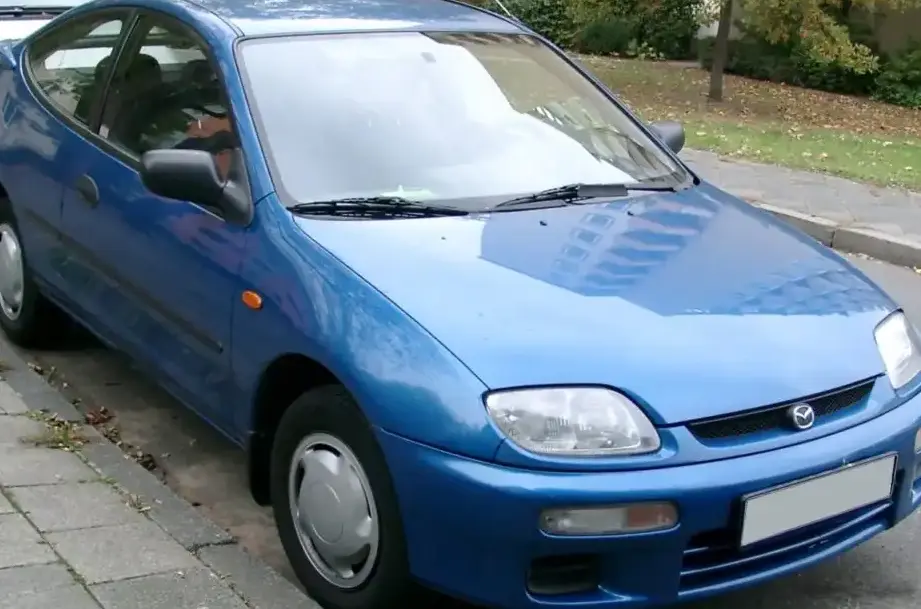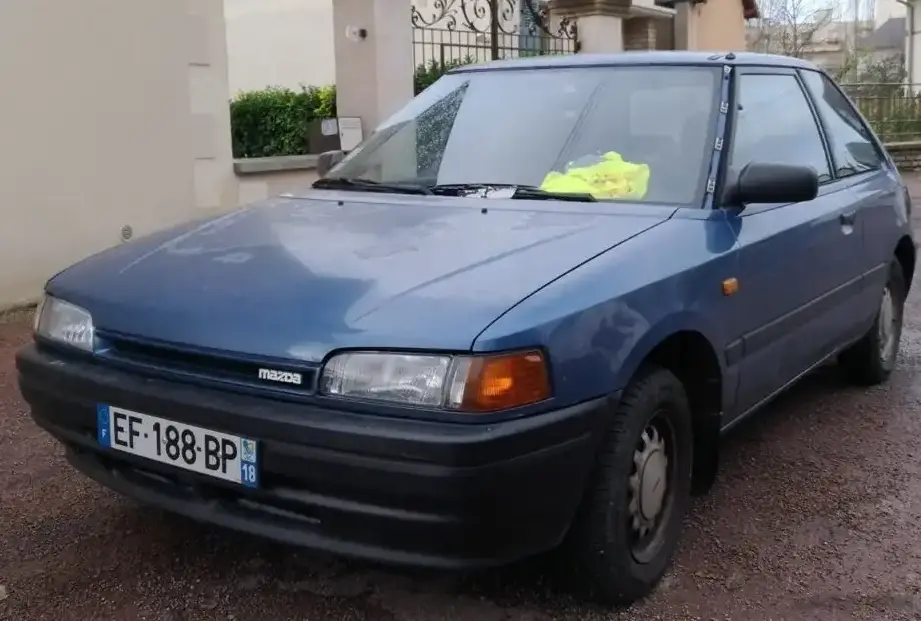
The Mazda 323 S IV (BG), produced between 1991 and 1994, represented Mazda’s entry into the competitive compact hatchback segment. This generation, known internally as the BG platform, aimed to offer a blend of practicality, affordability, and Mazda’s signature sporty handling. The 1.6-liter 16-valve variant, producing 88 horsepower, served as a core model within the range, positioned as a sensible and economical choice for buyers prioritizing fuel efficiency and everyday usability over outright performance. It was a key offering in European and Asian markets, where compact hatchbacks were highly popular, and also saw moderate sales in other regions.
Technical Specifications
| Brand | Mazda |
| Model | 323 |
| Generation | 323 S IV (BG) |
| Type (Engine) | 1.6 16V (88 Hp) |
| Start of production | 1991 |
| End of production | 1994 |
| Powertrain Architecture | Internal Combustion engine |
| Body type | Hatchback |
| Seats | 5 |
| Doors | 3 |
| Fuel consumption (urban) | 7 l/100 km (33.6 US mpg, 40.4 UK mpg, 14.3 km/l) |
| Fuel consumption (extra urban) | 5 l/100 km (47 US mpg, 56.5 UK mpg, 20 km/l) |
| Fuel consumption (combined) | 6 l/100 km (39.2 US mpg, 47.1 UK mpg, 16.7 km/l) |
| Fuel Type | Petrol (Gasoline) |
| Acceleration 0 – 100 km/h | 12.1 sec |
| Acceleration 0 – 62 mph | 12.1 sec |
| Acceleration 0 – 60 mph | 11.5 sec |
| Maximum speed | 194 km/h (120.55 mph) |
| Emission standard | Euro 2 |
| Weight-to-power ratio | 10.5 kg/Hp, 95.7 Hp/tonne |
| Power | 88 Hp @ 3400 rpm |
| Power per litre | 55.1 Hp/l |
| Engine layout | Front, Transverse |
| Engine displacement | 1596 cm3 (97.39 cu. in.) |
| Number of cylinders | 4 |
| Engine configuration | Inline |
| Compression ratio | 10.1:1 |
| Number of valves per cylinder | 4 |
| Fuel injection system | Multi-port manifold injection |
| Engine aspiration | Naturally aspirated engine |
| Kerb Weight | 920 kg (2028.25 lbs.) |
| Fuel tank capacity | 45 l (11.89 US gal | 9.9 UK gal) |
| Drivetrain Architecture | The Internal combustion engine (ICE) drives the front wheels of the vehicle. |
| Drive wheel | Front wheel drive |
| Number of gears and type of gearbox | 5 gears, manual transmission |
| Front suspension | Independent type McPherson |
| Rear suspension | McPherson |
| Front brakes | Ventilated discs |
| Rear brakes | Drum |
| Assisting systems | ABS (Anti-lock braking system) |
| Steering type | Steering rack and pinion |
| Power steering | Electric Steering |
| Tires size | 175/70 R13 |
| Wheel rims size | 13 |
Powertrain & Engine Architecture
The heart of the 323 S IV 1.6 16V was the Mazda B6 engine, specifically the B6-ZE variant in many markets. This 1.6-liter inline-four cylinder engine featured a dual overhead camshaft (DOHC) design with four valves per cylinder, contributing to its relatively high output for its displacement. The engine utilized a multi-port fuel injection system, providing precise fuel delivery for improved efficiency and responsiveness. The compression ratio of 10.1:1 was a typical value for engines of this era, balancing performance and fuel economy. The engine’s 88 horsepower peak was achieved at 3400 rpm, indicating a focus on usable torque rather than high-revving power. The engine was transversely mounted in the front of the vehicle, driving the front wheels.
Driving Characteristics
The 1.6-liter engine, paired with a five-speed manual transmission, provided adequate, though not exhilarating, performance. Acceleration from 0 to 60 mph took around 11.5 to 12.1 seconds, and the top speed was approximately 120 mph. The gear ratios were tuned for everyday drivability, prioritizing fuel efficiency and smooth cruising over rapid acceleration. Compared to the more powerful 1.8-liter or V6 variants, the 1.6-liter felt noticeably less responsive, particularly when overtaking or climbing hills. However, its lighter weight and balanced chassis contributed to a nimble and enjoyable driving experience, especially on winding roads. The steering, while not particularly communicative, was precise and provided reasonable feedback.
Equipment & Trim Levels
The 1.6-liter 323 S IV typically came with a fairly basic level of equipment, reflecting its position as an entry-level model. Standard features generally included power steering, central locking, and an AM/FM radio. Interior upholstery was typically cloth, and the dashboard featured a functional, if somewhat spartan, design. Optional extras included power windows, a sunroof, and upgraded audio systems. Higher trim levels, such as the LX or SE, added features like alloy wheels, a more comprehensive instrument cluster, and improved interior trim.
Chassis & Braking
The 323 S IV utilized a McPherson strut suspension system at both the front and rear, providing a comfortable ride and predictable handling. The front suspension featured ventilated disc brakes, offering good stopping power, while the rear brakes were drum brakes, a cost-saving measure common in this class of vehicle. An anti-lock braking system (ABS) was available as an option, enhancing safety in emergency braking situations. The chassis was relatively lightweight, contributing to the car’s agility. Stabilizer bars were fitted to both the front and rear axles, helping to reduce body roll during cornering.
Market Reception & Comparison
The Mazda 323 S IV 1.6 16V was generally well-received by automotive critics as a practical and reliable compact hatchback. It was praised for its fuel efficiency, comfortable ride, and nimble handling. However, some critics noted that the engine lacked outright power, particularly when compared to competitors like the Volkswagen Golf or Opel Astra. In terms of fuel economy, the 1.6-liter 323 S IV offered competitive figures, achieving around 39.2 US mpg on a combined cycle. Reliability was generally good, although some owners reported minor issues with the fuel injection system or electrical components.
Legacy
The Mazda 323 S IV 1.6 16V has proven to be a relatively durable and long-lasting vehicle. Many examples are still on the road today, testament to Mazda’s engineering quality. The B6 engine is known for its robustness and relatively simple maintenance requirements. In the used car market, these 323s are often sought after as affordable and reliable transportation. While not a particularly collectible model, the 1.6-liter variant represents a solid and dependable choice for those seeking a classic compact hatchback. Parts availability remains reasonable, making maintenance and repairs relatively straightforward. The 323 S IV 1.6 16V remains a reminder of a time when compact cars prioritized practicality and affordability alongside Mazda’s inherent sporting character.