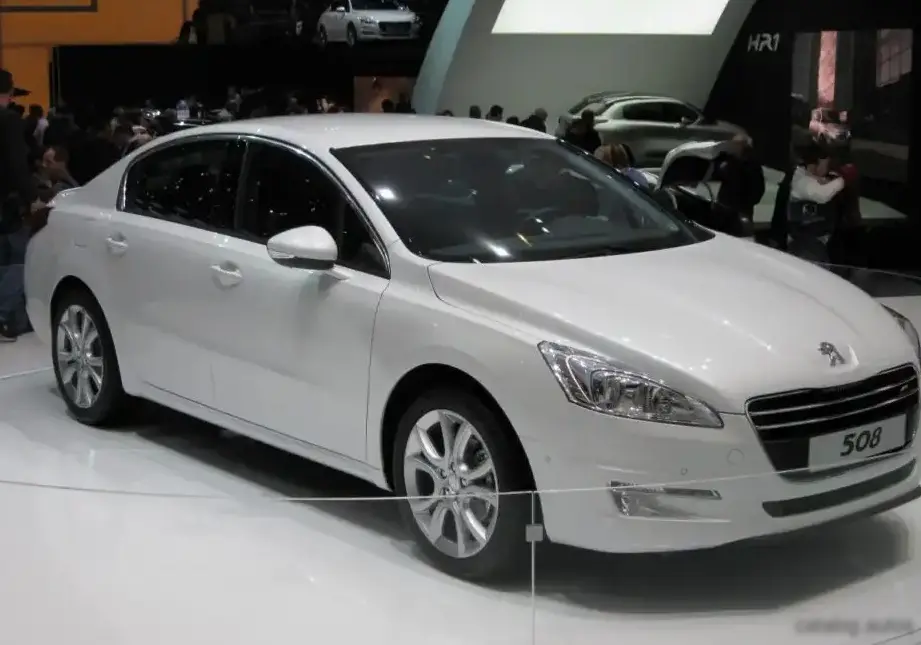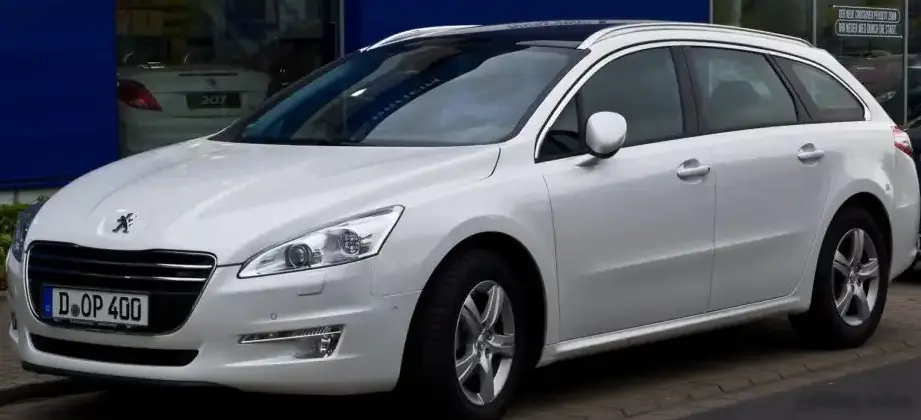
The Peugeot 508 I SW (Phase I), produced from 2010 to 2014, represented Peugeot’s entry into the competitive mid-size station wagon segment. This variant, equipped with the 1.6 THP (Turbo High Pressure) engine producing 156 horsepower, was positioned as a balance between fuel efficiency and respectable performance within the 508 SW lineup. It served as a key offering for buyers seeking a practical and stylish family vehicle, particularly in European markets where station wagons maintain significant popularity. The 508 SW Phase I was built on the PSA Group’s Platform 3, also known as the EMP2 platform, shared with other Peugeot and Citroën models.
Technical Specifications
| Brand | Peugeot |
| Model | 508 |
| Generation | 508 I SW (Phase I, 2010) |
| Type (Engine) | 1.6 THP (156 Hp) |
| Start of production | 2010 |
| End of production | 2014 |
| Powertrain Architecture | Internal Combustion engine |
| Body type | Station wagon (estate) |
| Seats | 5 |
| Doors | 5 |
| Fuel consumption (urban) | 9.3 l/100 km (25.3 US mpg) |
| Fuel consumption (extra urban) | 5 l/100 km (47 US mpg) |
| Fuel consumption (combined) | 6.5 l/100 km (36.2 US mpg) |
| Fuel Type | Petrol (Gasoline) |
| Acceleration 0 – 100 km/h | 8.8 sec |
| Acceleration 0 – 62 mph | 8.8 sec |
| Acceleration 0 – 60 mph | 8.4 sec |
| Maximum speed | 218 km/h (135.46 mph) |
| Emission standard | Euro 5 |
| Weight-to-power ratio | 9.1 kg/Hp |
| Weight-to-torque ratio | 5.9 kg/Nm |
| Power | 156 Hp @ 6000 rpm |
| Torque | 240 Nm @ 1400-4000 rpm (177.01 lb.-ft.) |
| Engine layout | Front, Transverse |
| Engine Model/Code | 5FV EP6CDT |
| Engine displacement | 1598 cm3 (97.52 cu. in.) |
| Number of cylinders | 4 |
| Engine configuration | Inline |
| Number of valves per cylinder | 4 |
| Fuel injection system | Direct injection |
| Engine aspiration | Turbocharger, Intercooler |
| Engine oil capacity | 4.25 l (4.49 US qt | 3.74 UK qt) |
| Coolant capacity | 6.4 l (6.76 US qt | 5.63 UK qt) |
| Kerb Weight | 1420 kg (3130.56 lbs.) |
| Max. weight | 2080 kg (4585.62 lbs.) |
| Max load | 660 kg (1455.05 lbs.) |
| Trunk (boot) space – maximum | 560 l (19.78 cu. ft.) |
| Fuel tank capacity | 72 l (19.02 US gal | 15.84 UK gal) |
| Length | 4813 mm (189.49 in.) |
| Width | 1920 mm (75.59 in.) |
| Height | 1476 mm (58.11 in.) |
| Wheelbase | 2817 mm (110.91 in.) |
| Minimum turning circle | 10.9 m (35.76 ft.) |
| Drivetrain Architecture | Front wheel drive |
| Number of gears | 6 |
| Gearbox type | Manual transmission |
| Front suspension | Independent type McPherson |
| Rear suspension | Independent multi-link suspension |
| Front brakes | Ventilated discs |
| Rear brakes | Disc |
| Assisting systems | ABS (Anti-lock braking system) |
| Steering type | Steering rack and pinion |
| Tires size | 215/60 R16; 215/55 R17; 235/45 R18 |
| Wheel rims size | 16; 17; 18 |
Powertrain & Engine Architecture
The heart of this 508 SW variant is the 5FV EP6CDT 1.6-liter turbocharged four-cylinder engine. This engine is part of Peugeot’s Prince engine family, developed in collaboration with BMW. The “THP” designation signifies Turbo High Pressure, indicating the use of a twin-scroll turbocharger for improved responsiveness and reduced turbo lag. Direct fuel injection is employed, delivering fuel directly into the combustion chamber for precise control and enhanced efficiency. The engine features a dual overhead camshaft (DOHC) valvetrain with four valves per cylinder, optimizing airflow for increased power output. The 1.6 THP engine produces 156 horsepower at 6000 rpm and 240 Nm (177 lb-ft) of torque available from a low 1400 rpm, providing a broad and usable powerband. This engine was paired with a six-speed manual transmission, delivering power to the front wheels.
Driving Characteristics
The 1.6 THP engine in the 508 SW offers a good balance between performance and fuel economy. Acceleration from 0 to 60 mph takes approximately 8.4 seconds, making it adequately quick for everyday driving and highway merging. The turbocharger provides a noticeable boost in power, particularly in the mid-range, allowing for confident overtaking maneuvers. While not as sporty as higher-powered versions of the 508, the 1.6 THP offers a smooth and refined driving experience. The six-speed manual transmission provides precise gear changes, and the gear ratios are well-suited to the engine’s power characteristics. Compared to the more powerful 2.0-liter diesel variants, the 1.6 THP offers a lighter front end, contributing to slightly more agile handling. However, it lacks the low-end torque of the diesel engine.
Equipment & Trim Levels
The 508 SW 1.6 THP typically came equipped with a respectable level of standard features. These included air conditioning, a CD stereo with auxiliary input, power windows and mirrors, and central locking. Higher trim levels, such as Allure or Feline, added features like dual-zone climate control, a touchscreen infotainment system, rear parking sensors, and alloy wheels. Interior upholstery was typically cloth, with leather options available on higher trims. Optional extras included a panoramic sunroof, navigation system, and advanced safety features like blind spot monitoring.
Chassis & Braking
The 508 SW features an independent suspension system at all four corners. The front suspension utilizes a McPherson strut design, while the rear employs a multi-link setup. This configuration provides a comfortable ride quality and good handling characteristics. The braking system consists of ventilated discs at the front and solid discs at the rear. Anti-lock Braking System (ABS) is standard, enhancing braking performance and stability. The steering is a rack and pinion system, providing precise and responsive steering feel.
Market Reception & Comparison
The Peugeot 508 SW 1.6 THP was generally well-received by automotive critics. It was praised for its stylish design, spacious interior, and comfortable ride. The 1.6 THP engine was considered a good compromise between performance and fuel efficiency. However, some critics noted that the engine could feel strained when fully loaded or driving uphill. Compared to the 2.0-liter HDi diesel variants, the 1.6 THP offered lower fuel economy but a more refined driving experience. The petrol engine also generally commanded a lower purchase price. In terms of reliability, the 1.6 THP engine has been known to experience occasional issues with the carbon buildup on the intake valves, requiring periodic cleaning.
Legacy
The Peugeot 508 SW 1.6 THP remains a popular choice in the used car market, particularly for buyers seeking a stylish and practical family vehicle. The 1.6 THP engine, while requiring occasional maintenance to address carbon buildup, is generally considered reliable. The 508 SW’s spacious interior, comfortable ride, and attractive design continue to appeal to buyers today. The model helped establish Peugeot as a strong contender in the mid-size station wagon segment, paving the way for future generations of the 508.