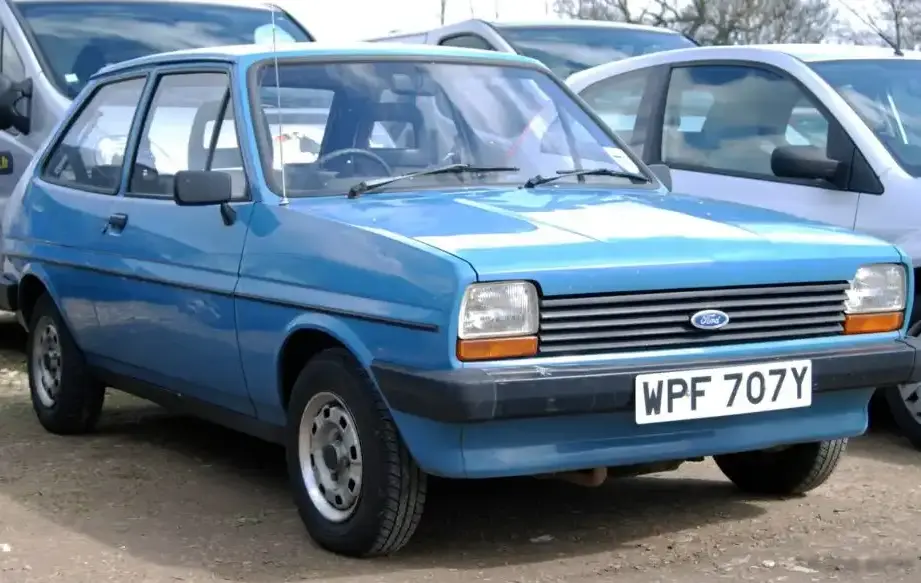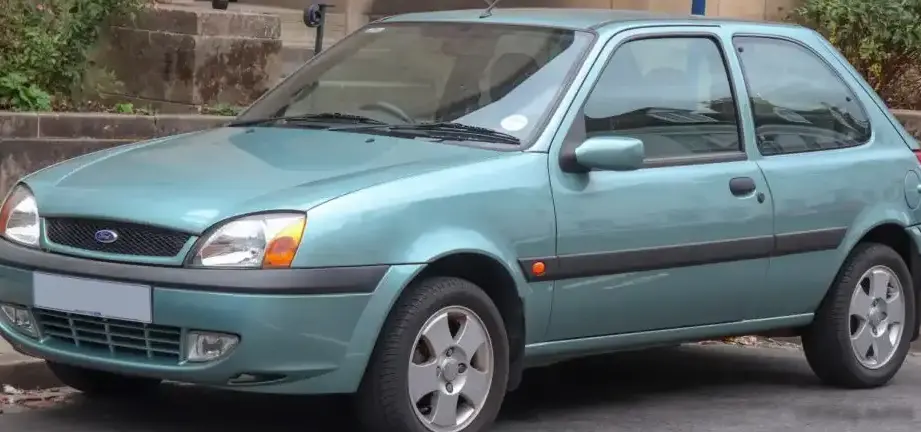
The Ford Fiesta Mk5, produced from 1999 to 2001, represented a significant step forward for Ford’s supermini. This generation, internally designated as the B50 platform, aimed to offer a more refined and spacious package than its predecessor. Within the Mk5 range, the 3-door 1.3i variant, producing 60 horsepower, served as the entry point to the Fiesta lineup. It was primarily targeted at first-time buyers, city commuters, and those seeking economical transportation. This model occupied the lower end of the spectrum, contrasting with the more powerful and feature-rich trims like the 1.4 and 1.6-liter versions.
Technical Specifications
| Brand | Ford |
| Model | Fiesta |
| Generation | Fiesta V (Mk5) 3 door |
| Type (Engine) | 1.3 i (60 Hp) |
| Start of production | September, 1999 |
| End of production | November, 2001 |
| Powertrain Architecture | Internal Combustion engine |
| Body type | Hatchback |
| Seats | 5 |
| Doors | 3 |
| Fuel consumption (urban) | 9.2 l/100 km (25.6 US mpg, 30.7 UK mpg, 10.9 km/l) |
| Fuel consumption (combined) | 7.3 l/100 km (32.2 US mpg, 38.7 UK mpg, 13.7 km/l) |
| Fuel Type | Petrol (Gasoline) |
| Acceleration 0 – 100 km/h | 15.9 sec |
| Acceleration 0 – 62 mph | 15.9 sec |
| Acceleration 0 – 60 mph | 15.1 sec |
| Maximum speed | 155 km/h (96.31 mph) |
| Weight-to-power ratio | 16.8 kg/Hp, 59.7 Hp/tonne |
| Weight-to-torque ratio | 9.8 kg/Nm, 102.5 Nm/tonne |
| Power | 60 Hp @ 5000 rpm |
| Power per litre | 46.2 Hp/l |
| Torque | 103 Nm @ 2500 rpm (75.97 lb.-ft. @ 2500 rpm) |
| Engine layout | Front, Transverse |
| Engine Model/Code | J4C, J4J, J4L, J4Q, J4R, J4T, JBC |
| Engine displacement | 1299 cm3 (79.27 cu. in.) |
| Number of cylinders | 4 |
| Engine configuration | Inline |
| Cylinder Bore | 74 mm (2.91 in.) |
| Piston Stroke | 75.5 mm (2.97 in.) |
| Compression ratio | 9.5:1 |
| Number of valves per cylinder | 2 |
| Fuel injection system | Multi-port manifold injection |
| Engine aspiration | Naturally aspirated engine |
| Valvetrain | OHC |
| Engine oil capacity | 3.25 l (3.43 US qt | 2.86 UK qt) |
| Coolant | 7.1 l (7.5 US qt | 6.25 UK qt) |
| Kerb Weight | 1005 kg (2215.65 lbs.) |
| Max. weight | 1460 kg (3218.75 lbs.) |
| Max load | 455 kg (1003.1 lbs.) |
| Trunk (boot) space – minimum | 250 l (8.83 cu. ft.) |
| Trunk (boot) space – maximum | 930 l (32.84 cu. ft.) |
| Fuel tank capacity | 40 l (10.57 US gal | 8.8 UK gal) |
| Length | 3833 mm (150.91 in.) |
| Width | 1634 mm (64.33 in.) |
| Height | 1334 mm (52.52 in.) |
| Wheelbase | 2446 mm (96.3 in.) |
| Front track | 1429 mm (56.26 in.) |
| Rear (Back) track | 1384 mm (54.49 in.) |
| Minimum turning circle | 9.9 m (32.48 ft.) |
| Drivetrain Architecture | Front wheel drive |
| Number of gears | 5 gears, manual transmission |
| Front suspension | Coil spring |
| Rear suspension | Coil spring |
| Front brakes | Disc |
| Rear brakes | Drum |
| Assisting systems | ABS (Anti-lock braking system) |
| Steering type | Steering rack and pinion |
| Power steering | Hydraulic Steering |
| Tires size | 185/55 R14 |
Powertrain & Engine Architecture
The heart of the Fiesta 1.3i was the Ford J4C engine, a 1.3-liter inline-four cylinder petrol engine. This engine, also known under codes J4J, J4L, J4Q, J4R, J4T, and JBC depending on the specific market and minor revisions, featured a single overhead camshaft (SOHC) valvetrain with two valves per cylinder. Fuel delivery was handled by a multi-port fuel injection system, providing a balance between efficiency and acceptable performance. The engine produced 60 horsepower at 5000 rpm and 103 Nm (76 lb-ft) of torque at 2500 rpm. The engine’s relatively low compression ratio of 9.5:1 allowed it to run on standard unleaded gasoline. The transmission was a standard five-speed manual gearbox, optimized for fuel economy rather than outright acceleration.
Driving Characteristics
The Fiesta 1.3i offered a predictable, if uninspiring, driving experience. Acceleration was leisurely, taking approximately 15.9 seconds to reach 62 mph. The engine felt strained when pushed hard, and overtaking required careful planning. The five-speed gearbox helped to keep the engine within its optimal rev range, but the lack of significant power meant that frequent downshifts were necessary. Compared to the 1.4 and 1.6-liter versions, the 1.3i felt noticeably slower and less refined. However, its light steering and compact dimensions made it easy to maneuver in urban environments.
Equipment & Trim Levels
The 1.3i Fiesta typically came with a basic level of equipment. Standard features included power steering, central locking, and an adjustable steering column. Interior trim was functional and durable, with cloth upholstery and a simple dashboard layout. Optional extras included air conditioning, electric front windows, and a radio/cassette player. The trim level was generally considered the base model, focusing on affordability and practicality.
Chassis & Braking
The Fiesta Mk5 utilized a MacPherson strut front suspension and a twist-beam rear suspension. This setup provided a reasonable compromise between ride comfort and handling. The front brakes were discs, while the rear brakes were drums, a cost-saving measure typical of entry-level models. Anti-lock Braking System (ABS) was available as an option, enhancing safety. The steering was a rack and pinion system, providing precise and responsive control.
Market Reception & Comparison
The Fiesta 1.3i was well-received as an affordable and economical city car. Critics praised its fuel efficiency and ease of driving, but noted its lack of performance. Compared to rivals like the Renault Clio and Peugeot 206, the Fiesta 1.3i offered a similar level of practicality and affordability. However, some competitors offered more refined interiors or more powerful engine options. Fuel economy was a strong point, averaging around 32.2 US mpg in combined driving.
Legacy
The 1.3i Fiesta Mk5, while not the most exciting variant in the range, proved to be a reliable and durable car. The J4C engine is known for its longevity, and with regular maintenance, it can provide many years of service. Today, these cars are relatively affordable on the used market, making them a popular choice for budget-conscious buyers or those seeking a classic Ford. While not highly sought after by collectors, well-maintained examples are increasingly appreciated for their simplicity and affordability.