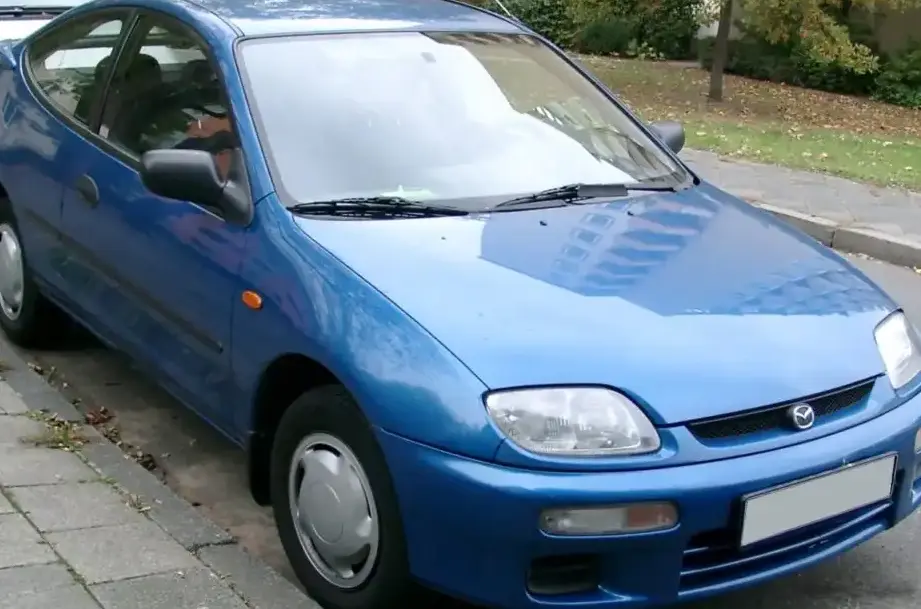
The Mazda 323 S IV (BG) 1.7 D, produced between 1989 and 1994, represents a significant entry point into the fourth generation of Mazda’s popular compact offering. This variant, powered by the PN54 diesel engine, was primarily aimed at the European and Asian markets where diesel engines enjoyed considerable popularity due to fuel economy and tax benefits. Within the BG series, which spanned a range of engine and trim options, the 1.7 D served as the base-level diesel offering, positioned below the more powerful 2.0-liter diesel variants. It was a practical, economical choice for buyers prioritizing fuel efficiency over outright performance, and played a key role in establishing the 323 as a competitive player in the crowded compact car segment.
Technical Specifications
| Brand | Mazda |
| Model | 323 |
| Generation | 323 S IV (BG) |
| Type (Engine) | 1.7 D (56 Hp) |
| Start of production | 1989 |
| End of production | 1994 |
| Powertrain Architecture | Internal Combustion engine |
| Body type | Hatchback |
| Fuel Type | Diesel |
| Power | 56 Hp |
| Engine Model/Code | PN54 |
| Engine aspiration | Naturally aspirated engine |
| Engine oil capacity | 3.9 l (4.12 US qt | 3.43 UK qt) |
| Coolant capacity | 6 l (6.34 US qt | 5.28 UK qt) |
Powertrain & Engine Architecture
The heart of the 323 S IV 1.7 D is the PN54 engine, a 1.7-liter inline-four cylinder diesel. This engine is a naturally aspirated, indirect injection diesel, a common configuration for the era. Indirect injection, while less efficient than direct injection systems, offered quieter operation and reduced emissions – important considerations in the late 1980s and early 1990s. The PN54 utilizes a Bosch rotary injection pump, delivering fuel to the pre-chamber where it mixes with air before combustion. The engine features a single overhead camshaft (SOHC) operating two valves per cylinder. The PN54 is known for its robust construction and relative simplicity, contributing to its longevity. While horsepower output is modest at 56 hp, the engine produces a reasonable amount of torque for its displacement, peaking around 88 lb-ft. The transmission paired with the PN54 in most European and Asian markets was a five-speed manual, however a four-speed automatic transmission was also available, though less common. The automatic transmission, while offering convenience, further reduced the car’s already limited acceleration.
Driving Characteristics
The driving experience in the 323 S IV 1.7 D is characterized by its practicality and fuel economy rather than sporty performance. Acceleration is leisurely, with 0-60 mph times estimated to be around 14-16 seconds. The engine’s torque delivery is relatively flat, providing adequate pulling power for everyday driving situations, but lacking the responsiveness of higher-output engines. The four-speed automatic transmission, when equipped, contributes to a somewhat sluggish feel, with noticeable gear changes and a tendency to hunt for the right gear on inclines. The gear ratios are geared towards maximizing fuel efficiency, rather than performance. Compared to the 1.6-liter gasoline versions of the 323, the 1.7 D offers significantly better fuel economy, but at the expense of acceleration and overall refinement. The manual transmission version provides a more engaging driving experience, allowing the driver to better utilize the engine’s available torque.
Equipment & Trim Levels
The 323 S IV 1.7 D typically came with a fairly basic level of equipment, reflecting its position as the entry-level diesel model. Standard features generally included power steering, central locking, and cloth upholstery. The interior design was functional and straightforward, with a focus on durability rather than luxury. Dashboard configuration was simple, with clearly labeled controls. Optional extras available for this trim included power windows, a sunroof, and upgraded audio systems. Higher trim levels, such as the LX or GLX, offered more luxurious appointments, including upgraded upholstery, alloy wheels, and additional convenience features. The 1.7 D often served as a base for fleet sales, meaning many examples were equipped with minimal options.
Chassis & Braking
The 323 S IV utilized a MacPherson strut front suspension and a torsion beam rear suspension. This setup provided a reasonable balance between ride comfort and handling. The torsion beam rear suspension, while cost-effective, limited rear wheel articulation and wasn’t as sophisticated as independent rear suspension systems found in some competitors. Braking on the 1.7 D typically consisted of disc brakes on the front wheels and drum brakes on the rear wheels. This configuration was common for vehicles in this price range during the early 1990s. Anti-lock braking system (ABS) was available as an option, but not standard equipment. Stabilizer bars were fitted to both the front and rear axles, helping to reduce body roll during cornering. The chassis was relatively lightweight, contributing to the car’s fuel efficiency.
Market Reception & Comparison
The Mazda 323 S IV 1.7 D received generally positive reviews for its fuel economy, reliability, and practicality. Critics acknowledged its modest performance, but recognized that it was not intended to be a sports car. Compared to other diesel-powered compact cars of the era, such as the Volkswagen Golf 1.9 TDI and the Ford Escort 1.8 D, the 323 1.7 D offered competitive fuel economy and a comparable level of refinement. The Golf TDI, however, generally offered superior performance and a more sophisticated driving experience. The Escort 1.8 D was often considered to be more utilitarian, while the 323 offered a slightly more refined interior and a more modern design. The 1.7 D’s reliability was a key selling point, and it proved to be a durable and long-lasting vehicle.
Legacy
The Mazda 323 S IV 1.7 D, while not a particularly exciting vehicle, holds a significant place in Mazda’s history as a practical and economical compact car. The PN54 engine, while simple, proved to be remarkably durable and capable of high mileage with proper maintenance. Today, examples of the 323 1.7 D are becoming increasingly rare, and well-maintained examples are sought after by enthusiasts and collectors. The car’s simplicity makes it relatively easy to maintain and repair, and parts availability is generally good. The 323 S IV 1.7 D represents a snapshot of automotive engineering from the early 1990s, a time when fuel efficiency and reliability were paramount concerns for many car buyers. It remains a testament to Mazda’s commitment to building durable and practical vehicles.