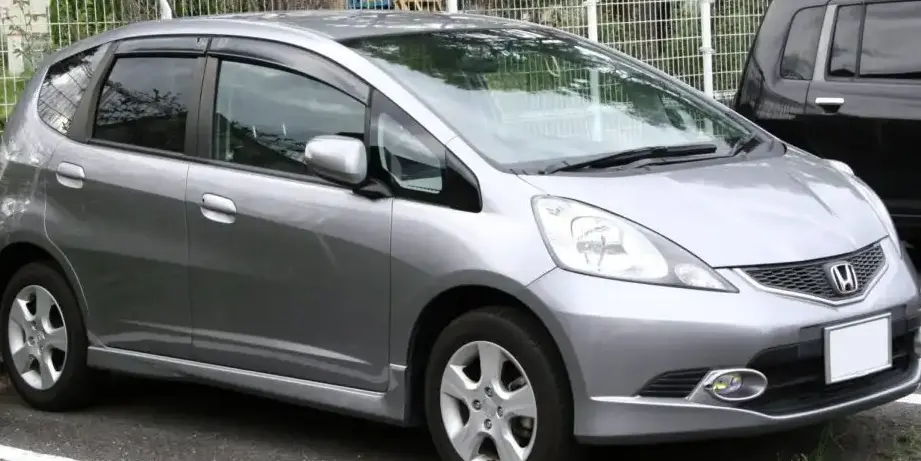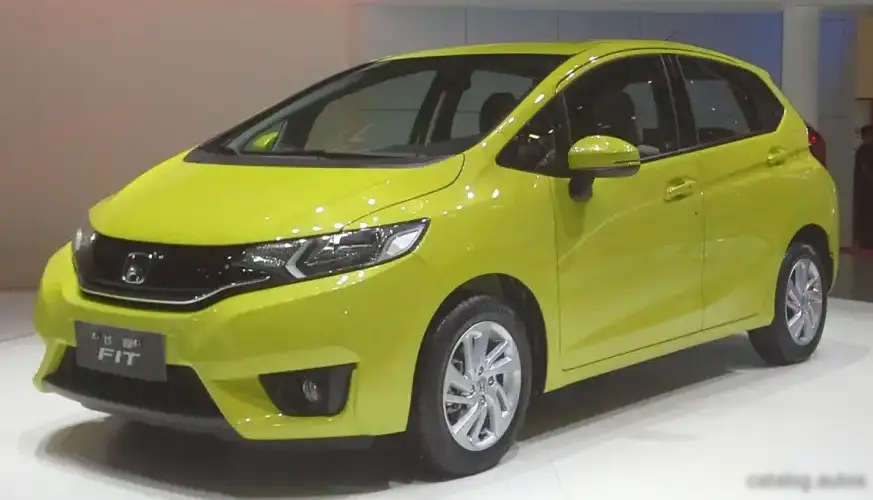
The Honda Fit III 1.5 (132 Hp) Automatic, produced between 2013 and 2017, represents a significant iteration in Honda’s subcompact hatchback lineage. Part of the third generation (GE/GG platform), the Fit III aimed to build upon the success of its predecessors by offering increased interior space, improved fuel efficiency, and enhanced versatility. This particular variant, equipped with the 1.5-liter engine and a continuously variable transmission (CVT), was positioned as a mainstream offering within the Fit lineup, appealing to buyers prioritizing ease of use and fuel economy over outright performance. It was primarily marketed in North America, Europe, and Asia, where subcompact hatchbacks are highly valued for their practicality and affordability.
Technical Specifications
| Brand | Honda |
| Model | FIT |
| Generation | Fit III |
| Type (Engine) | 1.5 (132 Hp) Automatic |
| Start of production | 2013 |
| End of production | 2017 |
| Powertrain Architecture | Internal Combustion engine |
| Body type | Hatchback |
| Seats | 5 |
| Doors | 5 |
| Fuel Type | Petrol (Gasoline) |
| Weight-to-power ratio | 8.1 kg/Hp, 123.4 Hp/tonne |
| Weight-to-torque ratio | 6.9 kg/Nm, 144.9 Nm/tonne |
| Power | 132 Hp @ 6600 rpm |
| Power per litre | 88.2 Hp/l |
| Torque | 155 Nm @ 4600 rpm (114.32 lb.-ft. @ 4600 rpm) |
| Engine layout | Front, Transverse |
| Engine Model/Code | L15B1 |
| Engine displacement | 1497 cm3 (91.35 cu. in.) |
| Number of cylinders | 4 |
| Engine configuration | Inline |
| Cylinder Bore | 73 mm (2.87 in.) |
| Piston Stroke | 89.4 mm (3.52 in.) |
| Compression ratio | 11.5:1 |
| Number of valves per cylinder | 4 |
| Fuel injection system | Multi-port manifold injection |
| Engine aspiration | Naturally aspirated engine |
| Valvetrain | DOHC, i-VTEC |
| Engine oil capacity | 3.3 l (3.49 US qt | 2.9 UK qt) |
| Coolant | 3.78 l (3.99 US qt | 3.33 UK qt) |
| Kerb Weight | 1070 kg (2358.95 lbs.) |
| Fuel tank capacity | 40 l (10.57 US gal | 8.8 UK gal) |
| Length | 3955 mm (155.71 in.) |
| Width | 1695 mm (66.73 in.) |
| Height | 1525 mm (60.04 in.) |
| Wheelbase | 2530 mm (99.61 in.) |
| Front track | 1480 mm (58.27 in.) |
| Rear (Back) track | 1470 mm (57.87 in.) |
| Ride height (ground clearance) | 135 mm (5.31 in.) |
| Drag coefficient (Cd) | 0.30 |
| Minimum turning circle (turning diameter) | 9.8 m (32.15 ft.) |
| Drivetrain Architecture | The Internal combustion engine (ICE) drives the front wheels of the vehicle. |
| Drive wheel | Front wheel drive |
| Number of gears and type of gearbox | automatic transmission CVT |
| Front brakes | Ventilated discs |
| Rear brakes | Drum |
| Assisting systems | ABS (Anti-lock braking system) |
| Tires size | 185/60 R15 |
| Wheel rims size | 15 |
Powertrain & Engine Architecture
The heart of the Fit III 1.5 Automatic is the L15B1 engine, a 1.5-liter inline-four cylinder gasoline engine. This engine utilizes Honda’s i-VTEC (intelligent Variable valve Timing and lift Electronic Control) system, which optimizes valve timing and lift based on engine speed and load, improving both fuel efficiency and performance. The L15B1 employs multi-point fuel injection, delivering fuel directly to each cylinder’s intake port. The engine’s design prioritizes efficiency and reliability over raw power. Paired with this engine is a Continuously Variable Transmission (CVT). Unlike traditional automatic transmissions with fixed gear ratios, a CVT provides a virtually infinite number of gear ratios within its range, allowing the engine to operate at its most efficient point more often. This contributes to improved fuel economy, but can sometimes result in a different driving feel compared to conventional automatics.
Driving Characteristics
The 132 horsepower and 114 lb-ft of torque produced by the L15B1 engine, when coupled with the CVT, delivers adequate, though not exhilarating, performance. Acceleration is smooth and linear, but the CVT can sometimes exhibit a “rubber band” effect, where engine RPMs rise quickly under acceleration without a corresponding increase in speed. Compared to the six-speed manual transmission available on other Fit III models, the CVT prioritizes fuel efficiency over driver engagement. The CVT’s programming is tuned for economy, resulting in a more relaxed driving experience. The weight of the vehicle (around 2359 lbs) helps to mitigate the relatively modest power output, making it feel reasonably responsive in everyday driving situations.
Equipment & Trim Levels
The 1.5 Automatic variant of the Honda Fit III typically came standard with features such as air conditioning, power windows and locks, a basic audio system with USB connectivity, and ABS brakes. Higher trim levels, such as the EX and EX-L, added features like alloy wheels, a more advanced touchscreen infotainment system, a rearview camera, and heated front seats. Interior upholstery was typically cloth, with higher trims offering leather options. Optional extras included navigation systems, upgraded audio systems, and various accessory packages.
Chassis & Braking
The Fit III utilizes a front-wheel-drive layout with a MacPherson strut front suspension and a torsion beam rear suspension. This configuration provides a good balance of ride comfort and handling. The front brakes are ventilated discs, providing adequate stopping power, while the rear brakes are drums, a cost-saving measure common in this class of vehicle. ABS (Anti-lock Braking System) is standard, enhancing safety during emergency braking situations. The relatively light weight of the vehicle contributes to its nimble handling characteristics.
Market Reception & Comparison
The Honda Fit III 1.5 Automatic was generally well-received by automotive critics. It was praised for its spacious interior, impressive fuel economy (often exceeding 35 mpg combined), and overall practicality. However, some reviewers noted that the CVT could feel sluggish at times and that the engine lacked significant power for highway passing maneuvers. Compared to other subcompact hatchbacks like the Toyota Yaris and Nissan Versa, the Fit offered a more refined interior and a more engaging driving experience, albeit at a slightly higher price point. The 1.5L Automatic was often seen as a sweet spot in the lineup, offering a good balance of features, fuel economy, and affordability.
Legacy
The Honda Fit III, particularly the 1.5L Automatic variant, has proven to be a reliable and durable vehicle. The L15B1 engine is known for its longevity, and the CVT, while sometimes criticized for its driving feel, has generally held up well over time. In the used car market, these Fits are often sought after for their fuel efficiency, practicality, and Honda’s reputation for reliability. Maintenance costs are generally reasonable, and parts availability is good. The Fit III continues to be a popular choice for budget-conscious buyers looking for a versatile and dependable subcompact hatchback.