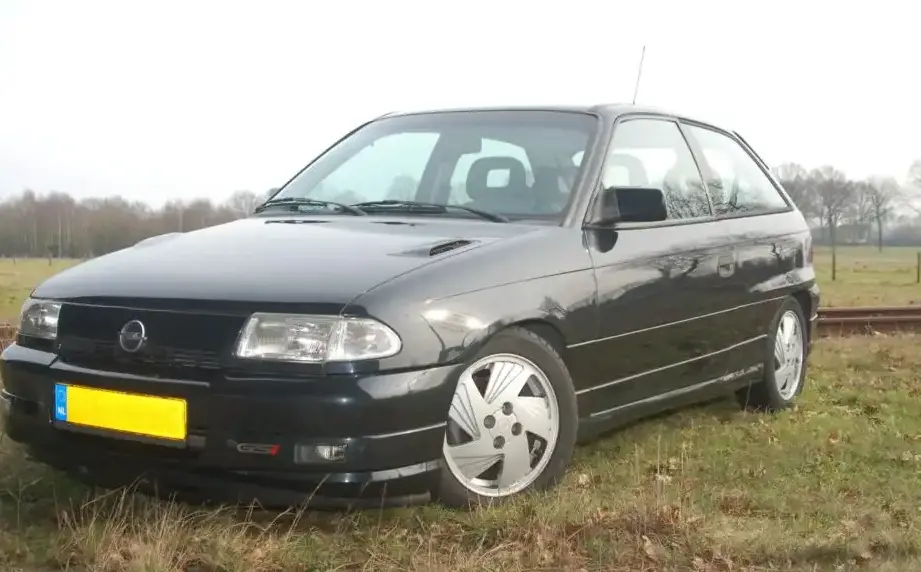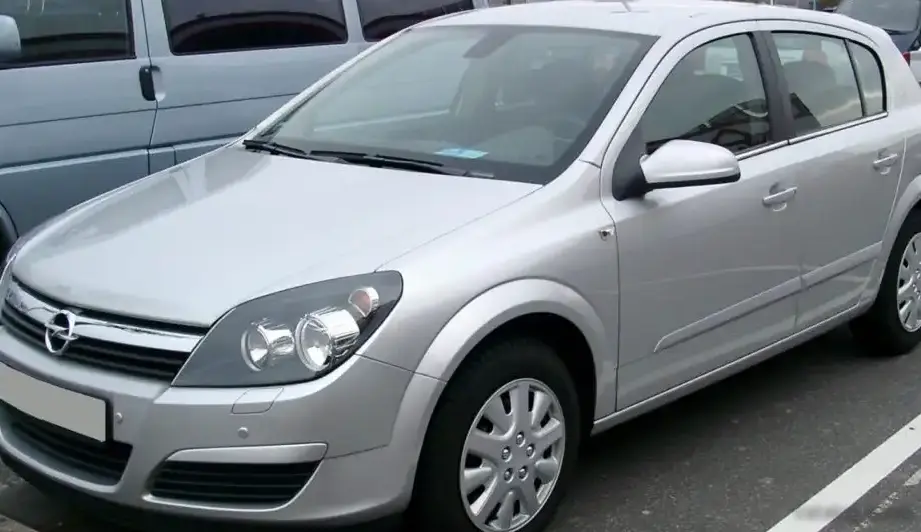
The Opel Astra H 1.7 CDTI, producing 100 horsepower, was a key variant within the Astra H range (2004-2009), representing a fuel-efficient and affordable entry point into the compact hatchback market in Europe. Introduced as part of the H generation, which benefited from a redesigned chassis and interior compared to its predecessor, the 1.7 CDTI aimed to balance practicality with reasonable performance and economy. This model was particularly significant in markets where diesel engines were favored due to taxation and fuel costs. Production of this specific configuration ran from 2004 to 2006, before being superseded by minor revisions within the H range.
Technical Specifications
| Brand | Opel |
| Model | Astra |
| Generation | Astra H |
| Type (Engine) | 1.7 CDTI (100 Hp) |
| Start of production | 2004 |
| End of production | 2006 |
| Powertrain Architecture | Internal Combustion engine |
| Body type | Hatchback |
| Seats | 5 |
| Doors | 5 |
| Fuel consumption (urban) | 6.3 l/100 km (37.3 US mpg, 44.8 UK mpg, 15.9 km/l) |
| Fuel consumption (extra urban) | 4.2 l/100 km (56 US mpg, 67.3 UK mpg, 23.8 km/l) |
| Fuel consumption (combined) | 5 l/100 km (47 US mpg, 56.5 UK mpg, 20 km/l) |
| Fuel Type | Diesel |
| Acceleration 0 – 100 km/h | 12.3 sec |
| Acceleration 0 – 62 mph | 12.3 sec |
| Acceleration 0 – 60 mph | 11.7 sec |
| Maximum speed | 181 km/h (112.47 mph) |
| Weight-to-power ratio | 12.7 kg/Hp, 79.1 Hp/tonne |
| Weight-to-torque ratio | 5.3 kg/Nm, 189.7 Nm/tonne |
| Power | 100 Hp @ 4000 rpm |
| Power per litre | 59.3 Hp/l |
| Torque | 240 Nm @ 2300 rpm (177.01 lb.-ft. @ 2300 rpm) |
| Engine layout | Front, Transverse |
| Engine Model/Code | Z17DTH |
| Engine displacement | 1686 cm3 (102.89 cu. in.) |
| Number of cylinders | 4 |
| Engine configuration | Inline |
| Cylinder Bore | 79 mm (3.11 in.) |
| Piston Stroke | 86 mm (3.39 in.) |
| Compression ratio | 18.4:1 |
| Number of valves per cylinder | 4 |
| Fuel injection system | Diesel Commonrail |
| Engine aspiration | Turbocharger, Intercooler |
| Valvetrain | DOHC |
| Engine oil capacity | 5 l (5.28 US qt | 4.4 UK qt) |
| Coolant | 6.8 l (7.19 US qt | 5.98 UK qt) |
| Kerb Weight | 1265 kg (2788.85 lbs.) |
| Max. weight | 1840 kg (4056.51 lbs.) |
| Max load | 575 kg (1267.66 lbs.) |
| Trunk (boot) space – minimum | 380 l (13.42 cu. ft.) |
| Trunk (boot) space – maximum | 1330 l (46.97 cu. ft.) |
| Fuel tank capacity | 52 l (13.74 US gal | 11.44 UK gal) |
| Length | 4249 mm (167.28 in.) |
| Width | 1753 mm (69.02 in.) |
| Width including mirrors | 2033 mm (80.04 in.) |
| Height | 1467 mm (57.76 in.) |
| Wheelbase | 2614 mm (102.91 in.) |
| Front track | 1488 mm (58.58 in.) |
| Rear (Back) track | 1488 mm (58.58 in.) |
| Front overhang | 871 mm (34.29 in.) |
| Rear overhang | 764 mm (30.08 in.) |
| Ride height (ground clearance) | 160 mm (6.3 in.) |
| Drag coefficient (Cd) | 0.32 |
| Drivetrain Architecture | The Internal combustion engine (ICE) drives the front wheels of the vehicle. |
| Drive wheel | Front wheel drive |
| Number of gears and type of gearbox | 5 gears, manual transmission |
| Front suspension | Spring Strut |
| Rear suspension | Spring Strut |
| Front brakes | Ventilated discs |
| Rear brakes | Disc |
| Assisting systems | ABS (Anti-lock braking system) |
| Steering type | Steering rack and pinion |
| Tires size | 195/65 R15 |
| Wheel rims size | 6.5J x 15 |
INTRODUCTION
The Opel Astra H 1.7 CDTI (100 hp) was a significant offering in the European C-segment hatchback market. Launched in 2004 as part of the Astra H series, it provided a diesel-powered alternative focused on fuel efficiency and affordability. Positioned as an entry-level to mid-range trim, it sat below the more powerful 1.9 CDTI and petrol variants like the 1.8. The Astra H itself represented a substantial step forward for Opel, moving to a new platform (the GM Delta platform) and offering improved interior space, safety features, and overall refinement compared to the Astra G it replaced. The 1.7 CDTI variant was particularly popular in countries with high diesel fuel acceptance and tax incentives favoring lower displacement engines.
Powertrain & Engine Architecture
The heart of the Astra H 1.7 CDTI is the Z17DTH engine, a 1.7-liter inline-four cylinder diesel. This engine is a common-rail direct injection diesel, meaning fuel is injected directly into the combustion chamber at extremely high pressure. This technology, coupled with a turbocharger and intercooler, allows for a good balance of power and fuel economy. The Z17DTH utilizes a double overhead camshaft (DOHC) valvetrain with four valves per cylinder, optimizing gas flow for improved performance. The engine produces 100 horsepower at 4000 rpm and 240 Nm (177 lb-ft) of torque at 2300 rpm. The engine was typically paired with a five-speed manual transmission, although an automated manual transmission (Easytronic) was also available as an option. The Easytronic, while offering some convenience, was often criticized for its slow and jerky shifts compared to a traditional automatic.
Driving Characteristics
The Astra H 1.7 CDTI, with its 100 horsepower and 240 Nm of torque, offered adequate, but not exhilarating, performance. Acceleration from 0 to 100 km/h (0-62 mph) took around 12.3 seconds, and top speed was approximately 181 km/h (112 mph). The engine’s torque delivery was its strong suit, providing reasonable pulling power for everyday driving and overtaking maneuvers. Compared to the more powerful 1.9 CDTI variants, the 1.7 CDTI felt noticeably slower, especially at higher speeds. The five-speed manual transmission was well-matched to the engine’s characteristics, offering a decent spread of gears for both fuel efficiency and performance. The Easytronic transmission, however, significantly impacted the driving experience, with slower response times and less smooth gear changes. Overall, the 1.7 CDTI prioritized fuel economy and usability over outright performance.
Equipment & Trim Levels
The Astra H 1.7 CDTI was typically offered in base or mid-range trim levels, such as ‘Essentia’ or ‘Enjoy’ depending on the market. Standard equipment generally included power steering, central locking, electric front windows, and an ABS anti-lock braking system. Higher trim levels added features like air conditioning, alloy wheels, a CD stereo, and front fog lights. Interior upholstery was typically cloth, with a functional and durable design. Optional extras included a sunroof, rear parking sensors, and upgraded audio systems. The dashboard layout was relatively straightforward and user-friendly, with clearly labeled controls. The Astra H offered a decent level of practicality, with a 380-liter boot (13.4 cu ft) that could be expanded to 1330 liters (46.97 cu ft) by folding down the rear seats.
Chassis & Braking
The Astra H utilized a MacPherson strut front suspension and a torsion beam rear suspension. This setup provided a good balance of ride comfort and handling. The front brakes were ventilated discs, while the rear brakes were solid discs. ABS was standard across the range. The Astra H’s chassis was relatively lightweight, contributing to its fuel efficiency. The steering was a rack and pinion system, providing precise and responsive control. The 1.7 CDTI variant typically came equipped with 195/65 R15 tires, offering a good compromise between comfort and grip. Stabilizer bars were fitted to both the front and rear axles to reduce body roll during cornering.
Market Reception & Comparison
The Astra H 1.7 CDTI was generally well-received by automotive critics as a practical and economical choice. It was praised for its fuel efficiency, comfortable ride, and reasonable price point. However, it was often criticized for its lack of outright performance compared to its more powerful siblings. Compared to the 1.9 CDTI, the 1.7 CDTI offered significantly lower running costs but at the expense of acceleration and overall refinement. The petrol-powered 1.8-liter variant provided a smoother and more responsive driving experience, but with higher fuel consumption. In terms of reliability, the Z17DTH engine proved to be generally robust, although issues with the diesel particulate filter (DPF) were common, particularly on vehicles used primarily for short journeys.
Legacy
The Opel Astra H 1.7 CDTI remains a relatively common sight on European roads today. The Z17DTH engine, while not known for its blistering performance, has proven to be reasonably durable with proper maintenance. Used examples are typically affordable, making them an attractive option for budget-conscious buyers. However, potential buyers should be aware of the potential for DPF issues and the importance of regular servicing. The Astra H 1.7 CDTI represents a practical and economical choice for those seeking a reliable and fuel-efficient compact hatchback. Its legacy lies in providing accessible diesel power to a wide range of drivers, contributing to the popularity of diesel engines in Europe during the mid-2000s.