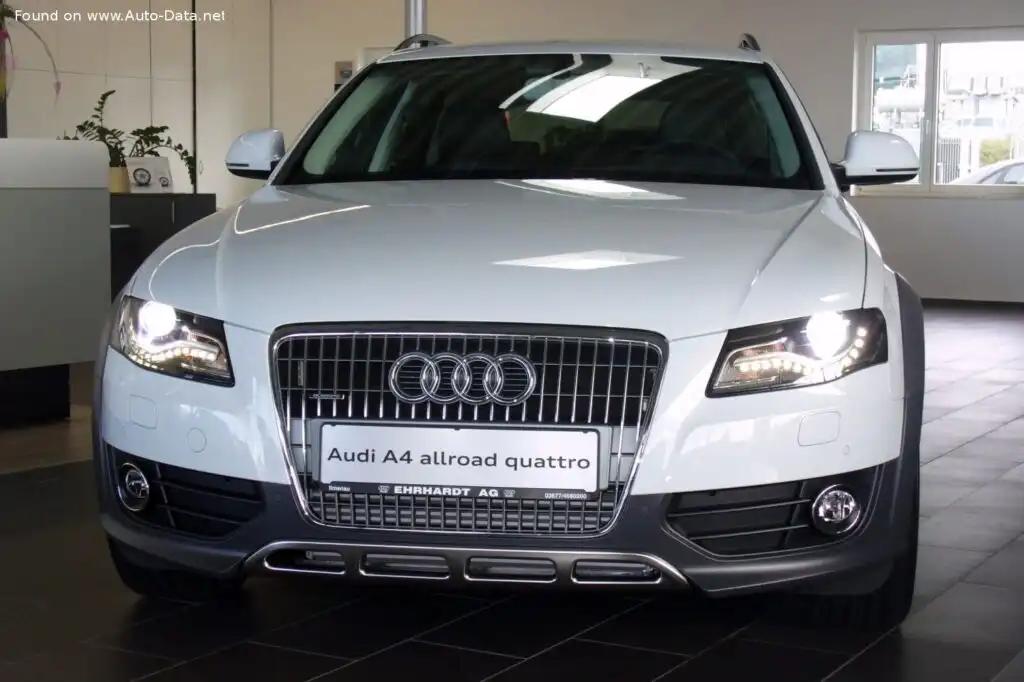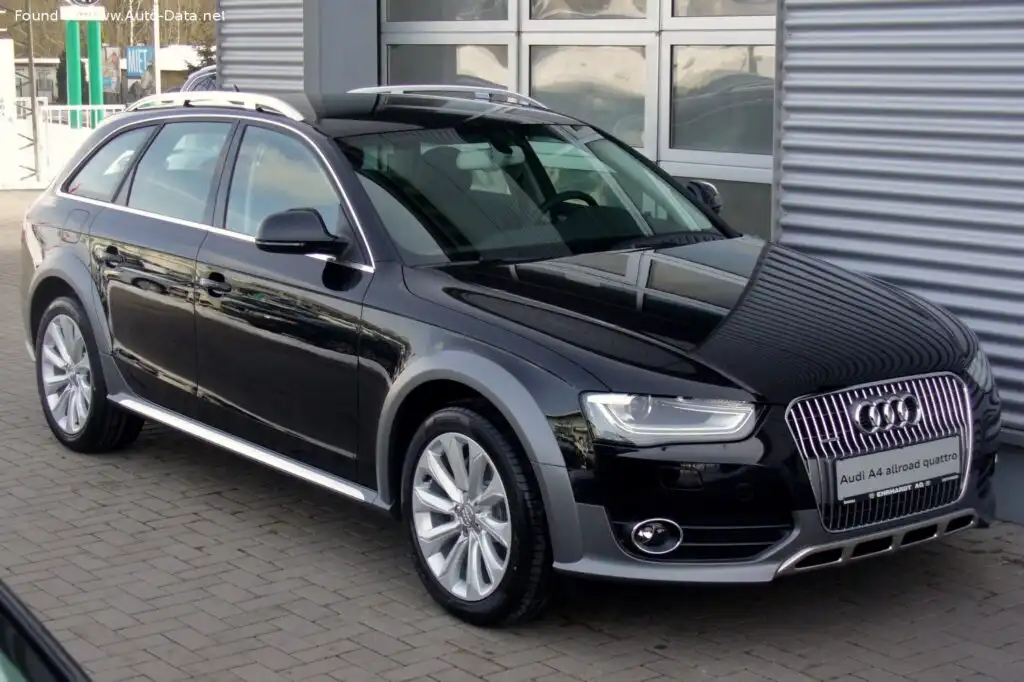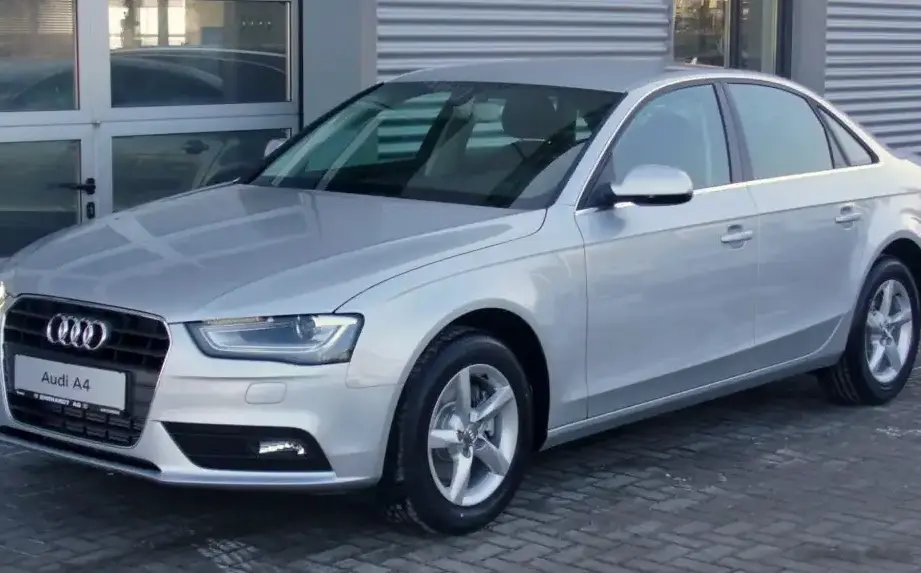
The Audi A4 (B8 8K) facelift, produced from 2011 to 2016, represented a significant mid-cycle refresh of Audi’s popular compact executive car. The 2.0 TFSI variant, specifically the 220 horsepower version paired with the Multitronic continuously variable transmission (CVT), was introduced in June 2013 and remained in production through 2016. This configuration occupied a sweet spot in the A4 lineup, offering a balance of performance, fuel efficiency, and technology aimed at buyers seeking a more engaging driving experience than the base models, but without the higher price tag of the S4 or more specialized trims. It was primarily marketed towards North America and Europe, where demand for refined, technologically advanced sedans was high.
Technical Specifications
| Brand | Audi |
| Model | A4 |
| Generation | A4 (B8 8K, facelift 2011) |
| Type (Engine) | 2.0 TFSI (220 Hp) Multitronic |
| Start of production | June, 2013 |
| End of production | 2016 |
| Powertrain Architecture | Internal Combustion engine |
| Body type | Sedan |
| Seats | 5 |
| Doors | 4 |
| Fuel consumption (economy) – urban (EPA) | 9.8 l/100 km (24 US mpg, 28.8 UK mpg, 10.2 km/l) |
| Fuel consumption (economy) – extra urban (EPA) | 7.4 l/100 km (31.8 US mpg, 38.2 UK mpg, 13.5 km/l) |
| Fuel consumption (economy) – combined (EPA) | 8.7 l/100 km (27 US mpg, 32.5 UK mpg, 11.5 km/l) |
| Fuel Type | Petrol (Gasoline) |
| Acceleration 0 – 60 mph | 6.6 sec |
| Maximum speed | 210 km/h (130.49 mph), Electronically limited |
| Emission standard | ULEV II |
| Weight-to-power ratio | 7.3 kg/Hp, 137.9 Hp/tonne |
| Weight-to-torque ratio | 4.6 kg/Nm, 219.4 Nm/tonne |
| Power | 220 Hp @ 4450-6000 rpm |
| Power per litre | 110.9 Hp/l |
| Torque | 350 Nm @ 1500-4300 rpm (258.15 lb.-ft. @ 1500-4300 rpm) |
| Engine layout | Front, Longitudinal |
| Engine Model/Code | EA888 / CAED, CPMB |
| Engine displacement | 1984 cm3 (121.07 cu. in.) |
| Number of cylinders | 4 |
| Engine configuration | Inline |
| Cylinder Bore | 82.5 mm (3.25 in.) |
| Piston Stroke | 92.8 mm (3.65 in.) |
| Compression ratio | 9.6:1 |
| Number of valves per cylinder | 4 |
| Fuel injection system | Direct injection |
| Engine aspiration | Turbocharger, Intercooler |
| Valvetrain | DOHC |
| Engine oil capacity | 4.6 l (4.86 US qt | 4.05 UK qt) |
| Coolant | 10 l (10.57 US qt | 8.8 UK qt) |
| Kerb Weight | 1595-1625 kg (3516.37 – 3582.51 lbs.) |
| Trunk (boot) space – minimum | 480 l (16.95 cu. ft.) |
| Trunk (boot) space – maximum | 962 l (33.97 cu. ft.) |
| Fuel tank capacity | 61 l (16.11 US gal | 13.42 UK gal) |
| Length | 4701 mm (185.08 in.) |
| Width | 1826 mm (71.89 in.) |
| Width including mirrors | 2040 mm (80.31 in.) |
| Height | 1427 mm (56.18 in.) |
| Wheelbase | 2808 mm (110.55 in.) |
| Front track | 1564 mm (61.57 in.) |
| Rear (Back) track | 1551 mm (61.06 in.) |
| Front overhang | 862 mm (33.94 in.) |
| Rear overhang | 1031 mm (40.59 in.) |
| Drag coefficient (Cd) | 0.31 |
| Minimum turning circle (turning diameter) | 11.5 m (37.73 ft.) |
| Drivetrain Architecture | The Internal combustion engine (ICE) drives the front wheels of the vehicle. |
| Drive wheel | Front wheel drive |
| Number of gears and type of gearbox | automatic transmission Multitronic |
| Front suspension | Coil spring, Independent multi-link suspension, Transverse stabilizer |
| Rear suspension | Independent on trapezoidal lever, Transverse stabilizer |
| Front brakes | Ventilated discs, 320 mm |
| Rear brakes | Disc, 300 mm |
| Assisting systems | ABS (Anti-lock braking system) |
| Steering type | Steering rack and pinion |
| Power steering | Electric Steering |
| Tires size | 245/45 R17; 245/40 R18; 255/35 R19 |
| Wheel rims size | 8J x 17; 8J x 18; 8.5J x 19 |
INTRODUCTION
The Audi A4 B8.5, as the facelifted model is often referred to, built upon the success of the B8 generation, offering a more refined and technologically advanced package. The 2.0 TFSI 220 hp Multitronic variant, introduced in 2013, was a key component of this update. It slotted into the A4 range above the lower-powered 1.8 TFSI models and below the higher-performance 3.0 TFSI and S4. The B8.5 A4 competed directly with BMW’s 3 Series, Mercedes-Benz’s C-Class, and Lexus’s IS, all vying for dominance in the premium compact executive segment. The Multitronic transmission was a defining feature, offering smooth, stepless gear changes and contributing to improved fuel economy.
Powertrain & Engine Architecture
At the heart of this A4 variant lies the EA888 2.0-liter turbocharged four-cylinder engine, specifically coded CAED or CPMB depending on the market. This engine utilizes direct fuel injection (FSI) and a single turbocharger with an intercooler to deliver a potent 220 horsepower and 350 Nm (258 lb-ft) of torque. The engine’s architecture features a cast iron block with an aluminum cylinder head, incorporating four valves per cylinder and a dual overhead camshaft (DOHC) configuration. The Multitronic transmission is a continuously variable transmission (CVT) that uses a chain drive instead of a traditional belt, enhancing durability. It features eight pre-set ratios that can be manually selected or left to operate in fully automatic mode. The Multitronic’s control unit constantly adjusts the gear ratio to optimize engine speed for efficiency or performance.
Driving Characteristics
The 2.0 TFSI 220 hp Multitronic A4 offered a noticeably more responsive driving experience compared to the 1.8 TFSI models. While not as brutally quick as the higher-output variants, the 220 hp engine provided ample power for everyday driving and confident overtaking maneuvers. The Multitronic transmission contributed to smooth acceleration, eliminating the shift shock often associated with traditional automatic transmissions. However, some drivers found the transmission lacked the engagement of a traditional automatic or dual-clutch gearbox, and could exhibit a slight “rubber band” feel under hard acceleration. The gear ratios were optimized for a balance of fuel economy and performance, with a focus on providing strong mid-range torque. The front-wheel drive configuration, while contributing to efficiency, could exhibit some torque steer under aggressive acceleration.
Equipment & Trim Levels
The 2.0 TFSI 220 hp Multitronic A4 typically came standard with a generous array of features, including leather upholstery, tri-zone automatic climate control, a multi-function steering wheel, and Audi’s MMI infotainment system with a central display screen. Optional extras included navigation, a premium sound system (Bang & Olufsen), parking sensors, and advanced driver-assistance systems such as adaptive cruise control and lane departure warning. Trim levels varied by market, but generally included options like Premium, Premium Plus, and Prestige, with each successive trim adding more standard features and luxury appointments. Interior color schemes typically included black, gray, and beige leather options.
Chassis & Braking
The B8.5 A4 featured a fully independent suspension system, with a four-link setup at the front and a trapezoidal link setup at the rear. This configuration provided a comfortable ride while maintaining good handling characteristics. Stabilizer bars were fitted to both axles to reduce body roll during cornering. Braking duties were handled by ventilated discs at the front and solid discs at the rear. Anti-lock braking system (ABS) was standard, along with electronic brake-force distribution (EBD). The suspension tuning was generally geared towards comfort, but the optional Sport suspension package offered a firmer ride and improved handling.
Market Reception & Comparison
The 2.0 TFSI 220 hp Multitronic A4 was generally well-received by automotive critics. It was praised for its refined engine, smooth transmission, and comfortable ride. However, some reviewers noted the Multitronic transmission lacked the sporty feel of a dual-clutch gearbox. Compared to the 1.8 TFSI A4, the 220 hp version offered a significant performance boost, while maintaining comparable fuel economy. The 3.0 TFSI A4 provided even more power, but at a higher price point. In terms of reliability, the EA888 engine proved to be generally robust, although some owners reported issues with carbon buildup on the intake valves over time. The Multitronic transmission required regular servicing, including fluid changes, to ensure optimal performance and longevity.
Legacy
The Audi A4 B8.5 2.0 TFSI 220 hp Multitronic remains a popular choice in the used car market. Its combination of performance, fuel efficiency, and technology continues to appeal to buyers seeking a premium compact executive car. While the Multitronic transmission requires diligent maintenance, it is generally considered reliable when properly cared for. The EA888 engine is well-regarded for its durability and tunability. The B8.5 A4 represents a high point in Audi’s design and engineering, and the 2.0 TFSI 220 hp Multitronic variant offers a compelling blend of refinement and driving enjoyment.