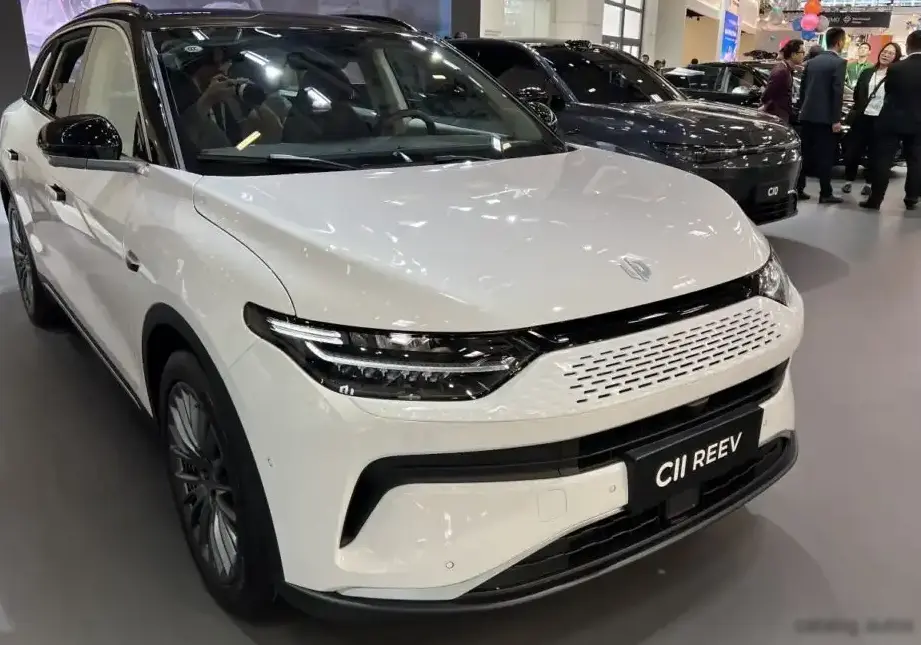
The Leapmotor C11 (facelift 2025) represents a significant update to Leapmotor’s flagship SUV, launched in July 2025. Positioned as a technologically advanced and competitively priced electric vehicle, the C11 aims to capture a substantial share of the growing EV market, particularly in China where Leapmotor is based. This specific variant, equipped with an 81.9 kWh battery pack and a single electric motor producing 299 horsepower, sits towards the higher end of the C11 lineup, offering a balance of performance, range, and features. It’s designed to appeal to buyers seeking a spacious, modern SUV with a focus on electric efficiency and smart technology.
Technical Specifications
| Brand | Leapmotor |
| Model | C11 |
| Generation | C11 (facelift 2025) |
| Type (Engine) | 81.9 kWh (299 Hp) Electric |
| Start of production | July, 2025 |
| Powertrain Architecture | BEV (Electric Vehicle) |
| Body type | SUV |
| Seats | 5 |
| Doors | 5 |
| Fuel Type | Electricity |
| Acceleration 0 – 100 km/h | 6.1 sec |
| Acceleration 0 – 62 mph | 6.1 sec |
| Acceleration 0 – 60 mph | 5.8 sec |
| Maximum speed | 190 km/h (118.06 mph) |
| Weight-to-power ratio | 7.1 kg/Hp, 141.7 Hp/tonne |
| Weight-to-torque ratio | 5.9 kg/Nm, 170.6 Nm/tonne |
| Gross battery capacity | 81.9 kWh |
| Battery voltage | 800 V |
| Battery technology | Lithium iron phosphate (LiFePO4) |
| Battery location | Below the floor |
| All-electric range (CLTC) | 640 km (397.68 mi) |
| Electric motor power | 299 Hp |
| Electric motor Torque | 360 Nm (265.52 lb.-ft.) |
| Electric motor location | Rear axle, Transverse |
| Electric motor type | Synchronous |
| System power | 299 Hp |
| System torque | 360 Nm (265.52 lb.-ft.) |
| Kerb Weight | 2110 kg (4651.75 lbs.) |
| Trunk (boot) space – minimum | 410 l (14.48 cu. ft.) |
| Trunk (boot) space – maximum | 974 l (34.4 cu. ft.) |
| Length | 4780 mm (188.19 in.) |
| Width | 1905 mm (75 in.) |
| Height | 1658 mm (65.28 in.) |
| Wheelbase | 2930 mm (115.35 in.) |
| Ride height (ground clearance) | 175 mm (6.89 in.) |
| Drivetrain Architecture | One electric motor drives the rear wheels. |
| Drive wheel | Rear wheel drive |
| Number of gears and type of gearbox | 1 gears, automatic transmission |
| Front suspension | Double wishbone |
| Rear suspension | Independent multi-link suspension |
| Front brakes | Ventilated discs |
| Rear brakes | Ventilated discs |
| Assisting systems | ABS (Anti-lock braking system) |
| Steering type | Steering rack and pinion |
| Power steering | Electric Steering |
| Tires size | 255/45 R20 |
| Wheel rims size | 20 |
Powertrain & Engine Architecture
The Leapmotor C11 (facelift 2025) utilizes a single, rear-mounted synchronous electric motor. This motor delivers a peak output of 299 horsepower and 360 Nm (265.52 lb.-ft.) of torque. The powertrain is powered by an 81.9 kWh Lithium Iron Phosphate (LiFePO4) battery pack, operating at a high 800V architecture. This high-voltage system allows for faster charging times, a key advantage in the competitive EV landscape. The single-speed automatic transmission is a standard setup for electric vehicles, providing seamless acceleration. The LiFePO4 chemistry is chosen for its enhanced thermal stability and longer cycle life compared to other battery technologies, though it typically offers slightly lower energy density.
Driving Characteristics
The rear-wheel-drive configuration of the C11 contributes to a balanced driving experience. Acceleration from 0 to 60 mph is achieved in approximately 5.8 seconds, making it reasonably quick for a mid-size SUV. The single-speed transmission provides instant torque delivery, characteristic of electric powertrains. Compared to potential dual-motor all-wheel-drive variants (if offered), this rear-wheel-drive version prioritizes efficiency and a slightly more engaging driving feel. The single gear ratio is optimized for a blend of acceleration and highway cruising, though it may not offer the same level of flexibility as a multi-gear transmission found in some internal combustion engine vehicles.
Equipment & Trim Levels
The 299 hp variant of the C11 typically includes a comprehensive suite of standard features. These generally include a large touchscreen infotainment system, a digital instrument cluster, leatherette upholstery, automatic climate control, and a panoramic sunroof. Advanced driver-assistance systems (ADAS) such as adaptive cruise control, lane keeping assist, and automatic emergency braking are also commonly included. Optional extras may include upgraded sound systems, ventilated front seats, and premium interior trim materials. The facelifted 2025 model is expected to feature further enhancements to the interior design and technology offerings, potentially including over-the-air software updates and improved connectivity features.
Chassis & Braking
The Leapmotor C11 employs a double wishbone suspension setup at the front and an independent multi-link suspension at the rear, designed to provide a comfortable ride and stable handling. Ventilated disc brakes are fitted on all four wheels, ensuring adequate stopping power. The electronic power steering system offers precise and responsive control. The vehicle’s relatively low center of gravity, thanks to the underfloor battery pack, contributes to improved cornering stability. The suspension tuning is geared towards balancing comfort and handling, making it suitable for both city driving and longer highway journeys.
Market Reception & Comparison
The Leapmotor C11 has been well-received in the Chinese market, praised for its competitive pricing, spacious interior, and advanced technology. Critics have noted its strong value proposition compared to established EV brands. The 81.9 kWh variant offers a CLTC-rated range of 640 km (397.68 mi), which is competitive within its segment. Compared to other electric SUVs in the same price range, the C11 often stands out with its 800V charging architecture and comprehensive ADAS features. Reliability data is still emerging, but early reports suggest a generally positive ownership experience.
Legacy
As a relatively new entrant to the automotive market, Leapmotor is still establishing its long-term reputation for reliability. However, the use of LiFePO4 battery technology suggests a potentially long lifespan for the battery pack. The C11’s focus on technology and value positions it as a key player in the rapidly evolving EV landscape. Its success will likely depend on Leapmotor’s ability to maintain competitive pricing, expand its charging infrastructure, and continue to innovate in areas such as autonomous driving and battery technology. The 2025 facelift is a crucial step in solidifying the C11’s position as a leading electric SUV.