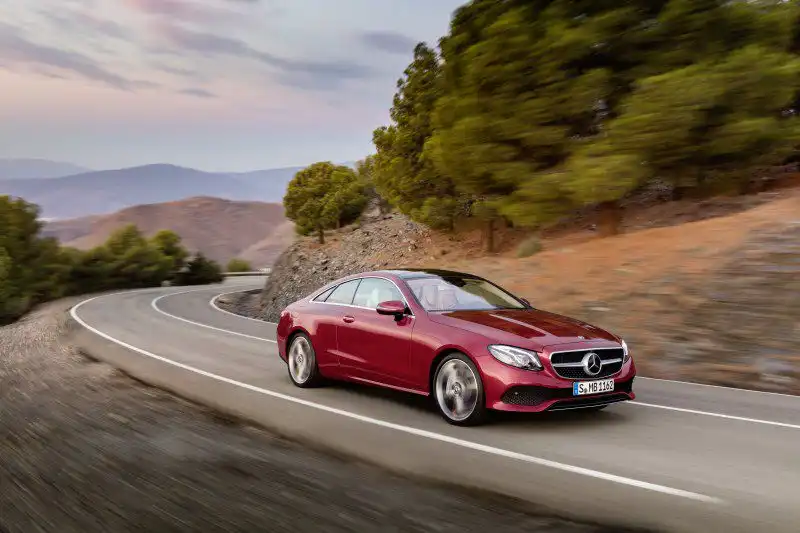
The Mercedes-Benz E-Class Coupe (C238) E 350 EQ Boost, produced from 2017 to 2020, represents a sophisticated blend of performance and efficiency within the fifth generation of the E-Class Coupe. Positioned as a mid-to-upper range offering, it bridged the gap between the base E 300 models and the more potent AMG variants. This variant was primarily marketed towards buyers seeking a luxurious grand tourer with a modern powertrain, incorporating mild hybrid technology for improved fuel economy and responsiveness. The C238 chassis, shared with the E-Class Cabriolet, offered a more dynamic driving experience compared to the E-Class sedan, appealing to those prioritizing style and driver engagement.
Technical Specifications
| Brand | Mercedes-Benz |
| Model | E-class |
| Generation | E-class Coupe (C238) |
| Type | E 350 (299 Hp) EQ Boost 9G-TRONIC |
| Start of production | 2017 |
| End of production | 2020 |
| Powertrain Architecture | MHEV (Mild Hybrid Electric Vehicle) |
| Body type | Coupe |
| Seats | 4 |
| Doors | 2 |
| Fuel consumption at Low speed (WLTP) | 7.6 l/100 km (30.9 US mpg) |
| Fuel consumption at very high speed (WLTP) | 8.6 l/100 km (27.4 US mpg) |
| CO2 emissions (WLTP) | 173-195 g/km |
| Fuel consumption (economy) – urban | 9.2-9.3 l/100 km (25.6 – 25.3 US mpg) |
| Fuel consumption (economy) – extra urban | 5.4-5.5 l/100 km (43.6 – 42.8 US mpg) |
| Fuel consumption (economy) – combined | 6.8-6.9 l/100 km (34.6 – 34.1 US mpg) |
| CO2 emissions | 155-158 g/km |
| Fuel Type | Petrol (Gasoline) |
| Acceleration 0 – 100 km/h | 5.9 sec |
| Acceleration 0 – 62 mph | 5.9 sec |
| Acceleration 0 – 60 mph | 5.6 sec |
| Maximum speed | 250 km/h (155.34 mph) – Electronically limited |
| Emission standard | Euro 6d-TEMP |
| Weight-to-power ratio | 5.6 kg/Hp |
| Weight-to-torque ratio | 4.2 kg/Nm |
| Battery voltage | 48 V |
| Electric motor power | 14 Hp |
| Power | 299 Hp @ 5800-6100 rpm |
| Torque | 400 Nm @ 3000-4000 rpm (295.02 lb.-ft.) |
| Engine layout | Front, Longitudinal |
| Engine Model/Code | M 264.920 |
| Engine displacement | 1991 cm3 (121.5 cu. in.) |
| Number of cylinders | 4 |
| Engine configuration | Inline |
| Fuel injection system | Direct injection |
| Engine aspiration | Twin-scroll turbo, Intercooler |
| Valvetrain | DOHC |
| Engine oil capacity | 7 l (7.4 US qt | 6.16 UK qt) |
| Coolant capacity | 11 l (11.62 US qt | 9.68 UK qt) |
| Kerb Weight | 1660 kg (3659.67 lbs.) |
| Max. weight | 2250 kg (4960.4 lbs.) |
| Max load | 590 kg (1300.73 lbs.) |
| Fuel tank capacity | 66 l (17.44 US gal | 14.52 UK gal) |
| Permitted trailer load with brakes (12%) | 1800 kg (3968.32 lbs.) |
| Permitted trailer load without brakes | 750 kg (1653.47 lbs.) |
| Length | 4826 mm (190 in.) |
| Width | 1860 mm (73.23 in.) |
| Height | 1430 mm (56.3 in.) |
| Wheelbase | 2873 mm (113.11 in.) |
| Front track | 1605 mm (63.19 in.) |
| Rear track | 1609 mm (63.35 in.) |
| Number of gears | 9 |
| Gearbox type | Automatic transmission G-TRONIC |
INTRODUCTION
The C238 E-Class Coupe, launched in 2017, represented a significant departure from its predecessor, adopting a more fluid and contemporary design language. The E 350 EQ Boost variant, powered by the M264 engine, was introduced as a key model within the lineup. It combined a 2.0-liter turbocharged inline-four cylinder engine with a 48-volt mild hybrid system, offering a balance of performance and efficiency. This model year marked a shift towards electrification within the Mercedes-Benz range, and the EQ Boost system was a crucial component of that strategy. The E 350 EQ Boost aimed to deliver a refined driving experience, appealing to buyers who desired a luxurious coupe without sacrificing modern technology.
Powertrain & Engine Architecture
At the heart of the E 350 EQ Boost lies the M264 2.0-liter inline-four cylinder engine. This engine utilizes direct fuel injection and a twin-scroll turbocharger to deliver 299 horsepower and 400 Nm (295 lb-ft) of torque. The key innovation is the integration of a 48-volt mild hybrid system. This system comprises a belt-driven starter-generator (BSG) and a 48V lithium-ion battery. The BSG allows for functions like extended coasting with the engine switched off, regenerative braking to recapture energy, and a smoother start/stop operation. The engine’s valvetrain employs a Dual Overhead Camshaft (DOHC) configuration with four valves per cylinder, optimizing airflow for improved performance. The 9G-TRONIC nine-speed automatic transmission is standard, providing smooth and efficient gear changes. This transmission is known for its wide gear ratio spread, contributing to both fuel economy and responsive acceleration.
Driving Characteristics
The E 350 EQ Boost offers a refined and comfortable driving experience. The mild hybrid system enhances responsiveness by providing an electric boost during acceleration, minimizing turbo lag. While not as overtly sporty as the AMG variants, the E 350 delivers ample power for confident overtaking and highway cruising. The 9G-TRONIC transmission is well-tuned, offering seamless shifts and contributing to a relaxed driving experience. Compared to the E 300, the E 350 provides noticeably more power and a more engaging driving feel. However, it doesn’t match the raw performance of the E 450 or the AMG models. The rear-wheel drive configuration provides a balanced feel, although all-wheel drive (4MATIC) was available as an option. The EQ Boost system subtly enhances the driving experience, providing a smoother and more refined feel without dramatically altering the car’s character.
Equipment & Trim Levels
The E 350 EQ Boost came standard with a generous array of features, reflecting its positioning as a premium coupe. Standard equipment typically included leather upholstery, heated and ventilated front seats, a premium sound system, and a large infotainment display with Mercedes-Benz’s MBUX system. MBUX offered voice control, augmented reality navigation, and a customizable user interface. Optional extras included a panoramic sunroof, advanced driver-assistance systems (such as adaptive cruise control and lane-keeping assist), and various interior trim options. The interior design emphasized luxury and sophistication, with high-quality materials and meticulous attention to detail. Dashboard configurations were generally consistent across the E-Class Coupe range, with subtle variations in trim and accent materials.
Chassis & Braking
The C238 E-Class Coupe features an independent multi-link suspension at both the front and rear axles, providing a comfortable ride and precise handling. The suspension is tuned to balance comfort and agility, offering a composed ride even on uneven surfaces. The E 350 EQ Boost typically came equipped with ventilated disc brakes on all four wheels, providing ample stopping power. Anti-lock Braking System (ABS) and Electronic Stability Program (ESP) were standard safety features. Steering is via a rack-and-pinion system with electric power assistance, offering precise and responsive steering feel. The chassis is designed to minimize weight while maximizing rigidity, contributing to improved handling and safety.
Market Reception & Comparison
The E 350 EQ Boost was generally well-received by automotive critics. Reviewers praised its refined driving experience, luxurious interior, and the benefits of the mild hybrid system. Fuel economy was considered competitive for its class, and the EQ Boost system was lauded for its ability to improve both efficiency and responsiveness. Compared to the E 300, the E 350 offered a noticeable performance upgrade, while remaining more affordable than the higher-performance E 450 or AMG models. Some critics noted that the 2.0-liter engine, while capable, lacked the character of larger engines found in some competitors. However, the overall package was considered a compelling offering in the luxury coupe segment.
Legacy
The E 350 EQ Boost represents an important step in Mercedes-Benz’s transition towards electrified powertrains. The M264 engine and 48-volt mild hybrid system became increasingly common in subsequent Mercedes-Benz models. In the used car market, the C238 E 350 EQ Boost holds its value relatively well, due to its combination of luxury, performance, and technology. The powertrain has proven to be generally reliable, with few widespread issues reported. Regular maintenance, including oil changes and adherence to the manufacturer’s recommended service intervals, is crucial for long-term reliability. The E 350 EQ Boost remains a desirable option for buyers seeking a sophisticated and well-equipped luxury coupe.