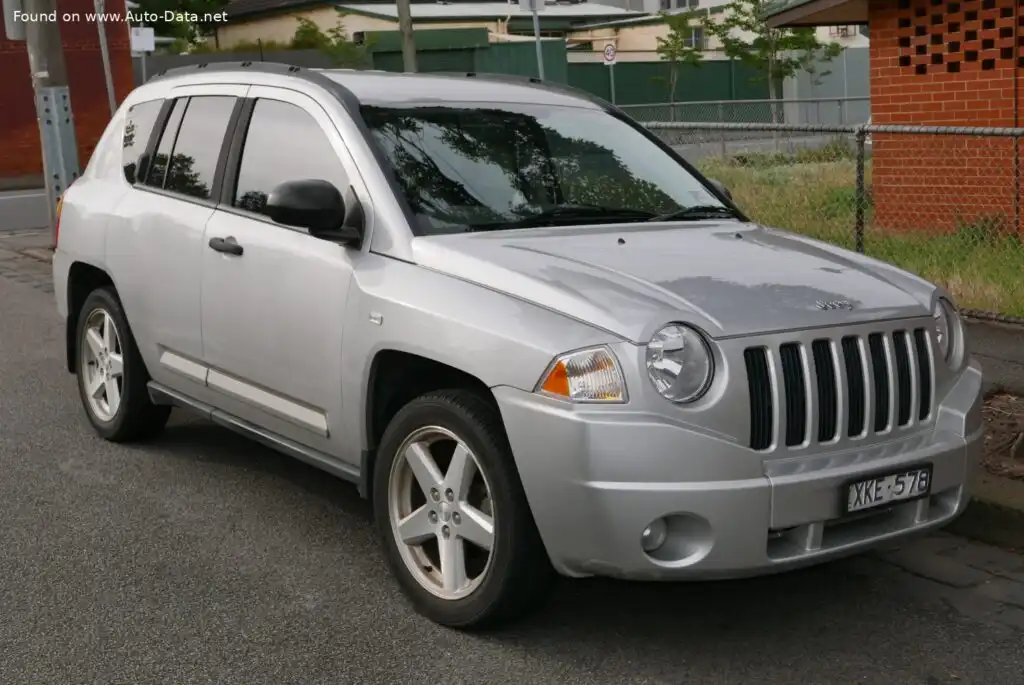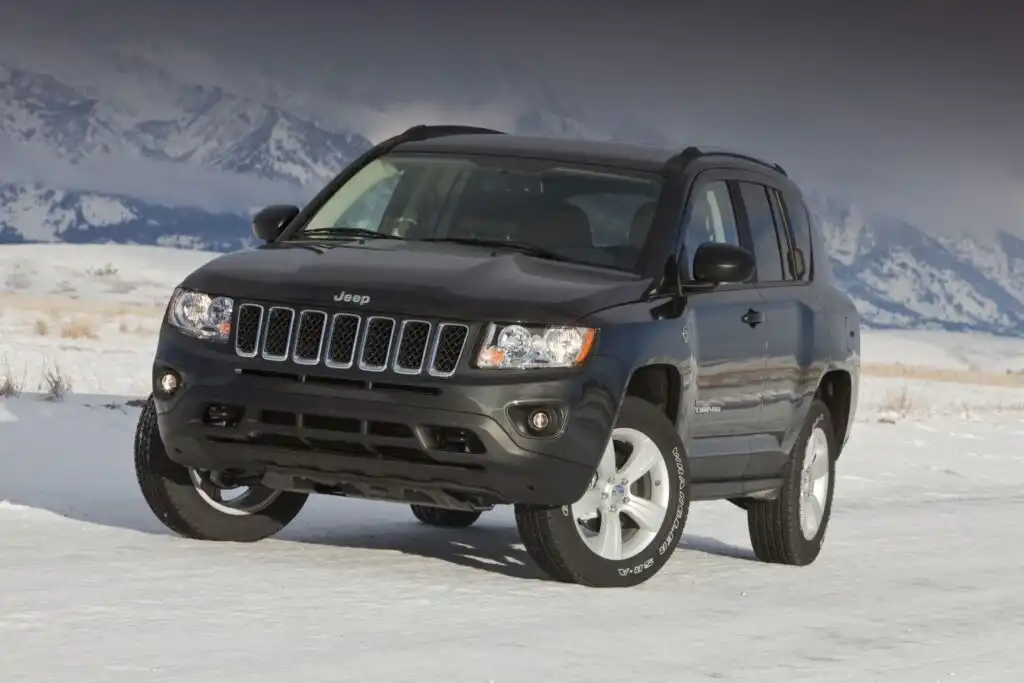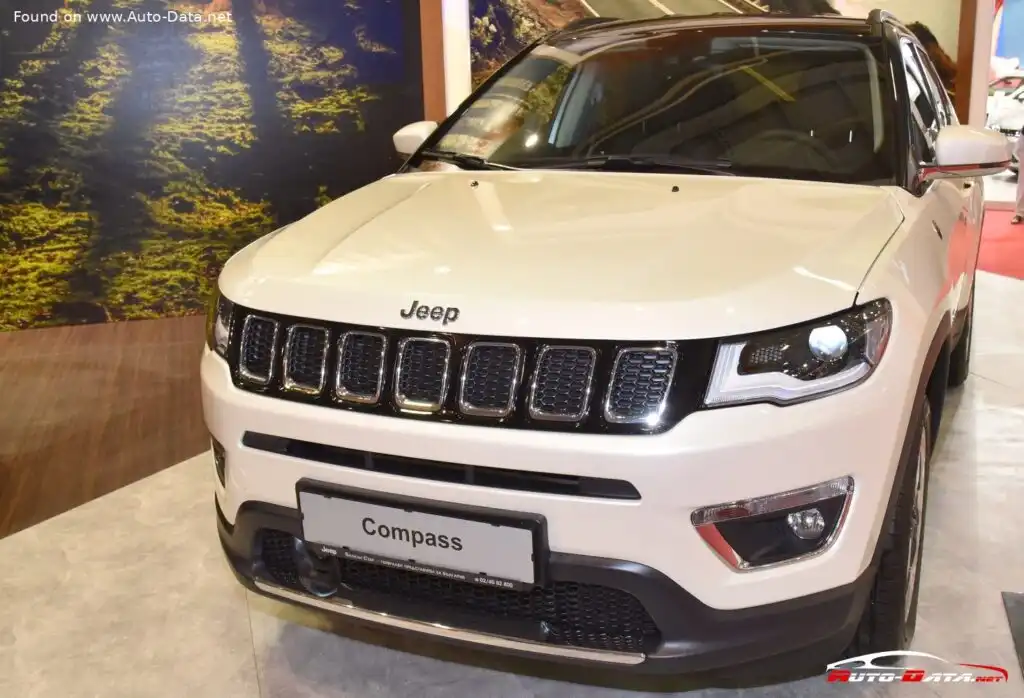
The Jeep Compass II (MP) 1.3 GSE T4, produced from July 2020 to April 2021, represents a key iteration within the second generation of the Jeep Compass. Positioned as a mid-range offering in many European and international markets, this variant combined a turbocharged 1.3-liter gasoline engine with a dual-clutch transmission (DCT) to deliver a balance of performance and fuel efficiency. It was designed to appeal to buyers seeking a compact SUV with modern technology and a more refined driving experience than base models, while remaining more accessible than the higher-powered trims. The Compass II (MP) series, built on the 551 platform, aimed to address criticisms of the first-generation Compass, offering improved interior quality, ride comfort, and technology.
Technical Specifications
| Brand | Jeep |
| Model | Compass |
| Generation | Compass II (MP) |
| Type (Engine) | 1.3 GSE T4 (150 Hp) DCT |
| Start of production | July, 2020 |
| End of production | April, 2021 |
| Powertrain Architecture | Internal Combustion engine |
| Body type | SUV, Crossover |
| Seats | 5 |
| Doors | 5 |
| Combined fuel consumption (WLTP) | 6.7-7 l/100 km (35.1 – 33.6 US mpg, 42.2 – 40.4 UK mpg, 14.9 – 14.3 km/l) |
| CO2 emissions (WLTP) | 151-163 g/km |
| Fuel consumption (economy) – urban (NEDC) | 6.6 l/100 km (35.6 US mpg, 42.8 UK mpg, 15.2 km/l) |
| Fuel consumption (economy) – extra urban (NEDC) | 5.4 l/100 km (43.6 US mpg, 52.3 UK mpg, 18.5 km/l) |
| Fuel consumption (economy) – combined (NEDC) | 5.8 l/100 km (40.6 US mpg, 48.7 UK mpg, 17.2 km/l) |
| CO2 emissions (NEDC) | 133 g/km |
| Fuel Type | Petrol (Gasoline) |
| Acceleration 0 – 100 km/h | 9.2 sec |
| Acceleration 0 – 62 mph | 9.2 sec |
| Acceleration 0 – 60 mph | 8.7 sec |
| Maximum speed | 199 km/h (123.65 mph) |
| Emission standard | Euro 6d-Final |
| Weight-to-power ratio | 9.5 kg/Hp, 104.9 Hp/tonne |
| Weight-to-torque ratio | 5.3 kg/Nm, 188.8 Nm/tonne |
| Power | 150 Hp @ 5500 rpm |
| Power per litre | 112.6 Hp/l |
| Torque | 270 Nm @ 1560 rpm (199.14 lb.-ft. @ 1560 rpm) |
| Engine layout | Front, Transverse |
| Engine Model/Code | 55282328 |
| Engine displacement | 1332 cm3 (81.28 cu. in.) |
| Number of cylinders | 4 |
| Engine configuration | Inline |
| Cylinder Bore | 70 mm (2.76 in.) |
| Piston Stroke | 86.5 mm (3.41 in.) |
| Compression ratio | 10.5:1 |
| Number of valves per cylinder | 4 |
| Fuel injection system | Direct injection |
| Engine aspiration | Turbocharger, Intercooler |
| Valvetrain | DOHC |
| Engine oil capacity | 4.7 l (4.97 US qt | 4.14 UK qt) |
| Coolant | 7.5 l (7.93 US qt | 6.6 UK qt) |
| Kerb Weight | 1430 kg (3152.61 lbs.) |
| Max. weight | 1965 kg (4332.08 lbs.) |
| Max load | 535 kg (1179.47 lbs.) |
| Trunk (boot) space – minimum | 438 l (15.47 cu. ft.) |
| Trunk (boot) space – maximum | 1387 l (48.98 cu. ft.) |
| Fuel tank capacity | 55 l (14.53 US gal | 12.1 UK gal) |
| Max. roof load | 68 kg (149.91 lbs.) |
| Permitted trailer load with brakes (12%) | 1750 kg (3858.09 lbs.) |
| Permitted trailer load without brakes | 600 kg (1322.77 lbs.) |
| Permitted towbar download | 60 kg (132.28 lbs.) |
| Length | 4394 mm (172.99 in.) |
| Width | 1819 mm (71.61 in.) |
| Width with mirrors folded | 1874 mm (73.78 in.) |
| Width including mirrors | 2033 mm (80.04 in.) |
| Height | 1629 mm (64.13 in.) |
| Wheelbase | 2636 mm (103.78 in.) |
| Ride height (ground clearance) | 198 mm (7.8 in.) |
| Minimum turning circle (turning diameter) | 11.07 m (36.32 ft.) |
| Approach angle | 15.8° |
| Departure angle | 30.8° |
| Ramp-over (brakeover) angle | 21.8° |
| Wading depth | 406 mm (15.98 in.) |
| Drivetrain Architecture | The Internal combustion engine (ICE) drives the front wheels of the vehicle. |
| Drive wheel | Front wheel drive |
| Number of gears and type of gearbox | 6 gears, automatic transmission DCT |
| Front suspension | Independent, type McPherson with coil spring and anti-roll bar |
| Rear suspension | Independent coil spring, Transverse stabilizer |
| Front brakes | Ventilated discs |
| Rear brakes | Disc |
| Assisting systems | ABS (Anti-lock braking system) |
| Steering type | Steering rack and pinion |
| Power steering | Electric Steering |
| Tires size | 215/60 R17; 225/55 R18; 235/45 R19 |
| Wheel rims size | 7J x 17; 7J x 18; 7.5J x 19 |
Powertrain & Engine Architecture
The heart of the Compass II (MP) 1.3 GSE T4 is the Fiat Firefly family 1.3-liter turbocharged inline-four cylinder engine, internally designated as 55282328. This engine utilizes direct fuel injection and a single-scroll turbocharger with an intercooler to achieve a balance of power and efficiency. The engine produces 150 horsepower at 5500 rpm and 270 Nm (199 lb-ft) of torque at a low 1560 rpm. The relatively high torque output at low engine speeds is a key characteristic of this engine, contributing to good drivability in everyday situations. The engine features a double overhead camshaft (DOHC) valvetrain with four valves per cylinder. The engine is paired with a six-speed dual-clutch transmission (DCT), which provides quick and smooth gear changes. This DCT is a crucial component in maximizing the engine’s potential and improving fuel economy compared to a traditional automatic transmission.
Driving Characteristics
The 1.3 GSE T4 with the DCT offers a noticeable step up in responsiveness compared to lower-powered Compass variants. While not a performance-oriented vehicle, the 9.2-second 0-60 mph acceleration is adequate for most driving scenarios. The DCT contributes to a more engaging driving experience, with quick shifts and minimal torque interruption. The gear ratios are tuned for a balance between acceleration and fuel efficiency. In real-world driving, the engine feels relatively refined, with minimal vibration and noise. However, it’s important to note that the engine can feel strained when fully loaded or during aggressive acceleration, particularly when compared to larger displacement engines available in other Compass trims. The front-wheel-drive configuration provides predictable handling, but lacks the all-weather capability of the available four-wheel-drive systems.
Equipment & Trim Levels
The 1.3 GSE T4 trim typically included standard features such as air conditioning, a touchscreen infotainment system with Apple CarPlay and Android Auto compatibility, rear parking sensors, and a suite of safety features including automatic emergency braking and lane departure warning. Interior upholstery was generally cloth, with options for leather available as upgrades. Higher trim levels within the 1.3 GSE T4 range could add features like a larger touchscreen, heated front seats, a panoramic sunroof, and advanced driver-assistance systems like adaptive cruise control. The overall interior design aimed for a modern aesthetic, with a focus on user-friendliness.
Chassis & Braking
The Compass II (MP) utilizes an independent suspension setup at all four corners. The front suspension employs a McPherson strut design with coil springs and an anti-roll bar, while the rear suspension features an independent coil spring setup with a transverse stabilizer. This suspension configuration provides a comfortable ride quality, although it’s not particularly sporty. Braking duties are handled by ventilated discs at the front and solid discs at the rear. The braking system is equipped with ABS (Anti-lock Braking System) and electronic brake-force distribution. Steering is provided by an electric power steering system, offering light and precise control.
Market Reception & Comparison
The Jeep Compass II (MP) 1.3 GSE T4 was generally well-received by critics as a competent and fuel-efficient compact SUV. However, some reviewers noted that the engine could feel underpowered when fully loaded or during demanding driving situations. Compared to the 1.4-liter MultiAir engine offered in some markets, the 1.3 GSE T4 provided a noticeable improvement in torque and overall drivability. Against competitors like the Nissan Qashqai and Kia Sportage, the Compass offered a unique blend of American styling and Italian engineering. Fuel economy figures of 6.7-7 l/100km (35.1-33.6 mpg) were competitive within its segment.
Legacy
The 1.3 GSE T4 engine and DCT combination has proven to be relatively reliable in the Jeep Compass II (MP). While some owners have reported minor issues with the DCT, such as occasional jerky shifts, these are generally infrequent and can often be addressed with software updates. The engine itself is known for its durability and fuel efficiency. On the used car market, the Compass II (MP) 1.3 GSE T4 represents a good value proposition for buyers seeking a stylish and practical compact SUV with modern features. Its relatively low running costs and decent performance make it an attractive option in the used car segment.