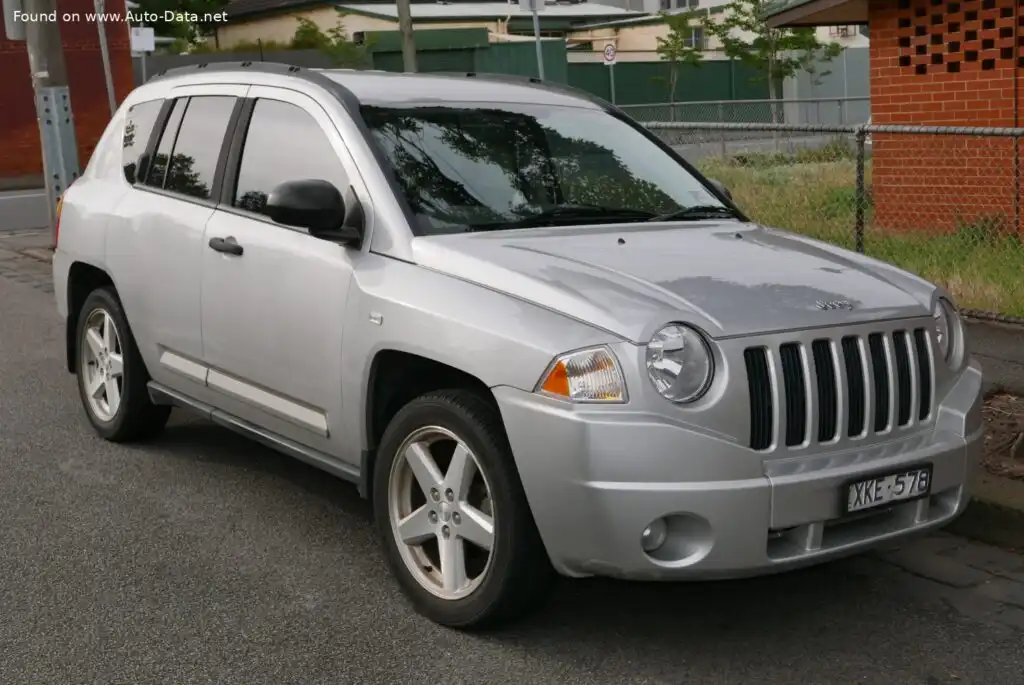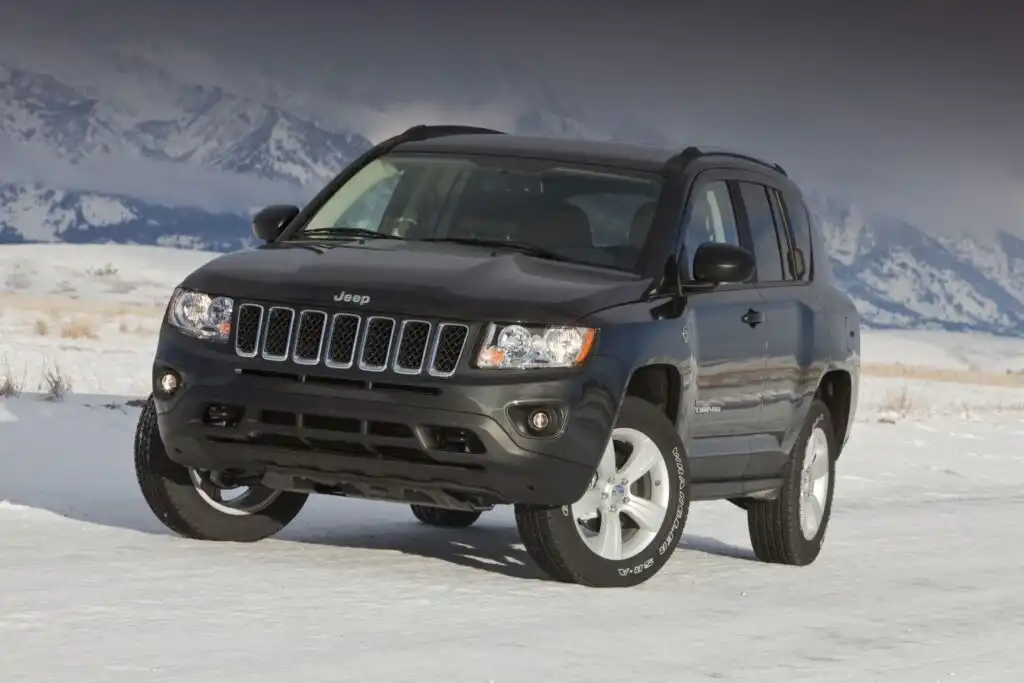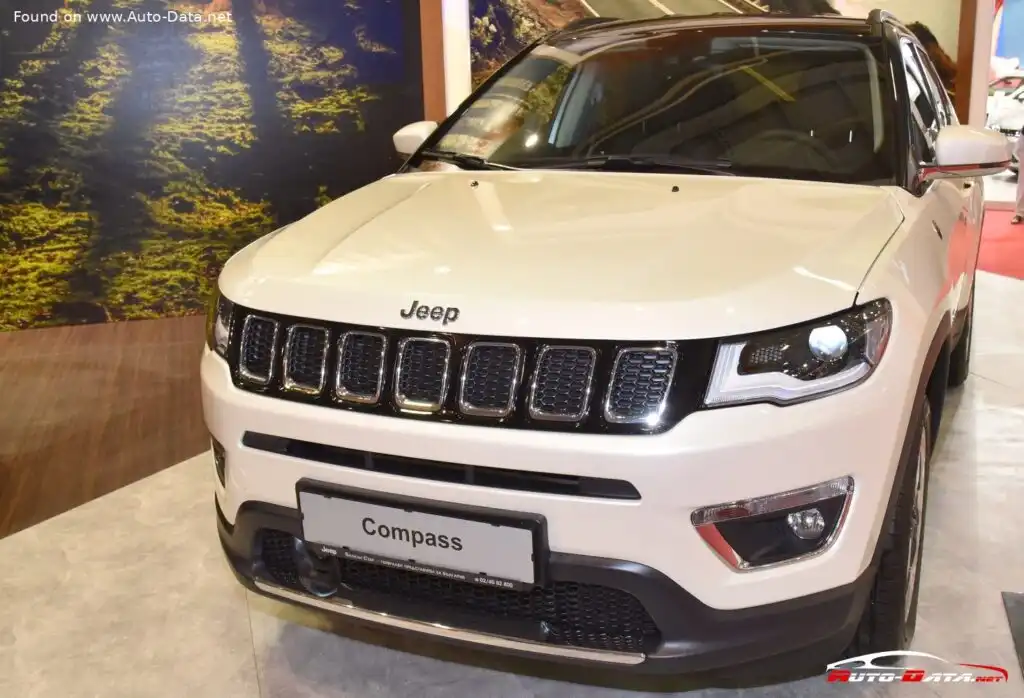
The Jeep Compass II (MP) 1.4 MultiAir 4×4 Automatic, produced from July 2017 to July 2020, represents a significant iteration of Jeep’s compact crossover SUV. Positioned as a mid-range offering within the broader Compass II (MP) lineup – which spanned various engine options and drivetrain configurations – this variant aimed to balance fuel efficiency with all-wheel-drive capability and a comfortable driving experience. It was primarily marketed in Europe and other international markets, offering a more accessible entry point into the Jeep brand compared to larger, more powerful models. This version utilized the 1HX0/A3 platform shared with other Stellantis vehicles.
Technical Specifications
| Brand | Jeep |
| Model | Compass |
| Generation | Compass II (MP) |
| Type (Engine) | 1.4 MultiAir (170 Hp) 4×4 Automatic |
| Start of production | July, 2017 |
| End of production | July, 2020 |
| Powertrain Architecture | Internal Combustion engine |
| Body type | SUV, Crossover |
| Seats | 5 |
| Doors | 5 |
| Fuel consumption (economy) – urban (NEDC) | 8.7-9.7 l/100 km (27 – 24.2 US mpg, 32.5 – 29.1 UK mpg, 11.5 – 10.3 km/l) |
| Fuel consumption (economy) – extra urban (NEDC) | 5.9-7.5 l/100 km (39.9 – 31.4 US mpg, 47.9 – 37.7 UK mpg, 16.9 – 13.3 km/l) |
| Fuel consumption (economy) – combined (NEDC) | 6.9-8.3 l/100 km (34.1 – 28.3 US mpg, 40.9 – 34 UK mpg, 14.5 – 12 km/l) |
| CO2 emissions (NEDC) | 160-190 g/km |
| Fuel Type | Petrol (Gasoline) |
| Acceleration 0 – 100 km/h | 9.5 sec |
| Acceleration 0 – 62 mph | 9.5 sec |
| Acceleration 0 – 60 mph | 9 sec |
| Maximum speed | 200 km/h (124.27 mph) |
| Emission standard | Euro 6 |
| Weight-to-power ratio | 9.1 kg/Hp, 110.4 Hp/tonne |
| Weight-to-torque ratio | 6.2 kg/Nm, 162.3 Nm/tonne |
| Power | 170 Hp @ 5500 rpm |
| Power per litre | 124.3 Hp/l |
| Torque | 250 Nm @ 2500 rpm (184.39 lb.-ft. @ 2500 rpm) |
| Engine layout | Front, Transverse |
| Engine Model/Code | EAQ |
| Engine displacement | 1368 cm3 (83.48 cu. in.) |
| Number of cylinders | 4 |
| Engine configuration | Inline |
| Cylinder Bore | 72 mm (2.83 in.) |
| Piston Stroke | 84 mm (3.31 in.) |
| Compression ratio | 10:1 |
| Number of valves per cylinder | 4 |
| Fuel injection system | Multi-port manifold injection |
| Engine aspiration | Turbocharger, Intercooler |
| Valvetrain | SOHC |
| Engine oil capacity | 3.8 l (4.02 US qt | 3.34 UK qt) |
| Coolant | 5.2 l (5.49 US qt | 4.58 UK qt) |
| Kerb Weight | 1540-1683 kg (3395.12 – 3710.38 lbs.) |
| Max. weight | 2087 kg (4601.05 lbs.) |
| Max load | 404-547 kg (890.67 – 1205.93 lbs.) |
| Trunk (boot) space – minimum | 438 l (15.47 cu. ft.) |
| Trunk (boot) space – maximum | 1251 l (44.18 cu. ft.) |
| Fuel tank capacity | 60 l (15.85 US gal | 13.2 UK gal) |
| Max. roof load | 68 kg (149.91 lbs.) |
| Permitted trailer load with brakes (12%) | 1000 kg (2204.62 lbs.) |
| Permitted trailer load without brakes | 500 kg (1102.31 lbs.) |
| Permitted towbar download | 50 kg (110.23 lbs.) |
| Length | 4394 mm (172.99 in.) |
| Width | 1819 mm (71.61 in.) |
| Height | 1644 mm (64.72 in.) |
| Wheelbase | 2636 mm (103.78 in.) |
| Front track | 1550 mm (61.02 in.) |
| Rear (Back) track | 1550 mm (61.02 in.) |
| Ride height (ground clearance) | 215 mm (8.46 in.) |
| Minimum turning circle (turning diameter) | 11.07 m (36.32 ft.) |
| Approach angle | 16.3° |
| Departure angle | 31.4° |
| Ramp-over (brakeover) angle | 22.9° |
| Wading depth | 406 mm (15.98 in.) |
| Drivetrain Architecture | The Internal combustion engine (ICE) drives the front wheels permanently, and the rear wheels are driven through an electrically or mechanically operated clutch if necessary. |
| Drive wheel | All wheel drive (4×4) |
| Number of gears and type of gearbox | 9 gears, automatic transmission |
| Front suspension | Independent, type McPherson with coil spring and anti-roll bar |
| Rear suspension | Independent coil spring, Transverse stabilizer |
| Front brakes | Ventilated discs |
| Rear brakes | Disc |
| Assisting systems | ABS (Anti-lock braking system) |
| Steering type | Steering rack and pinion |
| Power steering | Electric Steering |
| Tires size | 225/55 R18; 235/45 R19 |
| Wheel rims size | 7J x 18; 7.5J x 19 |
Powertrain & Engine Architecture
At the heart of the Jeep Compass II 1.4 MultiAir 4×4 Automatic lies the Fiat-developed 1.4-liter turbocharged inline-four cylinder engine, designated the EAQ. This engine is part of the Fire family and utilizes Fiat’s MultiAir technology, a fully variable valve actuation system. MultiAir eliminates the mechanical linkage between the camshaft and the intake valves, instead using hydraulic actuators to control valve opening and closing. This allows for independent control of intake valve timing and lift, optimizing combustion efficiency and reducing emissions. The engine produces 170 horsepower at 5500 rpm and 250 Nm (184 lb-ft) of torque at 2500 rpm. Fuel is delivered via multi-port fuel injection. The engine is transversely mounted in the front of the vehicle. Paired with this engine is a ZF-sourced 9-speed automatic transmission, chosen for its wide gear ratio spread aimed at improving both fuel economy and performance.
Driving Characteristics
The 1.4 MultiAir engine, while offering adequate power for everyday driving, wasn’t known for its blistering acceleration. The 0-60 mph time of around 9 seconds reflects this. The 9-speed automatic transmission, while technically advanced, sometimes exhibited hesitant shifts, particularly at lower speeds. The all-wheel-drive system provides enhanced traction in inclement weather and on loose surfaces, but doesn’t transform the Compass into a dedicated off-roader. Compared to higher-output engine options (like the 2.4-liter engine available in some markets), this variant prioritized fuel efficiency and a more relaxed driving experience. The gear ratios were tuned for economy, meaning the engine often felt strained during aggressive acceleration or when fully loaded.
Equipment & Trim Levels
The 1.4 MultiAir 4×4 Automatic trim typically included standard features such as air conditioning, a touchscreen infotainment system with Bluetooth connectivity, alloy wheels, and a suite of safety features including ABS, electronic stability control, and multiple airbags. Higher trim levels added features like leather upholstery, a panoramic sunroof, a premium audio system, and advanced driver-assistance systems (ADAS) such as lane departure warning and automatic emergency braking. Interior upholstery was generally cloth on base models, with leather options available on higher trims. Dashboard configurations were relatively consistent across the range, featuring a modern design with a focus on usability.
Chassis & Braking
The Jeep Compass II utilizes an independent suspension setup at all four corners. The front suspension employs a McPherson strut design with coil springs and an anti-roll bar, while the rear features an independent coil spring setup with a transverse stabilizer. This configuration aimed to provide a comfortable ride and predictable handling. Braking duties are handled by ventilated discs at the front and solid discs at the rear. The ABS system provides enhanced braking control in emergency situations. Stabilizer bar thickness was moderate, contributing to a balanced ride without being overly stiff.
Market Reception & Comparison
Critics generally viewed the 1.4 MultiAir 4×4 Automatic as a competent, if not particularly exciting, offering in the compact crossover segment. Fuel economy was a strong point, with combined figures ranging from 6.9 to 8.3 l/100 km (34.1 – 28.3 US mpg). However, the engine’s performance was often criticized as being underwhelming, especially when compared to competitors offering larger displacement engines. Compared to other Compass II trims, such as those equipped with the 2.4-liter engine, this variant offered a more affordable entry point but sacrificed performance. The 9-speed automatic transmission also received mixed reviews, with some testers noting its occasional hesitation.
Legacy
The 1.4 MultiAir engine, while innovative, has been known to exhibit some long-term reliability concerns, particularly related to the MultiAir system itself. Issues such as solenoid failures and oil leaks have been reported. The 9-speed automatic transmission has also experienced some reported issues, although these are not exclusive to this specific engine/transmission combination. In the used car market, the Compass II 1.4 MultiAir 4×4 Automatic represents a relatively affordable option for those seeking a compact crossover with all-wheel drive. However, potential buyers should be aware of the potential reliability issues and factor in the cost of preventative maintenance when considering a purchase. Its lasting impact lies in showcasing Fiat’s advanced engine technology within the Jeep brand, even if its overall reputation is somewhat mixed.