Technical Specifications
| Brand | Audi |
| Model | A4 |
| Generation | A4 (B8 8K, facelift 2011) |
| Type (Engine) | 2.0 TFSI flexible fuel (180 Hp) |
| Start of production | September, 2011 |
| End of production | 2015 |
| Powertrain Architecture | Internal Combustion engine |
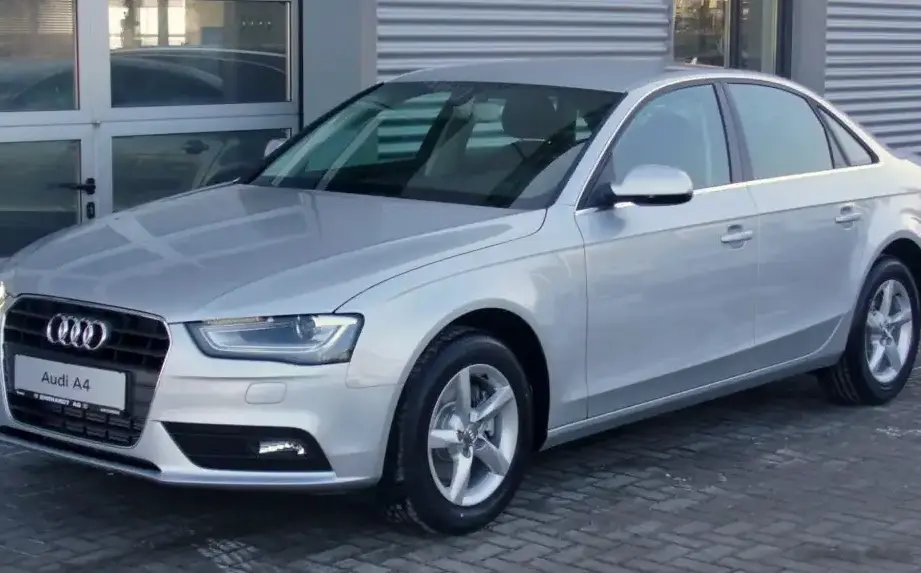
| Body type | Sedan |
| Seats | 5 |
| Doors | 4 |
| Fuel consumption (urban) | 8.2 l/100 km (28.7 US mpg, 34.4 UK mpg, 12.2 km/l) |
| Fuel consumption (extra urban) | 5.1 l/100 km (46.1 US mpg, 55.4 UK mpg, 19.6 km/l) |
| Fuel consumption (combined) | 6.2 l/100 km (37.9 US mpg, 45.6 UK mpg, 16.1 km/l) |
| CO2 emissions | 144 g/km |
| Fuel Type | Petrol / Ethanol – E85 |
| Acceleration 0 – 100 km/h | 7.9 sec |
| Acceleration 0 – 62 mph | 7.9 sec |
| Acceleration 0 – 60 mph | 7.5 sec |
| Maximum speed | 236 km/h (146.64 mph) |
| Emission standard | Euro 5 |
| Weight-to-power ratio | 7.9 kg/Hp, 125.9 Hp/tonne |
| Weight-to-torque ratio | 4.5 kg/Nm, 223.8 Nm/tonne |
| Power | 180 Hp @ 4000-6000 rpm |
| Power per litre | 90.7 Hp/l |
| Torque | 320 Nm @ 1500-3900 rpm (236.02 lb.-ft. @ 1500-3900 rpm) |
| Engine layout | Front, Longitudinal |
| Engine Model/Code | CFKA |
| Engine displacement | 1984 cm3 (121.07 cu. in.) |
| Number of cylinders | 4 |
| Engine configuration | Inline |
| Cylinder Bore | 82.5 mm (3.25 in.) |
| Piston Stroke | 92.8 mm (3.65 in.) |
| Compression ratio | 9.6:1 |
| Number of valves per cylinder | 4 |
| Fuel injection system | Direct injection |
| Engine aspiration | Turbocharger, Intercooler |
| Valvetrain | DOHC |
| Engine oil capacity | 4.6 l (4.86 US qt | 4.05 UK qt) |
| Kerb Weight | 1430 kg (3152.61 lbs.) |
| Max. weight | 1980 kg (4365.15 lbs.) |
| Max load | 550 kg (1212.54 lbs.) |
| Trunk (boot) space – minimum | 480 l (16.95 cu. ft.) |
| Trunk (boot) space – maximum | 962 l (33.97 cu. ft.) |
| Fuel tank capacity | 63 l (16.64 US gal | 13.86 UK gal) |
| Max. roof load | 90 kg (198.42 lbs.) |
| Permitted trailer load with brakes (8%) | 1700 kg (3747.86 lbs.) |
| Permitted trailer load without brakes | 750 kg (1653.47 lbs.) |
| Permitted towbar download | 80 kg (176.37 lbs.) |
| Length | 4701 mm (185.08 in.) |
| Width | 1826 mm (71.89 in.) |
| Width including mirrors | 2040 mm (80.31 in.) |
| Height | 1427 mm (56.18 in.) |
| Wheelbase | 2808 mm (110.55 in.) |
| Front track | 1564 mm (61.57 in.) |
| Rear (Back) track | 1551 mm (61.06 in.) |
| Front overhang | 862 mm (33.94 in.) |
| Rear overhang | 1031 mm (40.59 in.) |
| Drag coefficient (Cd) | 0.28 |
| Minimum turning circle (turning diameter) | 11.5 m (37.73 ft.) |
| Drivetrain Architecture | The Internal combustion engine (ICE) drives the front wheels of the vehicle. |
| Drive wheel | Front wheel drive |
| Number of gears and type of gearbox | 6 gears, manual transmission |
| Front suspension | Independent multi-link suspension |
| Rear suspension | Independent on trapezoidal lever |
| Front brakes | Ventilated discs |
| Rear brakes | Disc |
| Assisting systems | ABS (Anti-lock braking system) |
| Steering type | Steering rack and pinion |
| Power steering | Electric Steering |
| Tires size | 225/55 R16 |
| Wheel rims size | 7.5J x 16 |
The Audi A4 B8.5 2.0 TFSI flexible-fuel (180 Hp) was introduced as part of the facelifted B8 generation in 2011. Positioned as a mid-range offering, it slotted between the lower-powered 1.8 TFSI models and the more performance-oriented 3.0 TFSI variants. The flexible-fuel capability, allowing operation on gasoline or a blend of up to 85% ethanol (E85), was a key selling point in markets with incentives for biofuel use. Built on the Volkswagen Group’s PL46 platform (also known as the A4/A5 platform or 1HX0/A3 platform), the B8 A4 aimed to deliver a premium driving experience with a focus on refinement, technology, and build quality.
Powertrain & Engine Architecture
At the heart of this A4 variant lies the 1.8-liter (1984 cc) four-cylinder, inline, turbocharged and direct-injected 2.0 TFSI engine, designated the CFKA engine code. This engine is part of the EA888 family, known for its robust design and tuning potential. The direct injection system, utilizing high-pressure fuel injectors, delivers fuel directly into the combustion chamber, improving efficiency and reducing emissions. The turbocharger, coupled with an intercooler, provides forced induction, boosting power output. The engine features a double overhead camshaft (DOHC) valvetrain with four valves per cylinder, optimizing airflow for enhanced performance. The flexible-fuel capability is achieved through modifications to the fuel system and engine control unit (ECU) to accommodate the different properties of ethanol. The engine was paired with a six-speed manual transmission, delivering power to the front wheels.
Driving Characteristics
The 180 Hp 2.0 TFSI with a manual transmission offered a balanced driving experience. While not as exhilarating as the higher-output variants, it provided sufficient power for everyday driving and occasional spirited acceleration. The engine’s torque peak of 320 Nm (236 lb-ft) available from 1500-3900 rpm ensured strong low-end and mid-range responsiveness. The six-speed manual transmission was well-matched to the engine’s characteristics, offering precise shifts and allowing the driver to maintain optimal engine speed. Compared to the 1.8 TFSI, the 2.0 TFSI offered noticeably more power and torque, resulting in quicker acceleration and improved highway passing ability. However, it didn’t quite match the performance of the 3.0 TFSI models, which delivered significantly higher horsepower and torque figures. The front-wheel-drive configuration provided good traction in most conditions, but could exhibit some torque steer under hard acceleration.
Equipment & Trim Levels
The 2.0 TFSI flexible-fuel model typically came equipped with a respectable level of standard features. These included automatic climate control, a multi-function steering wheel, power windows and mirrors, and an audio system with CD player and auxiliary input. Higher trim levels offered additional features such as leather upholstery, a sunroof, navigation system, and parking sensors. Optional extras included upgraded audio systems, heated seats, and various driver assistance systems. Interior upholstery was typically cloth in the base trims, with leather options available as upgrades. The dashboard layout was clean and modern, with a focus on ergonomics and ease of use.
Chassis & Braking
The A4 B8.5 featured a sophisticated chassis design aimed at providing a comfortable yet engaging driving experience. The front suspension utilized an independent multi-link setup, while the rear suspension employed an independent trapezoidal link design. This configuration minimized body roll and provided precise handling. Braking duties were handled by ventilated discs at the front and solid discs at the rear, equipped with ABS (Anti-lock Braking System) as standard. The steering system was a rack-and-pinion type with electric power assistance, offering precise and responsive steering feel.
Market Reception & Comparison
The Audi A4 B8.5 2.0 TFSI flexible-fuel variant was generally well-received by automotive critics. It was praised for its refined driving experience, comfortable interior, and fuel efficiency. The flexible-fuel capability was seen as a positive attribute in markets where ethanol was readily available and incentivized. Compared to other trims in the A4 lineup, the 2.0 TFSI offered a good balance of performance and economy. The 1.8 TFSI was more affordable but lacked the 2.0 TFSI’s punch, while the 3.0 TFSI offered superior performance but came at a higher price point. Fuel economy was competitive within its class, and the engine proved to be relatively reliable.
Legacy
The CFKA engine, found in this A4 variant, has proven to be a durable and reliable powertrain when properly maintained. Common issues include carbon buildup on the intake valves (a characteristic of direct-injection engines) and occasional oil leaks. However, these issues are generally manageable with regular maintenance and preventative measures. On the used car market, the B8.5 A4 2.0 TFSI flexible-fuel models hold their value reasonably well, particularly those with a well-documented service history. The combination of Audi’s reputation for quality, the engine’s reliability, and the flexible-fuel capability make it an attractive option for buyers seeking a premium compact executive car.