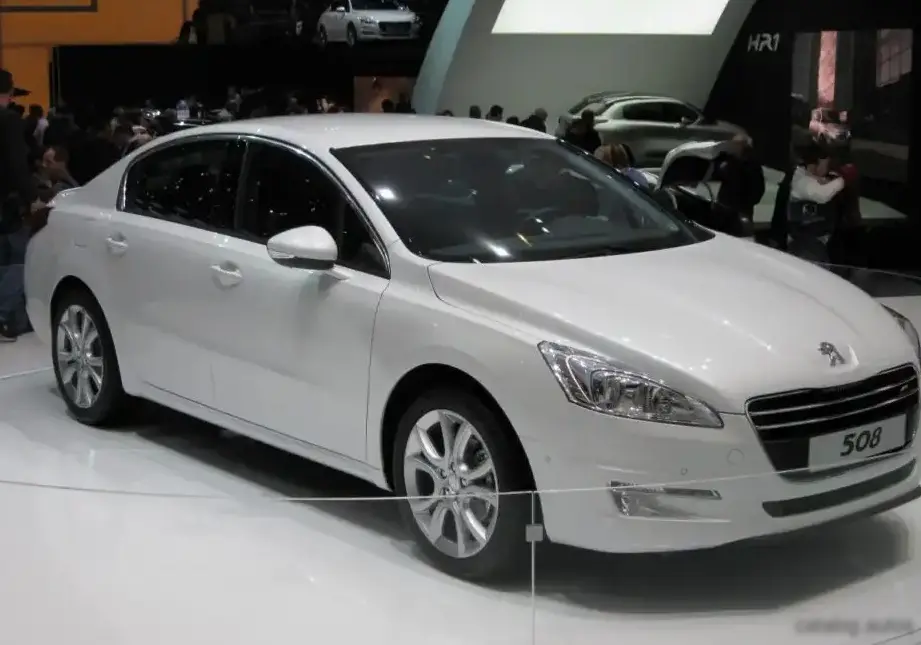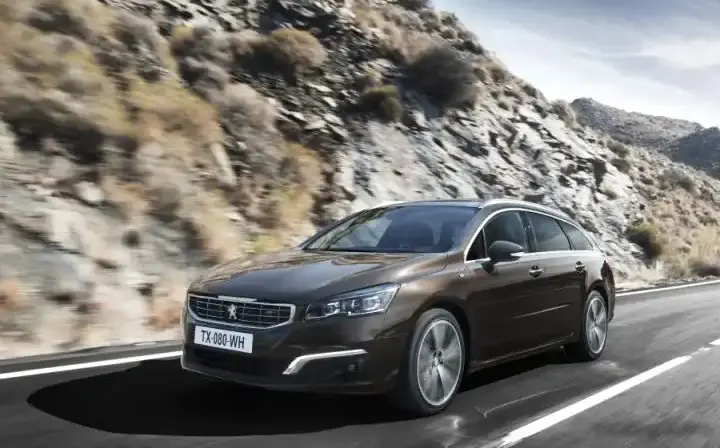
The Peugeot 508 I SW (Phase II), specifically the 2.0 BlueHDi variant producing 150 horsepower, was a key model in Peugeot’s lineup from 2014 to 2018. This station wagon, or “estate” as it’s known in Europe, represented a blend of practicality, fuel efficiency, and a touch of French styling. Positioned as a mid-range offering within the 508 SW family, it aimed to appeal to buyers seeking a versatile vehicle for both family duties and long-distance travel. The Phase II update brought styling revisions and technological enhancements to the original 508 SW, solidifying its position in the competitive European D-segment.
Technical Specifications
| Brand | Peugeot |
| Model | 508 |
| Generation | 508 I SW (Phase II, 2014) |
| Type (Engine) | 2.0 BlueHDi (150 Hp) |
| Start of production | 2014 |
| End of production | 2018 |
| Powertrain Architecture | Internal Combustion engine |
| Body type | Station wagon (estate) |
| Seats | 5 |
| Doors | 5 |
| Fuel consumption (urban) | 5 l/100 km (47 US mpg, 56.5 UK mpg, 20 km/l) |
| Fuel consumption (extra urban) | 3.8 l/100 km (61.9 US mpg, 74.3 UK mpg, 26.3 km/l) |
| Fuel consumption (combined) | 4.2 l/100 km (56 US mpg, 67.3 UK mpg, 23.8 km/l) |
| CO2 emissions | 110 g/km |
| Fuel Type | Diesel |
| Acceleration 0 – 100 km/h | 9.1 sec |
| Acceleration 0 – 62 mph | 9.1 sec |
| Acceleration 0 – 60 mph | 8.6 sec |
| Maximum speed | 210 km/h (130.49 mph) |
| Emission standard | Euro 6 |
| Weight-to-power ratio | 10.1 kg/Hp, 98.7 Hp/tonne |
| Weight-to-torque ratio | 4.1 kg/Nm, 243.4 Nm/tonne |
| Power | 150 Hp @ 4000 rpm |
| Power per litre | 75.1 Hp/l |
| Torque | 370 Nm @ 2000 rpm (272.9 lb.-ft. @ 2000 rpm) |
| Engine layout | Front, Transverse |
| Engine Model/Code | AHX DW10FD |
| Engine displacement | 1997 cm3 (121.86 cu. in.) |
| Number of cylinders | 4 |
| Engine configuration | Inline |
| Number of valves per cylinder | 4 |
| Fuel injection system | Diesel Commonrail |
| Engine aspiration | Turbocharger, Intercooler |
| Engine oil capacity | 6.1 l (6.45 US qt | 5.37 UK qt) |
| Coolant capacity | 10 l (10.57 US qt | 8.8 UK qt) |
| Kerb Weight | 1520 kg (3351.03 lbs) |
| Max. weight | 2200 kg (4850.17 lbs) |
| Max load | 680 kg (1499.14 lbs) |
| Trunk (boot) space – minimum | 512 l (18.08 cu. ft.) |
| Trunk (boot) space – maximum | 1592 l (56.22 cu. ft.) |
| Fuel tank capacity | 72 l (19.02 US gal | 15.84 UK gal) |
| Length | 4829 mm (190.12 in) |
| Width | 1828 mm (71.97 in) |
| Height | 1476 mm (58.11 in) |
| Wheelbase | 2817 mm (110.91 in) |
| Front track | 1579 mm (62.17 in) |
| Rear track | 1552 mm (61.1 in) |
| Ride height (ground clearance) | 148 mm (5.83 in) |
| Minimum turning circle | 12.2 m (40.03 ft) |
| Drivetrain Architecture | Front wheel drive |
| Number of gears | 6 gears, manual transmission |
| Front suspension | Independent, type McPherson with coil spring and anti-roll bar |
| Rear suspension | Independent multi-link suspension |
| Front brakes | Ventilated discs |
| Rear brakes | Disc |
| Assisting systems | ABS (Anti-lock braking system) |
| Steering type | Steering rack and pinion |
| Tires size | 235/45 R18 98W |
| Wheel rims size | 18 |
Powertrain & Engine Architecture
The heart of the 508 SW 2.0 BlueHDi was the DW10FD engine, a four-cylinder diesel powerplant. This engine, often identified by the AHX code, was a staple in the PSA Group’s (Peugeot-Citroën) offerings. It featured a common-rail direct injection system, delivering fuel at extremely high pressure for optimized combustion. A turbocharger with an intercooler was employed to boost power and torque, providing a good balance between performance and efficiency. The engine utilized four valves per cylinder and a sophisticated engine management system to meet stringent Euro 6 emissions standards. The 150 horsepower output was achieved at 4000 rpm, while the substantial 370 Nm (272.9 lb-ft) of torque was available from just 2000 rpm, providing strong pulling power for everyday driving and hauling loads. This particular variant was paired with a six-speed manual transmission, offering drivers precise control over gear selection.
Driving Characteristics
The 2.0 BlueHDi 150 hp version of the 508 SW offered a comfortable and refined driving experience. While not a performance-oriented model, the engine provided ample power for confident overtaking and cruising on highways. The six-speed manual transmission allowed for efficient gear changes, and the engine’s strong low-end torque meant that frequent downshifts weren’t necessary. Compared to the more powerful 180 hp BlueHDi variant, this version prioritized fuel economy over outright speed. The gear ratios were tuned to maximize efficiency, resulting in a relaxed driving experience at cruising speeds. The 0-60 mph time of around 8.6 seconds was respectable for a diesel station wagon of this size. The suspension, tuned for comfort, absorbed bumps and imperfections in the road well, making it a pleasant long-distance companion.
Equipment & Trim Levels
The 508 SW 2.0 BlueHDi 150 hp typically came with a good level of standard equipment. This included features like air conditioning, a touchscreen infotainment system with Bluetooth connectivity, alloy wheels, and a comprehensive suite of safety features such as ABS, ESP (Electronic Stability Program), and multiple airbags. Higher trim levels offered upgrades such as leather upholstery, a panoramic sunroof, navigation system, and parking sensors. Interior upholstery was generally cloth on the base models, with leather options available on higher trims. The dashboard layout was modern and functional, with a focus on ergonomics and ease of use.
Chassis & Braking
The 508 SW featured a McPherson strut front suspension and an independent multi-link rear suspension, providing a good balance between ride comfort and handling. The front brakes were ventilated discs, offering strong stopping power, while the rear brakes were solid discs. The steering was a rack and pinion system, providing precise and responsive control. The standard tire size was 235/45 R18, offering good grip and stability. The suspension was tuned to prioritize comfort, but still provided adequate body control in corners.
Market Reception & Comparison
The Peugeot 508 SW 2.0 BlueHDi 150 hp was generally well-received by automotive critics. It was praised for its fuel efficiency, comfortable ride, and spacious interior. Compared to its rivals, such as the Ford Mondeo Estate and Volkswagen Passat Variant, it offered a distinctive French flair and a competitive price point. The 150 hp version was often seen as a sweet spot in the range, offering a good balance between performance and economy. The more powerful 180 hp variant offered more performance but came at a higher price and with slightly lower fuel economy. The lower-powered diesel options were more affordable but lacked the punch of the 150 hp model.
Legacy
The DW10FD engine, in its various iterations, proved to be a reliable and durable powerplant. While diesel engines, in general, have faced increased scrutiny in recent years, the 2.0 BlueHDi engine has a reputation for longevity when properly maintained. Used examples of the 508 SW 2.0 BlueHDi are still relatively common on the market today, and they represent a good value for buyers seeking a practical and fuel-efficient station wagon. Regular servicing, including oil changes and filter replacements, is crucial for maintaining the engine’s health. The 508 SW, in all its forms, helped to solidify Peugeot’s reputation as a manufacturer of stylish and well-engineered vehicles.