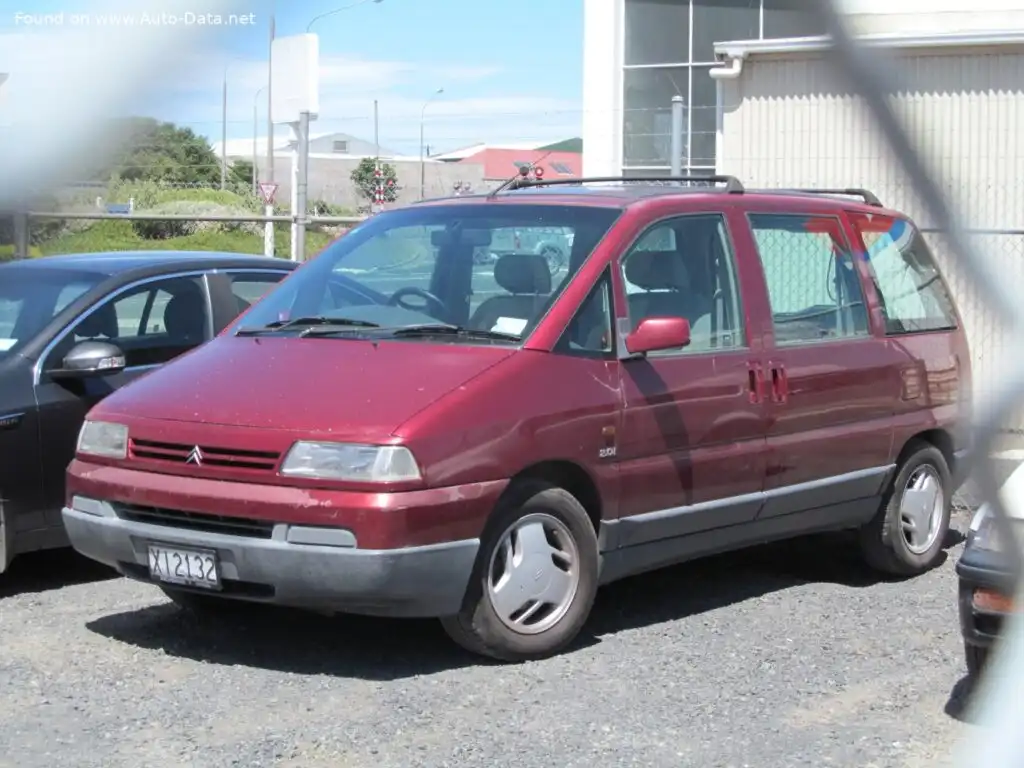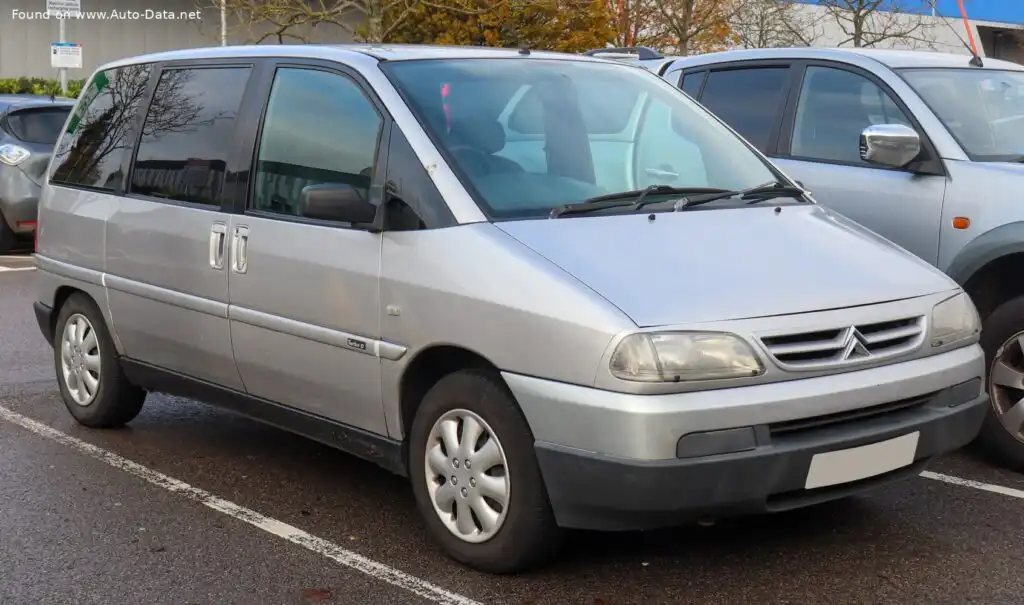
The Citroen Evasion 2.0 HDi, produced between 1999 and 2000, represented a significant offering in the European minivan segment. Part of the U6U generation, this variant was positioned as a practical and fuel-efficient option for large families or those requiring substantial passenger and cargo space. The Evasion, sold as the Eurovan in some markets, was a collaborative effort with Peugeot and Fiat, sharing a common platform and many components. The 2.0 HDi model, equipped with a 109 horsepower turbodiesel engine, aimed to balance performance with economy, appealing to buyers prioritizing long-distance comfort and lower running costs.
Technical Specifications
| Brand | Citroen |
| Model | Evasion |
| Generation | Evasion (U6U) |
| Type (Engine) | 2.0 HDi (109 Hp) |
| Start of production | 1999 |
| End of production | 2000 |
| Powertrain Architecture | Internal Combustion engine |
| Body type | Minivan |
| Seats | 8 |
| Doors | 5 |
| Fuel consumption (urban) | 8.8 l/100 km (26.7 US mpg, 32.1 UK mpg, 11.4 km/l) |
| Fuel consumption (extra urban) | 5.6 l/100 km (42 US mpg, 50.4 UK mpg, 17.9 km/l) |
| Fuel consumption (combined) | 6.7 l/100 km (35.1 US mpg, 42.2 UK mpg, 14.9 km/l) |
| CO2 emissions | 182 g/km |
| Fuel Type | Diesel |
| Acceleration 0 – 100 km/h | 15.8 sec |
| Acceleration 0 – 62 mph | 15.8 sec |
| Acceleration 0 – 60 mph | 15 sec |
| Maximum speed | 173 km/h (107.5 mph) |
| Emission standard | Euro 2 |
| Weight-to-power ratio | 14.6 kg/Hp, 68.3 Hp/tonne |
| Weight-to-torque ratio | 6.4 kg/Nm, 156.7 Nm/tonne |
| Power | 109 Hp @ 4000 rpm |
| Power per litre | 54.6 Hp/l |
| Torque | 250 Nm @ 1750 rpm (184.39 lb.-ft. @ 1750 rpm) |
| Maximum engine speed | 5300 rpm |
| Engine layout | Front, Transverse |
| Engine Model/Code | RHZ DW10ATED |
| Engine displacement | 1997 cm3 (121.86 cu. in.) |
| Number of cylinders | 4 |
| Engine configuration | Inline |
| Cylinder Bore | 85 mm (3.35 in.) |
| Piston Stroke | 88 mm (3.46 in.) |
| Compression ratio | 17.6:1 |
| Number of valves per cylinder | 2 |
| Fuel injection system | Diesel Commonrail |
| Engine aspiration | Turbocharger |
| Valvetrain | OHC |
| Engine oil capacity | 4.5 l (4.76 US qt | 3.96 UK qt) |
| Coolant | 8.5 l (8.98 US qt | 7.48 UK qt) |
| Kerb Weight | 1595 kg (3516.37 lbs.) |
| Max. weight | 2395 kg (5280.07 lbs.) |
| Max load | 800 kg (1763.7 lbs.) |
| Trunk (boot) space – minimum | 340 l (12.01 cu. ft.) |
| Trunk (boot) space – maximum | 2100 l (74.16 cu. ft.) |
| Fuel tank capacity | 80 l (21.13 US gal | 17.6 UK gal) |
| Max. roof load | 100 kg (220.46 lbs.) |
| Permitted trailer load with brakes (12%) | 1300 kg (2866.01 lbs.) |
| Permitted trailer load without brakes | 750 kg (1653.47 lbs.) |
| Permitted towbar download | 60 kg (132.28 lbs.) |
| Length | 4454 mm (175.35 in.) |
| Width | 1816 mm (71.5 in.) |
| Height | 1714 mm (67.48 in.) |
| Wheelbase | 2824 mm (111.18 in.) |
| Front track | 1534 mm (60.39 in.) |
| Rear (Back) track | 1540 mm (60.63 in.) |
| Front overhang | 881 mm (34.69 in.) |
| Rear overhang | 749 mm (29.49 in.) |
| Drivetrain Architecture | The Internal combustion engine (ICE) drives the front wheels of the vehicle. |
| Drive wheel | Front wheel drive |
| Number of gears and type of gearbox | 5 gears, manual transmission |
| Front suspension | Independent type McPherson, Transverse stabilizer |
| Rear suspension | independent torsion suspension, Wishbone |
| Front brakes | Ventilated discs |
| Rear brakes | Drum |
| Assisting systems | ABS (Anti-lock braking system) |
| Steering type | Steering rack and pinion |
| Power steering | Hydraulic Steering |
| Tires size | 205/65 R15 |
| Wheel rims size | 6.5J x 15 |
Powertrain & Engine Architecture
The heart of the Evasion 2.0 HDi is the DW10ATED engine, a 1997cc inline-four cylinder turbodiesel. This engine, designated with the RHZ code in some markets, was a product of PSA Peugeot Citroën’s ongoing development of direct injection diesel technology. The engine utilizes a common rail direct injection system, delivering fuel at extremely high pressure for improved combustion efficiency and reduced emissions. The turbocharger, a key component, provides increased air intake, boosting power output. The engine features an overhead camshaft (OHC) valvetrain with two valves per cylinder. The 5-speed manual transmission was the standard offering, chosen for its balance of fuel efficiency and driver control. The engine’s design prioritized torque delivery at low RPMs, making it well-suited for hauling passengers and luggage.
Driving Characteristics
The 109 horsepower output of the 2.0 HDi engine in the Evasion translates to a practical, rather than sporty, driving experience. Acceleration from 0-60 mph takes around 15 seconds, and top speed is approximately 107.5 mph. The engine’s strength lies in its mid-range torque, providing adequate power for overtaking and maintaining speed on highways. The 5-speed manual gearbox is well-matched to the engine’s characteristics, offering smooth shifts and allowing the driver to keep the engine within its optimal power band. Compared to higher-powered versions of the Evasion, such as those with gasoline engines, the 2.0 HDi prioritizes fuel economy and relaxed cruising over outright performance. The relatively long gearing contributes to fuel efficiency but can feel somewhat sluggish during quick acceleration.
Equipment & Trim Levels
The Citroen Evasion 2.0 HDi typically came with a reasonable level of standard equipment, focusing on practicality and comfort. Features included power steering, central locking, electric front windows, and an adjustable steering column. Interior upholstery was typically cloth, with a durable and functional design. Optional extras included air conditioning, alloy wheels, and a more advanced audio system. Trim levels varied depending on the market, but generally, the 2.0 HDi model represented a mid-range offering, positioned above the base models but below the more luxurious trims.
Chassis & Braking
The Evasion’s chassis features an independent McPherson strut suspension at the front and an independent torsion beam suspension at the rear. This setup provides a comfortable ride quality, absorbing bumps and irregularities in the road surface effectively. The front brakes are ventilated discs, offering good stopping power, while the rear brakes are drums. ABS (Anti-lock Braking System) was standard, enhancing safety during emergency braking situations. The suspension was tuned to prioritize ride comfort and stability when fully loaded, reflecting the vehicle’s intended use as a family transport.
Market Reception & Comparison
The Citroen Evasion 2.0 HDi was generally well-received by critics as a practical and fuel-efficient minivan. Its spacious interior, comfortable ride, and economical diesel engine were highlighted as key strengths. Compared to gasoline-powered Evasions, the 2.0 HDi offered significantly better fuel economy, making it an attractive option for high-mileage drivers. However, its relatively slow acceleration was a common criticism. Against competitors like the Renault Espace and Volkswagen Sharan, the Evasion offered a competitive package, particularly in terms of value for money.
Legacy
The DW10ATED engine, found in the Evasion 2.0 HDi, proved to be a relatively reliable powertrain when properly maintained. Common issues include turbocharger wear and potential problems with the fuel injection system, particularly if the vehicle has not been serviced regularly. Today, the Evasion 2.0 HDi can be found in the used car market at affordable prices. Its practicality and fuel efficiency continue to appeal to buyers seeking a spacious and economical vehicle for family use. However, potential buyers should be aware of the vehicle’s age and the importance of a thorough pre-purchase inspection to identify any potential mechanical issues.