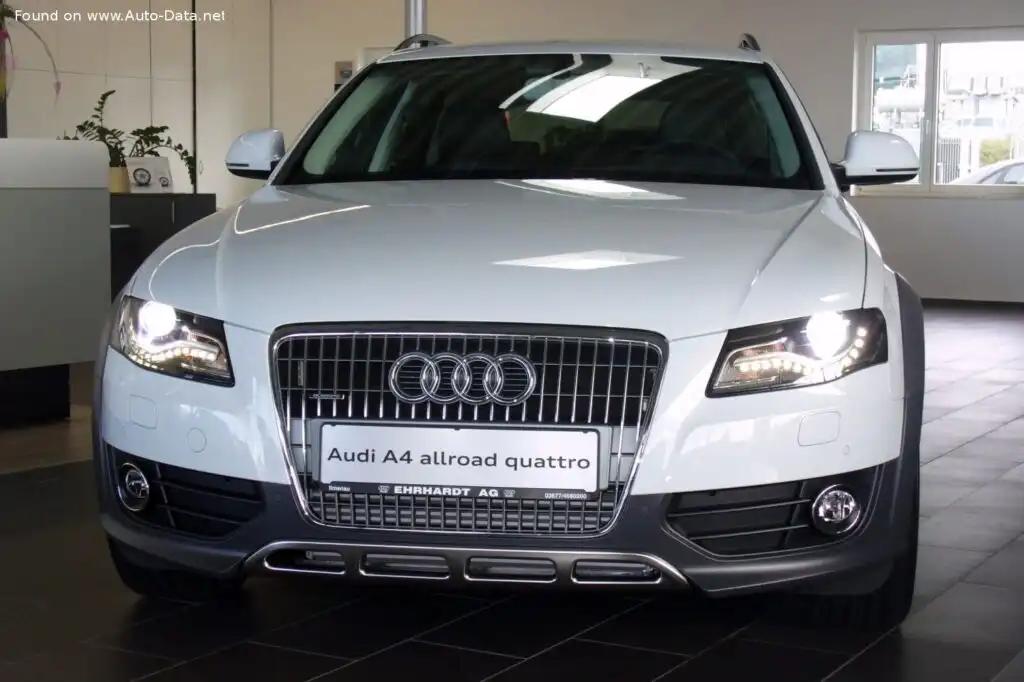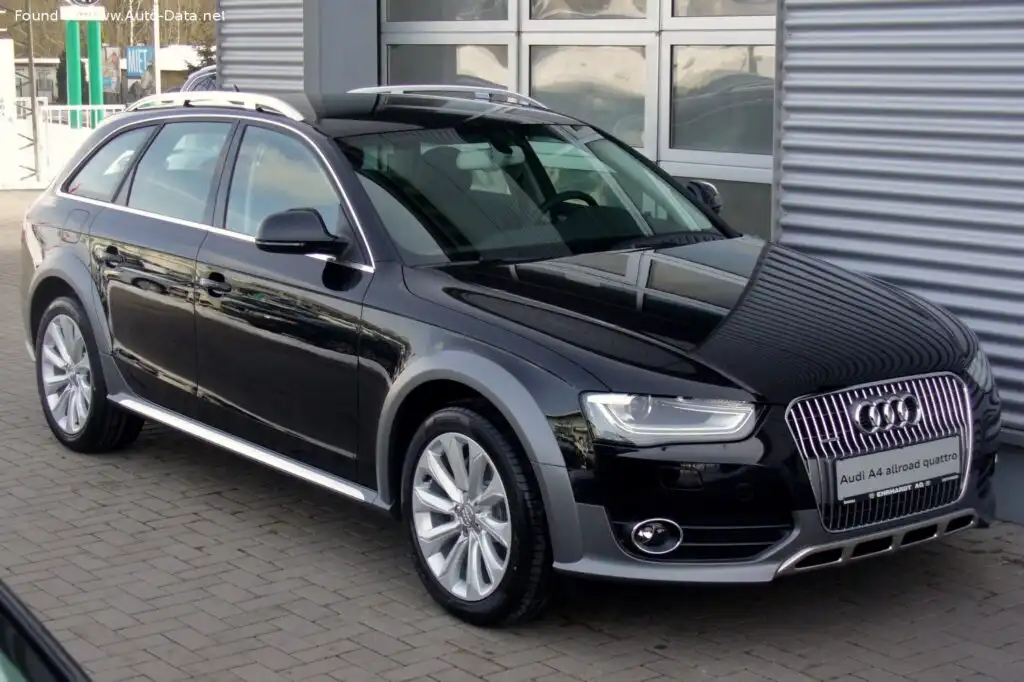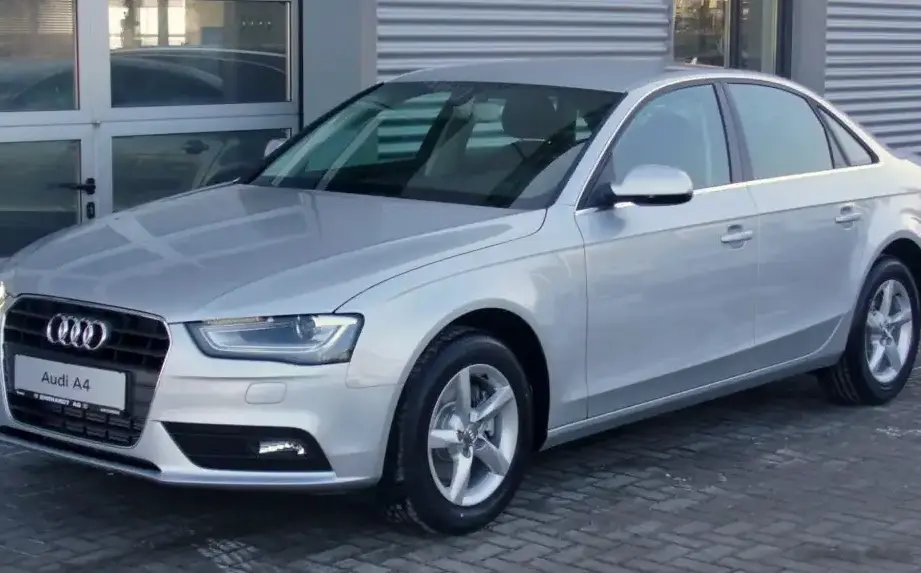
The Audi A4 (B8 8K) facelift, produced from November 2011 to 2015, represented a significant mid-cycle refresh of Audi’s popular compact executive car. Among the various engine and transmission options offered, the 3.0 TDI V6 paired with the Multitronic continuously variable transmission (CVT) held a prominent position as a premium offering, balancing performance with efficiency. This variant aimed at buyers seeking a refined driving experience and strong torque delivery without sacrificing fuel economy. It sat above the 2.0 TDI and TFSI models in the lineup, offering a substantial power upgrade, and below the performance-oriented S4.
Technical Specifications
| Brand | Audi |
| Model | A4 |
| Generation | A4 (B8 8K, facelift 2011) |
| Type (Engine) | 3.0 TDI V6 (204 Hp) Multitronic |
| Start of production | November, 2011 |
| End of production | 2015 |
| Powertrain Architecture | Internal Combustion engine |
| Body type | Sedan |
| Seats | 5 |
| Doors | 4 |
| Fuel consumption (urban) | 5.5 l/100 km (42.8 US mpg, 51.4 UK mpg, 18.2 km/l) |
| Fuel consumption (extra urban) | 4.6 l/100 km (51.1 US mpg, 61.4 UK mpg, 21.7 km/l) |
| Fuel consumption (combined) | 4.9 l/100 km (48 US mpg, 57.6 UK mpg, 20.4 km/l) |
| CO2 emissions | 129 g/km |
| Fuel Type | Diesel |
| Acceleration 0 – 100 km/h | 7.1 sec |
| Acceleration 0 – 62 mph | 7.1 sec |
| Acceleration 0 – 60 mph | 6.7 sec |
| Maximum speed | 235 km/h (146.02 mph) |
| Emission standard | Euro 5 |
| Weight-to-power ratio | 7.8 kg/Hp, 128.3 Hp/tonne |
| Weight-to-torque ratio | 4 kg/Nm, 251.6 Nm/tonne |
| Power | 204 Hp @ 3500-4500 rpm |
| Power per litre | 68.8 Hp/l |
| Torque | 400 Nm @ 1250-3500 rpm (295.02 lb.-ft. @ 1250-3500 rpm) |
| Engine layout | Front, Longitudinal |
| Engine Model/Code | CLAB |
| Engine displacement | 2967 cm3 (181.06 cu. in.) |
| Number of cylinders | 6 |
| Engine configuration | V-engine |
| Cylinder Bore | 83 mm (3.27 in.) |
| Piston Stroke | 91.4 mm (3.6 in.) |
| Compression ratio | 16.8:1 |
| Number of valves per cylinder | 4 |
| Fuel injection system | Diesel Commonrail |
| Engine aspiration | Turbocharger, Intercooler |
| Valvetrain | DOHC |
| Engine oil capacity | 6.4 l (6.76 US qt | 5.63 UK qt) |
| Kerb Weight | 1590 kg (3505.35 lbs.) |
| Max. weight | 2140 kg (4717.89 lbs.) |
| Max load | 550 kg (1212.54 lbs.) |
| Trunk (boot) space – minimum | 480 l (16.95 cu. ft.) |
| Trunk (boot) space – maximum | 962 l (33.97 cu. ft.) |
| Fuel tank capacity | 63 l (16.64 US gal | 13.86 UK gal) |
| Max. roof load | 90 kg (198.42 lbs.) |
| Permitted trailer load with brakes (8%) | 1900 kg (4188.78 lbs.) |
| Permitted trailer load without brakes | 750 kg (1653.47 lbs.) |
| Permitted towbar download | 80 kg (176.37 lbs.) |
| Length | 4701 mm (185.08 in.) |
| Width | 1826 mm (71.89 in.) |
| Width including mirrors | 2040 mm (80.31 in.) |
| Height | 1427 mm (56.18 in.) |
| Wheelbase | 2808 mm (110.55 in.) |
| Front track | 1564 mm (61.57 in.) |
| Rear (Back) track | 1551 mm (61.06 in.) |
| Front overhang | 862 mm (33.94 in.) |
| Rear overhang | 1031 mm (40.59 in.) |
| Drag coefficient (Cd) | 0.28 |
| Minimum turning circle (turning diameter) | 11.5 m (37.73 ft.) |
| Drivetrain Architecture | The Internal combustion engine (ICE) drives the front wheels of the vehicle. |
| Drive wheel | Front wheel drive |
| Number of gears and type of gearbox | automatic transmission Multitronic |
| Front suspension | Independent multi-link suspension |
| Rear suspension | Independent on trapezoidal lever |
| Front brakes | Ventilated discs |
| Rear brakes | Disc |
| Assisting systems | ABS (Anti-lock braking system) |
| Steering type | Steering rack and pinion |
| Power steering | Electric Steering |
| Tires size | 225/50 R17 |
| Wheel rims size | 7.5J x 17 |
Powertrain & Engine Architecture
The heart of this A4 variant is the CLAB engine code, a 3.0-liter V6 turbocharged diesel engine. This engine utilizes a common rail direct injection system, delivering fuel at extremely high pressures for optimized combustion. The engine features a single turbocharger with an intercooler to manage intake air temperature, boosting efficiency and power output. The valvetrain employs a double overhead camshaft (DOHC) design with four valves per cylinder, enhancing volumetric efficiency. The Multitronic transmission, a continuously variable transmission (CVT), was a key component. Unlike traditional automatic transmissions with fixed gear ratios, the Multitronic uses a chain-driven system to provide a virtually infinite number of gear ratios, optimizing engine speed for efficiency or performance. This transmission was known for its smooth operation and ability to keep the engine in its optimal power band.
Driving Characteristics
The 3.0 TDI with the Multitronic offered a distinctly different driving experience compared to the 2.0 TDI or the manual transmission options. The abundance of torque – 400 Nm (295 lb-ft) – available from a low 1250 rpm provided effortless acceleration and strong in-gear performance. The Multitronic transmission, while smooth, didn’t offer the direct feel of a traditional automatic or manual gearbox. It prioritized efficiency, often holding lower gears for longer to maximize fuel economy. While 0-60 mph times were around 6.7 seconds, the real-world benefit was the relaxed cruising and responsive power delivery for overtaking. Compared to the more sporty S4, this variant prioritized comfort and refinement over outright performance.
Equipment & Trim Levels
The 3.0 TDI V6 Multitronic typically came equipped as a higher trim level, often designated as “SE” or “Prestige” depending on the market. Standard features included leather upholstery, tri-zone automatic climate control, a premium audio system, and parking sensors. Optional extras frequently included navigation, advanced driver-assistance systems (such as adaptive cruise control and lane departure warning), and upgraded wheel designs. Interior trim options ranged from wood veneers to brushed aluminum accents, allowing for a degree of personalization.
Chassis & Braking
The A4 B8’s chassis featured an independent multi-link suspension at the front and an independent trapezoidal link suspension at the rear, providing a comfortable yet controlled ride. The 3.0 TDI models generally received slightly stiffer suspension components compared to the base models to handle the increased weight and power. Braking systems consisted of ventilated discs at the front and solid discs at the rear, equipped with ABS (Anti-lock Braking System). The steering was a rack-and-pinion system with electric power assistance, offering precise and responsive handling.
Market Reception & Comparison
The 3.0 TDI V6 Multitronic A4 was generally well-received by automotive critics. It was praised for its refined engine, smooth transmission, and comfortable ride. Fuel economy was considered excellent for a vehicle of its size and performance. Compared to the 2.0 TDI, the V6 offered significantly more power and refinement, justifying the higher price tag. However, some critics noted the Multitronic transmission lacked the engagement of a traditional automatic or manual gearbox. Reliability was generally good, although the Multitronic transmission required regular servicing to ensure longevity.
Legacy
The 3.0 TDI V6 engine proved to be a durable and reliable powerplant. While the Multitronic transmission is known to require more attentive maintenance – including fluid changes every 40,000 miles – than a conventional automatic, well-maintained examples continue to provide years of service. On the used car market, this variant commands a premium due to its desirable combination of performance, efficiency, and refinement. It remains a popular choice for buyers seeking a comfortable and capable executive car with long-term reliability.