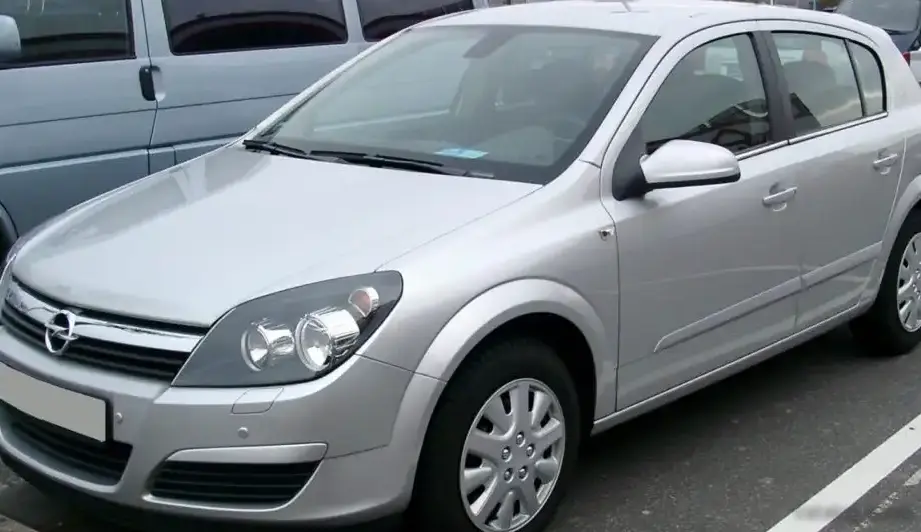
The Opel Astra H 2.0i 16V Turbo, produced from 2004 to 2006, represented a performance-oriented variant within the broader Astra H (2004-2009) range. Positioned as a flagship model, it offered a significant power upgrade over the more common naturally aspirated and diesel engine options. Built on the GM Delta platform (internally designated as 1HX0), the Astra H aimed to provide a more refined and modern driving experience compared to its predecessor, the Astra G. This 240 horsepower version was primarily marketed in Europe, offering a sporty alternative within the competitive C-segment hatchback market.
Technical Specifications
| Brand | Opel |
| Model | Astra |
| Generation | Astra H |
| Type (Engine) | 2.0i 16V Turbo (240 Hp) |
| Start of production | 2004 |
| End of production | 2006 |
| Powertrain Architecture | Internal Combustion engine |
| Body type | Hatchback |
| Seats | 5 |
| Doors | 5 |
| Fuel consumption (urban) | 13 l/100 km (18.1 US mpg, 21.7 UK mpg, 7.7 km/l) |
| Fuel consumption (extra urban) | 7 l/100 km (33.6 US mpg, 40.4 UK mpg, 14.3 km/l) |
| Fuel consumption (combined) | 9.2 l/100 km (25.6 US mpg, 30.7 UK mpg, 10.9 km/l) |
| Fuel Type | Petrol (Gasoline) |
| Acceleration 0 – 100 km/h | 6.4 sec |
| Acceleration 0 – 62 mph | 6.4 sec |
| Acceleration 0 – 60 mph | 6.1 sec |
| Maximum speed | 244 km/h (151.61 mph) |
| Weight-to-power ratio | 5.8 kg/Hp, 173.3 Hp/tonne |
| Weight-to-torque ratio | 4.3 kg/Nm, 231 Nm/tonne |
| Power | 240 Hp @ 5600 rpm |
| Power per litre | 120.1 Hp/l |
| Torque | 320 Nm (236.02 lb.-ft.) |
| Engine layout | Front, Transverse |
| Engine Model/Code | Z20LEH |
| Engine displacement | 1998 cm3 (121.93 cu. in.) |
| Number of cylinders | 4 |
| Engine configuration | Inline |
| Cylinder Bore | 86 mm (3.39 in.) |
| Piston Stroke | 86 mm (3.39 in.) |
| Compression ratio | 8.8:1 |
| Number of valves per cylinder | 4 |
| Fuel injection system | Multi-port manifold injection |
| Engine aspiration | Turbocharger, Intercooler |
| Engine oil capacity | 5 l (5.28 US qt | 4.4 UK qt) |
| Coolant | 7.7 l (8.14 US qt | 6.78 UK qt) |
| Kerb Weight | 1385 kg (3053.4 lbs.) |
| Max. weight | 1860 kg (4100.6 lbs.) |
| Max load | 475 kg (1047.2 lbs.) |
| Trunk (boot) space – minimum | 380 l (13.42 cu. ft.) |
| Trunk (boot) space – maximum | 1330 l (46.97 cu. ft.) |
| Fuel tank capacity | 52 l (13.74 US gal | 11.44 UK gal) |
| Length | 4249 mm (167.28 in.) |
| Width | 1753 mm (69.02 in.) |
| Width including mirrors | 2033 mm (80.04 in.) |
| Height | 1467 mm (57.76 in.) |
| Wheelbase | 2614 mm (102.91 in.) |
| Front track | 1488 mm (58.58 in.) |
| Rear (Back) track | 1488 mm (58.58 in.) |
| Front overhang | 871 mm (34.29 in.) |
| Rear overhang | 764 mm (30.08 in.) |
| Ride height (ground clearance) | 160 mm (6.3 in.) |
| Drag coefficient (Cd) | 0.32 |
| Drivetrain Architecture | The Internal combustion engine (ICE) drives the front wheels of the vehicle. |
| Drive wheel | Front wheel drive |
| Number of gears and type of gearbox | 6 gears, manual transmission |
| Front suspension | Spring Strut |
| Rear suspension | Spring Strut |
| Front brakes | Ventilated discs |
| Rear brakes | Disc |
| Assisting systems | ABS (Anti-lock braking system) |
| Steering type | Steering rack and pinion |
| Tires size | 215/45 R17 |
| Wheel rims size | 7J x17 |
Introduction
The Astra H 2.0i 16V Turbo, produced between 2004 and 2006, was the performance halo car for the Astra H range. It distinguished itself from the more economical engine options – primarily 1.4L, 1.6L, and 1.8L naturally aspirated engines, as well as a range of diesel variants – by offering a substantial boost in power and torque. This model aimed to attract buyers seeking a sporty and engaging driving experience within the practical confines of a five-door hatchback. The “H” designation signified the fourth generation of the Astra, and it represented a significant step forward in terms of interior quality, refinement, and available technology for Opel.
Powertrain & Engine Architecture
At the heart of the Astra H 2.0i 16V Turbo lies the Z20LEH engine, a 1998cc inline-four cylinder powerplant. This engine is a member of Opel’s ‘Ecotec’ family, known for its focus on efficiency and performance. The Z20LEH utilizes a cast iron block with an aluminum cylinder head, featuring four valves per cylinder (16V) and a dual overhead camshaft (DOHC) configuration. Crucially, it’s equipped with a Garrett GT2252V turbocharger with an intercooler, boosting output to 240 horsepower at 5600 rpm and 320 Nm (236 lb-ft) of torque. Fuel delivery is managed by a multi-port fuel injection system. The engine’s compression ratio is 8.8:1. The standard transmission for this variant was a Getrag M32 six-speed manual gearbox, known for its robust construction and precise shift feel. While an automatic transmission was offered on other Astra H models, it was not paired with the 2.0i Turbo due to torque limitations of the available automatic gearboxes at the time.
Driving Characteristics
The 2.0i 16V Turbo Astra H offered a noticeably different driving experience compared to its lower-powered siblings. Acceleration from 0-60 mph was achieved in approximately 6.1 seconds, and it boasted a top speed of 151.61 mph. The turbocharger provides a surge of power in the mid-range, making overtaking maneuvers effortless. The six-speed manual transmission allows the driver to keep the engine within its optimal power band. Compared to the naturally aspirated 1.8L, the 2.0i Turbo offered significantly more torque, resulting in stronger acceleration in all gears. While the suspension was tuned for a balance between comfort and handling, the increased power demanded more attentive driving, particularly on winding roads. The steering, while precise, lacked some of the feedback found in more focused sports hatchbacks.
Equipment & Trim Levels
The 2.0i 16V Turbo typically came with a high level of standard equipment. This included features such as air conditioning, power windows, power mirrors, a CD stereo system, and alloy wheels. Sport seats with enhanced bolstering were standard, providing additional support during spirited driving. Optional extras included leather upholstery, a sunroof, and upgraded audio systems. The interior trim generally featured a dark color scheme with metallic accents. The Astra H range offered various trim levels, but the 2.0i Turbo was often positioned as the top-of-the-line model, benefiting from the most comprehensive equipment list.
Chassis & Braking
The Astra H utilized a MacPherson strut front suspension and a multi-link rear suspension, providing a good balance of ride comfort and handling. The 2.0i Turbo model typically featured slightly stiffer springs and dampers compared to lower-powered variants to better manage the increased power. Braking duties were handled by ventilated discs at the front and solid discs at the rear, equipped with ABS (Anti-lock Braking System). The braking system was generally considered adequate for the car’s performance, although some reviewers noted a slight lack of feel under heavy braking. The car’s weight distribution was reasonably balanced, contributing to its neutral handling characteristics.
Market Reception & Comparison
The Astra H 2.0i 16V Turbo was generally well-received by automotive critics. It was praised for its strong performance, refined interior, and relatively affordable price point. However, some reviewers noted that it lacked the outright handling prowess of rivals such as the Ford Focus ST and Volkswagen Golf GTI. Compared to the 1.8L Astra H, the 2.0i Turbo offered a significant performance advantage but at the cost of slightly higher fuel consumption. The diesel variants, while offering excellent fuel economy, couldn’t match the 2.0i Turbo’s acceleration. The 2.0i Turbo appealed to buyers who wanted a sporty and practical hatchback without the higher price tag of a dedicated performance model.
Legacy
The Z20LEH engine, while generally reliable, is known to be susceptible to issues with the PCV (Positive Crankcase Ventilation) system and occasional turbocharger failures if not properly maintained. Regular oil changes and careful driving are crucial for ensuring long-term reliability. Today, the Astra H 2.0i 16V Turbo is becoming increasingly sought after by enthusiasts, particularly those looking for a relatively affordable and engaging hot hatch. Parts availability is generally good, although some specific components may be becoming harder to find. Well-maintained examples command a premium in the used car market, reflecting their performance potential and relative rarity.