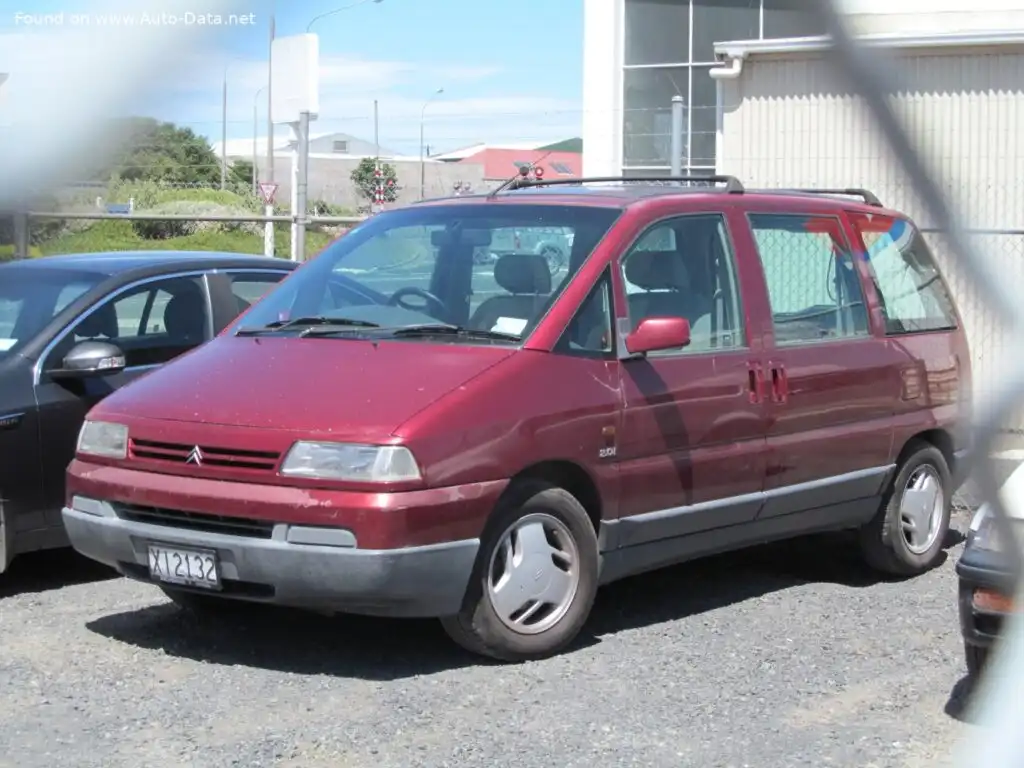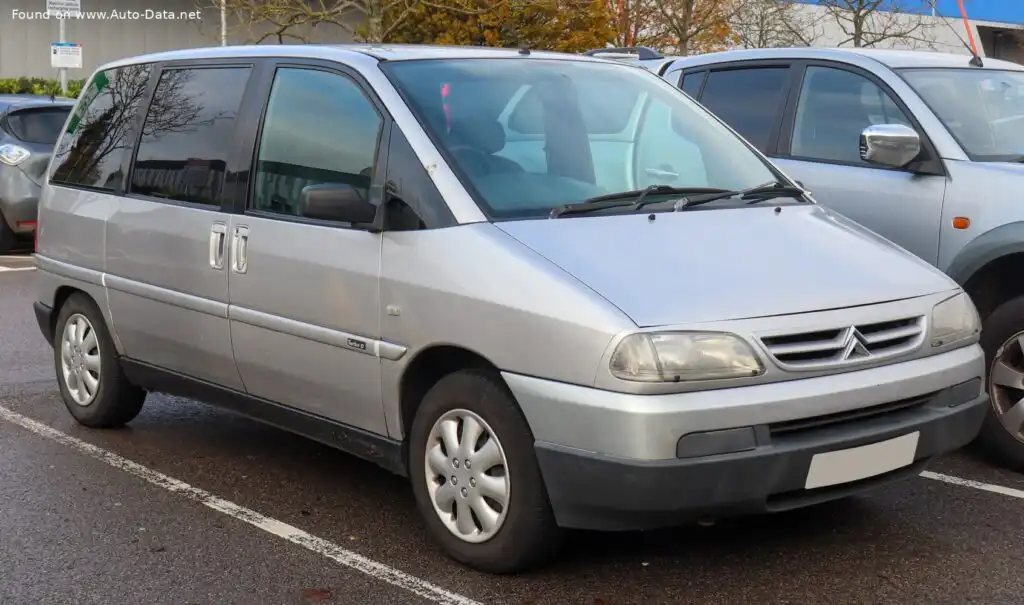
The Citroen Evasion 2.0 HDi 16V, produced between 2001 and 2002, represented a significant offering in the European minivan segment. Part of the U6U generation, this variant aimed to provide a balance of fuel efficiency, practicality, and reasonable performance for families and those requiring substantial passenger or cargo space. It was positioned as a mid-range option within the Evasion lineup, slotting between the lower-powered petrol engines and the more expensive, fully-equipped versions. The Evasion, sold as the Eurovan in some markets, was a collaborative effort with Peugeot and Fiat, sharing a common platform and many components.
Technical Specifications
| Brand | Citroen |
| Model | Evasion |
| Generation | Evasion (U6U) |
| Type (Engine) | 2.0 HDi 16V (109 Hp) |
| Start of production | 2001 |
| End of production | 2002 |
| Powertrain Architecture | Internal Combustion engine |
| Body type | Minivan |
| Seats | 8 |
| Doors | 5 |
| Fuel consumption (urban) | 8.9 l/100 km (26.4 US mpg, 31.7 UK mpg, 11.2 km/l) |
| Fuel consumption (extra urban) | 6.0 l/100 km (39.2 US mpg, 47.1 UK mpg, 16.7 km/l) |
| Fuel consumption (combined) | 7.0 l/100 km (33.6 US mpg, 40.4 UK mpg, 14.3 km/l) |
| CO2 emissions | 186 g/km |
| Fuel Type | Diesel |
| Acceleration 0 – 100 km/h | 15.2 sec |
| Acceleration 0 – 62 mph | 15.2 sec |
| Acceleration 0 – 60 mph | 14.4 sec |
| Maximum speed | 175 km/h (108.74 mph) |
| Emission standard | Euro 3 |
| Weight-to-power ratio | 14.6 kg/Hp, 68.3 Hp/tonne |
| Weight-to-torque ratio | 5.9 kg/Nm, 169.3 Nm/tonne |
| Power | 109 Hp @ 4000 rpm |
| Power per litre | 54.6 Hp/l |
| Torque | 270 Nm @ 1750 rpm (199.14 lb.-ft. @ 1750 rpm) |
| Maximum engine speed | 5300 rpm |
| Engine layout | Front, Transverse |
| Engine Model/Code | RHW DW10ATED4 |
| Engine displacement | 1997 cm3 (121.86 cu. in.) |
| Number of cylinders | 4 |
| Engine configuration | Inline |
| Cylinder Bore | 85 mm (3.35 in.) |
| Piston Stroke | 88 mm (3.46 in.) |
| Compression ratio | 17.6:1 |
| Number of valves per cylinder | 4 |
| Fuel injection system | Diesel Commonrail |
| Engine aspiration | Turbocharger, Intercooler |
| Valvetrain | DOHC |
| Engine oil capacity | 4.75 l (5.02 US qt | 4.18 UK qt) |
| Coolant | 9 l (9.51 US qt | 7.92 UK qt) |
| Kerb Weight | 1595 kg (3516.37 lbs.) |
| Max. weight | 2395 kg (5280.07 lbs.) |
| Max load | 800 kg (1763.7 lbs.) |
| Trunk (boot) space – minimum | 340 l (12.01 cu. ft.) |
| Trunk (boot) space – maximum | 2100 l (74.16 cu. ft.) |
| Fuel tank capacity | 80 l (21.13 US gal | 17.6 UK gal) |
| Max. roof load | 100 kg (220.46 lbs.) |
| Permitted trailer load with brakes (8%) | 1900 kg (4188.78 lbs.) |
| Permitted trailer load with brakes (12%) | 1300 kg (2866.01 lbs.) |
| Permitted trailer load without brakes | 750 kg (1653.47 lbs.) |
| Permitted towbar download | 60 kg (132.28 lbs.) |
| Length | 4454 mm (175.35 in.) |
| Width | 1816 mm (71.5 in.) |
| Height | 1714 mm (67.48 in.) |
| Wheelbase | 2824 mm (111.18 in.) |
| Front track | 1534 mm (60.39 in.) |
| Rear (Back) track | 1540 mm (60.63 in.) |
| Front overhang | 881 mm (34.69 in.) |
| Rear overhang | 749 mm (29.49 in.) |
| Drivetrain Architecture | The Internal combustion engine (ICE) drives the front wheels of the vehicle. |
| Drive wheel | Front wheel drive |
| Number of gears and type of gearbox | 5 gears, manual transmission |
| Front suspension | Independent type McPherson, Transverse stabilizer |
| Rear suspension | independent torsion suspension, Wishbone |
| Front brakes | Ventilated discs |
| Rear brakes | Drum |
| Assisting systems | ABS (Anti-lock braking system) |
| Steering type | Steering rack and pinion |
| Power steering | Hydraulic Steering |
| Tires size | 205/65 R15 |
| Wheel rims size | 6.5J x 15 |
Powertrain & Engine Architecture
The heart of the Citroen Evasion 2.0 HDi 16V is the DW10ATED4 engine, a 1997cc inline four-cylinder diesel. This engine, developed by PSA (Peugeot Société Anonyme) and often referred to by its engine code RHW, utilizes a common rail direct injection system. This system, a significant advancement at the time, allowed for precise fuel delivery, resulting in improved fuel economy, reduced emissions, and quieter operation compared to older diesel technologies. The 16-valve cylinder head, featuring a double overhead camshaft (DOHC) configuration, further enhanced breathing and contributed to the engine’s power output. A turbocharger with an intercooler was employed to boost power and torque. The intercooler cooled the compressed air from the turbocharger, increasing its density and further improving combustion efficiency. The engine produced 109 horsepower at 4000 rpm and 270 Nm (199 lb-ft) of torque at 1750 rpm. The engine was paired with a 5-speed manual transmission, delivering power to the front wheels.
Driving Characteristics
The 2.0 HDi 16V Evasion offered a comfortable, if not particularly sporty, driving experience. The engine’s torque peak at a relatively low 1750 rpm provided good pulling power for everyday driving and when fully loaded. However, with a kerb weight of around 1595 kg (3516 lbs), acceleration was modest, taking approximately 15.2 seconds to reach 62 mph. The 5-speed manual transmission was well-matched to the engine, offering reasonable gear spacing. Compared to the petrol-powered Evasions, the HDi variant provided significantly better fuel economy. It also offered more torque than the base petrol engines, making it more suitable for carrying passengers and luggage. Compared to higher-output HDi versions, this 109 hp engine felt less strained on long journeys and offered a more relaxed driving experience, albeit with less outright performance.
Equipment & Trim Levels
The 2.0 HDi 16V Evasion typically came equipped with features such as power steering, ABS brakes, central locking, and electric front windows. Interior upholstery was generally cloth, with a functional and durable design. Higher trim levels offered options like air conditioning, alloy wheels, a CD player, and upgraded interior trim. The Evasion was designed with practicality in mind, offering a spacious interior with flexible seating arrangements. The rear seats could be folded or removed to create a large cargo area. The dashboard layout was straightforward and easy to use, prioritizing functionality over aesthetics.
Chassis & Braking
The Evasion utilized an independent McPherson strut suspension at the front and an independent torsion beam suspension at the rear. This setup provided a comfortable ride, absorbing bumps and imperfections in the road surface effectively. The front brakes were ventilated discs, offering good stopping power, while the rear brakes were drums. This configuration was typical for vehicles in this weight class at the time. The steering was a hydraulic rack and pinion system, providing precise and responsive handling.
Market Reception & Comparison
The Citroen Evasion 2.0 HDi 16V was generally well-received by critics for its fuel efficiency, spacious interior, and practicality. It was seen as a sensible choice for families and those needing a versatile vehicle. However, some reviewers noted its modest performance and somewhat utilitarian interior. Compared to other minivans on the market, the Evasion offered a competitive level of space and practicality at a reasonable price point. The HDi engine provided a significant advantage in terms of fuel economy compared to petrol-powered rivals. Reliability was generally good, although some owners reported issues with the common rail injection system over time.
Legacy
The Citroen Evasion, and specifically the 2.0 HDi 16V variant, remains a popular choice in the used car market, particularly for those seeking a spacious and economical family vehicle. The DW10ATED4 engine is known for its durability, although regular maintenance is essential to prevent issues with the common rail system. Parts availability is generally good, and the Evasion’s relatively simple construction makes it relatively easy to maintain and repair. While it may not offer the latest technology or the most refined driving experience, the Evasion 2.0 HDi 16V continues to provide a practical and affordable transportation solution.