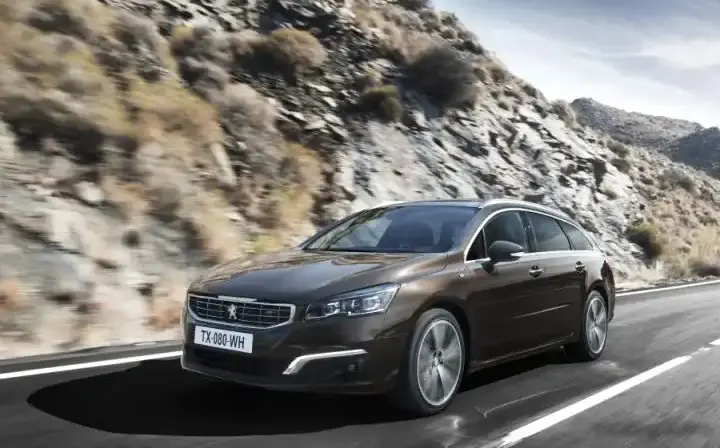
The Peugeot 508 I SW (Phase II), specifically the 2.0 HDi 163 horsepower variant with a Diesel Particulate Filter (FAP), was a popular choice in the European market from 2014 to 2015. This model represented a mid-cycle refresh of the first-generation 508 SW (Station Wagon), building upon the original’s strengths with updated styling and improved efficiency. Positioned as a practical and refined family vehicle, it offered a balance between fuel economy, space, and driving comfort. The 2.0 HDi 163 hp trim sat in the mid-range of the 508 SW lineup, offering a step up in performance from the lower-powered diesel options while remaining more accessible than the flagship models.
Technical Specifications
| Brand | Peugeot |
| Model | 508 |
| Generation | 508 I SW (Phase II, 2014) |
| Type (Engine) | 2.0 HDi (163 Hp) FAP |
| Start of production | 2014 |
| End of production | 2015 |
| Powertrain Architecture | Internal Combustion engine |
| Body type | Station wagon (estate) |
| Seats | 5 |
| Doors | 5 |
| Fuel consumption (urban) | 6.7 l/100 km (35.1 US mpg, 42.2 UK mpg, 14.9 km/l) |
| Fuel consumption (extra urban) | 3.9 l/100 km (60.3 US mpg, 72.4 UK mpg, 25.6 km/l) |
| Fuel consumption (combined) | 4.9 l/100 km (48 US mpg, 57.6 UK mpg, 20.4 km/l) |
| CO2 emissions | 129 g/km |
| Fuel Type | Diesel |
| Acceleration 0 – 100 km/h | 8.9 sec |
| Acceleration 0 – 62 mph | 8.9 sec |
| Acceleration 0 – 60 mph | 8.5 sec |
| Maximum speed | 210 km/h (130.49 mph) |
| Emission standard | Euro 5 |
| Weight-to-power ratio | 9.2 kg/Hp, 108.7 Hp/tonne |
| Weight-to-torque ratio | 4.4 kg/Nm, 226.7 Nm/tonne |
| Power | 163 Hp @ 3750 rpm |
| Power per litre | 81.6 Hp/l |
| Torque | 340 Nm @ 2000 rpm (250.77 lb.-ft. @ 2000 rpm) |
| Engine layout | Front, Transverse |
| Engine Model/Code | RHH DW10CTED4 |
| Engine displacement | 1997 cm3 (121.86 cu. in.) |
| Number of cylinders | 4 |
| Engine configuration | Inline |
| Number of valves per cylinder | 4 |
| Fuel injection system | Diesel Commonrail |
| Engine aspiration | Turbocharger, Intercooler |
| Engine oil capacity | 5 l (5.28 US qt | 4.4 UK qt) |
| Coolant capacity | 10 l (10.57 US qt | 8.8 UK qt) |
| Kerb Weight | 1500 kg (3306.93 lbs.) |
| Max. weight | 2140 kg (4717.89 lbs.) |
| Max load | 640 kg (1410.96 lbs.) |
| Trunk (boot) space – minimum | 512 l (18.08 cu. ft.) |
| Trunk (boot) space – maximum | 1592 l (56.22 cu. ft.) |
| Fuel tank capacity | 72 l (19.02 US gal | 15.84 UK gal) |
| Length | 4829 mm (190.12 in.) |
| Width | 1828 mm (71.97 in.) |
| Height | 1476 mm (58.11 in.) |
| Wheelbase | 2817 mm (110.91 in.) |
| Front track | 1579 mm (62.17 in.) |
| Rear track | 1552 mm (61.1 in.) |
| Ride height (ground clearance) | 148 mm (5.83 in.) |
| Minimum turning circle | 12.2 m (40.03 ft.) |
| Drivetrain Architecture | Front wheel drive |
| Number of gears | 6 |
| Gearbox type | Manual transmission |
| Front suspension | Independent, McPherson with coil spring and anti-roll bar |
| Rear suspension | Independent multi-link suspension |
| Front brakes | Ventilated discs |
| Rear brakes | Disc |
| Assisting systems | ABS (Anti-lock braking system) |
| Steering type | Steering rack and pinion |
| Tires size | 215/55 R17; 235/45 R18 |
| Wheel rims size | 17; 18 |
INTRODUCTION
The Peugeot 508 I SW (Phase II) 2.0 HDi 163 FAP, launched in 2014, was a key model in Peugeot’s lineup, aimed at providing a practical and stylish alternative to traditional estate cars. Built on the 1HX0/A3 platform shared with Citroën and other PSA Group vehicles, the 508 SW offered a spacious interior and a large cargo area. The Phase II update brought cosmetic changes, including revised front and rear styling, as well as interior enhancements. The 2.0 HDi 163 hp engine was a mainstay of the 508 range, offering a good balance of performance and fuel efficiency for long-distance driving and everyday use.
Powertrain & Engine Architecture
The heart of this variant is the DW10CTED4 engine, a 2.0-liter four-cylinder diesel engine. This engine, often referred to by its RHH engine code, utilizes a common rail direct injection system, delivering fuel at extremely high pressure for optimized combustion. The engine features a turbocharger with an intercooler, boosting power output and improving torque. The 163 horsepower output is achieved at 3750 rpm, while the peak torque of 340 Nm (250.77 lb.-ft.) is available from 2000 rpm. This provides strong pulling power for comfortable cruising and overtaking. The engine also incorporates a Diesel Particulate Filter (DPF) – hence the ‘FAP’ designation – to reduce harmful emissions, meeting Euro 5 standards. The 508 SW 2.0 HDi 163 was typically paired with a six-speed manual transmission, although an automatic option was also available. The manual gearbox offered precise shifts and contributed to the car’s overall efficiency.
Driving Characteristics
The 2.0 HDi 163 hp engine in the 508 SW provided a relaxed and refined driving experience. While not overtly sporty, it offered sufficient power for most driving situations. Acceleration from 0 to 100 km/h (0-62 mph) took around 8.9 seconds, making it competitive within its class. The engine’s strong low-end torque meant that it felt responsive in everyday driving, with minimal need for downshifting. Compared to the higher-output 2.0 HDi variants, this version prioritized fuel economy over outright performance. The six-speed manual transmission allowed drivers to maintain optimal engine speeds for efficiency and control. The suspension setup, tuned for comfort, absorbed bumps and imperfections in the road well, providing a smooth ride. The steering was light and precise, making the car easy to maneuver.
Equipment & Trim Levels
The 508 SW 2.0 HDi 163 typically came equipped with a respectable level of standard features. These included air conditioning, electric windows and mirrors, a CD stereo system, and alloy wheels. Higher trim levels added features such as a touchscreen infotainment system with navigation, leather upholstery, parking sensors, and automatic headlights and wipers. Interior upholstery was generally cloth on the base models, with leather options available on higher trims. The dashboard layout was functional and well-designed, with clear instrumentation. Optional extras included a panoramic sunroof, a premium sound system, and advanced driver-assistance systems.
Chassis & Braking
The 508 SW featured a McPherson strut front suspension and an independent multi-link rear suspension, providing a good balance of ride comfort and handling. The front brakes were ventilated discs, while the rear brakes were solid discs. Anti-lock Braking System (ABS) was standard, enhancing safety and control during emergency braking. The car’s weight distribution was well-balanced, contributing to its stable handling characteristics. Stabilizer bars were fitted to both the front and rear axles to reduce body roll during cornering.
Market Reception & Comparison
The Peugeot 508 SW 2.0 HDi 163 was generally well-received by automotive critics. It was praised for its spacious interior, comfortable ride, and fuel efficiency. The engine was considered a good all-rounder, offering a balance of performance and economy. Compared to the more powerful 2.0 HDi variants, this version was seen as a more sensible choice for drivers prioritizing fuel costs and everyday usability. The 1.6 HDi models offered even better fuel economy but lacked the same level of performance. Against competitors like the Ford Mondeo Estate and Volkswagen Passat Estate, the 508 SW offered a more stylish and distinctive design.
Legacy
The DW10CTED4 engine has proven to be a durable and reliable unit, provided it is properly maintained. Regular servicing, including oil changes and DPF regeneration, is crucial for long-term reliability. In the used car market, the 508 SW 2.0 HDi 163 remains a popular choice, offering a practical and affordable family vehicle. While older examples may require some maintenance, the engine’s robust construction and readily available parts ensure that it can continue to provide years of reliable service. The 508 SW, in general, established Peugeot as a strong contender in the estate car segment, known for its style, comfort, and practicality.