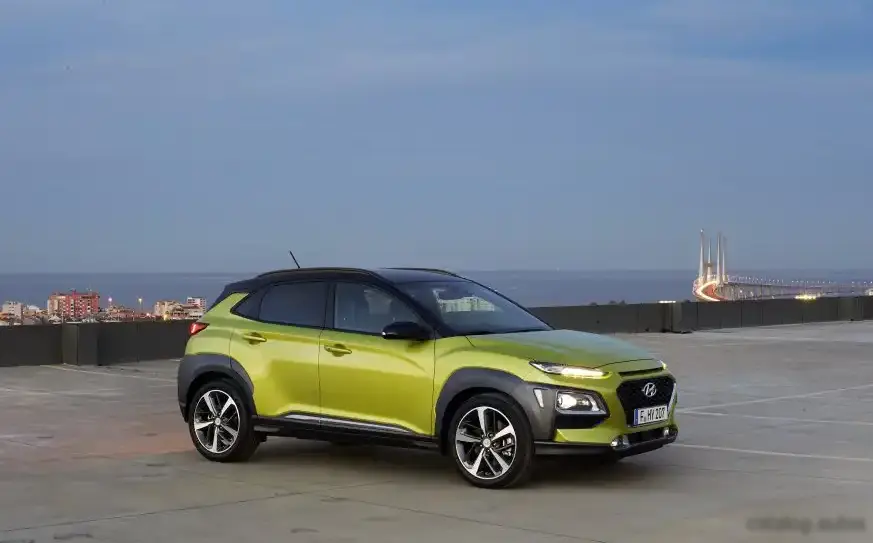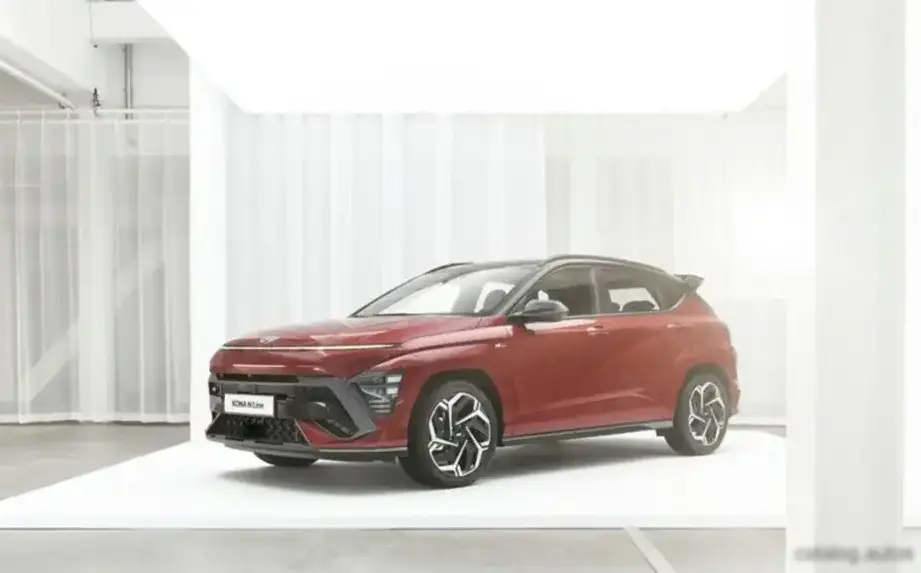
The Hyundai Kona II 1.0 T-GDI, producing 100 horsepower, represents an entry-level offering within the second generation (launched in August 2024) of Hyundai’s popular subcompact SUV. Positioned as a fuel-efficient and accessible option, this variant caters to buyers prioritizing affordability and practicality over outright performance. Production of this specific configuration ran from August 2024 to August 2025, serving primarily the European and Asian markets where smaller displacement engines are favored due to tax incentives and fuel costs. It slots below the more powerful 1.6 T-GDI and hybrid variants in the Kona II lineup.
Technical Specifications
| Brand | Hyundai |
| Model | Kona |
| Generation | Kona II |
| Type (Engine) | 1.0 T-GDI (100 Hp) |
| Start of production | August, 2024 |
| End of production | August, 2025 |
| Powertrain Architecture | Internal Combustion engine |
| Body type | SUV |
| Seats | 5 |
| Doors | 5 |
| Combined fuel consumption (WLTP) | 5.7 l/100 km (41.3 US mpg, 49.6 UK mpg, 17.5 km/l) |
| CO2 emissions (WLTP) | 129 g/km |
| Fuel Type | Petrol (Gasoline) |
| Acceleration 0 – 100 km/h | 13.3 sec |
| Acceleration 0 – 62 mph | 13.3 sec |
| Acceleration 0 – 60 mph | 12.6 sec |
| Maximum speed | 169 km/h (105.01 mph) |
| Emission standard | Euro 6e |
| Weight-to-power ratio | 13 kg/Hp, 77.2 Hp/tonne |
| Weight-to-torque ratio | 6.5 kg/Nm, 154.4 Nm/tonne |
| Power | 100 Hp @ 6000 rpm |
| Power per litre | 100.2 Hp/l |
| Torque | 200 Nm @ 2000-2500 rpm (147.51 lb.-ft. @ 2000-2500 rpm) |
| Engine layout | Front, Transverse |
| Engine Model/Code | G3LE |
| Engine displacement | 998 cm3 (60.9 cu. in.) |
| Number of cylinders | 3 |
| Engine configuration | Inline |
| Cylinder Bore | 71 mm (2.8 in.) |
| Piston Stroke | 84 mm (3.31 in.) |
| Number of valves per cylinder | 4 |
| Fuel injection system | Direct injection |
| Engine aspiration | Turbocharger, Intercooler |
| Engine oil capacity | 3.1 l (3.28 US qt | 2.73 UK qt) |
| Coolant | 6.37 l (6.73 US qt | 5.6 UK qt) |
| Kerb Weight | 1295-1435 kg (2854.99 – 3163.63 lbs.) |
| Max. weight | 1860 kg (4100.6 lbs.) |
| Max load | 425-565 kg (936.96 – 1245.61 lbs.) |
| Trunk (boot) space – minimum | 466 l (16.46 cu. ft.) |
| Trunk (boot) space – maximum | 1300 l (45.91 cu. ft.) |
| Fuel tank capacity | 47 l (12.42 US gal | 10.34 UK gal) |
| Max. roof load | 100 kg (220.46 lbs.) |
| Permitted trailer load with brakes (12%) | 1200 kg (2645.55 lbs.) |
| Permitted trailer load without brakes | 600 kg (1322.77 lbs.) |
| Permitted towbar download | 80 kg (176.37 lbs.) |
| Length | 4350 mm (171.26 in.) |
| Width | 1825 mm (71.85 in.) |
| Height | 1585 mm (62.4 in.) |
| Wheelbase | 2660 mm (104.72 in.) |
| Front track | 1602 mm (63.07 in.) |
| Rear (Back) track | 1611 mm (63.43 in.) |
| Ride height (ground clearance) | 160 mm (6.3 in.) |
| Drivetrain Architecture | The Internal combustion engine (ICE) drives the front wheels of the vehicle. |
| Drive wheel | Front wheel drive |
| Number of gears and type of gearbox | 6 gears, manual transmission |
| Front suspension | Independent type McPherson |
| Rear suspension | Torsion |
| Front brakes | Ventilated discs |
| Rear brakes | Disc |
| Assisting systems | ABS (Anti-lock braking system) |
| Steering type | Steering rack and pinion |
| Power steering | Electric Steering |
| Tires size | 205/65 R16 |
| Wheel rims size | 6.5J x 16 |
Powertrain & Engine Architecture
The heart of the Kona II 1.0 T-GDI is the Hyundai-Kia G3LE engine, a 998cc, three-cylinder turbocharged gasoline engine. This engine utilizes direct fuel injection, a key technology for maximizing efficiency and reducing emissions. The G3LE engine employs a single-scroll turbocharger with an intercooler to boost power output. The engine’s valvetrain features four valves per cylinder, contributing to improved breathing and overall performance. The 100 horsepower and 200 Nm (147.51 lb-ft) of torque are delivered between 2000 and 2500 rpm. This variant is exclusively paired with a 6-speed manual transmission, prioritizing fuel economy over rapid acceleration. The engine is mounted transversely in the front of the vehicle, driving the front wheels.
Driving Characteristics
The 1.0 T-GDI equipped Kona offers a comfortable, rather than sporty, driving experience. Acceleration is adequate for urban and highway driving, but the 13.3-second 0-62 mph time reflects its focus on efficiency. The turbocharger provides a noticeable boost in power during acceleration, but the engine can feel strained when pushed hard, particularly when fully loaded. The 6-speed manual transmission is well-matched to the engine’s characteristics, offering precise shifts and a reasonable spread of gear ratios. Compared to the 1.6 T-GDI variants, the 1.0 T-GDI feels noticeably less powerful, especially during overtaking maneuvers. However, it provides a more engaging driving experience than the automatic transmissions offered with the higher-output engines.
Equipment & Trim Levels
The 1.0 T-GDI typically came as a base or mid-range trim level, depending on the specific market. Standard equipment generally included air conditioning, a touchscreen infotainment system with Apple CarPlay and Android Auto compatibility, Bluetooth connectivity, and a suite of safety features such as ABS, ESC, and multiple airbags. Higher trim levels added features like alloy wheels, a rear-view camera, parking sensors, and upgraded interior materials. Interior upholstery was typically cloth, with options for partial leather in some markets. The dashboard layout was consistent across the Kona II range, featuring a modern and minimalist design.
Chassis & Braking
The Kona II utilizes a front-wheel-drive platform with an independent McPherson strut suspension at the front and a torsion beam suspension at the rear. This setup provides a good balance between ride comfort and handling. The front brakes are ventilated discs, while the rear brakes are solid discs. The steering is electrically assisted, providing light and precise control. The relatively low weight of the 1.0 T-GDI variant (1295-1435 kg) contributes to its nimble handling characteristics. Stabilizer bars are fitted to both the front and rear axles to reduce body roll during cornering.
Market Reception & Comparison
The Kona II 1.0 T-GDI was generally well-received by automotive critics as an affordable and fuel-efficient option within the subcompact SUV segment. Its low running costs and practical interior were praised, but its limited power output was a common criticism. Compared to the 1.6 T-GDI variants, the 1.0 T-GDI offered significantly better fuel economy but lacked the same level of performance. The 1.0 T-GDI also offered a more affordable entry point into the Kona II range, making it an attractive option for budget-conscious buyers.
Legacy
The G3LE engine, while not known for exceptional longevity, has proven to be reasonably reliable in the Kona II. Common issues reported include occasional turbocharger problems and potential for oil consumption as the engine ages. However, with regular maintenance and careful driving, the 1.0 T-GDI powertrain can provide years of dependable service. On the used car market, the Kona II 1.0 T-GDI represents a good value proposition for buyers seeking a fuel-efficient and practical subcompact SUV. Its affordability and low running costs make it a popular choice for first-time car buyers and city dwellers.