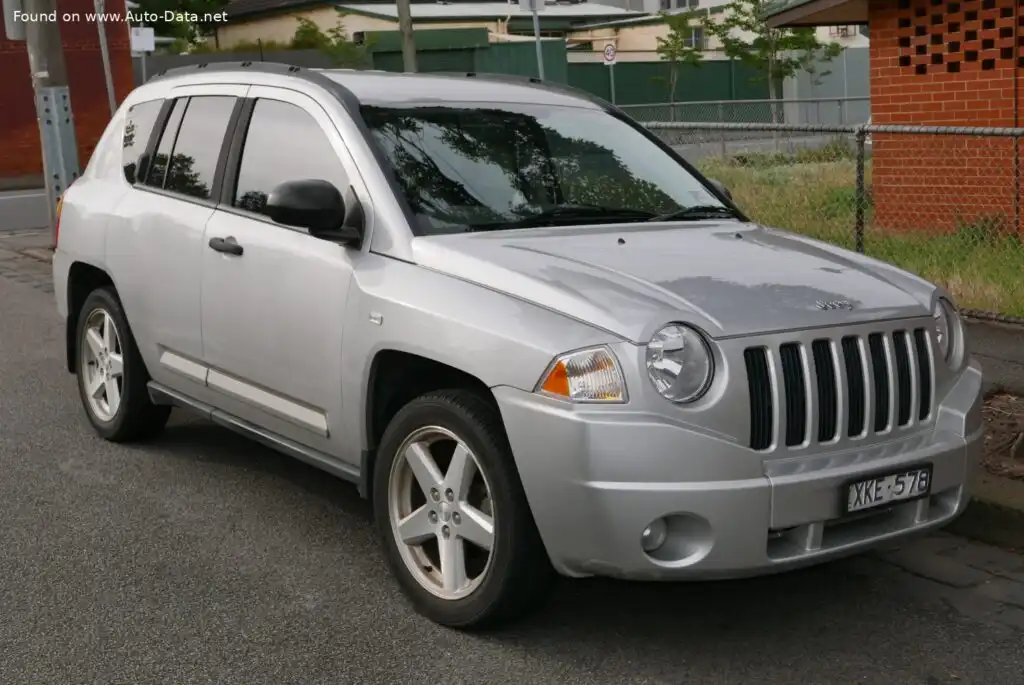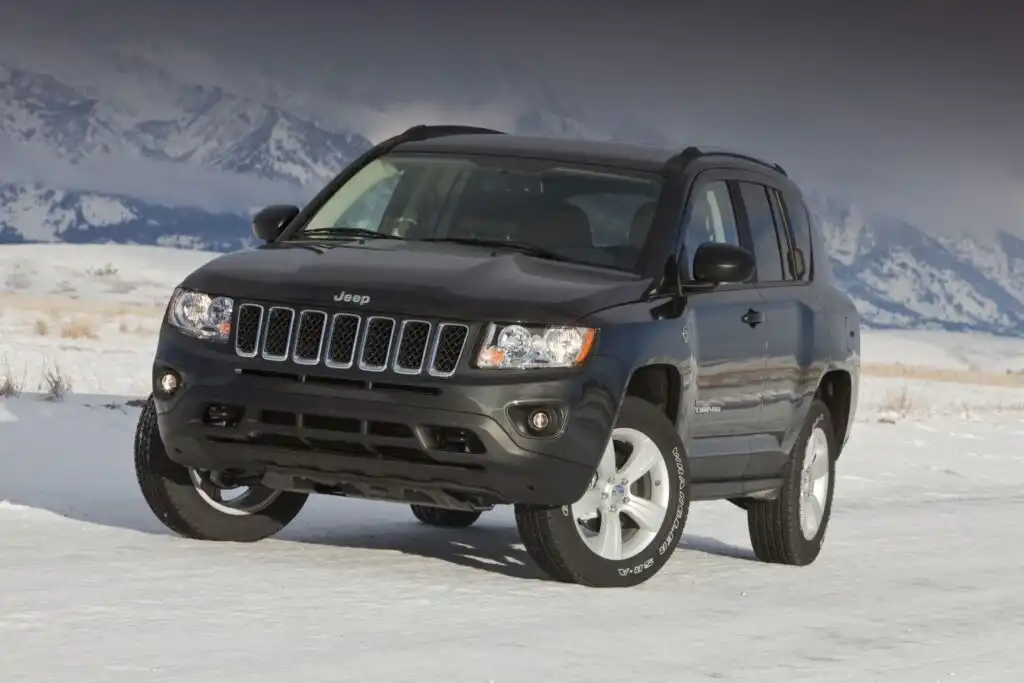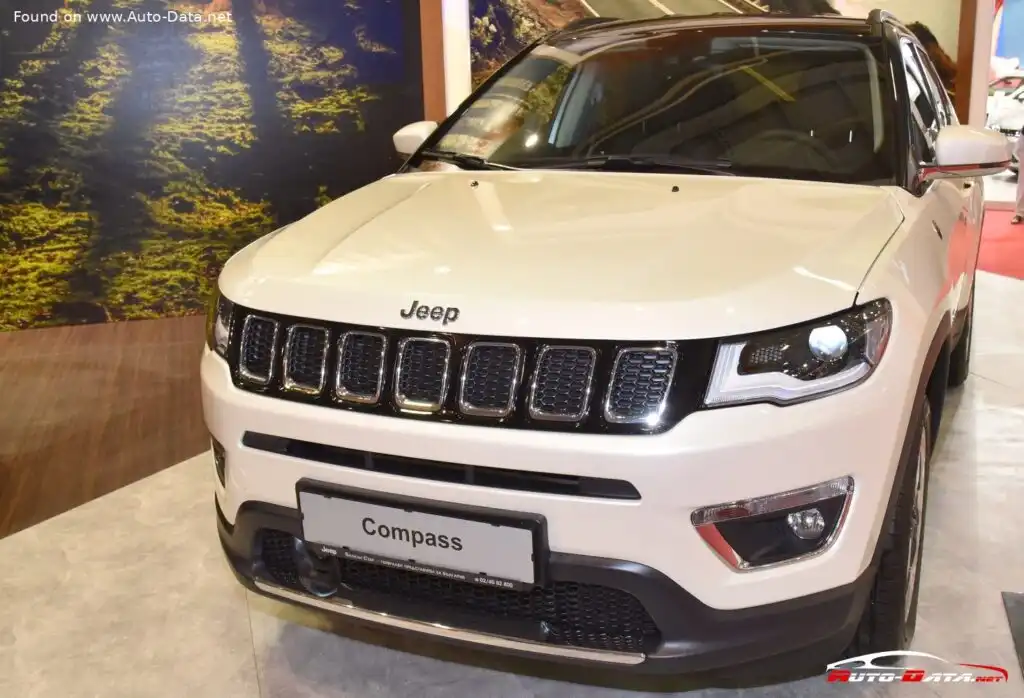
The Jeep Compass II (MP) 2.4 MultiAir 4×4, produced from February 2017 to June 2021, represents a significant step forward for the compact SUV in the North American market. Part of the second generation Compass (MP) lineup built on the 551 platform, this variant aimed to offer a balance of capability, fuel efficiency, and modern features. Positioned as a mid-range offering within the Compass family, it slotted above the base 2.0-liter engine and below the Trailhawk trim, which focused on more extreme off-road performance. The 2.4 MultiAir 4×4 was designed to appeal to buyers seeking all-weather confidence and a more refined driving experience than the entry-level models.
Technical Specifications
| Brand | Jeep |
| Model | Compass |
| Generation | Compass II (MP) |
| Type (Engine) | 2.4 MultiAir (180 Hp) 4×4 |
| Start of production | February, 2017 |
| End of production | June, 2021 |
| Powertrain Architecture | Internal Combustion engine |
| Body type | SUV, Crossover |
| Seats | 5 |
| Doors | 5 |
| Fuel consumption (economy) – urban (EPA) | 10.7 l/100 km (22 US mpg, 26.4 UK mpg, 9.3 km/l) |
| Fuel consumption (economy) – extra urban (EPA) | 7.6 l/100 km (30.9 US mpg, 37.2 UK mpg, 13.2 km/l) |
| Fuel consumption (economy) – combined (EPA) | 9.4 l/100 km (25 US mpg, 30.1 UK mpg, 10.6 km/l) |
| Fuel Type | Petrol (Gasoline) |
| Weight-to-power ratio | 8.4 kg/Hp, 119.3 Hp/tonne |
| Weight-to-torque ratio | 6.4 kg/Nm, 157.1 Nm/tonne |
| Power | 180 Hp @ 6400 rpm |
| Power per litre | 76.3 Hp/l |
| Torque | 237 Nm @ 3900 rpm (174.8 lb.-ft. @ 3900 rpm) |
| Maximum engine speed | 6400 rpm |
| Engine layout | Front, Transverse |
| Engine Model/Code | Tigershark |
| Engine displacement | 2360 cm3 (144.02 cu. in.) |
| Number of cylinders | 4 |
| Engine configuration | Inline |
| Cylinder Bore | 88 mm (3.46 in.) |
| Piston Stroke | 97 mm (3.82 in.) |
| Compression ratio | 10:1 |
| Number of valves per cylinder | 4 |
| Fuel injection system | Multi-port manifold injection |
| Engine aspiration | Naturally aspirated engine |
| Valvetrain | SOHC |
| Engine oil capacity | 5.2 l (5.49 US qt | 4.58 UK qt) |
| Coolant | 6.5 l (6.87 US qt | 5.72 UK qt) |
| Kerb Weight | 1509 kg (3326.78 lbs.) |
| Trunk (boot) space – minimum | 770 l (27.19 cu. ft.) |
| Trunk (boot) space – maximum | 1693 l (59.79 cu. ft.) |
| Fuel tank capacity | 51 l (13.47 US gal | 11.22 UK gal) |
| Permitted trailer load with brakes (12%) | 907 kg (1999.59 lbs.) |
| Length | 4394 mm (172.99 in.) |
| Width | 1819 mm (71.61 in.) |
| Width with mirrors folded | 1874 mm (73.78 in.) |
| Width including mirrors | 2033 mm (80.04 in.) |
| Height | 1641 mm (64.61 in.) |
| Wheelbase | 2636 mm (103.78 in.) |
| Front track | 1542 mm (60.71 in.) |
| Rear (Back) track | 1532 mm (60.31 in.) |
| Ride height (ground clearance) | 208 mm (8.19 in.) |
| Minimum turning circle (turning diameter) | 11.07 m (36.32 ft.) |
| Approach angle | 16.8° |
| Departure angle | 31.7° |
| Ramp-over (brakeover) angle | 22.9° |
| Wading depth | 406 mm (15.98 in.) |
| Drivetrain Architecture | The Internal combustion engine (ICE) drives the front wheels permanently, and the rear wheels are driven through an electrically or mechanically operated clutch if necessary. |
| Drive wheel | All wheel drive (4×4) |
| Number of gears and type of gearbox | 6 gears, manual transmission |
| Front suspension | Independent, type McPherson with coil spring and anti-roll bar |
| Rear suspension | Independent coil spring, Transverse stabilizer |
| Front brakes | Ventilated discs, 305×28 mm |
| Rear brakes | Disc, 278×12 mm |
| Assisting systems | ABS (Anti-lock braking system) |
| Steering type | Steering rack and pinion |
| Power steering | Electric Steering |
| Tires size | 215/65 R16; 225/60 R17; 225/55 R18 |
| Wheel rims size | 6.5J x 16; 7J x 17; 7J x 18 |
INTRODUCTION
The Jeep Compass II (MP) represented a significant overhaul of the original Compass, addressing many criticisms leveled at the first generation. Introduced for the 2017 model year, the MP series moved to a more sophisticated platform and offered improved refinement, interior quality, and technology. The 2.4-liter MultiAir engine paired with a 9-speed automatic transmission and four-wheel drive was a popular configuration, offering a balance of performance and capability for everyday driving. This variant aimed to broaden the Compass’s appeal beyond the traditional Jeep buyer, attracting customers looking for a stylish and practical compact SUV.
Powertrain & Engine Architecture
The heart of this Compass variant is the Tigershark 2.4-liter inline-four cylinder engine. This engine, designated as the GDE, utilizes MultiAir technology, an electro-hydraulic valve actuation system developed by Fiat. MultiAir allows for independent control of intake valve timing and lift, optimizing combustion efficiency and reducing emissions. The engine produces 180 horsepower at 6400 rpm and 174.8 lb-ft of torque at 3900 rpm. Fuel is delivered via multi-port fuel injection. The engine features a single overhead camshaft (SOHC) design. The 9-speed automatic transmission, sourced from ZF, provides a wide range of gear ratios designed to maximize fuel economy and provide smooth acceleration. This transmission was known for its complexity and, in early iterations, some reliability concerns, but Jeep made improvements throughout the production run.
Driving Characteristics
The 2.4-liter MultiAir engine, while not exceptionally powerful, provides adequate performance for daily driving. Acceleration is reasonably brisk, but the 9-speed automatic transmission can sometimes feel hesitant, particularly during quick overtaking maneuvers. The wide gear ratios contribute to good fuel economy, but can also result in the engine feeling strained when climbing hills or carrying a full load. Compared to the base 2.0-liter engine, the 2.4-liter offers a noticeable improvement in power and responsiveness. The 4×4 system provides enhanced traction in inclement weather, making it a capable all-season vehicle. The steering is light and precise, making it easy to maneuver in urban environments.
Equipment & Trim Levels
The 2.4 MultiAir 4×4 was typically offered in Latitude, Limited, and Trailhawk trim levels. The Latitude trim included standard features such as air conditioning, a 5-inch touchscreen infotainment system, Bluetooth connectivity, and a rearview camera. The Limited trim added features like leather upholstery, heated front seats, a larger 8.4-inch touchscreen, and a premium sound system. Optional extras included a panoramic sunroof, navigation system, and advanced safety features like blind-spot monitoring and rear cross-traffic alert. Interior upholstery was typically cloth on the Latitude and leather on the Limited. Dashboard configurations were consistent across trims, with a focus on a user-friendly layout.
Chassis & Braking
The Compass II (MP) utilizes an independent suspension system at all four corners. The front suspension features McPherson struts with a coil spring and anti-roll bar, while the rear suspension employs an independent coil spring setup with a transverse stabilizer. This suspension setup provides a comfortable ride quality, although it’s not particularly sporty. Brakes consist of ventilated discs at the front and solid discs at the rear. The braking system is assisted by an Anti-lock Braking System (ABS). The Compass II (MP) features electric power steering, providing a light and responsive steering feel.
Market Reception & Comparison
The 2.4-liter MultiAir 4×4 Compass received mixed reviews from automotive critics. While praised for its improved interior quality and modern features, some reviewers criticized the 9-speed automatic transmission for its occasional sluggishness. Fuel economy was generally considered to be competitive within the compact SUV segment. Compared to other trims, the 2.4-liter offered a noticeable performance advantage over the base 2.0-liter engine, but it came at a higher price point. The Trailhawk trim, with its more aggressive off-road capabilities, appealed to a different type of buyer.
Legacy
The Jeep Compass II (MP) 2.4 MultiAir 4×4 represents a significant improvement over its predecessor. While the 9-speed automatic transmission had some early reliability issues, these were largely addressed through software updates and revised components. The 2.4-liter MultiAir engine, while not known for exceptional longevity, has proven to be reasonably reliable with proper maintenance. On the used car market, these models offer a good value proposition for buyers seeking a capable and well-equipped compact SUV. The Compass II (MP) helped to revitalize the Jeep brand and establish it as a major player in the competitive compact SUV segment.