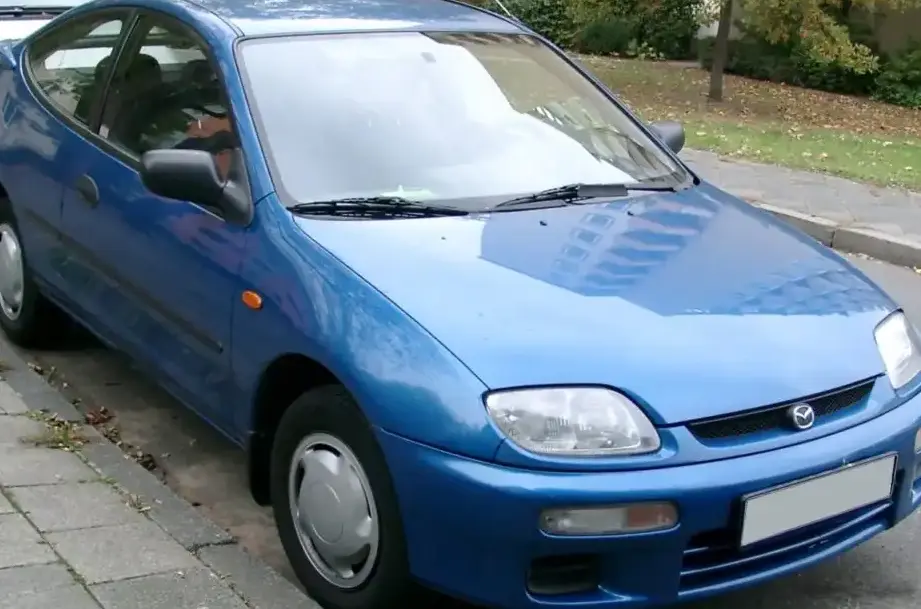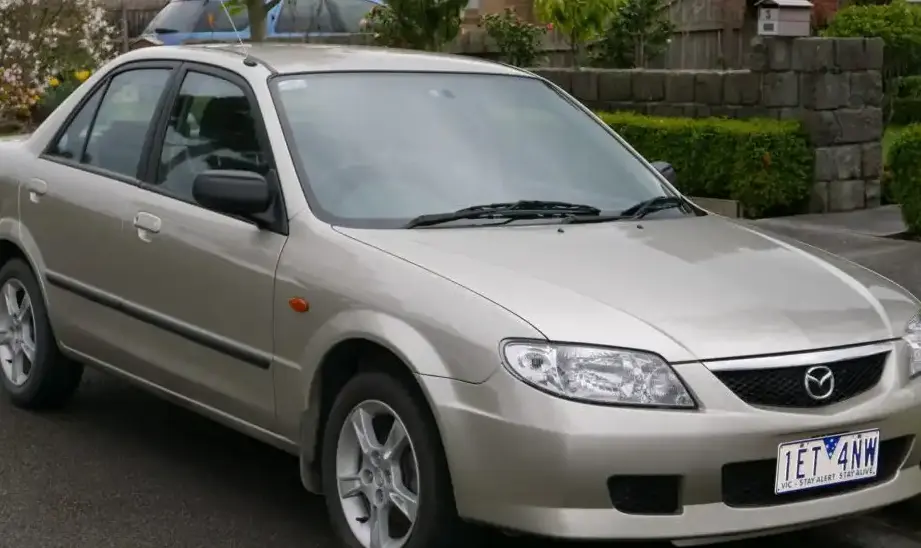
The Mazda 323 S VI (BJ) 2.0i 16V Automatic, produced between 2000 and 2003, represented a significant step up in refinement and performance for Mazda’s compact offering. Part of the BJ generation (the sixth iteration of the 323), this variant occupied a mid-range position within the lineup, appealing to buyers seeking a balance between fuel efficiency, comfort, and respectable power. It was primarily marketed in Europe, Australia, and parts of Asia, offering a more sophisticated alternative to base models while remaining more accessible than the higher-performance options. The 323 S VI was built on the Mazda BG platform, a chassis known for its relatively lightweight construction and responsive handling.
Technical Specifications
| Brand | Mazda |
| Model | 323 |
| Generation | 323 S VI (BJ) |
| Type (Engine) | 2.0i 16V (130 Hp) Automatic |
| Start of production | 2000 year |
| End of production | 2003 year |
| Powertrain Architecture | Internal Combustion engine |
| Body type | Sedan |
| Seats | 5 |
| Doors | 4 |
| Fuel consumption (urban) | 12.5 l/100 km (18.8 US mpg, 22.6 UK mpg, 8 km/l) |
| Fuel consumption (extra urban) | 7.2 l/100 km (32.7 US mpg, 39.2 UK mpg, 13.9 km/l) |
| Fuel consumption (combined) | 9.2 l/100 km (25.6 US mpg, 30.7 UK mpg, 10.9 km/l) |
| Fuel Type | Petrol (Gasoline) |
| Acceleration 0 – 100 km/h | 11.7 sec |
| Acceleration 0 – 62 mph | 11.7 sec |
| Acceleration 0 – 60 mph | 11.1 sec |
| Maximum speed | 183 km/h (113.71 mph) |
| Weight-to-power ratio | 8.9 kg/Hp, 112.6 Hp/tonne |
| Weight-to-torque ratio | 6.8 kg/Nm, 148.1 Nm/tonne |
| Power | 130 Hp @ 6000 rpm |
| Power per litre | 65.3 Hp/l |
| Torque | 171 Nm @ 4400 rpm (126.12 lb.-ft. @ 4400 rpm) |
| Engine layout | Front, Transverse |
| Engine Model/Code | FS7E, FS7G |
| Engine displacement | 1991 cm3 (121.5 cu. in.) |
| Number of cylinders | 4 |
| Engine configuration | Inline |
| Cylinder Bore | 83 mm (3.27 in.) |
| Piston Stroke | 92 mm (3.62 in.) |
| Compression ratio | 9.7:1 |
| Number of valves per cylinder | 4 |
| Fuel injection system | Multi-port manifold injection |
| Engine aspiration | Naturally aspirated engine |
| Valvetrain | DOHC |
| Engine oil capacity | 3.5 l (3.7 US qt | 3.08 UK qt) |
| Coolant | 7.5 l (7.93 US qt | 6.6 UK qt) |
| Kerb Weight | 1155 kg (2546.34 lbs.) |
| Max. weight | 1625 kg (3582.51 lbs.) |
| Max load | 470 kg (1036.17 lbs.) |
| Trunk (boot) space – minimum | 415 l (14.66 cu. ft.) |
| Fuel tank capacity | 55 l (14.53 US gal | 12.1 UK gal) |
| Length | 4390 mm (172.83 in.) |
| Width | 1705 mm (67.13 in.) |
| Height | 1410 mm (55.51 in.) |
| Wheelbase | 2610 mm (102.76 in.) |
| Front track | 1470 mm (57.87 in.) |
| Rear (Back) track | 1470 mm (57.87 in.) |
| Drivetrain Architecture | The Internal combustion engine (ICE) drives the front wheels of the vehicle. |
| Drive wheel | Front wheel drive |
| Number of gears and type of gearbox | 4 gears, automatic transmission |
| Front suspension | Coil spring |
| Rear suspension | Coil spring |
| Front brakes | Ventilated discs |
| Rear brakes | Disc |
| Assisting systems | ABS (Anti-lock braking system) |
| Steering type | Steering rack and pinion |
| Power steering | Hydraulic Steering |
| Tires size | 195/55 R15 |
| Wheel rims size | 15 |
Powertrain & Engine Architecture
The heart of the 323 S VI 2.0i Automatic is the FS-DE engine, a 1.991-liter inline-four cylinder powerplant. This engine, often designated as FS7E or FS7G depending on minor regional variations, featured a double overhead camshaft (DOHC) valvetrain with four valves per cylinder. This configuration allowed for efficient cylinder filling and exhaust scavenging, contributing to the engine’s respectable power output. Fuel delivery was handled by a multi-port fuel injection system, providing precise fuel metering for optimal combustion. The FS-DE engine was known for its relatively smooth operation and decent reliability. The automatic transmission paired with this engine was a conventional four-speed unit. While not the most technologically advanced transmission available at the time, it provided smooth shifts and contributed to the car’s ease of driving. It was designed to prioritize comfort over outright performance.
Driving Characteristics
The 2.0i Automatic version of the 323 S VI offered a comfortable and predictable driving experience. With 130 horsepower and 126 lb-ft of torque, acceleration was adequate for everyday driving, though not particularly sporty. The 0-60 mph time of around 11.1 seconds reflects this. The automatic transmission, while smooth, did result in some power loss compared to the available five-speed manual. Gear ratios were tuned for fuel efficiency and relaxed cruising, rather than aggressive acceleration. Compared to the more powerful 2.3-liter V6 models, the 2.0i Automatic felt noticeably less responsive. However, it offered a significant improvement in fuel economy and a more affordable price point. The suspension provided a comfortable ride, absorbing bumps and imperfections in the road well. Steering was light and precise, making the car easy to maneuver in urban environments.
Equipment & Trim Levels
The 2.0i Automatic trim typically included features such as air conditioning, power windows, power door locks, and a basic audio system. Interior upholstery was usually cloth, with options for upgraded materials available. Depending on the market, features like alloy wheels, a sunroof, and a more advanced audio system could be added as optional extras. Safety features included ABS (Anti-lock Braking System) as standard equipment, a notable inclusion for a car in this class at the time. The dashboard layout was functional and straightforward, prioritizing ease of use over stylistic flair.
Chassis & Braking
The 323 S VI utilized a front-engine, front-wheel-drive layout. Suspension consisted of coil springs all around, providing a comfortable ride. The front suspension incorporated MacPherson struts, while the rear used a multi-link setup. Braking duties were handled by ventilated discs at the front and solid discs at the rear. The ABS system helped to maintain steering control during hard braking. The chassis was relatively lightweight, contributing to the car’s nimble handling characteristics. Stabilizer bars were fitted to both the front and rear axles to reduce body roll during cornering.
Market Reception & Comparison
The Mazda 323 S VI 2.0i Automatic was generally well-received by automotive critics as a practical and reliable family sedan. It was praised for its comfortable ride, decent fuel economy, and reasonable price. However, some critics noted that the automatic transmission dulled the engine’s performance and that the interior lacked the sophistication of some competitors. Compared to other trims in the 323 lineup, the 2.0i Automatic offered a good balance between performance and economy. The 1.6-liter models were more affordable but lacked the power of the 2.0i, while the V6 models were more expensive and less fuel-efficient. Against competitors like the Honda Civic, Toyota Corolla, and Ford Focus, the 323 S VI offered a compelling package with a focus on comfort and reliability.
Legacy
The Mazda 323 S VI 2.0i Automatic has proven to be a relatively reliable vehicle over the long term. The FS-DE engine is known for its durability, and the automatic transmission, while not particularly advanced, has generally held up well. Today, these cars can be found in the used car market at affordable prices. They represent a good value for buyers seeking a dependable and economical compact sedan. While not a particularly collectible model, the 323 S VI 2.0i Automatic remains a testament to Mazda’s commitment to building well-engineered and practical vehicles.