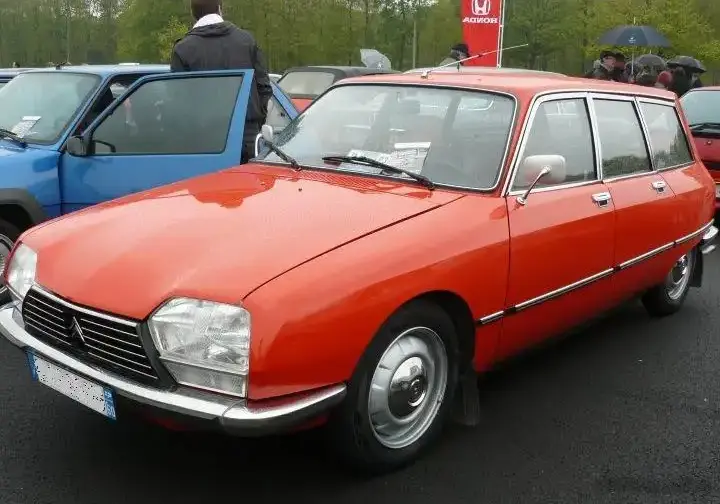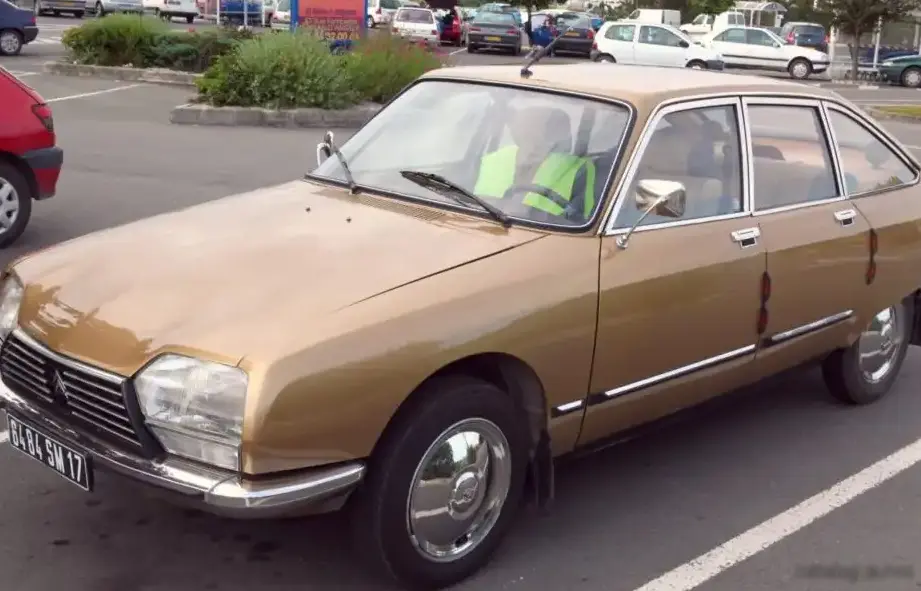
The Citroen GS 1.2, produced between 1973 and 1979, represents an intriguing entry point into the innovative world of the Citroen GS series. Positioned as the base model within the range, the 1.2-liter variant offered a more accessible price point compared to the more powerful 1.6-liter and fuel-injected versions. While not known for blistering performance, the GS 1.2 played a significant role in bringing Citroen’s advanced hydropneumatic suspension technology to a wider audience. It was a key offering in the European market, particularly in France, where Citroen held a strong following for its comfortable and technologically advanced vehicles. The GS, overall, was Citroen’s attempt to create a more mainstream, aerodynamic family car to replace the aging ID/DS series.
Technical Specifications
| Brand | Citroen |
| Model | GS |
| Generation | GS |
| Type (Engine) | 1.2 (59 Hp) |
| Start of production | 1973 |
| End of production | 1979 |
| Powertrain Architecture | Internal Combustion engine |
| Body type | Hatchback |
| Seats | 5 |
| Doors | 4 |
| Fuel Type | Petrol (Gasoline) |
| Acceleration 0 – 100 km/h | 16.1 sec |
| Acceleration 0 – 62 mph | 16.1 sec |
| Acceleration 0 – 60 mph | 15.3 sec |
| Maximum speed | 151 km/h (93.83 mph) |
| Weight-to-power ratio | 15.8 kg/Hp, 63.4 Hp/tonne |
| Weight-to-torque ratio | 10.7 kg/Nm, 93.5 Nm/tonne |
| Power | 59 Hp @ 5750 rpm |
| Power per litre | 48.3 Hp/l |
| Torque | 87 Nm @ 3250 rpm (64.17 lb.-ft. @ 3250 rpm) |
| Engine Model/Code | G12/611 |
| Engine displacement | 1222 cm3 (74.57 cu. in.) |
| Number of cylinders | 4 |
| Engine configuration | Boxer |
| Cylinder Bore | 77 mm (3.03 in.) |
| Piston Stroke | 65.5 mm (2.58 in.) |
| Compression ratio | 8.2:1 |
| Engine aspiration | Naturally aspirated |
| Engine oil capacity | 3.7 l (3.91 US qt | 3.26 UK qt) |
| Kerb Weight | 930 kg (2050.3 lbs) |
| Max. weight | 1345 kg (2965.22 lbs) |
| Max load | 415 kg (914.92 lbs) |
| Trunk (boot) space – minimum | 409 l (14.44 cu. ft.) |
| Trunk (boot) space – maximum | 846 l (29.88 cu. ft.) |
| Fuel tank capacity | 43 l (11.36 US gal | 9.46 UK gal) |
| Max. roof load | 60 kg (132.28 lbs) |
| Permitted trailer load with brakes (12%) | 800 kg (1763.7 lbs) |
| Permitted trailer load without brakes | 465 kg (1025.15 lbs) |
| Length | 4120 mm (162.2 in.) |
| Width | 1608 mm (63.31 in.) |
| Height | 1349 mm (53.11 in.) |
| Wheelbase | 2550 mm (100.39 in.) |
| Front track | 1378 mm (54.25 in.) |
| Rear (Back) track | 1328 mm (52.28 in.) |
| Front overhang | 818 mm (32.2 in.) |
| Rear overhang | 752 mm (29.61 in.) |
| Ride height (ground clearance) | 154 mm (6.06 in.) |
| Minimum turning circle | 9.7 m (31.82 ft.) |
| Drivetrain Architecture | The Internal combustion engine (ICE) drives the front wheels. |
| Drive wheel | Front wheel drive |
| Number of gears and type of gearbox | 4 gears, manual transmission |
| Front suspension | Hydro-pneumatic element, Double wishbone |
| Rear suspension | Hydro-pneumatic element, Trailing arm |
| Front brakes | Disc |
| Rear brakes | Disc |
| Steering type | Steering rack and pinion |
Powertrain & Engine Architecture
The Citroen GS 1.2 was powered by the G12/611 engine, a 1222cc, naturally aspirated, four-cylinder boxer engine. This engine was notable for its horizontally opposed configuration, which contributed to a lower center of gravity and smoother operation. The engine featured a single overhead camshaft and a two-barrel Solex carburetor. While relatively simple in design, the boxer layout provided inherent balance, reducing vibrations. The 59 horsepower output was achieved at 5750 rpm, with a torque figure of 87 Nm (64.17 lb-ft) at 3250 rpm. The engine was paired with a four-speed manual transmission, which was the standard offering for this variant. The transmission was designed to maximize the limited power available, with gear ratios optimized for acceleration and fuel economy.
Driving Characteristics
The driving experience in the GS 1.2 was defined by its comfort and unique handling characteristics. The hydropneumatic suspension, a Citroen hallmark, provided a remarkably smooth ride, absorbing bumps and imperfections in the road with ease. However, the 59 hp engine meant that performance was modest. Acceleration was slow, and overtaking required careful planning. The four-speed manual transmission helped to keep the engine in its optimal power band, but it couldn’t fully compensate for the lack of outright power. Compared to the 1.6-liter versions, the 1.2 felt noticeably slower, particularly when fully loaded. The steering was light and precise, contributing to a pleasant driving experience, even if it wasn’t a particularly sporty one.
Equipment & Trim Levels
The GS 1.2 was typically equipped with basic, but functional, features. Standard equipment included cloth upholstery, a basic instrument panel, and manually operated windows. The interior was designed with practicality in mind, offering comfortable seating for five passengers. Optional extras included a sunroof, upgraded upholstery, and a radio. The GS 1.2 was positioned as the entry-level model, so it lacked many of the luxury features found in the higher-spec versions. However, it still offered a level of refinement that was uncommon in its price range, thanks to the advanced suspension system.
Chassis & Braking
The GS featured a monocoque chassis, providing a good balance of strength and lightness. The front suspension utilized a double wishbone setup with the Citroen’s signature hydropneumatic elements, while the rear suspension employed a trailing arm design, also with hydropneumatic assistance. This suspension system allowed for self-leveling and adjustable ride height. Braking was provided by disc brakes on all four wheels, offering adequate stopping power for the vehicle’s weight and performance. The steering was a rack and pinion system, providing precise and responsive handling.
Market Reception & Comparison
The Citroen GS 1.2 received mixed reviews. Critics praised the comfortable ride and innovative suspension system, but many found the engine to be underpowered. It was often seen as a compromise – a way to experience Citroen’s advanced technology at a more affordable price. Compared to the 1.6-liter versions, the 1.2 offered better fuel economy but significantly less performance. The 1.6-liter models were favored by drivers who prioritized power and responsiveness. The GS 1.2 appealed to buyers who valued comfort and practicality over outright speed.
Legacy
The Citroen GS 1.2, while not the most powerful or sought-after variant, remains a significant vehicle in Citroen’s history. Its introduction helped to democratize the brand’s advanced hydropneumatic suspension technology. Today, the GS 1.2 is a relatively rare sight on the road, and well-maintained examples are becoming increasingly collectible. The boxer engine, while not known for its longevity, is generally reliable if properly maintained. Parts availability can be a challenge, but a dedicated community of Citroen enthusiasts continues to support the preservation of these classic vehicles. The GS 1.2 stands as a testament to Citroen’s innovative spirit and its commitment to providing a unique and comfortable driving experience.