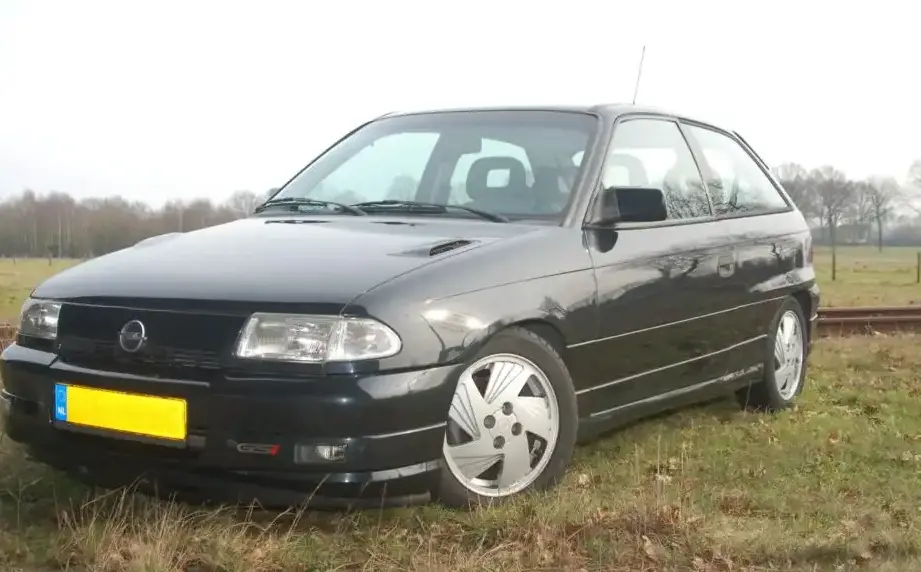
The Opel Astra H Caravan 1.8i 16V, produced from November 2005 through 2006, represented a mid-range offering within the broader Astra H (2004-2010) lineup. This variant, a five-door station wagon (estate), aimed to balance practicality with reasonable performance and fuel economy. It occupied a position between the base 1.6L models and the more powerful 2.2L Direct Injection engines, targeting families and individuals needing a versatile vehicle without the higher price tag of the premium trims. The Astra H generation itself was a significant step forward for Opel, sharing its platform (the GM Delta platform) with other European and global models, and representing a considerable improvement in build quality and refinement over its predecessor.
Technical Specifications
| Brand | Opel |
| Model | Astra |
| Generation | Astra H Caravan |
| Type (Engine) | 1.8i 16V (140 Hp) |
| Start of production | November, 2005 |
| End of production | 2006 |
| Powertrain Architecture | Internal Combustion engine |
| Body type | Station wagon (estate) |
| Seats | 5 |
| Doors | 5 |
| Fuel consumption (urban) | 10.5 l/100 km (22.4 US mpg, 26.9 UK mpg, 9.5 km/l) |
| Fuel consumption (extra urban) | 6.2 l/100 km (37.9 US mpg, 45.6 UK mpg, 16.1 km/l) |
| Fuel consumption (combined) | 7.8 l/100 km (30.2 US mpg, 36.2 UK mpg, 12.8 km/l) |
| CO2 emissions | 178 g/km |
| Fuel Type | Petrol (Gasoline) |
| Acceleration 0 – 100 km/h | 10.5 sec |
| Acceleration 0 – 62 mph | 10.5 sec |
| Acceleration 0 – 60 mph | 10 sec |
| Maximum speed | 208 km/h (129.25 mph) |
| Weight-to-power ratio | 8.8 kg/Hp, 114.3 Hp/tonne |
| Weight-to-torque ratio | 7 kg/Nm, 142.9 Nm/tonne |
| Power | 140 Hp @ 6300 rpm |
| Power per litre | 78 Hp/l |
| Torque | 175 Nm @ 3800 rpm (129.07 lb.-ft. @ 3800 rpm) |
| Engine layout | Front, Transverse |
| Engine Model/Code | Z18XER |
| Engine displacement | 1796 cm3 (109.6 cu. in.) |
| Number of cylinders | 4 |
| Engine configuration | Inline |
| Cylinder Bore | 80.5 mm (3.17 in.) |
| Piston Stroke | 88.2 mm (3.47 in.) |
| Compression ratio | 10.5:1 |
| Number of valves per cylinder | 4 |
| Fuel injection system | Multi-port manifold injection |
| Engine aspiration | Naturally aspirated engine |
| Valvetrain | DOHC |
| Engine oil capacity | 4.25 l (4.49 US qt | 3.74 UK qt) |
| Coolant | 6.1 l (6.45 US qt | 5.37 UK qt) |
| Kerb Weight | 1225 kg (2700.66 lbs.) |
| Max. weight | 1850 kg (4078.55 lbs.) |
| Max load | 625 kg (1377.89 lbs.) |
| Trunk (boot) space – minimum | 540 l (19.07 cu. ft.) |
| Trunk (boot) space – maximum | 1590 l (56.15 cu. ft.) |
| Fuel tank capacity | 52 l (13.74 US gal | 11.44 UK gal) |
| Length | 4515 mm (177.76 in.) |
| Width | 1794 mm (70.63 in.) |
| Height | 1500 mm (59.06 in.) |
| Wheelbase | 2703 mm (106.42 in.) |
| Front track | 1488 mm (58.58 in.) |
| Rear (Back) track | 1488 mm (58.58 in.) |
| Ride height (ground clearance) | 160 mm (6.3 in.) |
| Drag coefficient (Cd) | 0.31 |
| Drivetrain Architecture | The Internal combustion engine (ICE) drives the front wheels of the vehicle. |
| Drive wheel | Front wheel drive |
| Number of gears and type of gearbox | 5 gears, manual transmission |
| Front suspension | Spring Strut |
| Rear suspension | Spring Strut |
| Front brakes | Ventilated discs |
| Rear brakes | Disc |
| Assisting systems | ABS (Anti-lock braking system) |
| Steering type | Steering rack and pinion |
| Tires size | 195/65 R15 |
| Wheel rims size | 6.5J X 15 |
Powertrain & Engine Architecture
The heart of the Astra H Caravan 1.8i 16V is the Z18XER engine, a member of Opel’s Ecotec family. This 1.8-liter (1796 cc) inline-four cylinder engine features a dual overhead camshaft (DOHC) valvetrain with four valves per cylinder. It utilizes a multi-port fuel injection system, delivering fuel directly into the intake ports. The Z18XER produces 140 horsepower at 6300 rpm and 175 Nm (129 lb-ft) of torque at 3800 rpm. The engine’s design prioritized fuel efficiency and smooth operation over outright performance. The 5-speed manual transmission was standard, offering a relatively conventional gear ratio spread. The transmission was chosen for its durability and cost-effectiveness, rather than sporty performance.
Driving Characteristics
The 1.8L engine, paired with the 5-speed manual, provided adequate, but not exhilarating, performance. Acceleration from 0-60 mph took around 10 seconds, and top speed was approximately 129 mph. The engine felt most comfortable in the mid-range, offering sufficient power for everyday driving and highway cruising. However, it could feel strained when pushed hard, particularly when fully loaded. Compared to the more powerful 2.2L Direct Injection models, the 1.8L felt noticeably slower. The manual transmission offered a more engaging driving experience than the optional automatic, providing better control and responsiveness. The gear ratios were well-suited for fuel economy, but didn’t prioritize quick acceleration.
Equipment & Trim Levels
The 1.8i 16V trim typically included standard features such as air conditioning, power windows, central locking, and an audio system. Safety features included ABS brakes, front airbags, and seatbelt pretensioners. Higher trim levels, such as the Enjoy and Cosmo, added features like alloy wheels, climate control, a trip computer, and upgraded interior trim. Optional extras included a sunroof, parking sensors, and a more advanced audio system. Interior upholstery was typically cloth, with the option of leather on higher trims. The dashboard layout was functional and straightforward, with a focus on ergonomics.
Chassis & Braking
The Astra H Caravan featured a MacPherson strut front suspension and a multi-link rear suspension, providing a comfortable ride and decent handling. The front brakes were ventilated discs, while the rear brakes were solid discs. The steering was a rack-and-pinion system, offering precise and responsive control. The suspension was tuned for comfort, prioritizing ride quality over sporty handling. Stabilizer bars were fitted to both the front and rear axles to reduce body roll during cornering. The 195/65 R15 tires provided adequate grip in most conditions.
Market Reception & Comparison
The Astra H Caravan 1.8i 16V was generally well-received by critics as a practical and affordable family car. It was praised for its spacious interior, comfortable ride, and reasonable fuel economy. However, some critics found the engine to be underpowered, particularly when compared to its rivals. Fuel economy was a strong point, averaging around 30 mpg in combined driving. Compared to the 2.2L Direct Injection models, the 1.8L offered lower running costs but sacrificed performance. The 1.7 CDTi diesel variant offered even better fuel economy, but at the expense of refinement.
Legacy
The Z18XER engine proved to be a relatively reliable unit, although it was known to suffer from occasional issues with the intake manifold and ignition coils. The Astra H Caravan, in general, has proven to be a durable and dependable vehicle, and remains a popular choice in the used car market. Parts availability is generally good, and maintenance costs are relatively low. The 1.8L variant, while not the most exciting to drive, offers a good balance of practicality, affordability, and reliability, making it a sensible choice for budget-conscious buyers.