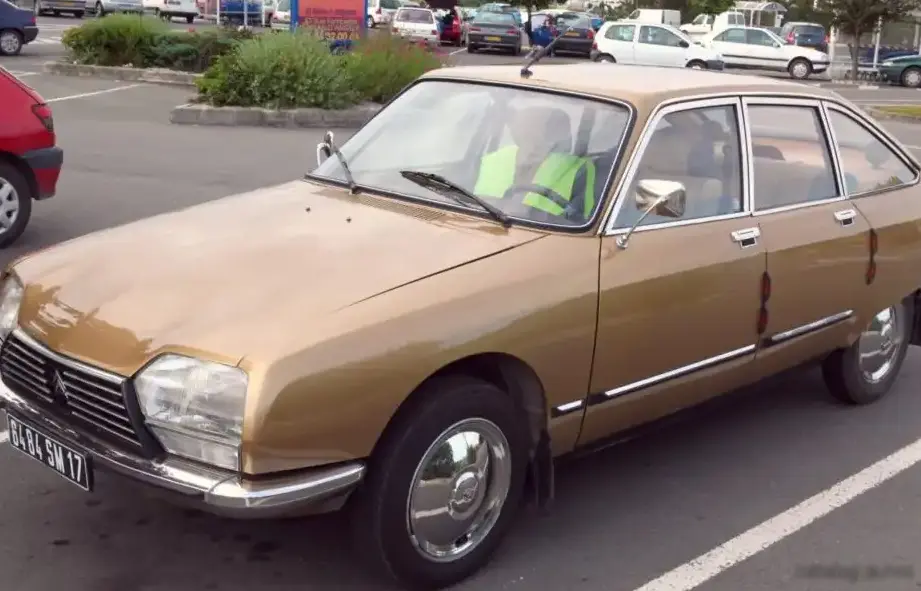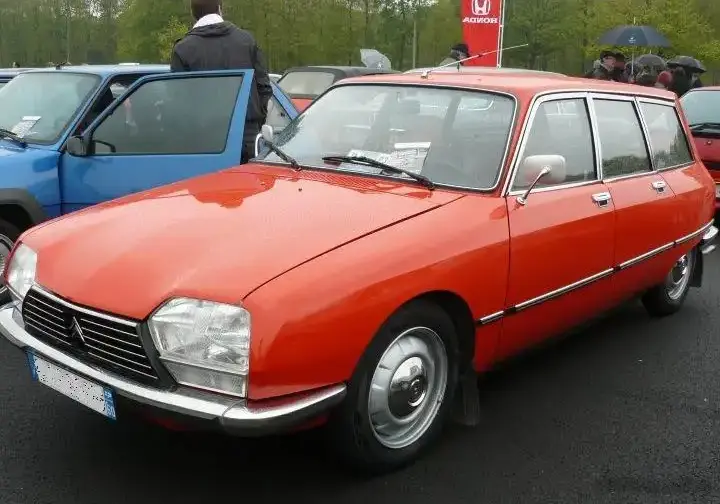
The Citroën GS Break 1.1, produced between 1977 and 1979, represents a unique offering within the broader Citroën GS range. As the station wagon (estate) variant powered by the 1.1-liter engine, it occupied the entry-level position in the Break lineup, appealing to buyers seeking practicality and fuel economy. The GS Break, built on the G platform, was Citroën’s attempt to blend the innovative hydropneumatic suspension technology of the larger DS and ID models with a more compact and affordable package. This particular 1.1-liter version was primarily aimed at the European market, where smaller displacement engines were favored due to taxation and fuel costs.
Technical Specifications
| Brand | Citroen |
| Model | GS |
| Generation | GS Break |
| Type (Engine) | 1.1 (56 Hp) |
| Start of production | 1977 |
| End of production | 1979 |
| Powertrain Architecture | Internal Combustion engine |
| Body type | Station wagon (estate) |
| Seats | 5 |
| Doors | 5 |
| Fuel Type | Petrol (Gasoline) |
| Maximum speed | 146 km/h (90.72 mph) |
| Weight-to-power ratio | 16.7 kg/Hp, 59.9 Hp/tonne |
| Weight-to-torque ratio | 11.7 kg/Nm, 85.6 Nm/tonne |
| Power | 56 Hp @ 5750 rpm |
| Power per litre | 49.6 Hp/l |
| Torque | 80 Nm @ 3500 rpm (59 lb.-ft. @ 3500 rpm) |
| Engine Model/Code | G11/631 |
| Engine displacement | 1129 cm3 (68.9 cu. in.) |
| Number of cylinders | 4 |
| Engine configuration | Boxer |
| Cylinder Bore | 74 mm (2.91 in.) |
| Piston Stroke | 65.6 mm (2.58 in.) |
| Compression ratio | 9:1 |
| Fuel injection system | Carburettor |
| Engine aspiration | Naturally aspirated engine |
| Engine oil capacity | 3.5 l (3.7 US qt | 3.08 UK qt) |
| Kerb Weight | 935 kg (2061.32 lbs.) |
| Max. weight | 1340 kg (2954.19 lbs.) |
| Max load | 405 kg (892.87 lbs.) |
| Trunk (boot) space – minimum | 645 l (22.78 cu. ft.) |
| Trunk (boot) space – maximum | 1500 l (52.97 cu. ft.) |
| Fuel tank capacity | 43 l (11.36 US gal | 9.46 UK gal) |
| Max. roof load | 80 kg (176.37 lbs.) |
| Permitted trailer load with brakes (12%) | 800 kg (1763.7 lbs.) |
| Permitted trailer load without brakes | 460 kg (1014.13 lbs.) |
| Length | 4120 mm (162.2 in.) |
| Width | 1608 mm (63.31 in.) |
| Height | 1349 mm (53.11 in.) |
| Wheelbase | 2550 mm (100.39 in.) |
| Front track | 1378 mm (54.25 in.) |
| Rear (Back) track | 1328 mm (52.28 in.) |
| Front overhang | 818 mm (32.2 in.) |
| Rear overhang | 752 mm (29.61 in.) |
| Minimum turning circle (turning diameter) | 9.7 m (31.82 ft.) |
| Drivetrain Architecture | The Internal combustion engine (ICE) drives the front wheels of the vehicle. |
| Drive wheel | Front wheel drive |
| Number of gears and type of gearbox | 4 gears, manual transmission |
| Front suspension | Hydro-pneumatic element, Double wishbone |
| Rear suspension | Hydro-pneumatic element, Trailing arm |
| Front brakes | Disc |
| Rear brakes | Disc |
| Steering type | Steering rack and pinion |
Powertrain & Engine Architecture
The Citroën GS Break 1.1 utilized the G11/631 engine, a 1129cc, naturally aspirated, four-cylinder boxer engine. This engine was characterized by its horizontally opposed cylinders, which contributed to a lower center of gravity and reduced engine vibrations. Fuel delivery was managed by a single carburetor, a common setup for engines of this era and displacement. The engine produced 56 horsepower at 5750 rpm and 80 Nm (59 lb-ft) of torque at 3500 rpm. The engine’s 9:1 compression ratio was typical for gasoline engines of the time. The engine was paired with a four-speed manual transmission, which was the standard offering for this variant. The boxer configuration, while offering smoothness, also presented challenges in terms of packaging and maintenance compared to more conventional inline engines.
Driving Characteristics
The 1.1-liter GS Break offered modest performance. Acceleration was leisurely, and top speed was around 90.72 mph (146 km/h). The four-speed manual transmission was geared to prioritize fuel economy over outright performance. Compared to the more powerful 1.6-liter and 2.0-liter versions of the GS, the 1.1 felt significantly underpowered, especially when fully loaded or tackling inclines. However, the hydropneumatic suspension provided a remarkably comfortable ride, absorbing bumps and imperfections in the road with ease. The steering was light and precise, making the car easy to maneuver in urban environments. The combination of a small engine and comfortable suspension made it a suitable choice for everyday commuting and family transport.
Equipment & Trim Levels
The GS Break 1.1 was positioned as the entry-level model, and as such, it came with a relatively basic level of equipment. Standard features included cloth upholstery, a basic instrument panel, and manually operated windows. Optional extras included a sunroof, upgraded upholstery, and a radio. The interior was functional and practical, prioritizing space and usability over luxury. The dashboard layout was typical of Citroën designs of the period, with a focus on ergonomics and ease of use. The Break body style itself offered a significant advantage in terms of cargo capacity, making it a versatile vehicle for families and those needing to transport larger items.
Chassis & Braking
The GS Break featured Citroën’s renowned hydropneumatic suspension system, which provided a self-leveling ride and exceptional comfort. The front suspension utilized double wishbones, while the rear suspension employed a trailing arm design. This setup contributed to the car’s stable handling and ability to absorb road imperfections. Braking was provided by disc brakes on all four wheels, offering adequate stopping power for the vehicle’s weight and performance. The steering system was a rack and pinion type, providing precise and responsive steering feel.
Market Reception & Comparison
The Citroën GS Break 1.1 was generally well-received as an affordable and practical family car. Critics praised the comfortable ride provided by the hydropneumatic suspension and the spacious interior. However, the engine’s lack of power was a common criticism. Compared to the 1.6-liter and 2.0-liter versions, the 1.1 offered significantly less performance but also better fuel economy. The 1.9-liter diesel version, while slower, provided even greater fuel efficiency and torque. The 1.1-liter model appealed to buyers who prioritized economy and comfort over outright performance.
Legacy
The Citroën GS Break 1.1, while not the most powerful or sought-after version of the GS, remains a significant vehicle in Citroën’s history. Its innovative hydropneumatic suspension and comfortable ride set it apart from its competitors. The G11/631 engine, while relatively simple, proved to be reasonably reliable. Today, the GS Break 1.1 is a relatively rare sight on the road, and well-maintained examples are becoming increasingly collectible. The car’s unique design and advanced technology continue to appeal to enthusiasts and collectors alike. Parts availability can be a challenge, but a dedicated community of Citroën owners and specialists exists to support the preservation of these classic vehicles.