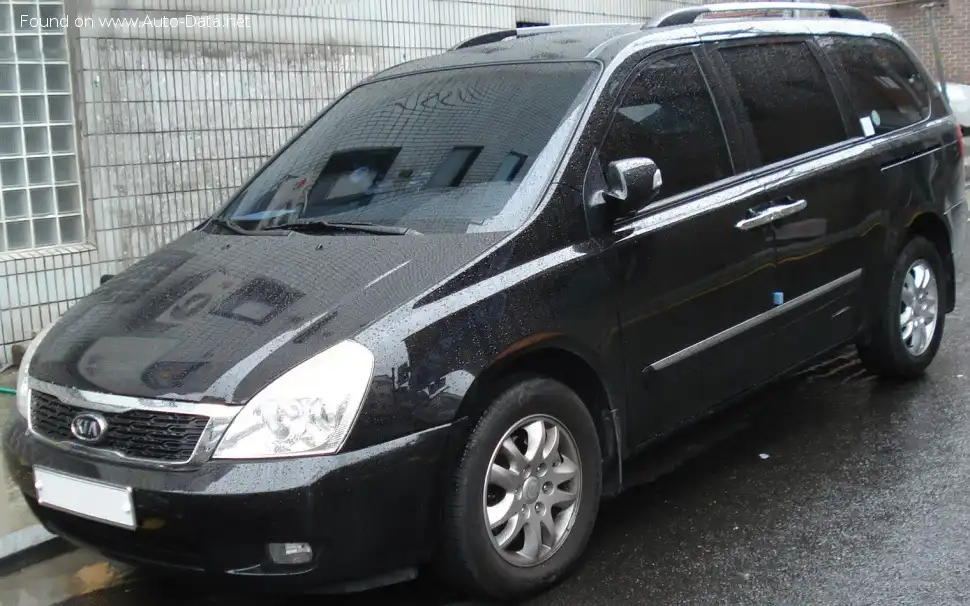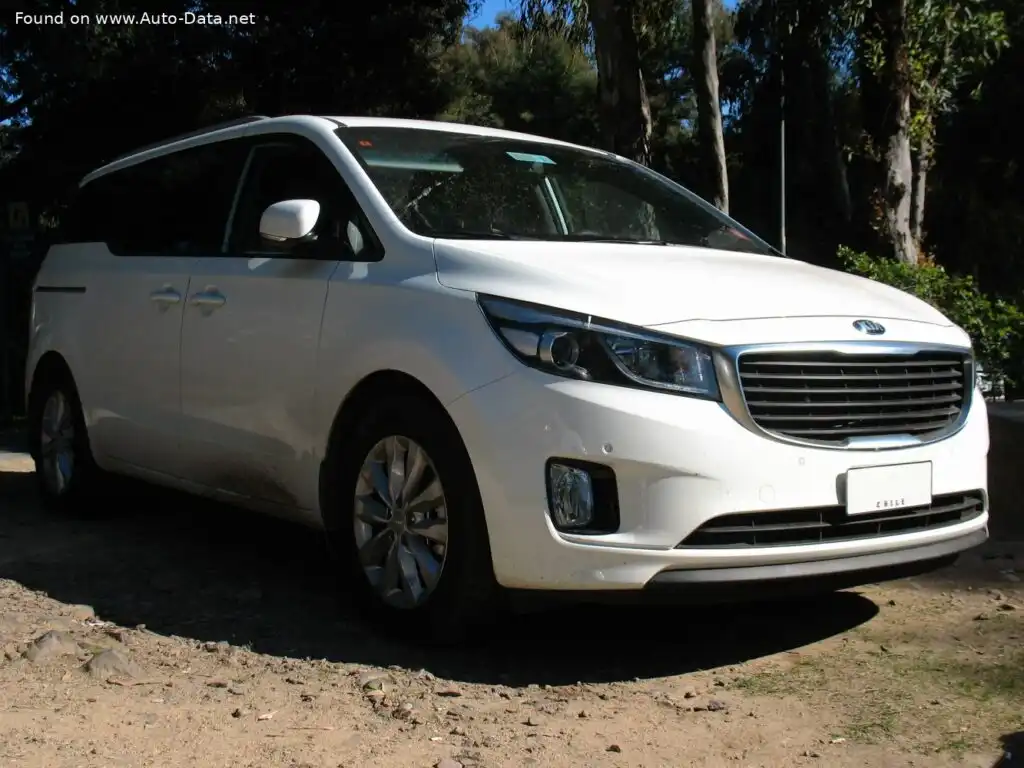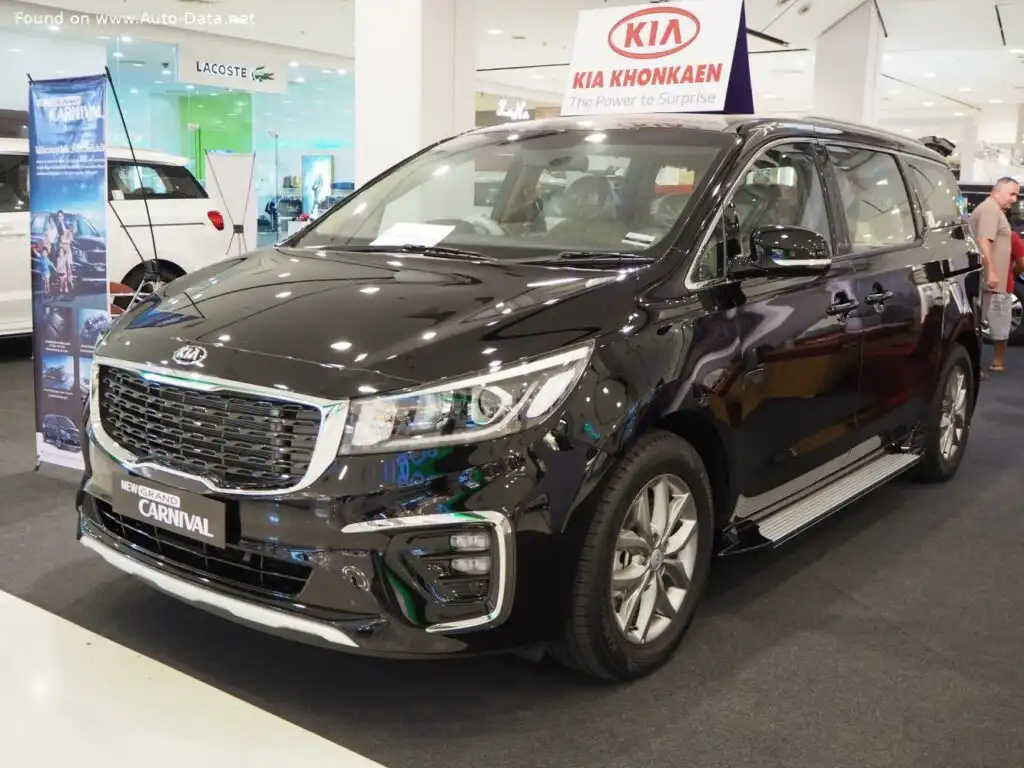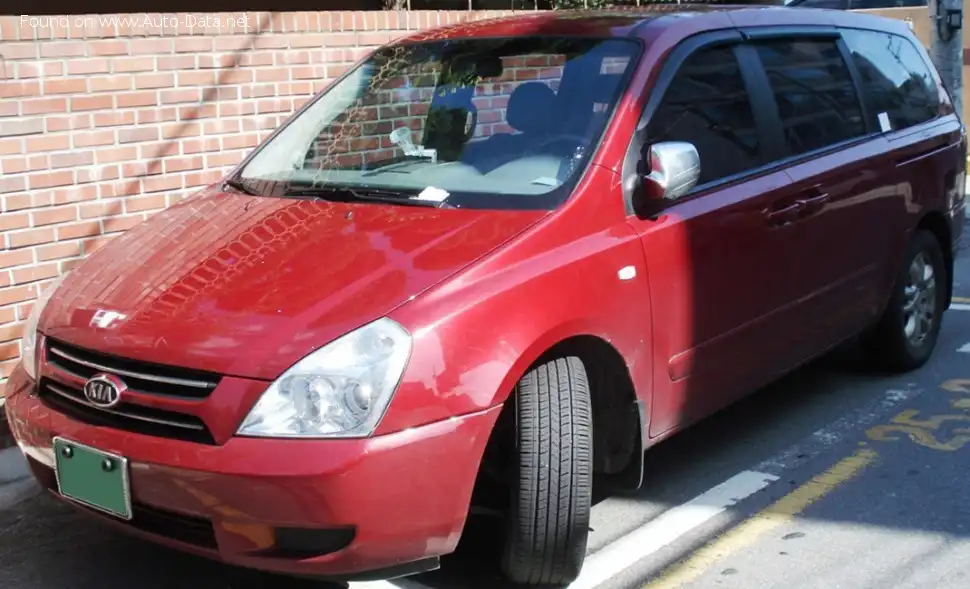
The Kia Grand Carnival II, specifically the 2.9 CRDi variant paired with a five-speed automatic transmission, was manufactured between 2006 and 2010. This model represents Kia’s second-generation Carnival (marketed as the Sedona in North America), a minivan engineered to compete with established vehicles such as the Dodge Caravan, Toyota Sienna, and Honda Odyssey. The 2.9 CRDi Automatic trim occupied a mid-to-upper position within the Grand Carnival II range, providing a balance of performance, interior space, and features geared towards families and those needing a versatile multi-passenger vehicle. Its primary sales were concentrated in markets outside of North America, where diesel engines enjoyed greater consumer acceptance.
Technical Specifications
| Brand | Kia |
| Model | Carnival |
| Generation | Grand Carnival II |
| Type (Engine) | 2.9 CRDi (185 Hp) Automatic |
| Start of production | 2006 |
| End of production | 2010 |
| Powertrain Architecture | Internal Combustion engine |
| Body type | Minivan |
| Seats | 7 |
| Doors | 5 |
| Fuel Type | Diesel |
| Weight-to-power ratio | 11.5 kg/Hp |
| Weight-to-torque ratio | 6.2 kg/Nm |
| Power | 185 Hp @ 3800 rpm |
| Power per litre | 63.7 Hp/l |
| Torque | 343 Nm @ 1750-3500 rpm (252.98 lb.-ft. @ 1750-3500 rpm) |
| Engine layout | Front, Transverse |
| Engine Model/Code | J3 |
| Engine displacement | 2902 cm3 (177.09 cu. in.) |
| Number of cylinders | 4 |
| Engine configuration | Inline |
| Cylinder Bore | 97.1 mm (3.82 in.) |
| Piston Stroke | 98 mm (3.86 in.) |
| Compression ratio | 18:1 |
| Number of valves per cylinder | 4 |
| Fuel injection system | Diesel Commonrail |
| Engine aspiration | Turbocharger, Intercooler |
| Valvetrain | DOHC |
| Engine oil capacity | 6.6 l (6.97 US qt | 5.81 UK qt) |
| Coolant | 10 l (10.57 US qt | 8.8 UK qt) |
| Kerb Weight | 2132 kg (4700.26 lbs.) |
| Max. weight | 2920 kg (6437.5 lbs.) |
| Max load | 788 kg (1737.24 lbs.) |
| Trunk (boot) space – minimum | 912 l (32.21 cu. ft.) |
| Trunk (boot) space – maximum | 4007 l (141.51 cu. ft.) |
| Fuel tank capacity | 80 l (21.13 US gal | 17.6 UK gal) |
| Length | 5130 mm (201.97 in.) |
| Width | 1985 mm (78.15 in.) |
| Height | 1780 mm (70.08 in.) |
| Wheelbase | 3020 mm (118.9 in.) |
| Front track | 1685 mm (66.34 in.) |
| Rear (Back) track | 1685 mm (66.34 in.) |
| Drag coefficient (Cd) | 0.34 |
| Minimum turning circle | 12.1 m (39.7 ft.) |
| Drivetrain Architecture | Front wheel drive |
| Number of gears | 5 |
| Gearbox type | Automatic transmission |
| Front suspension | Independent type McPherson |
| Rear suspension | Dependent spring suspension with transverse stabilizer |
| Front brakes | Ventilated discs |
| Rear brakes | Drum |
| Assisting systems | ABS (Anti-lock braking system) |
| Steering type | Steering rack and pinion |
| Tires size | 235/60 R17 |
| Wheel rims size | 17 |
Powertrain & Engine Architecture
The 2.9 CRDi Automatic Grand Carnival is powered by the J3 engine, a 2.9-liter inline-four cylinder diesel. This engine employs a common rail direct injection system, injecting fuel at exceptionally high pressure to optimize combustion efficiency and minimize emissions. A turbocharger and intercooler work in tandem to increase power output to 185 horsepower at 3800 rpm, and 343 Nm (252.98 lb-ft) of torque is available between 1750 and 3500 rpm. The engine features a DOHC (Double Overhead Camshaft) valvetrain with four valves per cylinder, enhancing airflow and contributing to overall performance. The five-speed automatic transmission was selected for its user-friendliness and suitability for family transportation, prioritizing smooth gear changes over outright performance. While not a cutting-edge transmission by contemporary standards, it proved reliable and well-suited to the engine’s torque curve.
Driving Characteristics
The 2.9 CRDi Automatic Grand Carnival delivered a comfortable and relaxed driving experience. The engine’s substantial torque provided adequate acceleration for daily driving and highway travel, even when the vehicle was fully occupied with passengers and luggage. However, it wasn’t designed to be a particularly sporty vehicle. The automatic transmission, while smooth, could feel somewhat hesitant during quick overtaking maneuvers. Compared to the manual transmission models, the automatic version offered slightly reduced responsiveness. The gear ratios were optimized for fuel efficiency and comfort rather than maximizing performance. The vehicle’s weight, exceeding 2100 kg (4700 lbs), also contributed to a less agile feel compared to smaller cars.
Equipment & Trim Levels
The 2.9 CRDi Automatic trim level generally included standard features such as air conditioning, power windows and door locks, a basic audio system, and alloy wheels. Higher trim packages offered upgrades like leather upholstery, a sunroof, and more sophisticated audio systems with CD changers. Safety equipment included ABS (Anti-lock Braking System) as standard. The interior was designed with practicality in mind, offering a spacious cabin with versatile seating configurations. The seven-seat layout allowed for various arrangements to accommodate different passenger and cargo requirements.
Chassis & Braking
The Grand Carnival II utilized a front-wheel-drive layout. The front suspension incorporated an independent McPherson strut design, providing a reasonable balance of ride comfort and handling. The rear suspension featured a dependent spring setup with a transverse stabilizer bar, which helped to minimize body roll during cornering. The braking system consisted of ventilated discs on the front wheels and drum brakes on the rear. While sufficient for typical driving conditions, the rear drum brakes were a cost-saving measure and didn’t provide the same stopping power as disc brakes on all four wheels.
Market Reception & Comparison
The Kia Grand Carnival II 2.9 CRDi Automatic was generally well-received in markets where diesel-powered minivans were popular. Reviewers praised its spacious interior, comfortable ride, and relatively affordable price. However, some critics noted that the automatic transmission could be slow to respond and that the overall driving experience wasn’t as engaging as some of its competitors. Compared to the gasoline-powered versions of the Grand Carnival, the 2.9 CRDi offered significantly improved fuel economy and greater torque. When compared to rivals like the Toyota Sienna and Honda Odyssey (which were predominantly sold with gasoline engines in many markets), the Kia presented a different value proposition, appealing to buyers who prioritized fuel efficiency and torque for towing or carrying substantial loads.
Legacy
The Kia Grand Carnival II 2.9 CRDi Automatic has proven to be a relatively dependable vehicle, particularly the engine and transmission. Common issues typically involve wear and tear on suspension components and occasional failures of sensors within the fuel injection system. In the used car market, these models offer good value for money, providing ample space and practicality at a reasonable price. However, prospective buyers should be aware of the age-related issues common to vehicles of this era, such as corrosion and the need for routine maintenance. The J3 engine, while robust, requires regular oil changes and attention to the fuel system to maintain optimal performance. Overall, the 2.9 CRDi Automatic Grand Carnival II remains a viable option for families seeking a spacious and economical people-carrier.